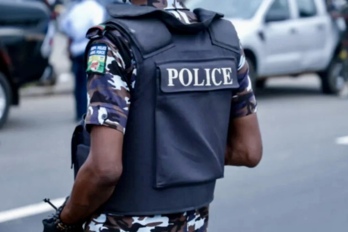
Lagos motorist’s AK-47 extortion claim exposes the danger in police enforcement
A fresh allegation that officers attached to Ajiwe Police Station in Ajah pointed AK-47 rifles at a Lagos motorist, accused him of being a kidnapper and forced him to part with ₦100,000 has once again dragged Nigeria’s policing culture into the spotlight. The complaint, published by SaharaReporters on 28 July 2026, centres on Solomon Lagoke, who said the encounter happened near VGC Filling Station while he was driving back from Lekki.
The timing is politically and institutionally sensitive. Only weeks earlier, the current Inspector-General of Police, Olatunji Disu, had ordered nationwide enforcement against vehicles without valid number plates, as well as plates that are concealed, altered, defaced or otherwise obscured. The police said the exercise was intended to curb criminality, strengthen intelligence gathering and improve vehicle identification, warning that offending vehicles would be stopped, impounded and processed under the law.
Lagoke said the incident began when two mini-buses moved in front of his car and one abruptly stopped ahead of him. He alleged that armed officers stepped out with rifles, ordered him to reverse and then park, before treating him like a suspect in an armed crime rather than a motorist caught in a roadside check. “I was scared because they acted like car hijackers,” he reportedly said, adding that the guns made him comply immediately.
According to his account, the officers did not merely ask questions about the vehicle’s papers; they allegedly went straight to accusations. He said they called him “a thief” and “a kidnapper”, claimed the car was stolen and demanded that he open the boot. Lagoke maintained that nothing incriminating was found, and that he then contacted the dealer, who allegedly confirmed ownership of the car and sent a valid dealer’s licence to the officers.
The allegation becomes more troubling because, by Lagoke’s account, confirmation of ownership did not end the matter. He said the officers still insisted that he follow them to the station and later took him before the Divisional Police Officer. He also said the exchange worsened after he identified himself as a Take It Back Movement member and criticised the officers for harassing citizens instead of confronting bandits. In his telling, the confrontation shifted from enforcement to intimidation.
The most serious claim is the alleged demand for cash. Lagoke said an Investigating Police Officer first asked for ₦500,000 before reducing it to ₦300,000, and that another officer later lowered the amount to ₦100,000, which he said he paid out of fear. He also alleged that the officers seized the dealer plates and made him write an undertaking before releasing him. If verified, that would amount to a textbook abuse of official power: a lawful enforcement operation allegedly converted into an extortion racket.
That allegation lands in a country where the police have repeatedly framed plate enforcement as a public-safety measure because criminals may exploit unregistered or concealed vehicles to evade detection. The force has already carried out similar operations in other states, including Cross River, where 25 vehicles were impounded in Calabar for number-plate violations, and the Lagos State Police Command has also reported crackdowns under the same national directive. The law is not the problem; the problem is how it is sometimes enforced.
There is also a wider credibility issue. Nigeria has seen repeated allegations of police extortion in recent months, including a March case in Anambra where six officers were detained after a trader complained that they tortured and extorted him. That kind of recurring scandal explains why one motorist’s allegation can quickly resonate far beyond Ajah: every unresolved complaint deepens the public belief that too many roadside checks have become cash collection points.
For the Ajiwe police leadership, this is now a test of transparency. The current police hierarchy has promised uniform enforcement with “no preferential treatment”, and the station’s DPO has reportedly said the matter would be investigated. That inquiry should be swift, independent and public. If the allegation is false, the officers should be cleared. If it is true, the force should say so plainly and act decisively. Nigeria cannot afford a policing system in which motorists fear the badge more than the criminals it is supposed to stop.