This in-depth exposé unravels the unfolding leadership crisis in the Lagos State House of Assembly, where Mudashiru Obasa’s dramatic return collides with Mojisola Meranda’s contested tenure. Explore our exclusive analysis of court battles, party politics, and high-stakes manoeuvrings in Lagos’ political arena.
LAGOS — Nigerian politics has been a theatre of high drama, and the latest episode in Lagos State is no exception. A battle of wills, power, and constitutional propriety now engulfs the Lagos State House of Assembly as a faction of 35 determined lawmakers declare that the embattled Mudashiru Obasa is finished, yet his audacious return with reinforced security details signals a seismic shift in the political landscape.
As the storm of court battles, party intrigues, and high-level interventions intensifies, Atlantic Post provides an exclusive, in-depth analysis of the crisis, the personalities involved, and the implications for Lagos and Nigerian politics.
A Divided House: The Controversial Removal and the Emergence of a New Speaker
The crisis began when a group of 35 lawmakers resolved to remove Mudashiru Obasa as the Speaker of the Lagos State House of Assembly. The rationale behind this dramatic action was purportedly rooted in claims of misconduct and a desire for more democratic propriety.
The lawmakers, representing diverse constituencies within Lagos, made it clear that Obasa’s removal was a decision made in the interest of upholding the sanctity of due process.
In response, they swiftly installed Mojisola Meranda as the new Speaker, a move meant to symbolise both a fresh start and a strict adherence to internal parliamentary procedures.
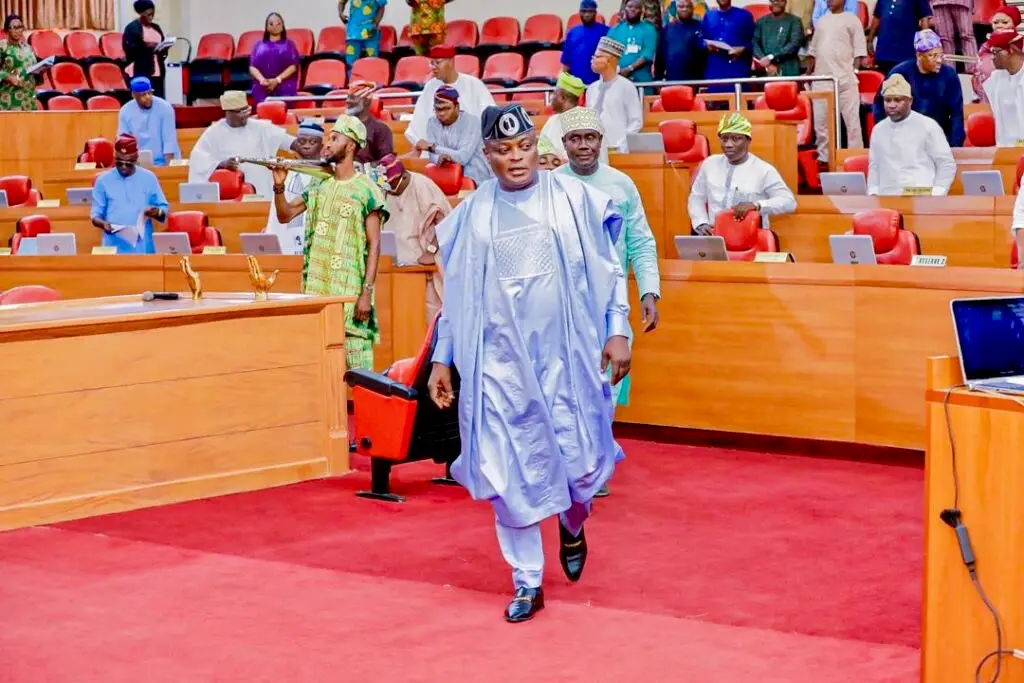
Yet, in a turn of events that has left political analysts and party loyalists alike stunned, Obasa has returned to the Assembly with a fully restored security detail.
Declaring, with unyielding conviction, “I’ve resumed, and I remain the Speaker of the Assembly. I’ve never been removed,” Obasa’s stance has thrown the Assembly into a state of constitutional and political ambiguity.
His assertion—that impeachment or removal must adhere to due process—has resonated with a segment of the political elite, even as his opponents see it as a blatant act of defiance.
This confrontation is more than a mere squabble between two political figures; it is emblematic of a deeper schism within the ruling All Progressives Congress (APC) in Lagos.
The dispute now centres on the legitimacy of leadership and the integrity of democratic processes within the Assembly—a theme that has repeatedly recurred in Lagos’ political history.
The High Stakes of Lagos Politics: Background and Historical Context
Lagos, often referred to as the commercial nerve centre of Nigeria, is no stranger to political turbulence. With its massive economic influence and diverse populace, the state’s political developments are closely watched not only within Nigeria but across the West African region.
Past episodes of legislative infighting, factional disputes, and power struggles have often culminated in significant political and administrative changes. Today’s crisis, however, is unprecedented in its complexity and the high stakes involved.
For decades, the Lagos State House of Assembly has been a microcosm of Nigeria’s broader political dynamics—where personal ambition, party loyalty, and constitutional mandates often clash.
In the current scenario, the divide is stark: while a majority faction now supports the leadership of Mojisola Meranda, Obasa’s return is bolstered by powerful figures in the APC, including those with close ties to President Bola Tinubu.
The political undercurrents here run deep, hinting at the possibility of high-level interventions that transcend the local political arena.
In past years, similar political crises have often been resolved behind closed doors or through dramatic court interventions. However, the current impasse, characterised by public declarations, mass security deployments, and a contentious legal battle, signals that this episode could redefine the contours of power within Lagos.
The implications for party unity and legislative authority are enormous, potentially affecting the direction of governance in one of Africa’s most dynamic states.
Behind the Scenes: The Power Play within the APC
At the heart of the crisis is an intricate power struggle within the ruling APC. Sources close to the matter reveal that a high-level meeting took place among influential party chieftains, including former governors from neighbouring states—Chief Bisi Akande from Osun and Aremo Olusegun Osoba from Ogun—as well as Governor Babajide Sanwo-Olu.
Held at the Lagos Assembly’s headquarters in Marina, the meeting was ostensibly aimed at finding a solution to the escalating leadership crisis.
The consensus among the participants was stark: they proposed that Obasa should resign upon his return, and that Mojisola Meranda should also step aside to allow for a new Speaker from the Lagos West Senatorial District. This was envisaged as a conciliatory gesture that could restore balance within the Assembly.
However, the arrangement quickly unraveled when Obasa returned with a reinforced security detail—a move that, according to insiders, was a direct result of a secret meeting held between Obasa and loyalists of President Tinubu in the early hours of Thursday morning.
The restoration of Obasa’s security, widely interpreted as a nod from the highest levels of the party leadership, has provided him with an aura of legitimacy. One APC insider described Obasa’s return as “a massive political statement,” indicating that the pendulum might be swinging in his favour.
With senior party figures possibly signalling their backing for Obasa, it appears that the faction supporting Meranda is now facing an uphill battle in a political terrain where loyalty and power go hand in hand.
It is within this intricate interplay of power that the role of the Governance Advisory Council (GAC) comes under intense scrutiny.
Critics argue that the GAC, which was brought in to mediate the crisis, has not only failed to resolve the matter but has also inadvertently deepened the rift within the party.
A prominent APC chieftain remarked that the GAC’s involvement has undermined its credibility and might even lead to its eventual disbandment.
The internal divisions highlighted by this crisis could have far-reaching implications for the APC’s cohesion, both in Lagos and nationally.
The Legal Battlefield: Courtroom Dramas and Constitutional Debates
As the political skirmish unfolds within the Assembly, another front has opened in the judicial arena. Obasa has taken his fight to the courts, filing suit number ID/9047GCM/2025 before the Lagos State High Court in Ikeja.
The suit challenges the constitutionality of the House’s sitting and proceedings during a recess—an action that took place without the Speaker reconvening the House or delegating his authority.
The court appearance was marked by a dramatic confrontation among legal representatives. Obasa’s counsel, Afolabi Fashanu, faced off against Mr Femi Falana, SAN, who represented the Assembly.
The courtroom became a stage for legal posturing, with another counsel, Abang Mkpandiok, challenging Falana’s authority and filing for a change of counsel.
In a scene reminiscent of a high-stakes legal drama, the presiding judge, Justice Yetunde Pinheiro, deferred the application for a change of counsel, citing non-compliance with the procedural rules.
This legal tussle is not merely a procedural matter. It reflects the deep-seated constitutional questions at the heart of the crisis—questions concerning the legitimacy of the Assembly’s decisions during a period of recess, and the proper process for the removal or reinstatement of a Speaker.
With the next hearing scheduled for March 7, 2025, all eyes remain on the courts to see whether they will restore order or further complicate an already volatile situation.
For legal experts and constitutional scholars, the outcome of this suit could set a significant precedent. It raises the issue of whether political manoeuvrings, carried out in the absence of due process, can be legally sanctioned under Nigeria’s constitutional framework.
Moreover, it serves as a stark reminder of how legal battles in the political arena often mirror—and sometimes amplify—the wider crises of governance and accountability.
Security Measures and the Atmosphere of Intimidation
No political crisis in Lagos is complete without the palpable presence of security forces. Following Obasa’s controversial return, the Lagos Assembly complex became a veritable fortress.
Heavy security measures were swiftly implemented, with state police, task force operatives, and armed mobile policemen taking up strategic positions around the complex.
Patrol vehicles lined the roads leading to the Assembly, while armed officers ensured that pedestrian access was strictly controlled. The presence of state task force vans and clusters of policemen not only underscored the seriousness of the situation but also hinted at the potential for unrest.
A female Assembly staff member, speaking on condition of anonymity, remarked on the unusual security presence, noting that the normally bustling complex was now eerily quiet—a reflection of the deep anxiety permeating the corridors of power.
Such a fortified security environment sends a clear message: the stakes are high, and any further escalation in the crisis could lead to significant disruptions.
For many Lagosians, the image of an empty Assembly, guarded by an overwhelming force of security personnel, is both a symbol of governmental instability and a portent of potential civil unrest.
The heightened security underscores the urgency with which the state must resolve the leadership impasse, lest the crisis spill over into broader public disquiet.
Political Intrigue: The Shadow of President Tinubu and Federal Interference
Amid the tumult, whispers of high-level intervention have grown louder. Indications that President Bola Tinubu may be directly or indirectly backing Obasa’s return have sparked a storm of speculation and debate.
One source, speaking to a reputable publication, claimed that the restoration of Obasa’s security detail was a deliberate act orchestrated by key APC leaders loyal to the President. This assertion, if true, would suggest that the presidential administration is not a passive observer but an active player in the Lagos Assembly crisis.
The involvement of the President in such a high-stakes political skirmish is not entirely unprecedented. Over the years, the Nigerian presidency has often taken an interest in resolving internal disputes within its ruling party—sometimes through overt intervention, and at other times via discreet behind-the-scenes manoeuvring.
In the current crisis, however, the suggestion that Tinubu’s “handwriting” is evident on the matter has added an extra layer of complexity.
Critics argue that if the President is indeed backing Obasa, it undermines the principles of neutrality and fairness that are supposed to govern legislative proceedings. Moreover, such interference could set a dangerous precedent, where executive power is seen as overriding the autonomy of the legislature.
For opposition parties and political analysts, this alleged intervention is yet another example of the delicate balancing act between party loyalty and democratic governance—a balancing act that, if tipped too far, could have dire consequences for the integrity of Nigeria’s political institutions.
Voices from Within: Lawmakers Speak Out
As the drama unfolds, a chorus of voices from within the Assembly has emerged, each reflecting differing perspectives on the crisis. Lawmaker David Setonji, representing Badagry Constituency II, has been an outspoken advocate for Meranda’s leadership.
In a statement delivered through his media aide, Posu Davies, Setonji categorically rejected Obasa’s claim to the speakership, affirming that, “Meranda is the recognised Speaker. Obasa was rejected, and he is not coming back as Speaker of the Lagos State House of Assembly.”
Yet, not all lawmakers share this view. An anonymous lawmaker, speaking on condition of anonymity due to the sensitivity of the issue, alleged that Obasa’s bold move could only have been bolstered by presidential backing.
“Obasa cannot be that confident if there is no one backing him,” the lawmaker asserted, suggesting that President Tinubu’s influence looms large over the current crisis.
The internal divisions within the Assembly are further compounded by the fallout from the recent peace meetings. While some lawmakers embraced the proposal for a fresh start—an arrangement that would see a new Speaker emerging from Lagos West—others vocally opposed the idea.
Their reluctance to cede ground underscores the entrenched factionalism that has long plagued Lagos politics. For many in the public and within the party, these conflicting stances are emblematic of a deeper crisis of confidence—a crisis that threatens to erode the very foundations of democratic accountability within the Assembly.
The Role and Relevance of the Governance Advisory Council
In an attempt to mediate the escalating crisis, the Governance Advisory Council (GAC) was convened. Comprised of seasoned political operators and ex-officials, the GAC was expected to bring an impartial perspective to an increasingly contentious situation. However, the council’s intervention has proven to be as divisive as it has been ineffectual.
The chairman of the GAC, Tajudeen Olusi, has stated that the advisory body provided its recommendations privately, advice that was intended to help the warring factions reach an amicable solution. Yet, the fact that these recommendations were rejected—and that the panel’s influence appears to be waning—has raised serious questions about its future role.
One influential APC figure lamented that the failure of the GAC to resolve the crisis would mark the end of its influence in Lagos politics, suggesting that the body might soon be disbanded altogether.
The GAC’s diminished role has broader implications for the APC and Nigerian governance. In an era when institutional checks and balances are increasingly under threat, the erosion of such advisory bodies represents not just a loss of influence but also a weakening of the mechanisms designed to ensure accountability and transparency in government.
For the people of Lagos—and for Nigerian democracy as a whole—the fate of the GAC may well serve as a harbinger of more profound institutional transformations in the years to come.
Courtroom Clashes and Constitutional Conundrums
The legal proceedings that have now become an integral part of this political saga are unfolding with all the intensity of a high-stakes courtroom drama. The suit filed by Obasa challenges the legality of the Assembly’s recess proceedings—a challenge that cuts to the very heart of legislative protocol and constitutional governance.
Inside the Lagos State High Court in Ikeja, the atmosphere was charged with tension as multiple legal teams vied for representation in what many see as a battle for the soul of the Assembly.
Obasa’s lawyer, Afolabi Fashanu, clashed with Mr Femi Falana, SAN, the representative for the Assembly, over the proper handling of the case. The confrontation escalated when another counsel, Abang Mkpandiok, demanded a change in representation—a move that was ultimately deferred by Justice Yetunde Pinheiro pending proper compliance with court procedures.
Legal experts have noted that the outcome of these proceedings could set an important precedent for the interpretation of legislative powers and the scope of constitutional processes in Nigeria.
If the court rules in favour of Obasa’s interpretation of due process, it could fundamentally alter the way legislative disputes are resolved in the future. Conversely, a ruling that upholds the Assembly’s actions during its recess could embolden factions within the legislature to bypass established protocols in future disputes.
For the common citizen, these legal battles may seem like arcane technicalities, but they carry profound implications for democratic governance. They raise critical questions about the balance of power between different branches of government and the extent to which political manoeuvrings can be insulated from judicial scrutiny.
In this light, the Lagos Assembly crisis is not merely a localised political dispute—it is a test case for the robustness of Nigeria’s constitutional democracy.
The Public and Political Aftermath: What Lies Ahead?
As Lagos grapples with this unprecedented political impasse, the reverberations are being felt across the entire Nigerian political landscape. The discord within the Lagos State House of Assembly has sparked widespread debates about leadership, accountability, and the rule of law—debates that are likely to influence political discourse well into the future.
For party loyalists, the crisis is a stark reminder of the fragility of political alliances. The internal divisions that have surfaced may prompt a reorganisation of power within the APC, as factions recalibrate their strategies in response to the fallout.
For opposition parties, the turmoil presents an opportunity to highlight perceived shortcomings in the ruling party’s approach to governance—a narrative that is already gaining traction in political circles.
Moreover, the crisis has significant implications for the state’s legislative agenda. With the Assembly’s proceedings now mired in legal and political disputes, the ability of lawmakers to address critical issues affecting Lagosians—ranging from infrastructural development to economic reform—could be severely compromised.
The public’s faith in the legislative process is being tested, and unless a clear resolution is reached, the spectre of political paralysis looms large.
Looking ahead, the coming weeks and months will be critical. The scheduled court hearing on March 7, 2025, is likely to serve as a pivotal moment in the crisis. In the meantime, the APC’s internal dynamics, the role of the GAC, and the influence of President Tinubu will continue to be subjects of intense scrutiny.
The outcome of this saga will not only determine who ultimately holds the gavel in the Lagos State House of Assembly but may also redefine the political landscape in one of Nigeria’s most influential states.
Conclusion: A Defining Moment for Lagos and Nigeria
In conclusion, the ongoing leadership crisis in the Lagos State House of Assembly is more than a fleeting political skirmish—it is a defining moment that encapsulates the perennial struggle between tradition and transformation, power and principle.
With Mudashiru Obasa’s bold return challenging the legitimacy of Mojisola Meranda’s speakership, Lagos finds itself at the epicentre of a battle that transcends individual ambitions and strikes at the heart of democratic governance.
From the corridors of the Assembly to the tense courtroom dramas and the high-level interventions whispered about in political circles, every facet of this crisis is imbued with implications for the future of Lagos and, by extension, Nigerian politics.
The decisions made in the coming weeks—whether in the halls of justice or in the internal deliberations of the APC—will determine whether the principles of due process and accountability prevail, or whether partisan ambitions will subvert the democratic order.
The true test of any political system is not measured in moments of calm, but in its ability to weather storms such as this. Lagos, with its vibrant energy and dynamic political culture, stands as a microcosm of the broader challenges and opportunities that face Nigeria today.
The outcome of this crisis will not only resolve a leadership dispute—it will set the tone for how democratic institutions can adapt, reform, and ultimately thrive in the face of adversity.
For now, the Assembly remains divided, the courts are set to deliberate, and the public watches with bated breath. What is clear is that this is a battle for the soul of Lagos politics—a battle that will be studied, debated, and remembered for years to come.
Atlantic Post remains committed to bringing you the most comprehensive, accurate, and engaging analysis of the events shaping our nation. Stay tuned for further updates as this crisis unfolds and for expert insights into the evolving dynamics of Lagos politics.
- Additional reports by Osaigbovo Okungbowa, Kalada Jumbo, Taiwo Adebowale and Omonigho Macalualay