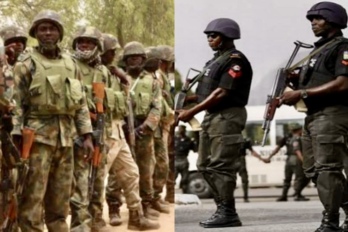
OWERRI, Nigeria — A fresh controversy has trailed a police operation in Owerri, Imo State, after the Rule of Law and Accountability Advocacy Centre (RULAAC) called for an immediate and transparent investigation into an incident in which soldiers reportedly intercepted armed police operatives they initially believed were kidnappers. The episode, said to have unfolded near Orji Flyover on the evening of 12 July 2026, has revived concerns about covert policing tactics, public safety and accountability in a state where security operations have repeatedly drawn scrutiny.
According to RULAAC, eyewitness accounts suggest that the officers were travelling in a white bus, rounded up several young men by the roadside and forced them into the vehicle without clearly identifying themselves or explaining the purpose of the arrests.
The group said the manner of the operation created panic among passers-by, with some believing they were witnessing a kidnapping. RULAAC said the episode may have “led bystanders to believe that a kidnapping was in progress” and urged “a thorough, impartial, and transparent investigation.”
The rights group said the situation escalated only after members of the public alerted soldiers at a nearby checkpoint, prompting the troops to stop the vehicle under the impression that they were confronting kidnappers.
A potentially deadly confrontation was reportedly avoided when the occupants identified themselves as police officers, after which some of the young men were released.
RULAAC warned that if the accounts are confirmed, the incident would point to serious operational lapses capable of endangering civilians and security personnel alike.
The incident also raises a direct legal and procedural question. In PLAC’s summary of the Nigeria Police Act, police officers carrying out a search are expected to be in uniform, wear a visible police identity card, and state their name, station, object and grounds for the search.
That safeguard is central to distinguishing lawful policing from conduct that can resemble abduction in the eyes of the public.
RULAAC said it had already brought the matter to the attention of the Commissioner of Police in Imo State, who reportedly said the matter was being addressed.
The group wants investigators to establish the identities of the officers involved, determine whether the operation complied with the Constitution, the Nigeria Police Act and the Administration of Criminal Justice Law, and decide whether the rights of the detained young men were breached.
It also wants the outcome made public and any culpable officer sanctioned.
Beyond the immediate incident, the case lands in a state where policing has been under renewed public pressure. Amnesty International, in a February 2026 briefing on Imo State’s anti-kidnapping unit in Owerri, documented alleged human rights violations including torture, arbitrary detention and extortion.
That backdrop gives added weight to RULAAC’s warning that operations which look opaque or heavy-handed risk deepening public distrust rather than improving security.
For residents of Imo State, the central issue is no longer just whether the officers were police or kidnappers. It is whether law enforcement agencies can conduct high-risk operations in a way that is lawful, visibly identifiable and professionally coordinated enough to avoid confusion, panic and a possible cross-fire between security forces.
Until the facts are officially established, the episode stands as another test of policing standards in a region already burdened by fear, suspicion and a demand for accountability.
Follow us on our broadcast channels today!
- WhatsApp: https://whatsapp.com/channel/0029VawZ8TbDDmFT1a1Syg46
- Telegram: https://t.me/atlanticpostchannel
- Facebook: https://www.messenger.com/channel/atlanticpostng