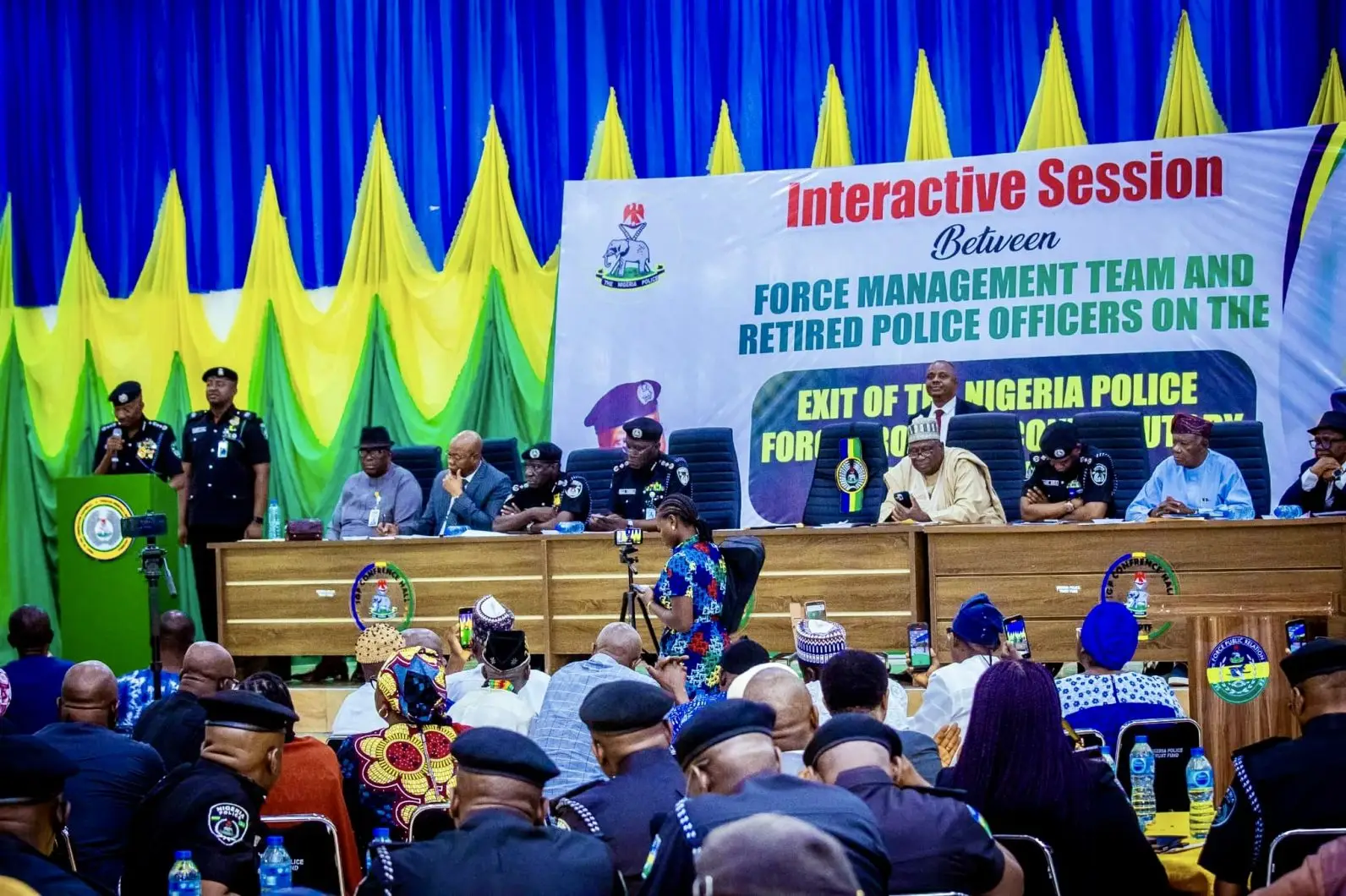
ABUJA, Nigeria — In an unprecedented move aimed at reshaping the future of police welfare, Inspector-General of Police (IGP) Kayode Adeolu Egbetokun convened an interactive session with retired police officers and pension stakeholders at the Police Resource Centre in Jabi, Abuja on Tuesday, 11th February 2025.
This high-profile gathering, which attracted key figures from the Nigeria Police Force and its pension bodies, has ignited vigorous debate on the sustainability and fairness of the nation’s contributory pension scheme.
A Session Marked by Urgency and Determination
The event, hosted by the IGP, emerged as a timely response to growing concerns over the contributory pension scheme that has long been a source of dissatisfaction among retired officers.
With years of service and sacrifice, Nigeria’s police personnel have grown increasingly vocal about the inadequacies of the current pension structure.
The session served as a critical forum for retired officers and senior stakeholders to share their experiences, voice their grievances, and propose reforms that could secure a dignified retirement for those who have safeguarded the nation.
Central to the discussions was the pressing need to overhaul a system that many critics argue fails to meet the financial security and welfare needs of retired officers and their families.
The IGP, in his remarks, underscored the necessity of addressing these issues head-on to build a sustainable framework that honours the contributions of Nigeria’s law enforcement veterans.
Global Perspectives and the Imperative for Reform
DIG Hashimu Argungu, (Rtd), the Chairman of the Police Service Commission, delivered a comprehensive review of global trends in retirement, pension systems, remuneration, and compensation. His presentation shed light on international best practices and emerging trends that have successfully reformed pension structures in various jurisdictions.
Such comparative analysis is vital in the Nigerian context, where the contributory scheme is increasingly viewed as archaic and insufficient.
Argungu’s insights were a call to action for a system that mirrors global standards. In many advanced economies, robust pension reforms have not only secured the financial future of law enforcement personnel but have also boosted morale and enhanced public confidence in security services.
The deliberations at Abuja thus resonated with a broader international narrative – that of modernising pension systems to reflect contemporary economic realities and the evolving nature of retirement.
The Contributory Pension Scheme Under Scrutiny
At the heart of the session was a critical evaluation of the current contributory pension scheme. Under this system, the retirement benefits of police officers are directly linked to their contributions during service.
However, critics argue that this model falls short of ensuring adequate post-retirement income, particularly when juxtaposed with the demands of modern living and the rising cost of living. The IGP’s remarks acknowledged these challenges, pointing to the urgent need for recalibration.
Several factors contribute to the growing dissatisfaction among retired officers. Firstly, the inflationary pressures and fluctuating economic conditions have eroded the real value of pension payouts.
Secondly, the system’s inherent design has often resulted in a pension that is not commensurate with the risks and sacrifices endured during active service.
As a result, there is mounting pressure on the police force to revisit and reform the pension framework to guarantee a more equitable distribution of benefits.
Voices from the Field: Retired Officers Speak Out
Retired officers, who have dedicated their lives to the safety and security of the nation, have expressed a mixture of hope and frustration regarding the current pension arrangements.
AIG Paul Ochonu (Rtd), the National President of the Association of Retired Police Officers, was among those present at the session. His participation underscored the deep-rooted concerns held by many former officers who feel that their years of service are not being adequately recognised in the retirement benefits they receive.
For many retired officers, the session provided an invaluable platform to articulate their experiences and advocate for tangible reforms. Their testimonies painted a picture of a system in desperate need of change – one where the legacy of dedicated service is not undermined by financial insecurity and systemic neglect.
An Institutional Commitment to Welfare and Dignity
The IGP’s reiteration of the force’s commitment to honouring its officers, both in service and in retirement, marks a significant moment in Nigeria’s law enforcement narrative. The assurance that those who have served will receive the respect and benefits they deserve resonates deeply with many who have long advocated for pension reforms.
By promising to address the shortcomings of the contributory scheme, the IGP not only demonstrates leadership but also signals an institutional willingness to embrace change.
This commitment is further bolstered by the presence of senior figures from the Force Management Team and other key stakeholders. Their collective endorsement of reform highlights the recognition that a robust pension system is integral not just to the welfare of retired officers, but also to maintaining a motivated and resilient police force.
The Political and Economic Dimensions
Beyond the immediate welfare concerns, the pension reforms carry significant political and economic implications. In Nigeria, where the police force plays a central role in national security, ensuring the financial security of retired officers is a matter of public interest.
An effective pension system enhances the credibility of the institution and fosters a culture of accountability and respect within the ranks.
Politically, the call for reform reflects broader debates on public sector compensation and social security. The discussions in Abuja have drawn attention from policymakers and economic experts alike, who recognise that pension reforms can have far-reaching impacts on national fiscal policy and public sector performance.
By aligning the pension scheme with global best practices, Nigeria stands to not only improve the welfare of its retired police officers but also to set a benchmark for other public sector pension systems.
A Critical Look at the Road Ahead
While the session at Jabi marks a promising step towards reform, critics caution that translating dialogue into action remains the biggest challenge. The complexities inherent in overhauling a national pension scheme are manifold, involving legislative changes, budget reallocations, and a restructuring of long-entrenched administrative processes.
Moreover, there is a palpable sense of urgency among retired officers and pension advocates who fear that any delay could exacerbate the financial vulnerabilities of those who have served.
It is imperative, therefore, that the insights garnered during the session are swiftly incorporated into actionable policy reforms. The road ahead demands not only political will but also a concerted effort to bridge the gap between policy formulation and implementation.
Conclusion: A Turning Point for Nigerian Law Enforcement?
The interactive session hosted by IGP Kayode Adeolu Egbetokun stands as a landmark moment in the ongoing debate over police pensions in Nigeria. It is a clarion call for a reimagined pension system that not only secures the financial future of retired officers but also honours their lifelong dedication to public service.
With influential voices like DIG Hashimu Argungu (Rtd) and AIG Paul Ochonu (Rtd) lending their expertise, there is cautious optimism that a sustainable and just pension framework is within reach.
However, the true measure of success will be determined by the speed and efficacy with which these discussions are transformed into concrete reforms. For now, the session has succeeded in spotlighting a critical issue and galvanising a collective resolve for change.
As Nigeria moves forward, the welfare of its police veterans must remain at the forefront of policy debates – a commitment that promises to secure both the legacy and the future of its law enforcement community.
In a nation where public service is both revered and challenging, the promise of a reformed pension scheme is more than a bureaucratic necessity – it is a tribute to the spirit and sacrifice of those who have safeguarded our communities.
The Atlantic Post will continue to monitor developments closely as the drive for reform gathers pace, hopeful that this session marks the dawn of a new era in Nigerian law enforcement welfare.
Additional report by Suleiman Adamu, Atlantic Post Senior National Security Correspondent.