A new Hausa backlash in Kano is not just about a viral insult. It is forcing an older and more uncomfortable argument into the open, namely that the Hausa-Fulani label has long been read by critics as a political arrangement built on conquest, elite incorporation and enduring imbalance.
The uproar in Kano over the comments attributed to Rukayya Umar Gadon Kaya has tapped into a much larger crisis than the conduct of one government aide. It has reopened a bruising argument over who defines northern identity, who benefits from it, and who pays the price when insecurity tears rural communities apart.
For many Hausa critics, this is no longer a debate about semantics. It is a reckoning with a political order they believe has hidden domination inside a shared ethnic label.
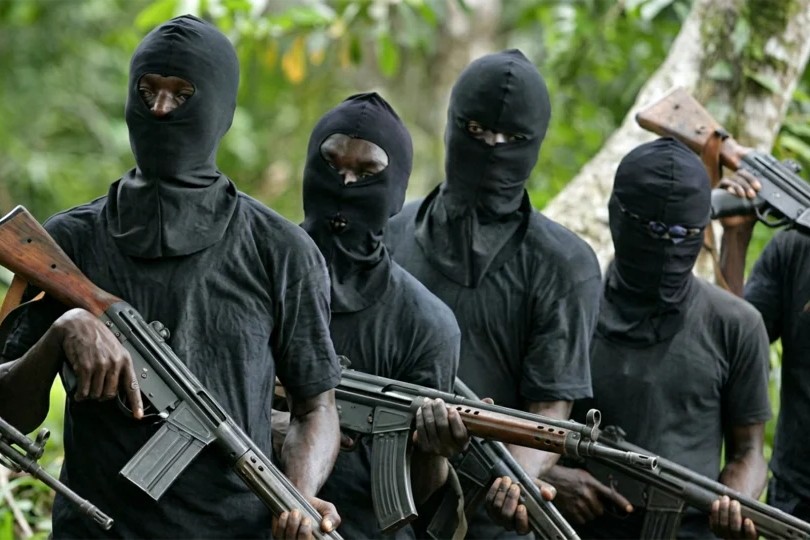
The current anger is being sharpened by a security crisis that has made the northwest one of the most dangerous parts of Nigeria, with banditry, kidnappings and rural attacks continuing to devastate villages and farmland.
Reuters reported in July 2025 that killings by bandits and insurgents in the first half of that year already exceeded the total for all of 2024, while the military remained stretched across multiple fronts.
What makes the present agitation so potent is the sense that the old Hausa-Fulani bargain has stopped describing reality. The label was never merely cultural. It was political from the beginning, a way of organising rule, justifying authority and presenting a ruling coalition as natural rather than constructed.
That is why the present rejection matters. Far from being simply a cry of wounded pride, it is a challenge to an inherited order that many now see as having blurred the line between coexistence and subordination.
The question raised by the new Hausa mood is blunt: when does a shared identity cease to be a description and become a cover for unequal power? Scholarly work on the Sokoto state and northern identity suggests that the answer has long been tied to politics rather than biology.
History gives this argument its force. Encyclopaedia Britannica records that Usman dan Fodio was born in December 1754 in Maratta, Gobir, in Hausaland, and that his family traced its roots to the Toronkawa clan, which had emigrated from Futa-Toro in Senegal around the 15th century.
Britannica also states that dan Fodio’s jihad between 1804 and 1808 created the Fulani empire in what is now northern Nigeria. In other words, the founding political myth of modern northern authority is inseparable from a Fulani-led religious and military upheaval that overthrew the pre-jihad Hausa order.
That legacy was not only military. It was cultural and administrative too. Cambridge scholarship on the Sokoto Caliphate shows that the Fulani rulers who emerged from the jihad assimilated themselves into Hausa culture and, in some cases, described themselves as Hausa or Hausawa.
That matters because it undercuts any claim that the Hausa-Fulani fusion was ever a simple, equal merger. It was an incorporation into the language, symbols and institutions of Hausa society under a new ruling elite.
The result was a fused identity that became politically useful, but also historically unequal. The very fact that Fulani rulers adopted Hausa speech and court culture suggests that the label “Hausa-Fulani” was a mechanism of governance as much as a social description.
The wider West African context strengthens that interpretation. The nineteenth century was shaped by a series of Islamic reform and jihadi movements across the Sahel and Western Sudan, and Cambridge describes these as movements that brought about major social and political change.
That broader reformist climate helps explain why Fulani-led movements from places such as Futa-Toro and related West African centres are often linked in scholarship to a larger historical current of clerical reform, state building and military expansion.
In the Nigerian case, the Sokoto jihad became the decisive event that reordered Hausaland and created the political conditions for the later emirate system.
This is where the contemporary Hausa revolt becomes more than an emotional reaction. It is built on the belief that the north’s ruling coalitions still draw legitimacy from a historical structure in which Fulani political power remains entrenched while Hausa communities carry the burdens of violence, displacement and neglect.
That belief is not arising in a vacuum. AP reported that in northwestern Nigeria, communities often accuse herders, mostly of Fulani origin, of grazing on farms and destroying crops, while authorities say attacks are common amid land and water disputes.
AP also noted that violence in the region has become deadlier in recent years, with some herders reportedly taking up arms. Whatever the precise makeup of any single armed group, the public perception in many villages is now inseparable from ethnic memory.
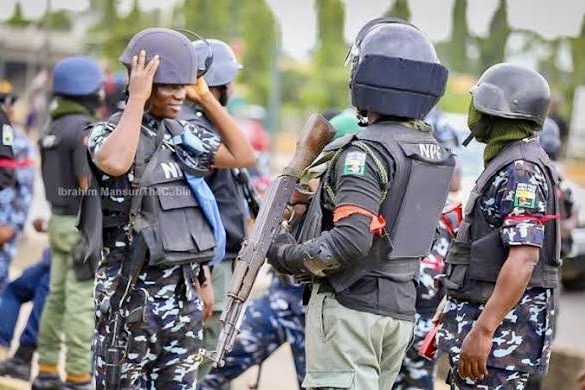
The insecurity crisis has made this perception politically explosive. Reuters said Nigeria’s military is fighting Boko Haram in the north-east, banditry and kidnappings in the north-west, herder attacks in the central states and secessionist violence in the south-east all at once.
That stretched security architecture has left rural Hausa communities exposed to raids, ransom kidnappings and repeated attacks on farming livelihoods. When people live with that kind of pressure for years, identity becomes a language for interpreting danger.
The grievance is no longer only that the state has failed. It is that those who are seen to benefit from the old political arrangement are also the ones being accused, fairly or unfairly, of failing to halt the violence.
The most serious danger now is that this backlash could harden into a simplistic ethnic verdict. It is understandable that many Hausa communities read the label “Hausa-Fulani” as a mask for domination.
It is also true that the northwest has suffered grievously from raids, kidnappings and attacks associated in public discourse with Fulani pastoralist networks.
But the region is also home to complex social ties, intermarriage and layered identities that cannot be erased by slogan politics.
Cambridge’s account of Fulani rulers describing themselves as Hausa/Hausawa is a reminder that the boundary between the two identities has been porous for generations. The history is real, but so is the entanglement.
That is why the debate should be understood as a struggle over power, not a licence for ethnic simplification.
The Hausa challenge is strongest when it demands honesty about who holds influence, who controls institutions, and why rural insecurity has persisted for so long. It becomes weaker if it drifts into blanket ethnic blame.
The more persuasive argument is that a fused political identity has allowed elites to benefit from the symbolism of unity while ordinary communities absorb the violence of collapse.
In that reading, the real issue is not merely Fulani ethnicity. It is the political economy of protection, patronage and silence.
There is also a deeper historical grievance here about erasure. Scholars have noted that the conquest and the later emirate order helped overwrite older Hausa political memories.
That is why today’s agitation is not only about present insecurity. It is also about reclaiming a pre-jihad history that many Hausa critics believe has been buried beneath the prestige of the Sokoto order.
The demand is for memory as much as for power. A people who feel their history has been overwritten will eventually begin to question the political language built on that overwrite.
The implications for northern politics are serious. If the Hausa rejection of the old label continues to grow, it could reshape electoral bargaining, emirate legitimacy and the language of representation across the region.
It could also force Fulani elites to confront an uncomfortable truth: that the old fusion no longer guarantees loyalty if communities believe the fusion serves one side more than the other.
The political class can no longer assume that a historical coalition will survive modern insecurity automatically. It will survive only if it is made credible again through security, justice and genuine inclusion.
That is the real warning from Kano. The Hausa uprising in language and sentiment is a signal that the old northern settlement is under strain, not simply an ethnic tantrum. A label that once unified elites is now being interrogated by the people most exposed to the failures of that elite order.
If the ruling class dismisses the agitation as noise, the noise will grow louder. If it responds with truth, reform and security, the region may yet avoid a deeper fracture. The crisis is not only that identities are shifting. It is that power has been hiding in plain sight for too long.
Follow us on our broadcast channels today!
- WhatsApp: https://whatsapp.com/channel/0029VawZ8TbDDmFT1a1Syg46
- Telegram: https://t.me/atlanticpostchannel
- Facebook: https://www.messenger.com/channel/atlanticpostng