Mike Arnold’s March 2026 memorandum to U.S. President Trump warns that “Nigeria’s constitution is a fraud” and urges new elections and a constitution “written by the people”.
In his exposé “The Blood Mineral Economy of Nigeria”, Arnold (a U.S. activist and author) portrays Nigeria as a destabilised state ruled by an “Islamic caliphate,” where jihadis and corrupt politicians jointly loot the country’s wealth.
The Nigerian Indigenous Nationalities Alliance for Self-Determination (NINAS), led by Tony Nnadi, has now issued a rejoinder to Arnold’s analysis.
In a detailed March 2026 statement, Nnadi challenges Arnold’s focus and blames the 1999 constitution itself for Nigeria’s bloodshed.
He argues that true reform requires scrapping this constitution and reconfiguring the Union – not merely new elections.
Arnold’s Analysis: “Constitution is a Fraud”
Mike Arnold’s conservative critique of Nigeria centres on religion and governance. In his widely circulated memo and related posts, he calls the 1999 Constitution the product of a military dictator and declares it illegitimate.
He points out that the document mentions “Sharia 73 times.” It never mentions Christianity, which is a stark asymmetry. The document “centralises all wealth under Northern Islamic control.”
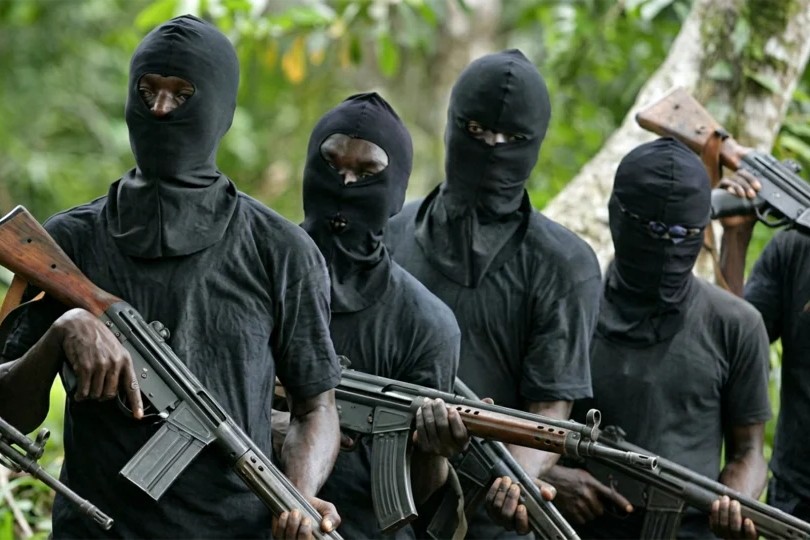
In Arnold’s telling, Nigeria is “not a democracy – it’s a caliphate” ruled by a rubber-stamp parliament. He warns that jihadist violence is rampant: without U.S. intervention, Nigeria could spawn “the largest terror state in history”.
Arnold’s prescription is to promptly hold a free, internationally monitored election. He suggests drafting a new constitution “by the people, ratified by the people”.
Crucially, he says Nigerians should then “decide whether they stay united or restructure”. In other words, Arnold explicitly leaves open the option of dismantling the Nigerian federation if voters choose.
His narrative has gone further. In his January 2026 book Epicenter: Nigeria, Radical Islam, and the War for Global Order, he claims an independent Biafra (the Southeast) could become “Africa’s shining beacon”.
He paints the former Biafran heartland as rich in oil, minerals, ports, and an educated populace. He views it as a region that would flourish once “the stranglehold is released”.
Conservative commentators have praised Arnold’s alarm, but some analysts warn his view oversimplifies Nigeria’s complex problems.
One review notes that Arnold highlights genuine crises. However, his account “risks oversimplifying Nigeria’s multifaceted conflicts. These involve jihadist groups, banditry, and inter-ethnic tensions”.
Nigerian officials generally reject the language of religion and secession. For example, Abuja labels attacks as criminal banditry. They avoid framing it as ethno-religious war.
Still, Arnold’s influence is clear among diaspora Christians and Western policymakers: U.S. lawmakers recently presented a report on Nigeria’s Christian persecution. They recommended sanctions and a security pact with Nigeria. The aim is to disarm Fulani militants.
Arnold was invited to testify at a Congress hearing. However, no official U.S. policy has yet proposed breaking up Nigeria’s federal system.
NINAS activists have been calling for a “union reset” under slogans like “Taking Back Our Sovereignty” (pictured).
Tony Nnadi is a NINAS co-convener and a renowned advocate from the southeast. He says Arnold is partly right about Nigeria’s crisis. Yet, he points at a different culprit. In Nnadi’s view, the 1999 Constitution’s excessive centralisation is the root cause of the violence and plunder.
He calls it a “worse-than-apartheid unitary constitution” that was imposed on a diverse federation. In particular, he cites the constitution’s Second Schedule. The “68-Item Federal Exclusive Legislative List” explicitly reserves all key wealth and security matters to the federal government.
Nnadi notes that this list includes “Arms, ammunition and explosives”. It also includes “Mines and minerals, including oil fields, oil mining, [and] natural gas”. In other words, only Abuja can legislate on weapons and on oil, gas and mineral wealth.
He charges that this has led to “the economic rape of Nigeria”. A cabal in Abuja effectively takes all oil and minerals from the regions. They even control the power to arm local people.
This, Nnadi argues, produces “security nightmares” and vast corruption at the centre, with heavy costs in lives and livelihoods. Scholars have long criticised this imbalance. One academic paper observes, “state power… has been maintained solely by the federal government”. This maintenance of power leads citizens to clamour for devolution and constitutional review.
In his rejoinder, Nnadi uses strong language. He depicts an “Invader-Fulani Caliphate conquest machinery”. This machinery has imposed the bad constitution. It now “remains the ultimate controller of the illicit ‘Federal Government of Nigeria’”.
In his account, nominal changes of presidents or parties in Abuja do not alter the real power. By keeping minerals and security under one roof, the federal elite, which he often labels “Fulani” or “Northern”, monopolises the country’s assets. This is done to the exclusion of the federating units and peoples of Nigeria.
He draws a grim analogy to South Africa’s apartheid. Just as that regime had to be overthrown for real freedom. Nnadi says Nigeria’s constitution and its enforcers must be “defeated, toppled, and ousted” to save the country.
Nnadi offers a stark solution. He argues Nigeria is in a state of emergency and traditional politics won’t fix it.
“The first urgent step… is to suspend the plans for further national elections in 2027,” he declares.
He believes Nigeria should not vote under a “fraudulent” constitution. Instead, the country must begin an immediate “transitioning process for union reconfiguration”. This would involve a negotiated breakup or restructuring.
Nnadi explicitly cites South Africa’s 1990 transition as a model. That country set aside its apartheid constitution. It then sat down to negotiate a new order.
In parallel, Nnadi points to NINAS’s own Five-Point Proposition (December 2020). This proposition outlines a framework for a “union reset.” It aims to reorganise Nigeria’s federal structure.
He claims this plan is a ready-made template that U.S. policy could even align with, urging the U.S. to push Nigeria toward it.
In summary, Nnadi’s rejoinder sharpens Arnold’s critique into a call for constitutional revolution. He agrees that Nigeria is in collapse but blames a rigged constitution, not just bad officials.
He says ongoing elections under the 1999 text will only be more of the same. They must be shelved in favour of constitutional renegotiation.
Unlike Arnold, who at least nominally works through elections and new laws, Nnadi takes a different approach. He advocates rejecting the current system entirely.
- Exclusive Federal Control: Nigeria’s 1999 constitution puts arms and mineral resources on the federal legislative list. Nnadi argues this centralisation causes “economic rape” and violence.
- Arnold’s Call: U.S. activist Mike Arnold labelled the constitution a “fraud” that benefits northern Islamist elites. He urged free elections and a new people’s constitution. He would even permit Nigerians to “restructure” or break apart the country after voting.
- Nnadi’s Response: Tony Nnadi of NINAS criticises the idea of more elections under the same system. He demands an immediate “union reconfiguration”, suspending 2027 polls, and toppling the constitution’s authors, as the only salvation.
- Biafra Factor: Both men touch on the Southeast. Arnold claims an independent Biafra could be a “shining beacon” for Africa. Nnadi’s stance similarly empowers self-determination, essentially endorsing separation or full autonomy for Nigeria’s peoples.
- Critics’ View: Observers caution that this debate may be oversimplifying. Some Nigerian analysts say the situation is complex. They argue that Arnold’s alarmist tone and calls for overthrow could be destabilising. As one critic notes, such narratives tend to “oversimplify Nigeria’s multifaceted conflicts”.
The Nnadi rejoinder has drawn mixed reactions. Pro-restructuring activists praise it as a logical extension of Arnold’s critique. They highlight long-standing grievances in the Niger Delta and Middle Belt.
The message resonates with Christian and ethnic groups who have long accused successive governments of “Fulani hegemony”.
Nigerian government and ruling-party media denounced both Arnold and Nnadi. They criticized them as meddling outsiders. Arnold is a foreign author. They labeled Nnadi as a rebel. He is erroneously linked to separatist networks.
Many Nigerians remain wary: while acknowledging security failures, most want reform through elections and legislation, not dissolution of the nation.
Meanwhile, international focus on Nigeria is growing. In Washington, a recent Congressional report on Nigeria’s religious violence called on the Buhari and Tinubu administrations. It urged them to clamp down on jihadist militants. They were also urged to repeal Sharia laws. But it did not echo Nnadi’s call for constitutional overhaul.
U.S. lawmakers have imposed sanctions on some Fulani militia leaders and urged more aid conditionality. Whether this pressure will translate into Nigeria rethinking its centralised constitution remains unclear.
In the Conservative view: The Atlantic Post’s sources emphasise that the NINAS does raise valid alarms about Nigeria’s security and resource conflicts. However, analysts must weigh the risks: replacing the constitution by force could unleash chaos.
As this story unfolds, the key questions remain. Can Nigeria heal via reform and democracy? Or will it be driven into a crisis that even constitutional change can’t remedy?
Follow us on our broadcast channels today!
- WhatsApp: https://whatsapp.com/channel/0029VawZ8TbDDmFT1a1Syg46
- Telegram: https://t.me/atlanticpostchannel
- Facebook: https://www.messenger.com/channel/atlanticpostng