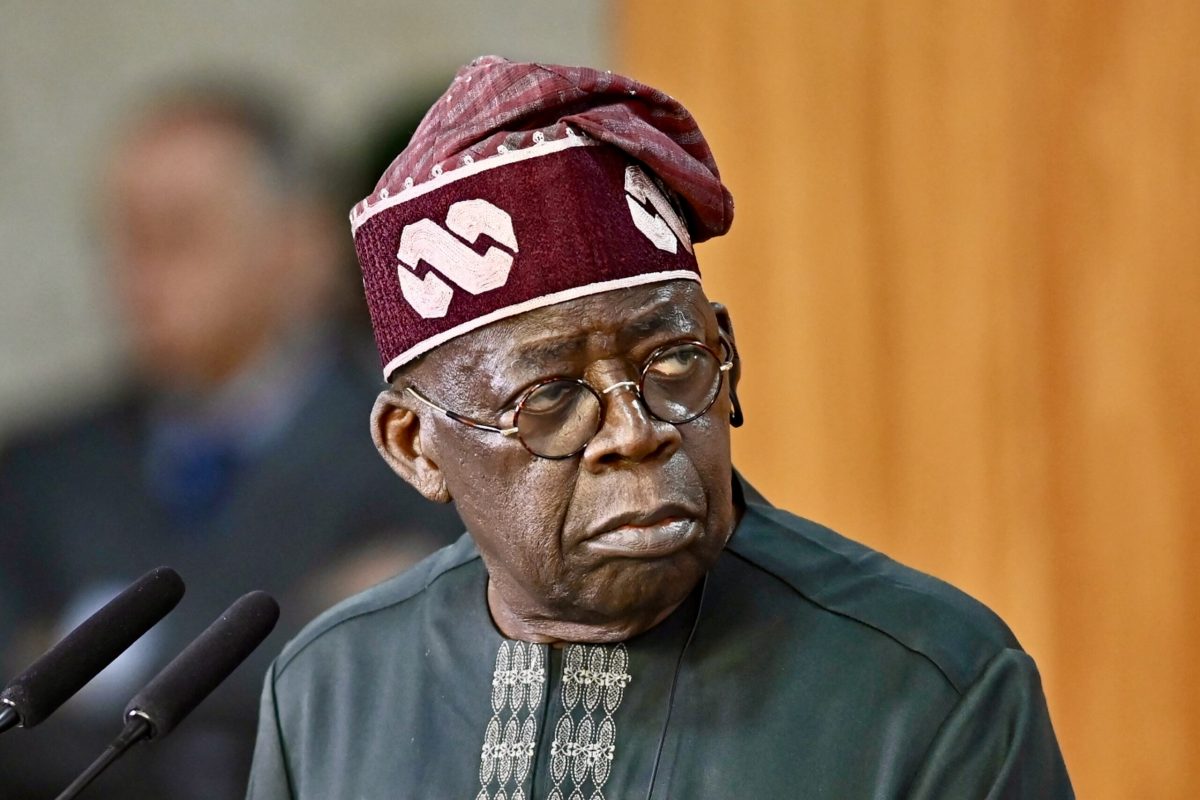
The National Dialogue on Strengthening Nigeria’s Democracy emphasised the need for robust institutions, political integrity, and active citizenship to address economic disparities and enhance governance. Key speakers, including Dr. Mahamudu Bawumia and Peter Obi, called for electoral reforms and civic engagement to ensure accountability and foster a productive, equitable Nigeria.

Explore the National Dialogue on Nigeria’s democracy, where leaders and citizens debated reforms, trust in institutions, and the fight against poverty to build a better future. Explore the National Dialogue on Nigeria’s democracy, where leaders and citizens debated reforms, trust in institutions, and the fight against poverty to build a better future. Explore the National Dialogue on Nigeria’s democracy, where leaders and citizens debated reforms, trust in institutions, and the fight against poverty to build a better future. Explore the National Dialogue on Nigeria’s democracy, where leaders and citizens debated reforms, trust in institutions, and the fight against poverty to build a better future.


ABUJA, Nigeria — The National Dialogue on Strengthening Nigeria’s Democracy: Pathway to Good Governance and Political Integrity, held at the Intercontinental Hotel in Abuja, has ignited a fervent discourse on the trajectory of democracy in Nigeria.
The event, graced by distinguished personalities, including Dr. Mahamudu Bawumia, former Vice President of Ghana, and Peter Obi, former Governor of Anambra State, served as a crucible for examining the nation’s democratic ethos and the imperative of robust institutions.
A Confluence of Democratic Minds
The dialogue convened a diverse array of stakeholders—politicians, academicians, civil society leaders, and international observers—united by a common goal: to dissect and fortify the pillars underpinning Nigeria’s democracy.
The choice of Abuja, Nigeria’s political epicentre, underscored the event’s significance in shaping national discourse.
Dr. Mahamudu Bawumia: A Paragon of Democratic Principles
Dr. Bawumia’s keynote address was a masterclass in democratic integrity. He recounted his experience in Ghana’s 2024 presidential election, where he conceded defeat to John Dramani Mahama before the final results were announced. This act of statesmanship not only upheld democratic principles but also reinforced Ghana’s reputation for political stability.
Dr. Bawumia emphasised that democracy transcends the mere act of voting; it encompasses the cultivation of institutions that command trust and respect the collective will of the people.
Peter Obi: A Clarion Call for Institutional Integrity
Peter Obi’s remarks resonated deeply with the audience. He highlighted the stark reality that approximately 100 million Nigerians live in absolute poverty, with an additional 150 million experiencing multidimensional poverty.
Obi questioned the efficacy of Nigeria’s democratic system in addressing these pressing issues, urging a reevaluation of institutional frameworks to ensure accountability, justice, and fairness.
He invoked Nelson Mandela’s words: “As long as poverty, injustice, and inequality exist, none of us can truly rest,” challenging leaders to deepen democratic practices for a better future.
The Nigerian Republican System: A Historical Perspective
Nigeria’s journey as a republic has been tumultuous. After gaining independence in 1960, the nation became a republic on October 1, 1963, with Nnamdi Azikiwe as its first president. However, the nascent republic was short-lived, succumbing to a military coup in January 1966.
This set a precedent for military interventions, with subsequent republics in 1979 and 1993 also being overthrown. It wasn’t until 1999 that Nigeria entered its Fourth Republic, which has endured despite numerous challenges.
The Fragility of African Democracies
The resurgence of military coups across Africa underscores the fragility of the continent’s democracies. Dr. Bawumia noted that for democracy to thrive, it must be underpinned by trust, robust institutions, and an unwavering commitment to the welfare of the populace.
He argued that the mere conduct of elections is insufficient; the true measure of democracy lies in the strength and integrity of its institutions.
Building Trust Through Strong Institutions
A recurring theme at the dialogue was the necessity of building institutions that not only function effectively but also command the trust of the citizenry.
Participants contended that institutions such as the judiciary, electoral bodies, and anti-corruption agencies must operate independently and transparently to foster public confidence.
Without such trust, the legitimacy of the democratic process remains in jeopardy.
Economic Disparities: A Threat to Democratic Stability
The staggering levels of poverty in Nigeria present a formidable challenge to democratic stability. With a significant portion of the population unable to meet basic needs, disillusionment with the democratic process is palpable.
Peter Obi emphasised that democracy loses its essence if it fails to address fundamental needs such as health, education, and poverty alleviation. He called for a paradigm shift towards governance models that prioritise economic and social progress.
Active Citizenship: Holding Leaders Accountable
The dialogue underscored the role of active citizenship in holding leaders accountable. Speakers advocated for increased civic engagement, where citizens are not mere spectators but active participants in the democratic process.
This involves demanding transparency, challenging injustices, and participating in policy formulation. Such engagement is pivotal in ensuring that leaders remain answerable to the people they serve.
Youth Empowerment: The Vanguard of Nation-Building
Nigeria’s burgeoning youth population was identified as a critical asset in the quest for a functional democracy. Empowering young people through education, skill development, and inclusive policies was deemed essential.
The dialogue called for creating platforms that allow the youth to contribute meaningfully to nation-building, recognising them as drivers of innovation and change.
The Imperative of Political Integrity
Political integrity emerged as a cornerstone of the discussions. Dr. Bawumia and Peter Obi both stressed the importance of ethical leadership, where leaders prioritise the common good over personal or partisan interests.
They argued that integrity in leadership fosters trust and sets the tone for governance that is responsive and accountable.
The Role of Civil Society and Media
The contributions of civil society organisations and the media were acknowledged as vital in strengthening democracy. These entities serve as watchdogs, holding the government accountable and ensuring that the voices of marginalised groups are heard.
The dialogue called for safeguarding the independence of the media and supporting civil society initiatives that promote democratic values.
Challenges to Democratic Consolidation
Despite the progress made, Nigeria’s democracy faces several challenges. These include electoral malpractices, corruption, ethnic tensions, and security issues.
The dialogue emphasised the need for comprehensive reforms to address these challenges, including electoral reforms to ensure free and fair elections, anti-corruption measures to enhance transparency, and policies aimed at fostering national unity.
The Path Forward: Recommendations from the Dialogue
Participants at the National Dialogue proposed a multifaceted approach to strengthen Nigeria’s democratic framework. Key recommendations included a call for electoral reform to eradicate malpractices and ensure the credibility of outcomes.
Establishing mechanisms to curtail the pervasive corruption in public offices was emphasised as a prerequisite for rebuilding trust in governance.
The discussion also delved into the vital role of education and civic awareness in fostering an enlightened electorate. Civic literacy was identified as a tool to empower citizens to make informed decisions, resist political manipulation, and demand accountability from leaders.
Furthermore, participants advocated for constitutional reforms that would decentralise power, ensuring that governance is closer to the people and more responsive to their needs.
This push for restructuring resonated deeply, as many saw it as a pathway toward reducing ethnic tensions and fostering national unity.
The Nigerian Republican System: A Case for Reevaluation
Nigeria’s republican history, marked by repeated interruptions from military rule, demands critical reevaluation. The Fourth Republic has endured for over two decades, yet its survival should not be mistaken for success.
The dialogue underscored the need to interrogate the systemic flaws within Nigeria’s republican model, particularly its inability to address the deeply entrenched socio-economic disparities.
Speakers lamented the undue focus on elections as the hallmark of democracy while neglecting the broader tenets of justice, equity, and participatory governance.
They argued that a true republican system must prioritise the collective welfare of its citizens, transcending the mere symbolism of democratic rituals.
Amid Africa’s Democratic Decline: A Call for Resilience
The resurgence of military coups across Africa was a recurring concern. From Niger to Gabon, the rollback of democratic gains serves as a cautionary tale for Nigeria. The dialogue emphasised the urgent need for Nigeria to lead by example, demonstrating resilience in the face of democratic erosion.
Robust institutions, political integrity, and active citizenship were identified as the bulwarks against the creeping tide of authoritarianism.
Economic Justice: A Cornerstone of Democracy
The dialogue made an impassioned case for economic justice as an indispensable element of democratic governance. With millions of Nigerians trapped in poverty, the disconnect between the elite and the masses has grown to untenable levels.
Participants called for policies that prioritise poverty alleviation, equitable wealth distribution, and access to quality healthcare and education.
Building a Productive New Nigeria
The event concluded with a rallying cry for collective action. The vision of a “productive new Nigeria” was painted as one driven by ethical leadership, robust institutions, and an empowered populace.
The dialogue called on Nigerians to move beyond rhetoric and embrace the hard work required to build a nation that embodies the true essence of democracy.
Additional report by Osaigbovo Okungbowa
Atlantic Post Senior Political Correspondent