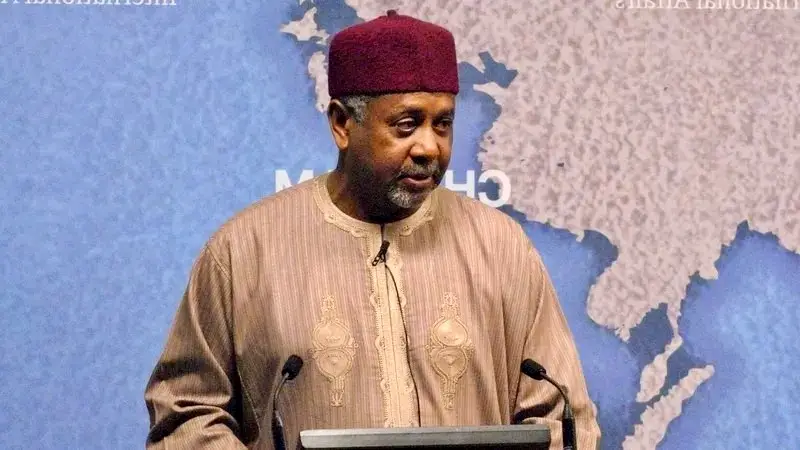
Uncover the explosive transatlantic scandal of ex-NSA Sambo Dasuki, whose dubious financial dealings—from a South Carolina horse farm to a $2.1bn arms scandal—raise critical questions of accountability in Nigeria.
Ex-NSA Sambo Dasuki: The Dark Web of Dubious Finances and Transatlantic Intrigue
In a saga that has rocked Nigeria’s political landscape, former National Security Adviser Sambo Dasuki finds himself ensnared in a labyrinth of corruption allegations, financial misdeeds, and transatlantic property deals that have now come under renewed scrutiny.
The explosive revelations – linking a 2002 purchase of a South Carolina horse farm to a multi-billion-dollar arms scandal – provide fresh ammunition for critics who argue that Nigeria’s political elite have long flouted accountability in favour of personal enrichment.
The Genesis of a Financial Controversy
Dasuki’s troubles, which emerged following his 2015 dismissal by President Muhammadu Buhari, have been well-documented over the past decade. However, new investigations have revealed that suspicions about his financial activities began long before the infamous $2.1-billion arms deal scandal.
According to exclusive reports by the Organised Crime and Corruption Reporting Project (OCCRP), Dasuki was already under the microscope for his involvement in a questionable purchase in South Carolina—a deal that involved the acquisition of a horse farm using funds whose origin remains shrouded in mystery.
Documents suggest that as far back as 2002, Dasuki orchestrated the cash purchase of the Green Hills horse farm in the Aiken Horse District for a sum of $950,000, transferring the title to his wife, Farida.
A subsequent 2007 letter from U.S. Citizenship and Immigration Services (USCIS) cast serious doubts on the legitimacy of these funds. US officials, unable to verify the source of the money, rejected Farida’s application for an immigrant investor visa, a decision that continues to haunt the former adviser.
Transatlantic Ties and Financial Misdirection
Further deepening the intrigue, investigative collaborations between the Platform to Protect Whistleblowers in Africa (PPLAAF), OCCRP, the Houston Chronicle, and Charleston’s Post and Courier have brought to light additional financial irregularities.
Investigations in 2024 unearthed evidence that Dasuki had allegedly funnelled suspicious funds into a $2.8-million mansion in a Washington D.C. suburb—a development that underscores the extent to which his financial dealings have stretched across continents.
Analysts argue that these revelations are not isolated events but part of a broader pattern of opaque financial practices. In the case of the horse farm, the funds were allegedly wired from bank accounts linked to companies in Hong Kong and the United Kingdom, suggesting a deliberate attempt to obfuscate the origin of the money. Dasuki’s purported use of offshore companies to channel his finances raises serious questions about his business acumen—and his commitment to transparency.
The Oil and Gas Connection: A Tale of Inconsistencies
Central to the controversy is Farida’s claim that the funds for the South Carolina farm originated from a petroleum company that purportedly paid Dasuki $1 million for lobbying efforts in Ghana.
The explanation, however, has been met with scepticism both in Nigeria and abroad. Farida provided an unsigned consulting contract as evidence, but US immigration officials, unconvinced by the documentation, remained highly critical.
The lack of corroborative evidence regarding Dasuki’s purported experience in the oil and gas sector only served to deepen the suspicions.
Adding further fuel to the fire, Quincy Sintim-Aboagye, the CEO of Texas-based Lushann International Energy Corporation, publicly disputed Farida’s claims.
Sintim-Aboagye categorically denied that his company had ever disbursed a payment of $1 million to Dasuki, though he did not entirely rule out the possibility that payments might have come from a Nigerian subsidiary.
This conflicting narrative has left many wondering whether the funds used in these transactions were indeed as legitimate as claimed.
Property, Politics and the Price of Corruption
The saga of Dasuki’s transatlantic financial misadventures does not end with the horse farm. The property, still registered under Farida’s name, has seen its ownership muddled by the intervention of third parties.
Alex Pacheco, a polo photographer with ties to both Florida and Aiken, has been paying the property taxes, despite his reluctance to comment on the estate’s operational details.
Public records indicate that the expansive estate not only serves as a holiday retreat but also boasts facilities including horse tracks and stable rentals—a far cry from its original image as a mere recreational property.
For many Nigerians, the unfolding drama is emblematic of a broader malaise in the nation’s political system, where funds earmarked for the defence of the state are allegedly siphoned off to fund lavish lifestyles and political manoeuvrings.
The arms scandal, involving the misappropriation of $2.1 billion that was meant to procure weapons to combat Boko Haram, has already incited widespread public outrage. The funds, critics argue, were diverted to finance political campaigns and personal expenses rather than to bolster national security.
Such allegations have not only tarnished Dasuki’s reputation but have also raised broader questions about the misuse of public funds at the highest echelons of government.
The Defence and Denial
Throughout the onslaught of allegations, Dasuki has steadfastly maintained his innocence. He argues that all disbursements were carried out in strict accordance with the procedures laid down by his principal, President Goodluck Jonathan. Yet, his repeated denials have done little to placate critics who point to the labyrinthine nature of his financial dealings.
The Economic and Financial Crimes Commission (EFCC) has documented instances where funds were directly transferred to politically connected individuals and companies with no verifiable link to legitimate defence procurement processes.
Dasuki’s prolonged detention, despite multiple grants of bail, has also led to mounting concerns over human rights violations and judicial overreach.
The unresolved status of his legal battles continues to cast a long shadow over Nigeria’s efforts to establish a transparent and accountable governance framework.
For many observers, the case epitomises the struggle against endemic corruption—a fight that has, for too long, been waged on uneven and inequitable terms.
A Critical Examination of Accountability
At the heart of this intricate web of allegations lies a fundamental question: who truly benefits from the mismanagement of public funds? For the Nigerian populace, the answer is painfully clear.
The diversion of billions of dollars away from essential military equipment and security apparatus has had dire consequences for the nation’s ability to combat insurgency and maintain internal stability.
The arms scandal, intertwined with Dasuki’s dubious financial manoeuvres, has not only compromised national security but has also undermined public trust in the institutions tasked with safeguarding the state.
Political commentators and analysts are quick to highlight the irony of a former national security adviser becoming embroiled in financial scandals that have international ramifications. The case is a stark reminder of the perils of unchecked power and the insidious nature of corruption that transcends national boundaries.
The transatlantic dimension of Dasuki’s financial dealings only serves to amplify the scale of the problem—raising the spectre of global money laundering and the exploitation of international financial networks by those in power.
The Road Ahead: Legal Battles and Public Outcry
As investigations continue to unfold, the future of Sambo Dasuki remains uncertain. The ongoing legal battles, coupled with the relentless pursuit of transparency by investigative bodies both in Nigeria and abroad, suggest that the truth behind these allegations is far from being fully revealed.
For many, the case is emblematic of a wider systemic failure that has allowed a select few to amass vast fortunes at the expense of national progress and security.
In the eyes of the public, the Dasuki saga is not merely a story about one man’s alleged misdeeds—it is a clarion call for comprehensive reform. It highlights the urgent need for robust accountability mechanisms, stricter oversight of public funds, and a judicial system that is both impartial and resilient against political interference.
The time has come for Nigeria to confront its longstanding issues of corruption head-on, lest the nation continues to pay a heavy price for the privileges of the few.
In conclusion, in a country where the mismanagement of public funds has often been met with impunity, the revelations surrounding Sambo Dasuki’s financial dealings serve as a potent reminder of the need for vigilance, transparency, and accountability.
The transatlantic dimensions of the scandal, from a dubious horse farm purchase in South Carolina to a multi-billion-dollar arms scandal, underscore the far-reaching implications of corruption.
As Nigeria grapples with these revelations, the hope remains that the pursuit of justice will finally restore public confidence in a system long plagued by abuse and exploitation.
- Additional report by Suleiman Adamu, Atlantic Post Senior National Security Correspondent