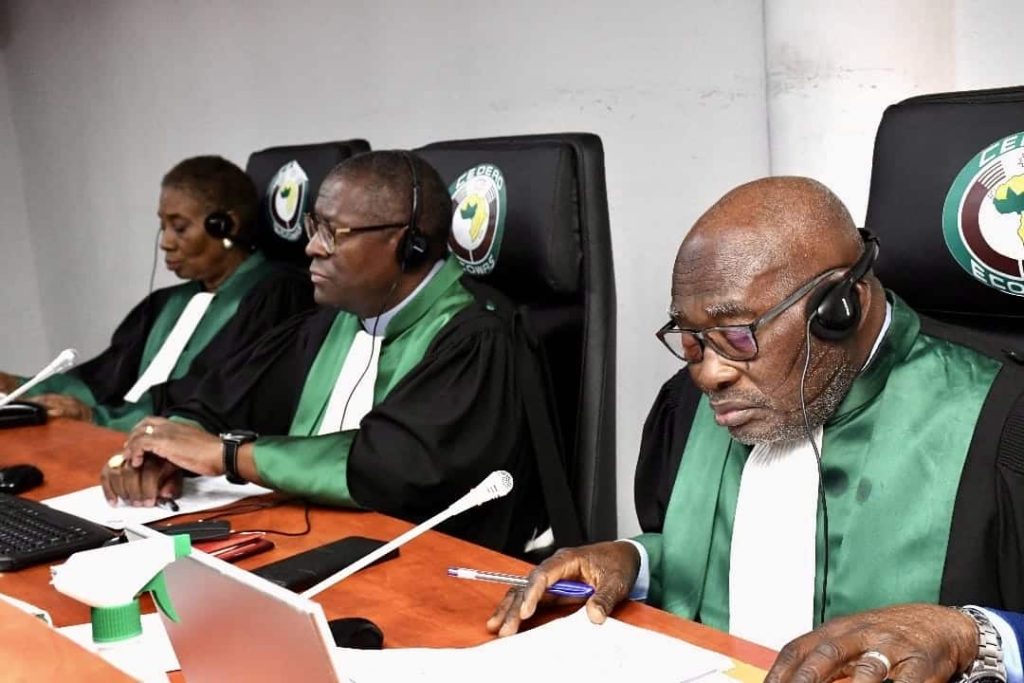
Landmark ECOWAS verdict demands immediate release of Moses Abiodun after 16 years’ wrongful detention and ₦20 million compensation for human-rights abuses.
Before delving into the details, it is essential to underscore the gravity of the ECOWAS Court’s judgment: after nearly 16 years behind bars without charge, Mr Moses Abiodun is to walk free immediately and receive ₦20 million for the gross violation of his fundamental rights.
This landmark ruling exposes the rot within Nigeria’s justice system, where indefinite pretrial detention has become a tool of oppression rather than a measure of last resort.
The Court’s finding not only condemns the Federal Government’s wilful denial of due process but also firmly upholds Nigeria’s binding commitments under both the African Charter on Human and Peoples’ Rights and the International Covenant on Civil and Political Rights, signalling a clarion call for urgent legal and institutional reform.
Mr Abiodun was apprehended in November 2008 by officers of the now‐defunct Special Anti-Robbery Squad (SARS), ostensibly on suspicion of armed robbery and conspiracy.
Although a Lagos Magistrate Court purportedly issued a remand warrant on 23 March 2009, Mr Abiodun remained in custody without being formally charged or brought to trial.
For nearly five months he languished without judicial oversight, and for almost 16 years thereafter, he endured indefinite detention—an appalling testament to systemic failure and executive overreach.
In Suit No ECW/CCJ/APP/56/22, the ECOWAS Court affirmed its jurisdiction, dismissing the Nigerian Government’s objections regarding the authenticity of the remand warrant and the admissibility of the case.
Violations of Fundamental Rights
The Court held that Mr Abiodun’s continued deprivation of liberty contravened Article 6 of the African Charter and Article 9 of the ICCPR.
It further found breaches of his right to freedom of movement (Article 12 of both instruments) and right to a fair trial within a reasonable time (Article 7(1)(d) of the African Charter).
Moreover, the judgment condemned the treatment as “inhuman and degrading,” amounting to anticipatory punishment in breach of Article 7 of the African Charter.
The ECOWAS Court ordered Mr Abiodun’s immediate release and awarded him ₦20 million in compensation for the cumulative harm suffered.
Call for Reform
Government Accountability
This ruling lays bare the gross negligence and impunity that pervade Nigeria’s criminal justice apparatus.
The Federal Government must not only comply with the judgment but also institute transparent mechanisms to prevent future miscarriages of justice.
Institutional Overhaul
SARS’ notorious history of arbitrary arrests must catalyse comprehensive police reforms, including strict adherence to procedural timelines and the abolition of indefinite pretrial detention.
Upholding International Obligations
Nigeria’s faith in regional and international law is at stake. By honouring its treaty obligations, Abuja can restore public confidence in the rule of law and avert further adverse judgments.
The ECOWAS Court’s verdict is an unequivocal rebuke of Nigeria’s dereliction of duty and a clarion call for systemic change.
As Mr Abiodun prepares to reclaim his liberty, the onus is on the Federal Government to translate this judgment into meaningful reform—ensuring that no Nigerian is ever again consigned to a cell without due process.