An unidentified officer’s alleged political and ethnic remarks expose a deeper test for police neutrality as Nigeria enters a more combustible phase of the 2027 election cycle.
ABUJA, Nigeria — The most disturbing line in a viral video allegedly showing a Nigerian police officer attacking Peter Obi is not the insult calling the presidential candidate a “Yahoo” boy.
It is the assertion that an Igbo man or woman can never become President of Nigeria.
That is an important distinction.
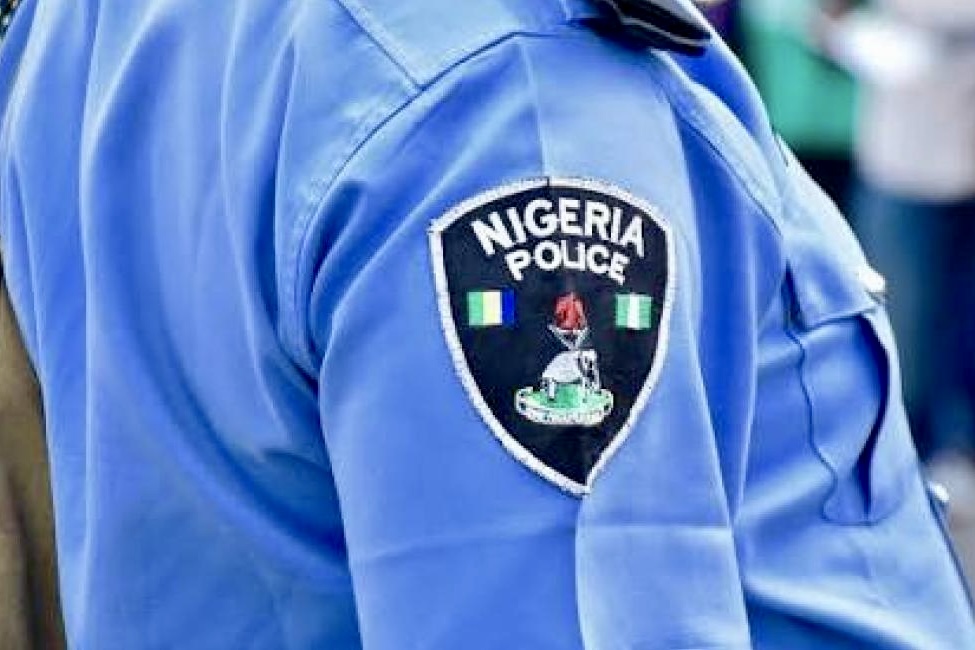
Political campaigns are expected to be noisy, partisan and often ruthless. A police officer is held to a different standard because the uniform represents an institution that is supposed to protect citizens regardless of ethnicity, political affiliation or personal preference.
The officer in the video appears to be speaking from inside a vehicle while in police uniform. He repeatedly attacks Obi, dismisses the prospect of an Igbo presidency and openly backs a contest between President Bola Tinubu and African Democratic Congress candidate Atiku Abubakar.
The footage has circulated widely on social media and was reported by Nigerian media outlets on Wednesday. The officer’s identity, rank, unit, precise location and the circumstances in which the recording was made have not been independently established.
That uncertainty is important.
So is what can already be checked.
Nigeria’s Police Act and the rules governing election security require police officers to act without ethnic or political bias. The Nigeria Police Force itself has repeatedly directed personnel deployed for elections to remain politically neutral and professional.
The question now is whether the Force will treat the footage as a social-media controversy or as a test of its own professional standards.
‘Igbo can never become president’
In the video, the officer reportedly says:
“Igbo can never become president. No way.”
He goes on to claim that an Obi presidency would turn Abuja into a “Yahoo office” and alleges that people would be subjected to rituals.
He then attacks Obi in personal terms, saying:
“Who is Obi? A small child.”
The officer also claims:
“All the votes they will cast for him in Igboland are useless.”
Later, the comments move beyond hostility towards a candidate and into an assertion about an entire ethnic group:
“Who will ever give Igbo man or Igbo woman a chance to become the president of this country?”
He adds:
“Igbo man or Igbo woman can never become president of this nation! It has been a tradition!”
The footage, as reported, also contains an even more consequential claim about what would happen if Obi won:
“Even if he wins, let oga (President Bola Tinubu) use money and deal with him. He will not enter that place.”
That statement, if accurately captured, is not merely campaign rhetoric. It introduces the idea that electoral victory and assumption of office could be treated as two different things.
The video provides no evidence that this represents the policy of President Tinubu, the Nigeria Police Force, the APC, the ADC or any other institution.
It is the statement of the unidentified speaker and should be treated as such.
The law does not create an ‘Igbo turn’
The officer presents ethnic exclusion from the presidency as an established national “tradition”.
Nigeria’s Constitution says otherwise in legal terms.
Section 131 sets out the qualifications for election as President. They include being a Nigerian citizen by birth, meeting the constitutional age requirement, belonging to and being sponsored by a political party, and possessing the required educational qualification. Ethnic identity is not listed as a qualification or disqualification.
The Constitution also contains a specific protection against discrimination.
Section 42 says a Nigerian citizen of a particular community, ethnic group, place of origin, sex, religion or political opinion shall not, simply on that basis, be subjected to specified disabilities or restrictions imposed by government action or law.
There is another inconvenient historical fact for the speaker’s assertion.
Nigeria has already had an Igbo President.
Dr Nnamdi Azikiwe, an Igbo from present-day Anambra, served as President of the First Republic from October 1, 1963 until January 16, 1966. The State House’s official historical record lists him as Nigeria’s first President.
The modern political argument is different.
Since the return to civilian rule in 1999, no person of Igbo origin has been elected President under the Fourth Republic. That historical pattern is a legitimate subject of political debate. It does not create a constitutional prohibition.
Nor does the fact that Nigerian parties often use informal ideas of zoning and regional rotation convert those political arrangements into a constitutional ban.
Indeed, the NDC itself zoned its 2027 presidential ticket to the South before Peter Obi emerged as its candidate. Channels Television reported that Obi was unveiled as the party’s presidential candidate on May 30, 2026.
As of September 2026, INEC’s published candidate information lists Obi as the NDC presidential candidate for the 2027 election.
Zoning can therefore be debated as political practice.
It cannot simply be presented as law.
The police standard is higher than private political opinion
A central question is whether a serving police officer is allowed to have political opinions.
That is not the real issue.
Police officers are citizens. The sharper question is what limits apply when a serving officer speaks publicly while wearing the uniform, particularly during an election cycle and in circumstances connected to the discharge of police duties.
The Nigeria Police Act contains an unusually relevant provision.
Section 96 states that a police officer shall not, in discharging his duty, discriminate against a person on the basis of place of origin, ethnic, political or religious affiliation, among other grounds.
It also says an officer shall not use language or act in a way that suggests bias towards a particular group.
That wording makes one detail crucial.
Was the officer on duty?
Was he travelling in an official capacity?
Was he interacting with members of the public as a police officer?
Was he deployed for an election-related assignment?
The video alone does not answer those questions.
The Force’s own electoral code is equally clear about the standards expected from police personnel.
The Inter-Agency Consultative Committee on Election Security cites Police Regulations requiring officers to maintain the good name of the Force, behave correctly, show courtesy and develop “tact, patience and tolerance”. It further requires officers to refuse to allow religious, racial, political or personal feelings to influence them in the execution of their duties and stresses impartiality.
The Nigeria Police Force has said the same thing in more direct language.
Ahead of the 2026 Osun governorship election, the Force said personnel deployed for election duties must act professionally and impartially and described the Police as “neutral, professional, and resolute”.
The Inspector-General of Police, Olatunji Rilwan Disu, has also publicly emphasised professionalism, respect for human dignity and ethical policing.
That is why the uniform changes the context.
A civilian saying, “Obi cannot win,” is expressing a political view.
A police officer in uniform saying “Igbo can never become president” creates a different institutional question.
The new police regulations raise the stakes
The timing is especially significant because Nigeria has just entered a new phase of police reform.
The Federal Ministry of Police Affairs said in April 2026 that the Nigeria Police Regulations (Amendment) 2026 had been gazetted and was designed to strengthen accountability, professionalism and service delivery within the Force. The Ministry said the regulations provide a modern operational framework under the Police Act 2020 and reinforce accountability and human-rights standards.
That puts an uncomfortable question before police leadership.
What does accountability mean when the alleged misconduct is not an arrest, shooting, extortion demand or other conventional abuse of police power, but words spoken by an officer whose appearance publicly connects those words to the institution?
The answer matters because public confidence in policing is partly built on the belief that an officer will not decide how to treat a citizen based on ethnicity or politics.
That principle becomes more important, not less, during elections.
The officer’s attack moves from Obi to his ethnicity
The video does not appear to be confined to an argument about Peter Obi’s policies, record or political strategy.
The repeated emphasis is on identity.
The officer reportedly refers to Obi as an Igbo man and repeatedly generalises about whether an Igbo man or woman can occupy the presidency.
That is the point at which the video moves from political disagreement into an argument about who should be entitled to seek national office.
His comments include:
“Obi is too small to stand where Atiku and Tinubu are speaking.”
He reportedly predicts:
“This time around, he will be in fifth position.”
He then returns to ethnicity:
“Igbo will be expecting to become the president?”
And again:
“Igbo man or Igbo woman can never become president of Nigeria.”
Those are political assertions, not established electoral facts.
The 2027 presidential election is scheduled for January 16, 2027, according to INEC’s current election calendar. INEC has also published a final list of presidential candidates, including Tinubu, Atiku and Obi.
No officer’s personal prediction can determine the constitutional eligibility or political fate of any candidate.
That decision belongs to voters under the electoral system.
‘Even if he wins’
The most troubling line in the recording may be the allegation that even if Obi wins, he could be prevented from taking office.
“Even if he wins, let oga use money and deal with him. He will not enter that place.”
The footage contains no evidence that money was actually used, that anyone planned to obstruct Obi, or that the speaker was relaying an official instruction.
That distinction is critical.
Yet the line deserves scrutiny because it touches a foundational principle of constitutional government: elections have meaning only if lawful results determine who takes office.
Nigeria’s presidential election is conducted on a nationwide basis. The Constitution treats the entire federation as one constituency for the presidential contest, while setting the required vote thresholds across the states and the Federal Capital Territory.
The Police Force is also central to the security environment in which citizens vote.
The current Electoral Act 2026 requires election officials and security officials taking part in an election to affirm loyalty and neutrality and to perform their duties impartially and in the national interest.
The law also places the police at the centre of security arrangements for political rallies and processions, limiting their role there to providing security.
That creates a basic institutional expectation.
The police should protect the electoral contest.
They should not become another contestant within it.
The Obasanjo claim also needs checking
The officer invokes former President Olusegun Obasanjo while making his case, reportedly saying:
“Obasanjo has said, ‘For me to make Igbo man my vice, it is not done’, he chose a Hausa.”
That attribution requires independent verification before being treated as fact.
There is well-documented material showing that Obasanjo has publicly discussed Igbo political representation, the treatment of the South-East and the question of an Igbo presidency. His public remarks have not been uniformly exclusionary.
In 2022, for example, Channels Television reported a statement from Orji Uzor Kalu that “it’s overdue for an Igbo man to become a Nigerian president”, while Obasanjo himself had previously said he was no longer in partisan politics.
In another widely reported interview, Obasanjo argued that an Igbo man had become Vice-President within years of the civil war and pointed to Igbo participation in senior national institutions.
The specific quotation attributed to him in the viral police video was not established by the sources reviewed for this report.
That should not be allowed to pass into public discourse as an authenticated quotation without evidence.
A test of the Force’s response
The next development is arguably more important than the argument in the video itself.
Will the Nigeria Police Force identify the officer?
Will it establish his rank and command?
Will investigators determine when and where the footage was recorded?
Was he on duty?
Was the vehicle public or private?
Was he travelling alone or with members of the public?
Does the recording show the entire conversation or an edited segment?
Was the phone recording made with the officer’s knowledge?
Most importantly, will the Force determine whether his conduct breached the Police Act, police regulations or election-security rules?
Those are straightforward investigative questions.
They do not require the Police Force to take sides in the 2027 election.
They require it to establish the facts.
The Police Service Commission has previously emphasised that police officers can be disciplined for misconduct and has monitored police conduct around elections. In 2023, the Commission said it would sanction officers involved in misconduct during the electoral period.
The Commission also describes itself as constitutionally responsible for disciplinary control over police officers, subject to the constitutional framework governing the Inspector-General.
That means the issue need not be turned into a political argument between Obi supporters and opponents.
It can be handled as an accountability matter.
The deeper danger is not one officer
There is a temptation in political controversies to ask whether an individual belongs to a particular camp.
The harder question is what happens when citizens begin to believe that the institution carrying the power to arrest, disperse crowds, secure polling units and maintain public order has already taken a political or ethnic side.
That perception alone can be destabilising.
Nigeria’s 2027 presidential and National Assembly election is now on the official calendar for January 16, 2027. Campaigning is already under way.
The political contest will produce more accusations, more heated speeches and more attempts to mobilise voters through identity.
That is precisely why professional institutions have to become more disciplined, not less.
The officer in the video is entitled to due process.
Peter Obi is entitled to compete according to the law.
Igbo Nigerians are entitled to participate in politics without an officer of the state telling them that their ethnicity disqualifies them from the presidency.
Every other Nigerian is entitled to believe that the officer who stops them on the road, controls a crowd, secures a polling station or responds to a political disturbance will see a citizen before seeing a tribe or a party.
That is the real issue raised by the footage.
Not whether Peter Obi is popular.
Not whether Tinubu or Atiku has a stronger political machine.
Not whether the officer’s prediction about the election is correct.
The unanswered question is much more basic:
Can a citizen still trust the badge when the person wearing it appears to have already chosen a side?
Verification note: Atlantic Post has not independently established the identity, rank, command, location or duty status of the officer shown in the circulating video. The quotations above are attributed to the speaker in the footage and should not be interpreted as statements of Nigeria Police Force policy. As of publication, this review located no official NPF statement specifically addressing the video.
Follow us on our broadcast channels today!
- WhatsApp: https://whatsapp.com/channel/0029VawZ8TbDDmFT1a1Syg46
- Telegram: https://t.me/atlanticpostchannel
- Facebook: https://www.messenger.com/channel/atlanticpostng