By Taiwo Adebowale
A Bold Demand for Change in Nigeria’s Fuel Supply Chain

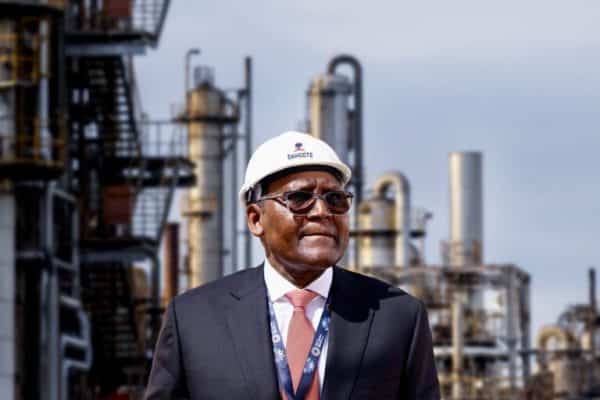
In a striking statement bound to shift the direction of Nigeria’s energy sector, Aliko Dangote, the Chairman of the Dangote Group and the driving force behind the recently launched Dangote Refinery, has thrown down the gauntlet to petroleum marketers and the Nigerian National Petroleum Company (NNPC). Following a private meeting with President Bola Tinubu at the Aso Rock Villa, Abuja, Dangote emerged to announce his refinery’s readiness to end Nigeria’s reliance on imported fuel.
With a declared capacity to produce over 30 million litres of fuel daily and a reserve of 500 million litres — enough to sustain the country’s needs for 12 days — Dangote’s proposition is clear: NNPC and other marketers should halt fuel imports and tap into locally refined fuel. This proposal, if implemented, could be one of the most revolutionary steps for Nigeria’s fuel sector, potentially ending decades-long dependence on costly imports. But what does this really mean for Nigeria, and why are there challenges in achieving this seemingly straightforward solution?
The Dangote Refinery: A Potential Game Changer
The Dangote Refinery, acclaimed as Africa’s largest and most advanced refinery, has been long awaited, with promises to help Nigeria reach self-sufficiency in fuel production. For years, Nigeria, Africa’s largest oil producer, has grappled with the paradox of massive crude oil exports while heavily relying on imported refined petroleum products. This dependency has been costly, draining foreign exchange reserves and making the local economy highly susceptible to global oil price shocks.
Key Details of the Dangote Refinery:
- Production Capacity: 650,000 barrels of crude per day.
- Fuel Production: Capable of producing over 30 million litres of refined petrol daily.
- Reserve Capacity: 500 million litres currently in reserve.
With these capacities, Dangote asserts that his refinery can satisfy Nigeria’s local fuel demand without reliance on imports. However, his latest announcement implies frustration over a lack of coordination from the NNPC and marketers, as evident in his statement: “I’m not in the business of retail… retailers should please come forward and pick [the fuel].” This frustration touches on a deeply rooted structural and operational issue in Nigeria’s energy landscape that has often stalled the nation’s potential for energy independence.
Dangote’s Ultimatum: Stop Imports and “Come and Pick”
The heart of Dangote’s message is a demand for decisive action. He urges the NNPC and marketers to “stop importing” and to “come and pick” the petrol he has ready. His refinery, designed to operate on a commercial basis, cannot afford the luxury of holding vast reserves without turnover. He points out that the 500 million litres in reserve cost him daily, noting the immense interest losses he incurs by immobilising such a large quantity of fuel, essentially treating it as an unsold product.
In emphasising this cost, he states, “If I can collect the naira, I can charge somebody 32% in interest. So right now, that’s what I’m losing.” This statement not only underscores the financial strain on Dangote’s business but also implicitly criticises a system that fails to capitalize on available domestic resources, instead choosing an import-heavy approach that ultimately burdens the economy.
President Tinubu’s Role: Navigating Political and Economic Challenges
With his meeting at Aso Rock Villa, Dangote has involved the highest level of government in his push for reform. President Bola Tinubu, a close ally of Dangote and a proponent of the privatization of the petroleum industry, is faced with a dilemma. By embracing Dangote’s call, Tinubu would be advocating for a drastic restructuring of fuel sourcing channels, which may face opposition from stakeholders who profit from the current import-dependent system.
Tinubu’s administration has already implemented policies meant to streamline the energy sector, including the recent subsidy removal. Supporting Dangote’s initiative could further this agenda, but it would require swift and unwavering commitment from Tinubu to tackle the entrenched interests within NNPC and private petroleum marketers. Moreover, such a shift would demand extensive regulatory oversight and transparency, particularly if it means revamping distribution and pricing mechanisms.
The Economic Impact of Dangote’s Proposal
If the government and marketers heed Dangote’s call, Nigeria could witness significant economic benefits:
- Reduction in Foreign Exchange Outflows: Currently, Nigeria spends billions of dollars annually on fuel imports. Sourcing from Dangote’s refinery would conserve foreign reserves, strengthening the naira and stabilising inflation.
- Job Creation: An emphasis on local sourcing could stimulate job creation within the downstream sector, as more infrastructure would be required to handle domestic fuel supply.
- Price Stability: Dangote’s refinery could potentially offer more consistent pricing, shielded from global fuel market volatility.
- Boost to Local Businesses: Other industries dependent on fuel would benefit from predictable supply chains, enabling better business planning and reducing production costs.
Obstacles to Overcoming Nigeria’s Dependency on Imported Fuel
Despite Dangote’s vision, Nigeria’s fuel market is a complex web of issues, including distribution bottlenecks, infrastructure gaps, and potential resistance from influential figures within the industry. These factors pose considerable challenges that might prevent the seamless transition to a fully domestic fuel supply.
- Infrastructure Deficiency: For Dangote’s refinery to distribute fuel across Nigeria efficiently, substantial improvements in storage, transportation, and pipeline infrastructure are necessary.
- NNPC’s Role and Interests: As the national oil company, the NNPC has vested interests and existing contracts related to imports. Redirecting their operations to rely solely on the Dangote Refinery could disrupt established networks and face resistance from those benefiting from the current setup.
- Price Regulation Concerns: Dangote operates a private refinery and will likely adopt a market-driven pricing model, which may conflict with public expectations and government pricing policies, potentially leading to inflationary pressures if not managed carefully.
- Security Risks: Pipeline vandalism and fuel theft remain critical issues that can disrupt supply lines, leading to shortages and increased operational costs. Ensuring security is essential for maintaining an uninterrupted fuel supply.
Dangote’s Direct Appeal to Retailers and the NNPC: The Accountability Factor
Dangote’s statement that he is “not in the business of retail” adds a critical layer to this debate. By pointing fingers at marketers, he highlights a structural accountability gap within Nigeria’s fuel distribution network. With ample supply at his refinery, Dangote believes it is the responsibility of retailers and the NNPC to manage distribution efficiently, ensuring fuel reaches every corner of Nigeria.
To ensure adequate accountability, Dangote’s proposal requires a collaborative framework where NNPC, independent marketers, and government regulators work cohesively. Such a framework could entail:
- Transparent Contracts: Establishing contracts between Dangote Refinery, NNPC, and marketers for assured offtake agreements that prevent bottlenecks.
- Incentives for Compliance: Introducing incentives for marketers and NNPC to prioritize local fuel sourcing.
- Real-time Monitoring: Implementing technology-driven monitoring systems to track distribution patterns, preventing artificial scarcity.
The Question of Fuel Scarcity: Why Are There Still Queues?
Dangote’s statement also shines a spotlight on Nigeria’s recurring issue of fuel scarcity, despite available supply. His remarks suggest that the scarcity is not due to production shortages but rather inefficiencies in distribution. This reality brings into question the accountability of retail outlets and marketers responsible for fuel distribution.
- Speculative Hoarding: Dangote implies that retailers may engage in speculative hoarding, a practice where fuel is withheld to create artificial scarcity, driving up prices.
- Logistics and Transportation Issues: Poor road networks, limited storage facilities, and an aging fleet of tanker trucks all exacerbate delivery delays.
Possible Economic and Social Fallout
Should Dangote’s proposal to halt fuel imports be adopted, the transition may not be entirely smooth. A shift of this magnitude will disrupt established networks, potentially resulting in short-term scarcities, distribution delays, and price spikes as the market adjusts. Socially, any disruptions in fuel availability would likely generate public dissatisfaction, as fuel costs have a direct impact on transportation, food prices, and household expenses.
Conclusion: A Path Toward Self-Sufficiency or a Utopian Vision?
Dangote’s assertion that “we’re more than ready” is a clarion call for a future where Nigeria is free from dependency on imported fuel. However, transforming this vision into reality is a formidable challenge that requires not just Dangote’s refinery but a complete overhaul of Nigeria’s fuel distribution, regulatory frameworks, and market dynamics. For this vision to be realised, President Tinubu’s administration must demonstrate a steadfast commitment, using regulatory power to mitigate resistance and ensure infrastructure improvements.
The future of Nigeria’s fuel market rests on a knife’s edge. If Dangote’s ultimatum is heeded, it could herald a new era of self-sufficiency, economic growth, and stability. But if ignored, Nigeria may continue its cyclical struggle with fuel scarcity, inflation, and the economic drain of foreign dependency. The question remains: Is Nigeria ready to embrace Dangote’s bold vision, or will it continue down the familiar path of costly fuel imports and economic vulnerability? Only time will reveal the answer, but one thing is certain — the stakes have never been higher.