By Editor
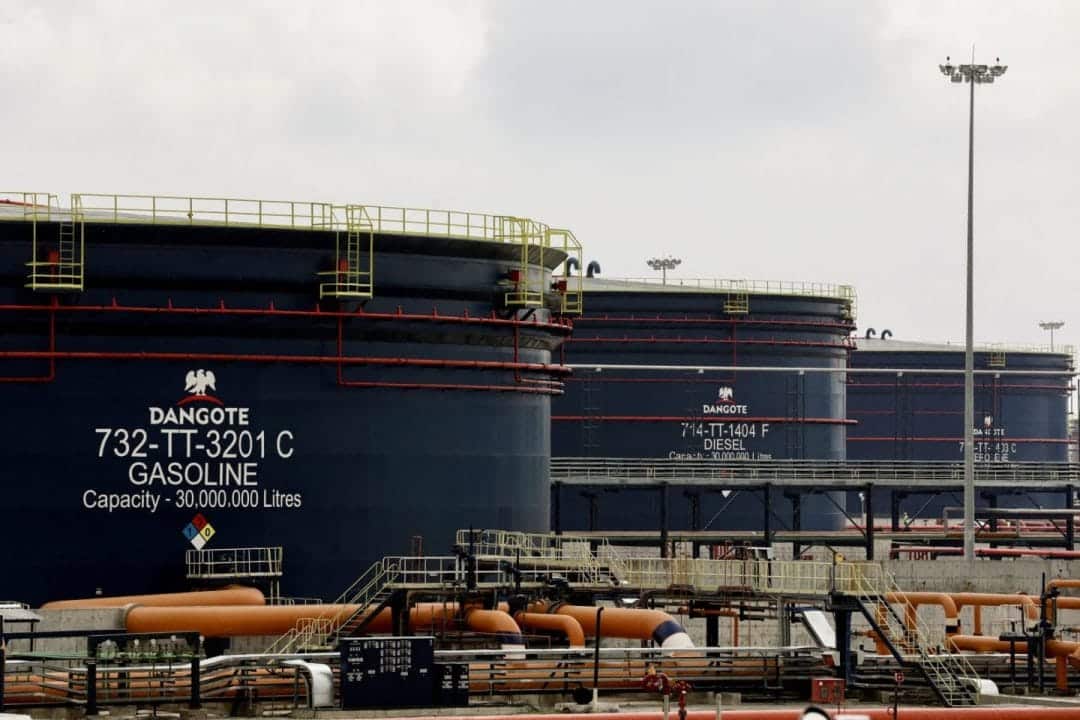
LAGOS, Nigeria — In a fiery press statement that has intensified an already tense standoff in Nigeria’s fuel industry, the Dangote Group has lashed out at independent petroleum marketers and traders, claiming their push to import cheaper petroleum products is a front for dumping substandard fuel into Nigeria. In its statement dated November 3, 2024, the Dangote Group responded directly to assertions by the Independent Petroleum Marketers Association of Nigeria (IPMAN) and the Petroleum Retail Outlet Owners Association of Nigeria (PETROAN) that they can import premium motor spirit (PMS) at a lower price than the Dangote Refinery’s offerings.

The press statement from Anthony Chiejina, Group Chief Branding and Communications Officer of the Dangote Group, was nothing short of explosive, filled with pointed accusations and staunch justifications. But beyond its surface claims, this development opens up a broader debate about Nigeria’s refining capacity, regulatory oversight, and the true impact of domestic pricing benchmarks on ordinary Nigerians. Below, we analyse the statement, its implications, and what this unfolding drama means for Nigeria’s fuel sector and its citizens.
A Battle Over Pricing and Quality: Dangote Defends Its Prices
The Dangote Group has positioned itself as a market stabiliser, providing Nigeria with a domestically refined product that it argues is superior in quality to the cheaper imports proposed by IPMAN and PETROAN. In the statement, Dangote explains that its prices are set with reference to international standards and are “competitive relative to the price of imports.”
The company further contends that if independent marketers are indeed importing cheaper PMS, they must be doing so at the expense of quality, thereby compromising consumer safety. According to the statement, Dangote has priced PMS at N960 per litre for sale into ships and N990 per litre for trucks, marking this as a fair rate given prevailing market benchmarks. This pricing, Dangote argues, is not only competitive but also ensures that Nigerians receive fuel that meets rigorous international standards.
However, the implicit claim here—that only Dangote’s PMS is of sufficient quality—raises eyebrows. The Nigerian consumer, already beleaguered by relentless price hikes in essential goods and services, may find this assertion cold comfort in the face of their own economic realities. With many Nigerians questioning why domestic refining has not led to the anticipated drop in fuel prices, the Dangote Group’s insistence on premium pricing seems to run counter to public expectation and even governmental promises of relief through local production.
‘Importing Substandard Fuel’: A Bold Accusation Against IPMAN and PETROAN
One of the most striking elements of the statement is the accusation that cheaper PMS imports equate to “substandard products” and are a deliberate strategy to “dump low-quality products into the country.” This assertion not only calls into question the integrity of IPMAN and PETROAN’s proposed import strategy but also hints at a potential health and environmental risk to Nigerians. Dangote argues that these imported products may damage vehicles and could even harm consumers’ health, alleging that regulatory authorities in Nigeria, particularly the Nigerian Midstream and Downstream Petroleum Regulatory Authority (NMDPRA), lack the necessary laboratory infrastructure to effectively detect such subpar imports.
This criticism directed at the NMDPRA signals a bold move by the Dangote Group. By highlighting the regulator’s supposed inadequacies, Dangote appears to challenge both the independent marketers and the regulatory system itself. This raises troubling questions about oversight: if the NMDPRA lacks adequate facilities for quality assurance, then what assurances does the Nigerian public have regarding the quality of any imported fuel? This pointed critique may be Dangote’s attempt to cast itself as the last line of defense in maintaining product standards, but it simultaneously spotlights potential gaps in Nigeria’s regulatory frameworks.
Benchmarking Against NNPC Prices: Setting a National Standard or Gaming the System?
According to the statement, Dangote’s pricing model follows the Nigerian National Petroleum Corporation’s (NNPC) established rates of N971 per litre for PMS sold to ships and N990 per litre for trucks, which the refinery has even slightly undercut. By linking its prices to those of the NNPC, the Dangote Group implies a shared commitment to industry-standard rates, presenting itself as a responsible player in a newly deregulated market.
However, this justification carries a subtle but crucial implication: if the NNPC’s pricing is indeed the baseline, then Dangote’s prices could be seen as simply following an inflated benchmark rather than reflecting any inherent cost efficiencies of domestic refining. Many industry critics argue that NNPC’s pricing is itself set at a premium, driven by bureaucratic inefficiencies and long-standing structural challenges. For Dangote to lean on NNPC’s rates as a benchmark might indicate that the promised savings from domestic production were overstated, or worse, never intended to benefit consumers.
This points to a larger issue within the deregulated Nigerian fuel market: the power dynamics at play. In a sector dominated by few players, with Dangote Refinery leading as the sole large-scale domestic refiner, setting prices to mirror NNPC’s could effectively stifle competition. This not only challenges the idea of true market liberalisation but raises fears that deregulation could serve to entrench monopoly pricing rather than foster healthy competition.
The Threat of Foreign Blending: Economic Protectionism or Market Paranoia?
In a somewhat unexpected turn, the Dangote Group claims that an international company has leased a depot facility next to its refinery with plans to “blend substandard products” for distribution within Nigeria. According to Dangote, this move undermines domestic refining and could sabotage efforts to build Nigeria’s refining capacity. The statement also draws a parallel with the protectionist measures seen in other countries, such as the tariffs imposed on electric vehicles (EVs) and microchips in the US and Europe, suggesting that protective barriers may be necessary to secure Nigeria’s refining future.
While Dangote’s desire to protect its nascent refining operation is understandable, critics may view this argument as a thinly veiled attempt to justify monopolistic practices. The comparison to EV and microchip tariffs falls somewhat flat; unlike these specialised industries, Nigeria’s petroleum sector has historically been dependent on imports due to inadequate refining capacity. Attempting to protect Dangote Refinery’s interests by opposing imports could easily be interpreted as stifling competition, a move that many would argue contravenes the core principles of a free market.
Furthermore, by framing this new depot’s activities as economically and environmentally hazardous, Dangote risks stoking public fears around foreign competition without clear evidence. This argument could serve to divert attention away from the core issue—whether domestic refining, led by Dangote, can actually deliver on its promises of affordability and quality, or if it will instead monopolise the market under the guise of “protectionism.”
A Plea to National Pride or a Strategic Deflection?
Perhaps most pointedly, the Dangote Group’s statement ends on a patriotic note, decrying those who “prefer for us to continue to export jobs and import poverty.” This appeal to national pride is clearly intended to resonate with the Nigerian public, presenting Dangote’s efforts as essential for the economic sovereignty of Nigeria. Yet, this rhetoric may ring hollow for the many Nigerians struggling to cope with daily expenses, including fuel prices that have only risen since deregulation.
The call to “disregard the deliberate disinformation” by rivals hints at a narrative of Dangote versus external forces seeking to undermine Nigeria’s growth. However, one could argue that this framing sidesteps accountability. As the dominant domestic refiner, Dangote holds significant influence over fuel pricing in Nigeria—a responsibility that demands transparency, not deflection.
An Industry at a Crossroads, and Nigerians Left Waiting
This latest salvo from the Dangote Group deepens the debate around Nigeria’s fuel pricing, quality assurance, and the integrity of the domestic refining industry. Dangote’s statement, while purporting to defend its practices, raises as many questions as it answers. Nigerians are left to wonder: are they truly receiving a premium product, or are they paying a premium price under the guise of quality assurance and economic protectionism?
The ongoing standoff between Dangote and independent marketers like IPMAN and PETROAN reveals much about the challenges facing Nigeria’s journey to energy independence. For millions of Nigerians, the stakes are real and immediate, as their livelihoods and daily expenses hinge on the cost and availability of fuel.
If Nigeria is to achieve true energy autonomy, it must ensure that industry giants like Dangote operate under rigorous oversight, fair competition, and a commitment to consumer welfare. The Nigerian government, particularly the NMDPRA, faces a critical role in upholding these principles. Ultimately, only a transparent, competitive, and genuinely deregulated market will ensure that Nigerians benefit from their nation’s resources and avoid the pitfalls of monopolistic pricing disguised as patriotism.
The Realities of Market Control: Is Dangote Creating an Oligopoly?
While the Dangote Group’s statement attempts to reassure the public of its commitment to quality, it inadvertently highlights the emerging dominance of the Dangote Refinery within Nigeria’s fuel market. Critics argue that the refinery’s pricing strategy is establishing a dangerous precedent, consolidating market control in the hands of a single entity. Though Dangote claims to price PMS in line with NNPC benchmarks, this approach risks stifling competition and limiting alternative fuel sources, leaving Nigeria with little recourse in the face of high domestic prices.
An oligopoly in the fuel market could further marginalise independent petroleum marketers, effectively eliminating the competition that could drive down costs for consumers. With IPMAN and PETROAN claiming they can import fuel more affordably, the existence of alternative sources is apparent. Yet, if Dangote’s refinery continues to dictate pricing under the guise of “quality assurance,” it could effectively establish a pseudo-monopoly where competition is not only discouraged but financially unfeasible.
The Dangote Group’s rhetoric on national pride and economic sovereignty might play well in public, but the practical effect on market dynamics suggests a different story. By tying its pricing to NNPC standards and casting aspersions on potential competitors, Dangote is establishing a framework that prioritizes corporate profitability over consumer affordability. Nigerians, still reeling from subsidy removal and rising inflation, may find themselves paying the price for this market consolidation.
Quality Claims: A Genuine Concern or a Competitive Tactic?
The Dangote Group’s insistence on product quality, while resonant, also raises skepticism. Although quality control is essential in any refined product, the accusation that rival marketers are willing to “dump low-quality products” on Nigerian consumers seems more strategic than protective. Quality concerns are valid, but Dangote’s positioning as the sole provider of high-standard PMS, without transparent industry-wide testing, might appear as an attempt to stifle competition through fear.
This statement is especially potent given the lack of regulatory infrastructure within NMDPRA to monitor imports, as Dangote himself points out. If independent verification of quality is unavailable, then Dangote’s assertion of superior quality cannot be substantiated against other potential sources. Instead, Dangote is effectively asserting its monopoly on quality, indirectly suggesting that all competitors’ products are inferior by default. This tactic, though seemingly in the public’s interest, ultimately narrows market choices and consolidates Dangote’s dominance without the need for direct price reductions.
Where is the NMDPRA in All This? The Need for Stronger Regulatory Oversight
The Dangote Group’s critique of the Nigerian Midstream and Downstream Petroleum Regulatory Authority’s (NMDPRA) lack of laboratory facilities for fuel quality testing is a crucial but overlooked point. If the regulatory body lacks the necessary tools to ensure the safety and standard of imported products, the public has no assurance of product quality, and companies like Dangote have unchecked freedom to label competitors as substandard. This oversight gap not only leaves room for quality discrepancies but potentially enables larger companies to manipulate the narrative around safety and pricing without accountability.
Strengthening the NMDPRA’s regulatory capacity would serve multiple purposes. First, it would establish an objective standard for fuel quality, ensuring that only products meeting these standards enter the Nigerian market. Second, it would prevent any one company from monopolising the definition of “quality” for fuel products, thereby encouraging healthy competition among local and international suppliers. Lastly, by holding all companies to the same standard, it would protect consumers from potentially dangerous fuel, regardless of its origin. Without this regulatory backbone, Nigerian consumers are left vulnerable to high prices and potentially low-quality imports, all while unable to validate the claims of quality made by either Dangote or its competitors.
The Nationalist Argument: Are Nigerians Being Swayed by Patriotism Over Pragmatism?
A striking aspect of the Dangote Group’s press release is its appeal to nationalism. By casting itself as the patriotic choice, committed to protecting Nigerian jobs and resources, Dangote frames its critics as advocates for “importing poverty” and “exporting jobs.” This appeal is likely to resonate with a public that has long yearned for an end to dependency on foreign oil imports. However, this rhetoric may also mask underlying business motives that are less about national interest and more about securing market dominance.
In reality, the concept of “economic patriotism” has often been used to justify protectionism and monopolistic practices. By positioning its products as inherently more “Nigerian” than those of its competitors, Dangote is capitalising on a narrative of national pride to bolster its market position. However, such appeals might obscure the fact that, in a truly free and competitive market, Nigerian consumers should have access to a variety of choices, both domestic and international, at competitive prices.
This nationalist framing also brings up questions about the actual impact of Dangote’s pricing on Nigeria’s economy. For instance, if local consumers cannot afford fuel despite it being produced domestically, then the broader economic benefits of local refining become limited. Dangote’s patriotic stance, while persuasive, risks becoming a barrier to market-driven solutions that could ultimately lower prices for Nigerians and encourage foreign investment in the refining sector.
The Role of IPMAN and PETROAN: Real Competitors or Strategic Distractions?
The Independent Petroleum Marketers Association of Nigeria (IPMAN) and the Petroleum Retail Outlet Owners Association of Nigeria (PETROAN) have both been vocal in criticising Dangote’s pricing, arguing that they can import PMS at a lower rate. While these associations represent a sizeable portion of Nigeria’s fuel distribution network, the reality of their position as “competitors” to Dangote remains ambiguous. IPMAN and PETROAN claim they can provide a more affordable product, but Dangote’s swift dismissal of this claim as indicative of “substandard products” suggests that their influence may be limited by Dangote’s dominance in domestic refining.
Furthermore, without a robust regulatory body to validate the quality of imported fuel, IPMAN and PETROAN’s claims of affordability are weakened. In this context, Dangote’s accusations about their products’ quality effectively control the narrative, placing IPMAN and PETROAN in a defensive position. Despite their pushback, these associations may find it increasingly challenging to maintain market relevance against Dangote’s strategic advantage in local refining, further highlighting the power imbalance within Nigeria’s fuel industry.
Potential Impact on Ordinary Nigerians: Will Fuel Become a Luxury?
As Dangote asserts its market position, Nigerians are left facing the real possibility that fuel will continue to be priced at a premium. This potential price hike has far-reaching implications, impacting not only fuel consumption but also the cost of goods, transportation, and general economic stability. For a country where the majority of citizens already struggle with high living costs, the lack of affordable fuel could worsen poverty rates and economic disparity.
Critics argue that domestic refining was supposed to reduce dependency on expensive imports and lead to price reductions, but Dangote’s pricing strategy seems to betray this promise. The company’s alignment with NNPC’s rates indicates that, rather than passing cost savings on to consumers, it may be leveraging local production to solidify control over pricing—a move that contradicts the promises of deregulation.
In an era where fuel accessibility should be improving due to domestic production, Nigerians are left wondering why their pockets bear no evidence of these supposed advancements. Instead, the Nigerian public could be witnessing the transformation of fuel from an essential resource into a luxury commodity, accessible only to those who can bear the increasing costs.
Final Thoughts: The Future of Nigeria’s Fuel Market Hangs in the Balance
As the Dangote Group and independent marketers continue their public showdown, the future of Nigeria’s fuel market remains uncertain. On one hand, Dangote’s refinery represents a long-awaited step toward self-sufficiency, potentially insulating the country from volatile global oil markets. On the other hand, if this self-sufficiency comes at the cost of fair pricing and market competition, then Nigeria’s energy independence could come with an unintended side effect: corporate monopoly.
To protect consumer interests, Nigerian regulatory bodies like the NMDPRA must play a more proactive role. Stronger regulations on quality standards, as well as measures to prevent price manipulation, would help ensure that all players in the market operate on a level playing field. For Nigerians, the promise of local refining can only be fulfilled if it translates into tangible benefits, rather than merely adding another layer of bureaucracy and corporate control.
In the end, the Dangote Group’s statement brings to light significant issues within Nigeria’s petroleum sector—issues that extend beyond individual corporate interests to encompass the fundamental principles of market fairness, transparency, and consumer protection. The question now is whether Nigeria’s policymakers and regulators will step up to address these concerns or allow the market to drift further into corporate-dominated territory.
The Dangote-IPMAN-PETROAN standoff should serve as a wake-up call to Nigerian authorities. If unchecked, the control of fuel pricing and distribution by a single entity could set a dangerous precedent for the nation’s energy future. For the Nigerian people, the stakes could not be higher. In a time of economic hardship, where every naira counts, the affordability and accessibility of fuel remain paramount. As this battle unfolds, Nigerians will be watching closely, hoping that their government will safeguard their interests and ensure that the country’s journey toward energy independence is not derailed by corporate dominance.