By Editor
KADUNA, Nigeria — The Nigerian Army’s recent operations in Kaduna and Niger States offer a powerful narrative of hope, bravery, and triumph in the ongoing war against terrorism. However, they also highlight the persistent challenges that remain unresolved in Nigeria’s deeply rooted security crisis. In a well-executed military offensive, the Army delivered a critical blow to terrorist networks, rescuing kidnapped students and capturing a significant number of insurgents and their logistical suppliers. Yet, beneath this facade of victory, the war on terror in Nigeria is far from over, and critical questions remain unanswered about the underlying factors that fuel these cycles of violence.

The Nigerian Army’s recent operations in Kaduna and Niger States offer a powerful narrative of hope, bravery, and triumph in the ongoing war against terrorism. 
The Nigerian Army’s recent operations in Kaduna and Niger States offer a powerful narrative of hope, bravery, and triumph in the ongoing war against terrorism. The Nigerian Army’s recent operations in Kaduna and Niger States offer a powerful narrative of hope, bravery, and triumph in the ongoing war against terrorism.


A Tactical Victory Against Terrorism: What the Army Got Right
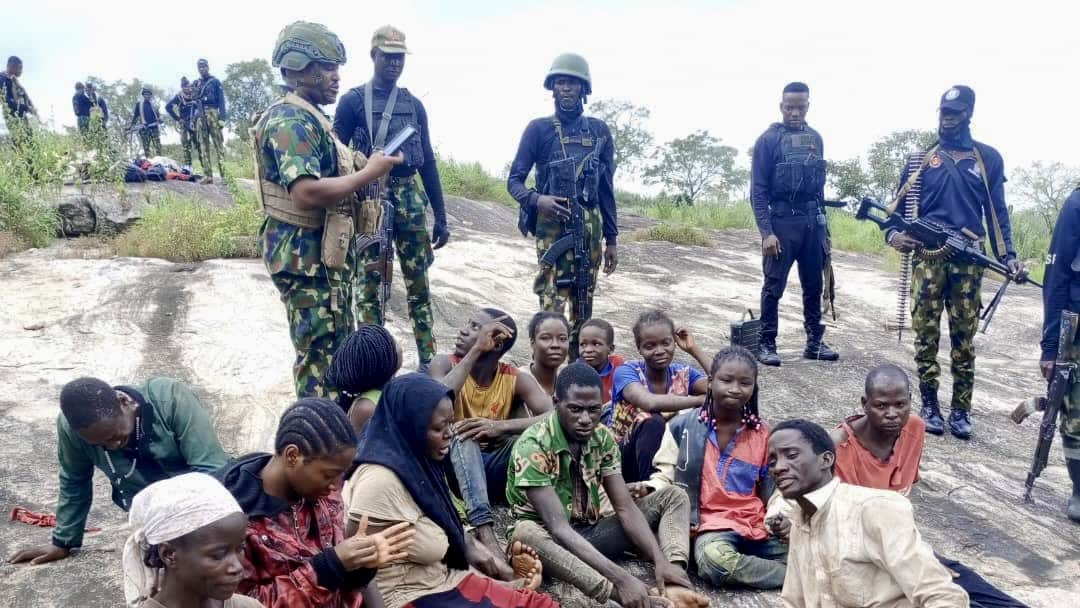
The Nigerian Army’s recent strikes, particularly in Chigbolu village, Kachia Local Government Area, exemplify a level of precision and execution rarely seen in previous operations. Acting on credible intelligence, troops launched an aggressive assault on terrorist camps, leading to the rescue of 13 abducted individuals. The meticulous planning of the operation ensured minimal civilian casualties and inflicted maximum damage on the terrorists, who were forced to flee, leaving behind captives, weapons, and other supplies.
This operation is a reminder of the Army’s evolving intelligence capabilities. By utilising local informants and surveillance technologies, the military was able to act swiftly and decisively. The recovery of 87 rounds of 7.62mm ammunition, a cache of AK-47 rifles, and other sophisticated weaponry underscores the scale of the terrorist network the military is battling. The neutralisation and capture of key insurgents prove that the military is gaining ground in its fight to eradicate these groups.
The capture of terrorist logistics suppliers, Mallam Usman Waikili and Salisu Idris, further highlights the Army’s growing success in dismantling the complex networks of insurgency. The seizure of ₦1,306,700.00, along with multiple ATM cards, SIM cards, and POS machines, points to the terrorists’ advanced methods of sustaining their operations, likely through ransom payments, informal financial systems, and illicit business networks.
The Deeper Problem: Is This Enough to Dismantle Terrorism?
While these operations mark a significant victory, the reality is that these successes barely scratch the surface of Nigeria’s broader security challenges. Terrorism in Nigeria is not a problem that can be eradicated solely by military force. The economic, political, and social factors that have allowed these terrorist organisations to flourish still persist.
The sheer amount of money recovered from captured insurgents—₦4,079,000.00—reveals the vast financial networks that sustain terrorism. Terrorists, particularly those affiliated with Boko Haram and ISWAP, continue to exploit Nigeria’s porous borders, smuggling arms and recruiting from local populations. The Army’s success in capturing weapons and ammunition in these raids is commendable, but it also exposes a glaring issue: How are these weapons entering the country in the first place?
Nigeria’s borders remain vulnerable, and efforts to secure them have been lacklustre at best. Even if insurgents are weakened in one region, they can easily retreat, regroup, and rearm across state lines or even international borders. Without coordinated border security, the Army’s victories may prove temporary, as insurgents are likely to re-emerge with new tactics and alliances.
Improving borders, particularly in countries facing security challenges like Nigeria, requires a multi-faceted approach that combines modern technology, better infrastructure, enhanced collaboration, and more effective policies. Here’s how borders can be improved:
Enhanced Border Security Technology
Surveillance Drones and Satellite Monitoring: Utilising unmanned aerial vehicles (UAVs) and satellite technology can provide real-time data on border activity. Drones can cover large, difficult-to-reach areas, giving security forces detailed visuals of potential threats.
Advanced Biometric Systems: Installing biometric systems at border crossings can ensure that every individual is properly documented. Biometric technologies such as fingerprint and facial recognition can help detect wanted criminals, terrorists, or smugglers trying to enter or leave the country.
Smart Fencing and Sensors: High-tech border fencing embedded with motion detectors, infrared cameras, and ground sensors can help detect suspicious movement along long stretches of borders. This can be particularly useful in remote areas where constant human patrols are not feasible.
Improved Infrastructure
More Checkpoints and Better Roads: Increasing the number of well-equipped border checkpoints can facilitate better monitoring. Improving roads leading to and from border regions can also help authorities access remote areas quickly.
Ports of Entry Modernisation: Upgrading ports of entry to include more secure, efficient facilities can improve customs processing and reduce illegal trafficking of weapons, drugs, and humans.
Waterways Control: In regions where borders involve rivers or coastal areas, increasing patrol boats and radar systems can help secure waterways, which are often exploited by smugglers and terrorists.
Collaborative Regional Border Control
Cross-Border Intelligence Sharing: Neighbouring countries facing similar security challenges should collaborate on intelligence-sharing initiatives. By creating regional task forces that pool information on suspected insurgents, arms dealers, or smugglers, countries can respond faster and more effectively to cross-border threats.
Joint Border Patrols: Conducting joint patrols between neighbouring countries’ security forces can close the gaps that terrorists and criminals exploit. This cooperation is crucial, especially in areas where borders are porous and insurgents move freely between nations.
International Cooperation on Border Policies: Establishing standardised border policies across regions like West Africa could help in tracking movements of goods and people. Stronger cooperation with international organisations, such as the African Union and the United Nations, could also help coordinate better border enforcement strategies.
Empowering Border Communities
Local Community Involvement: Border communities are often the first to notice suspicious activity. Empowering these communities with resources and information, and involving them in security operations through initiatives like community policing or local surveillance networks, can make borders more secure.
Improved Economic Opportunities: In many cases, smuggling and insurgency are supported by impoverished border communities who see illicit trade as an economic necessity. Providing better economic opportunities and infrastructure in these areas, such as healthcare, education, and jobs, can discourage involvement in illegal cross-border activities.
Anti-Corruption Measures
Tackling Border Corruption: One of the biggest issues in many countries is corruption at border checkpoints. Strengthening anti-corruption measures by regularly rotating officers, conducting random audits, and increasing salaries and benefits for border patrol officers can reduce bribery and facilitate stronger enforcement.
Transparent and Robust Border Management Systems: Digital systems for tracking goods, people, and vehicles can help reduce the discretionary power that often leads to corrupt practices. These systems ensure accountability by creating a clear audit trail for border activities.
Stronger Legal Frameworks
Reform of Immigration Laws: Updating immigration policies to reflect current security challenges is essential. Legal frameworks should include better protocols for screening and processing asylum seekers and tighter regulations on cross-border movement to ensure that those entering or exiting are properly vetted.
Crackdown on Smuggling and Trafficking Networks: National governments must strengthen laws on smuggling and human trafficking and ensure the prosecution of perpetrators. Building specialized law enforcement units to tackle these issues can create deterrents.
Capacity Building for Border Agencies
Increased Training for Border Patrol Agents: Providing specialised training for border personnel, including in counter-terrorism, smuggling detection, and human trafficking identification, is crucial for improving border security.
Equipment and Resource Allocation: Border forces need access to better equipment, including vehicles, communications technology, and protective gear, to handle threats effectively. Allocating proper resources will enhance the overall efficiency of border enforcement.
Strategic Border Policy Implementation
Risk-Based Border Management: Focusing on the most vulnerable sections of the border by using data-driven risk assessments can help allocate resources more effectively. Some border regions may be more prone to terrorist infiltration, while others might be major smuggling routes. Tailoring strategies for different areas will help improve overall security.
Humanitarian Border Policies: As many borders are not only security zones but also gateways for refugees and asylum seekers, ensuring a humane approach while maintaining security is essential. Proper screening processes that respect human rights while identifying potential threats are needed.
Digital and Cybersecurity Measures
Digital Tracking and Databases: Maintaining comprehensive digital databases of all entries and exits, with integration into regional or international systems like INTERPOL, helps track movements of suspected individuals and organised crime rings.
Cybersecurity for Border Systems: Ensuring that digital systems managing border control are secure from hacking or manipulation is critical. Strengthening cybersecurity protocols and conducting regular system audits can prevent breaches that might compromise national security.
Building Smarter, More Secure Borders
Effective border management requires a combination of advanced technology, collaborative efforts, and local community involvement. By upgrading infrastructure, training personnel, and leveraging intelligence, countries can better protect their borders from the myriad threats posed by terrorism, smuggling, and trafficking. The long-term success of these efforts, however, hinges on addressing the socio-economic challenges and ensuring transparent governance practices at the borders. Without addressing corruption, poverty, and the underlying drivers of insecurity, no amount of technology or enforcement will yield sustainable results.
The future of border security is about being both strategic and humane—using smart technology and data to protect national security while fostering regional cooperation and local empowerment. When borders become less porous and more resilient, nations can move closer to achieving peace and stability, both within and beyond their boundaries. The key lies in comprehensive, integrated approaches that balance immediate security needs with long-term socio-economic development.
The Persistent Threat of Kidnapping: Nigeria’s Deep-Rooted Insecurity
Perhaps the most jarring element of these operations is the fact that Nigerian students are still being kidnapped and held captive by terrorists. While the Army’s success in rescuing 13 individuals in Kachia is cause for celebration, it is also a sobering reminder that mass kidnappings continue to plague Nigeria.
In the last decade, the rise of kidnapping as a tool for both financial gain and political leverage has exploded. Groups like Boko Haram and ISWAP have shifted from attacking military outposts to targeting civilian populations, particularly in schools and universities. The psychological impact of these kidnappings cannot be overstated. They have become a symbol of the government’s inability to protect its most vulnerable citizens—children.
While the Army’s recent victory may give the impression of progress, it is merely a Band-Aid on a gaping wound. Nigeria’s security infrastructure remains weak, with intelligence-sharing between the military, police, and other security agencies often fragmented. The lack of coordination and resources is exploited by terrorists who continue to operate in the shadows, out of reach of the law.
The Role of Local Communities and Vigilante Groups
One critical factor that the Army’s narrative often overlooks is the role of local communities and vigilante groups in countering terrorism. In many cases, local informants provide the intelligence that allows the military to carry out successful raids. These informants risk their lives, as retaliation from terrorist groups can be brutal. Yet, their contribution is rarely acknowledged, and they often lack the protection and resources to continue their work effectively.
Additionally, vigilante groups have sprung up in many parts of Northern Nigeria, acting as the first line of defence against insurgents. These groups, while controversial, have played a crucial role in filling the security gap left by the overstretched and underfunded military. However, their existence also raises questions about the state’s monopoly on the use of force and the potential for these groups to become militarised or co-opted by insurgents.
The government must address this growing phenomenon of civilian-led security initiatives. While they provide immediate relief, they are not a long-term solution. Moreover, they risk deepening ethnic and regional tensions, as vigilante groups are often formed along communal lines. A reliance on these groups could lead to further fragmentation of Nigeria’s already fragile social fabric.
Celebrating Success Without Addressing the Bigger Picture
The Army’s leadership has rightfully commended the troops for their bravery and commitment in the recent raids. The Chief of Army Staff’s praise is an acknowledgment of the difficult and dangerous work being done by soldiers on the ground. However, it is crucial that this moment of victory does not obscure the broader, long-term issues that continue to plague Nigeria’s security apparatus.
One of the key questions that arise from this operation is the sustainability of these military successes. The Nigerian Army, while undoubtedly brave and effective in specific operations, is stretched thin across multiple fronts. From fighting Boko Haram in the North East to combating banditry in the North West and dealing with secessionist movements in the South East, the Army is overwhelmed.
Without a comprehensive overhaul of Nigeria’s entire security strategy, these military victories may be fleeting. The government must invest in modernising the Army’s equipment, improving soldiers’ welfare, and expanding intelligence capabilities. Moreover, addressing the socio-economic conditions that breed terrorism—such as poverty, unemployment, and lack of education—must be part of a holistic approach to national security.
A Pyrrhic Victory or a Turning Point?
The Nigerian Army’s operations in Kaduna and Niger States represent a significant achievement in the fight against terrorism. The rescue of kidnapped students and the capture of insurgents are victories that should be celebrated. However, they are also reminders of the long road ahead. Nigeria’s war against terrorism is far from over, and without addressing the root causes of insecurity, these military successes may amount to nothing more than pyrrhic victories.
The Nigerian government must not rest on its laurels. It is time for a comprehensive, multi-faceted approach that includes military action, community engagement, economic development, and political reform. Only then can Nigeria hope to dismantle the terrorist networks that threaten its future.
With reporting from Suleiman Adamu, Senior National Security/Defence Correspondent, Atlantic Post.