By Editor
PORT HARCOURT, Rivers State — The once-peaceful Rivers State is now engulfed in a political crisis that threatens the very fabric of its governance and stability. On Tuesday, the crisis escalated dramatically, culminating in the death of a police officer and a local vigilante member amidst violent confrontations involving political thugs. At the heart of this turmoil lies a fierce power struggle between the Governor Siminalayi Fubara and the Rivers State House of Assembly over the control and tenure of democratically elected local government chairmen and councillors.

The Genesis of the Crisis
The crisis stems from the expiration of the three-year tenure of elected local government council chairmen and councillors on Monday. Despite their term ending, these chairmen and councillors, supported by the Local Government Amendment Law 2024, passed by the Rivers State House of Assembly, have refused to vacate their offices. This law, endorsed by Speaker Martin Amaewhule and 27 lawmakers, allows the extension of the tenure of councillors and chairmen by six months due to the failure of the Governor Fubara administration to conduct local government elections.
However, Governor Fubara’s faction has vehemently opposed this extension, leading to violent clashes as thugs allegedly sponsored by the governor attempted to forcefully remove the councillors and chairmen from their offices. This confrontation reached a deadly peak at Eberi-Omuma in Omuma Local Government Area, where a police officer and a vigilante were killed in the ensuing violence.
Violent Confrontations and Escalation
The tension was palpable on Monday when thugs loyal to Governor Fubara caused a stampede by barricading the secretariats of three local governments in the Kalabari-speaking areas—Asari-Toru, Akuku-Toru, and Degema—claiming to enforce the governor’s directive. In a statewide broadcast on Tuesday, Governor Fubara directed the heads of local government administrations to take charge of council affairs from Wednesday, further intensifying the conflict.
The situation spiralled out of control at the Port Harcourt City Local Government Area Council when the state ALGON Chairman, Allwell Ihunda, narrowly escaped death. Ihunda, the outgoing Chairman of Port Harcourt City Local Government Area, was confronted by thugs identified as Ijaw militants while attempting to enter the council secretariat. The confrontation escalated into a chaotic scene with gunshots fired by Ihunda’s security details to disperse the militants.
The Broader Impact Across Local Governments
The unrest wasn’t confined to Port Harcourt. In Eleme LGA, the state ALGON secretary and outgoing chairman faced a similar fate, forced to leave the council facility after a heated exchange with Fubara’s thugs. In Obio/Akpor LGA, the secretariat was occupied by hundreds of thugs early Tuesday morning, leading to the destruction of property and violent clashes. The planned distribution of farm implements in Emuoha LGA by outgoing Chairman Dr. Chidi Lloyd was also disrupted by thugs loyal to the governor.
Notably, the conflict has spread across various local governments, with reports of shootings in Obio/Akpor, Emohua, Eleme, and Khana LGAs. In Ikwerre LGA, outgoing Chairman Dr. Samuel Nwanosike accused the governor of hiring cultists and gunmen to unleash violence, a claim refuted by the state Commissioner for Information and Communications, Joseph Johnson, who insisted that the state remains peaceful.
Police Intervention and Government Response
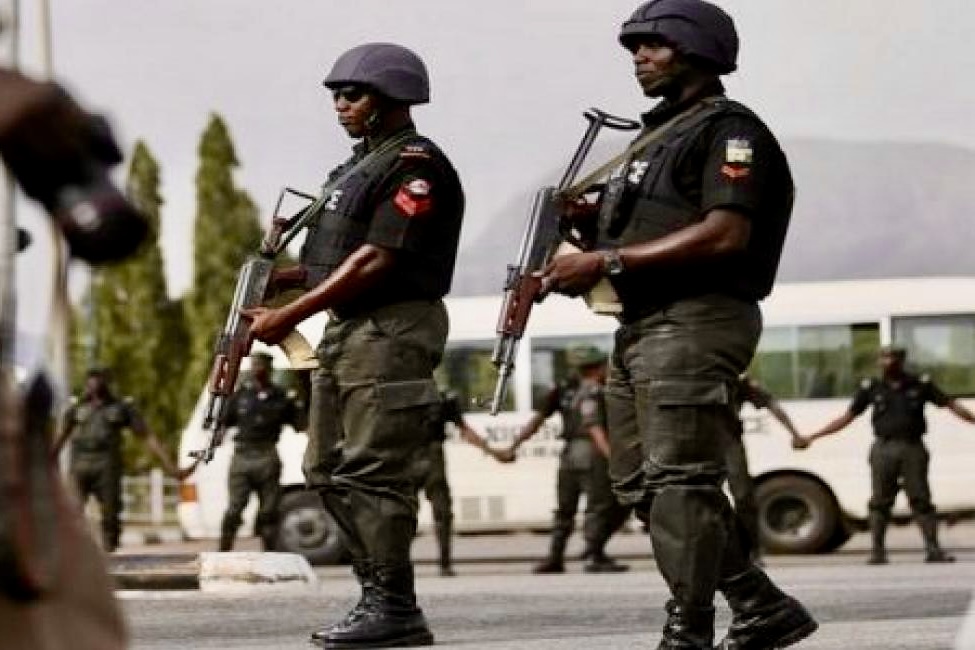
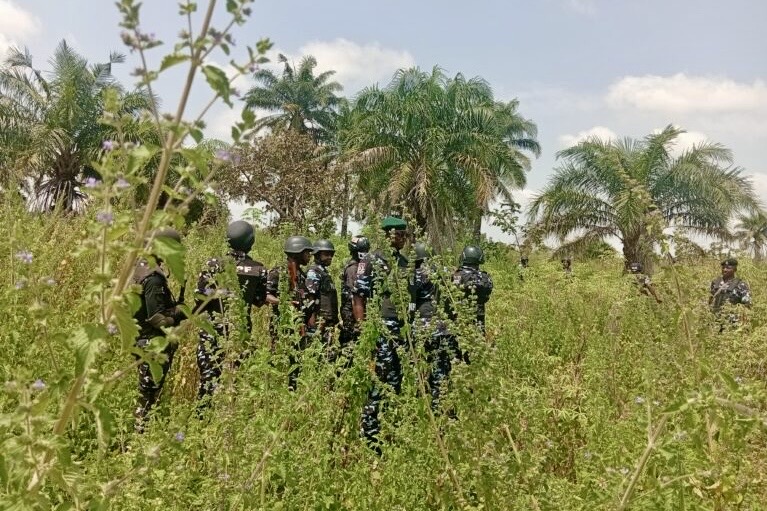
In response to the escalating violence, the Rivers State Police Command announced the takeover of all 23 local government secretariats. Conventional and anti-riot police officers have been deployed to maintain law and order. The police confirmed the deaths of the officer and vigilante member and stated that investigations are ongoing to determine the causes of the incident.
Governor Fubara, addressing the media after a State Security Council meeting, vowed to resist any attempts to arrest his supporters, whom he described as standing for the truth. He emphasized his commitment to ensuring peace in the state while protecting his supporters from what he termed “trumped-up charges.”
Historical Context and Political Tensions
The current crisis is deeply rooted in the historical political tensions between Governor Fubara and his predecessor, Nyesom Wike. The two have been at odds since Fubara took office, leading to a series of confrontations and legal battles. The conflict reached a boiling point on October 30, 2023, when the Rivers State House of Assembly complex was bombed to prevent the commencement of impeachment proceedings against Governor Fubara.
The following day, 27 assembly members loyal to Wike signed an impeachment notice and served same on Gov. Fubara, further intensifying the crisis. The political feud saw the 27 state assembly members announce a purported defection from the Peoples Democratic Party (PDP) to the All Progressives Congress (APC). In a controversial move, Governor Fubara ordered the demolition of the Assembly Complex, citing structural defects, a decision that has been widely criticized as an attempt to undermine the legislature.
Call for Federal Intervention
Amidst the chaos, there have been calls for federal intervention to restore order and uphold the constitution. Outgoing chairman Dr. Chidi Lloyd urged President Bola Tinubu to step in, warning that the state is on the brink of a breakdown in law and order. These calls highlight the severity of the crisis and the urgent need for a resolution to prevent further bloodshed and instability.
The Role of Media and Public Perception
Media coverage and public perception play a crucial role in the unfolding events. Reports from various local and national news outlets have painted a grim picture of the situation, with accusations and counter-accusations flying between the factions. The state Commissioner for Information and Communications, Joseph Johnson, has dismissed claims of widespread violence as exaggerated, insisting that Rivers State remains peaceful.
However, eyewitness accounts and reports from affected areas tell a different story, one of fear and uncertainty among the populace. The media’s role in documenting and reporting these events is critical in shaping public opinion and influencing the actions of both state and federal authorities.
The Path Forward
As Rivers State grapples with this political crisis, the path forward remains uncertain. The immediate need is to restore law and order, ensuring the safety of all residents. This requires a concerted effort from the state government, law enforcement agencies, and, potentially, federal intervention.
Long-term solutions must address the underlying political tensions and power struggles that have fueled the crisis. This includes conducting local government elections to provide a clear and democratic resolution to the tenure dispute. Additionally, fostering dialogue and reconciliation between the warring factions is essential to prevent future conflicts.
Conclusion
The crisis in Rivers State is a stark reminder of the fragile nature of political stability in Nigeria. The violent clashes and loss of life underscore the urgent need for effective governance, rule of law, and respect for democratic processes. As the state navigates this turbulent period, the actions of its leaders will be closely scrutinized, both by their constituents and the broader national and international community.
The situation calls for decisive leadership and a commitment to peace and democracy. Only through such measures can Rivers State hope to emerge from this crisis stronger and more united. The eyes of the nation are on Rivers State, and its leaders must rise to the occasion, ensuring that justice, peace, and stability prevail.