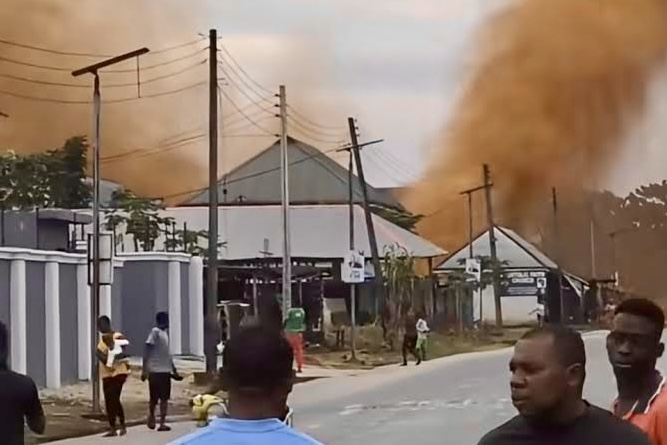
MAKURDI, Nigeria (AtlanticPost) — The Federal Government says suspects linked to the killings in Yelwata, Benue State will be arraigned on Monday before Federal High Court trial judge Justice Joyce Abdulmalik in Abuja.
The announcement came from Office of the Attorney General of the Federation and Minister of Justice, in a statement attributed to the media aide Kamarudeen Ogundele and linked to the Attorney General Lateef Fagbemi.
On the surface, it is a familiar pledge. A “strong signal” will be sent. “Justice will be ensured.” Lives and property will be protected. Yet beneath the language lies a bigger question. Business leaders, farmers, insurers, lenders, and households quietly ask it whenever mass violence hits a food producing corridor.
Will this be one of the rare cases where the state moves from condemnation to credible conviction.
If it is, the ripple effects will travel well beyond the courtroom. Benue’s insecurity is not only a humanitarian and security concern. It is a market event. It is a supply shock. It is a cost driver. It is a capital flight trigger. And when violence meets impunity, the premium that Nigeria pays for food, transport, insurance, credit and governance rises again.
If this prosecution is handled with seriousness, it has the potential to become a benchmark for deterrence. Transparency will also boost investor confidence in the rule of law. If mishandled, it could deepen distrust, inflame communal narratives, and reinforce the damaging signal that large scale rural killings can happen without consequence.
What the Federal Government Says Will Happen Monday
The government narrative is straightforward. Suspects “strongly linked” to the killings will be formally arraigned in Abuja. The authorities describe the investigation as painstaking and collaborative across agencies. The goal is deterrence. The language is framed as national security. “Enemies of the country” operating “under any disguise” are warned.
There are two immediate points that matter for public accountability.
First, arraignment is not conviction. It is the opening move. It determines if prosecutors have a charge sheet that matches the evidence. It checks if the court has jurisdiction. It also verifies if the defendants have counsel and can enter pleas. It also sets timelines. Nigeria has a long history of high-profile arrests. These arrests do not translate into final judgments. This is either because investigations are thin. Sometimes, witnesses disappear. In other cases, prosecutions collapse under procedural weight.
Second, the choice of venue and court is itself revealing. A federal court trial suggests the charges may be anchored in federal offences rather than only state level homicide statutes. That may include offences connected to terrorism. It may also involve organised violence, firearms, cross border criminality, or other violations created by Acts of the National Assembly. The precise framing matters. It determines the evidential burden and the kind of proof required. It also affects the investigative agencies likely to testify.
For markets, the detail to watch is not the rhetoric. It is the charge sheet. What exactly do prosecutors say happened? Who did what? What evidence supports it? How do they intend to prove it beyond reasonable doubt?
Why This Case Is Bigger Than Benue
Benue has long carried Nigeria’s symbolic nickname as a food basket state. That label is not just pride. It is a clue to systemic vulnerability. When violence disrupts farming communities in Benue, the effect does not stay local.
It plays out through at least five economic channels.
Supply disruption and price pressure
Farm violence reduces planting, harvesting and market participation. Even when farms are not directly attacked, insecurity imposes curfews, travel risk, and informal levies on movement. Traders respond by cutting trips, shifting routes, or raising margins to cover risk. The result is familiar. Fewer goods move. Spoilage rises. Prices climb.
Nigeria’s inflation story has been volatile through the past two years. Headline inflation has moderated following CPI rebasing. However, households still experience food stress. This is because food remains the largest item in the consumption basket for millions. Food inflation is thus the political and economic heartbeat. Disrupting food belt states adds heat.
Displacement and labour loss
Displacement is not an abstract statistic. In farming economies it is labour exit. It is the loss of seasonal routines. It is the breakdown of informal credit between farmers and middlemen. It is children leaving school. It is women losing small businesses that depend on market footfall.
Humanitarian reporting has consistently described Benue as a state with a high IDP concentration. Displaced families are spread across camps and host communities. That means the state is already operating with a large population under stress. When a mass killing occurs, the displacement shock compounds existing fragility.
Security costs and the crowding out of development
Every escalation pulls scarce public money into response mode. More deployments. More logistics. More relief. More political visits. Yet the same communities often lack the quiet investments that prevent recurrence. These include early warning systems, rural policing, dispute resolution structures, grazing governance, and land administration reforms.
The opportunity cost is large. Funds that could strengthen irrigation, extension services, storage, and agro processing get diverted to emergency spending.
Investor confidence and the risk premium
Investors rarely publish a memo saying they avoided a state because of rural violence. They simply raise required returns, shorten tenors, reduce exposure, or shift investment to lower risk corridors. The effect is a hidden tax on growth.
Agribusiness needs long term capital. Warehouses, processing plants, cold chains and transport fleets do not pay back in months. They pay back in years. A sustained perception of insecurity and impunity shortens capital patience.
Communal trust and the cost of conflict narratives
Farmer herder violence has become heavily politicised across Nigeria’s Middle Belt. Different groups use different labels, sometimes ethnic, sometimes religious, sometimes criminal. Each label influences public mood and policy. When the state fails to prosecute credibly, narratives harden and retaliation risk rises.
For business, hardening narratives is not culture war theatre. It is operational risk. It affects staffing, procurement, movement, and the ability to run markets safely.
The Yelwata Killings and the Accountability Gap
The killings referenced by the Federal Government are widely reported to have occurred in mid June 2025 in Yelwata, in Guma Local Government Area. Reports described night time attacks and significant loss of life, with many people displaced. Multiple accounts alleged involvement of armed attackers often described as herders, though attribution has been contested and must be proven in court.
For years, the accountability gap has been the central grievance in rural conflict. Communities say attacks repeat because perpetrators believe they can act and vanish. Security agencies blame difficult terrain, intelligence gaps, and the fluid nature of armed groups. Politicians blame each other. Meanwhile families bury their dead, relocate, or live with fear.
This is why a trial matters even before judgment.
A credible prosecution changes incentives. It tells potential perpetrators that the state can investigate, identify, arrest, and convict. It signals to communities that reporting and cooperation are not futile. It also signals to investors that Nigeria’s legal institutions can still function under pressure.
But credibility is fragile. It depends on choices prosecutors make in the next weeks.
What Makes This Trial Hard in Practice
Mass violence cases collapse for reasons that are rarely discussed in official statements.
Evidence collection in chaotic scenes
Crime scenes in rural attacks are often unsecured for hours. Crowds move through. Homes are cleared. People flee. Physical evidence is lost. The chain of custody becomes weak. If prosecutors rely on confessions without corroboration, defence lawyers can challenge voluntariness and reliability.
A painstaking investigation, if it is real, should mean forensic discipline, documented collection processes, and multiple independent strands of evidence.
Witness fear and community pressure
Witnesses in communal conflict cases face intimidation from multiple directions. They may fear attackers, they may fear being labelled traitors, and they may fear state actors if trust is low. Without witness protection measures, testimony becomes risky. People recant, disappear, or refuse to appear.
If the Federal Government wants this case to set a “strong signal,” they must focus on witness management. It will be one of the strongest signals of all.
Jurisdictional complexity
The Federal Government’s choice to prosecute in a federal court suggests reliance on federal offences. That can be strategically sensible. It can also create litigation over jurisdiction, depending on how the charges are framed and what facts are alleged. If jurisdiction challenges succeed, delays will mount. If the charge sheet is poorly drafted, the prosecution may be forced into amendments, giving the defence procedural openings.
Speed versus thoroughness
Political pressure tends to demand speed. Courtrooms, nevertheless, reward thoroughness. Rushing a case can produce avoidable errors. Yet delay erodes public confidence and increases the risk of witness fatigue.
The best signal is not speed alone. It is steady progress with visible competence.
Perception management and public trust
In cases tied to communal conflict, perception can become as important as facts. If one community believes the prosecution is selective, the case may inflame tensions rather than calm them. That risk increases if the state seems to prosecute low level actors. At the same time, it ignores organisers, sponsors, or wider networks that allow violence.
A trial can send a strong signal or a mixed signal. The difference is whether accountability is seen as even handed and evidence based.
The Business and Food Security Stakes Nigeria Can’t Ignore
Benue’s farming economy links directly to household welfare nationwide. When insecurity becomes routine in a food belt state, Nigeria pays in three easy-to-measure ways. It also pays in two ways that are harder to see.
Easy to measure
Higher food prices, especially for staples tied to rural supply routes.
Higher transport costs due to rerouting and risk allowances.
Higher public spending on security response and humanitarian relief.
Harder to see but equally real
Higher borrowing costs for agribusiness because risk increases.
Lower investment in storage and processing because capital avoids unstable zones.
In the short term, violence acts like a supply shock. In the long term, it serves as an investment deterrent. This keeps Nigeria’s agricultural value chain stuck in low productivity patterns. That is why a justice process is not separate from economic policy. Rule of law is an economic input.
What to Watch in Court for Signals That Matter
Atlantic Post readers might wonder if this case will break the cycle. There are practical indicators to follow from day one.
The charge sheet and the theory of the case
Does the prosecution show a coherent narrative, or a vague bundle of allegations. Are defendants linked to specific acts, or charged broadly with little detail. Does the case rely on hard evidence, digital trails, weapons recovery, forensic material, or primarily on statements.
The quality of disclosure
Will prosecutors give prompt disclosure to the defence. Will the court manage the case firmly to avoid endless adjournments. Will there be a clear timetable for trial within trial applications, bail arguments, and witness scheduling.
Witness protection and courtroom logistics
Are witnesses shielded where necessary. Are there provisions to prevent intimidation. Are victims’ families supported to attend without turning proceedings into a flashpoint.
Inter agency credibility
Because the government emphasised collaboration, the court will likely hear from investigators across agencies. Consistency matters. Contradictions between agencies can sink cases. Competence can strengthen them.
Public communication without prejudice
The state must communicate enough to sustain trust without prejudicing proceedings. Declaring victory before trial can backfire. So can silence that allows rumours to dominate.
What the Tinubu Administration Needs to Prove Beyond the Rhetoric
The statement ties the prosecution to the duty to protect life and property. By implication, it binds them to the legitimacy of the state. This makes sense politically and constitutionally. But it also creates a measurable test.
Can the administration of Bola Ahmed Tinubu show that rural mass violence is prosecutable in a way that deters recurrence.
To do so, the state needs to show four things.
Capacity
That investigators can build cases that survive cross examination, not just media headlines.
Neutrality
That justice is not shaped by the identity of victims or the politics of the region.
Continuity
That the case will not fade after initial publicity, and that appeals will be pursued with seriousness.
Prevention linkage
That prosecution is part of a larger prevention plan, not a substitute for it.
A trial alone can’t secure Benue. But a credible trial can reset expectations, and expectations shape behaviour.
Policy and Business Implications
This case should also provoke a clearer national conversation about rural security as economic infrastructure.
Markets need predictable movement corridors.
Farmers need assurance they can plant and harvest without being targeted.
Traders need safe roads and predictable enforcement.
Investors need stable property rights and credible dispute resolution.
If Nigeria can build a reputation that mass rural killings lead to swift and fair prosecution, the economic payoff will be significant. It will not show up only in headlines. It will show up in reduced risk premiums, stronger supply chains, and greater willingness to fund agribusiness.
Conversely, if the case collapses, it will reinforce the most damaging message possible. That rural communities are expendable and that violence is cheap.
The Patriotic Bottom Line
The Federal Government’s decision to arraign suspects is a necessary step. It is not yet a triumph. The strong signal Nigerians and markets need is not a promise of justice. It is the hard evidence of justice delivered through due process.
For Benue, the stakes are human first. For Nigeria, the stakes are also economic. A food belt can’t thrive under fear. And a country can’t credibly promise food security while rural producers live in insecurity and impunity persists.
Monday’s arraignment will open the file. The months that follow will decide whether Nigeria writes a new ending.
Follow us on our broadcast channels today!
- WhatsApp: https://whatsapp.com/channel/0029VawZ8TbDDmFT1a1Syg46
- Telegram: https://t.me/atlanticpostchannel
- Facebook: https://www.messenger.com/channel/atlanticpostng