On the night of 13–14 June 2025, in the remote hamlet of Yelwata, Guma Local Council, Benue State, a slaughter more reminiscent of medieval carnage than modern society unfolded.
Around 200 defenceless men, women and children—internally displaced persons under the care of a Catholic mission—were massacred with “extreme cruelty,” their homes razed, crops torched and bodies left strewn under moonless skies.
Entire families vanished within minutes; survivors recount bullet-riddled walls, agonised screams and the sickening stench of burning flesh.
This unprovoked atrocity—believed to be carried out by heavily armed herdsmen—breaks records even in a region long scoured by communal violence.
It has exposed the rotting underbelly of Nigeria’s security apparatus, laid bare the frailty of federal-state relations, and drawn an unprecedented global rebuke.
From the Vatican’s highest pulpit to the embattled streets of Makurdi, outrage has soared. Yet as President Bola Tinubu vows “enough is enough,” Nigerians ask: why must bloodshed become the only catalyst for decisive action?
I. Papal Condemnation: A Moral Earthquake
At midday on 15 June, Pope Leo XIV—Head of the Catholic Church and Sovereign of the Vatican City State—paused amid the Angelus prayer in St Peter’s Square.
With over 100,000 pilgrims in attendance, he decried the Yelwata massacre as a “terrible massacre,” explicitly naming the victims as internally displaced persons sheltered by a local Catholic mission.
“On the night of the 13th/14th June, in the town of Yelwata in the Guma Local Council in Benue State in Nigeria,” the Pope intoned, “a terrible massacre occurred in which around 200 people were killed with extreme cruelty. I pray that security, justice, and peace will prevail in Nigeria, a beloved country so affected by various forms of violence. And I pray in a special way for the rural Christian communities in Benue State, who have been unceasingly the victims of violence.”
This rare direct intervention from the Vatican’s leader—echoing only the gravest global crises—sent shockwaves through diplomatic channels.
It marked the first time a pontiff invoked Nigeria by name in an Angelus address, highlighting the international community’s alarm at the carnage.
Catholic relief agencies immediately ramped up mobilisation for food, medical and psychosocial support, warning that survivors now face famine, disease and deep trauma in displacement camps.
II. Tinubu’s Ultimatum: “Enough Is Now Enough”
Barely three hours later, President Bola Tinubu convened his National Security Council in Abuja. In a terse communiqué issued by Bayo Onanuga, his Special Adviser on Information & Strategy, the President declared:
“The latest news of wanton killings in Benue State is very depressing. We must not allow this bloodletting to continue unabated. Enough is now enough. I have directed the security agencies to act decisively and arrest perpetrators of these evil acts on all sides of the conflict and prosecute them. Political and community leaders must act responsibly and avoid inflammatory utterances that could further increase tensions and killings. This is the time for Governor Alia to act as a statesman and immediately lead the process of dialogue and reconciliation that will bring peace to Benue.”
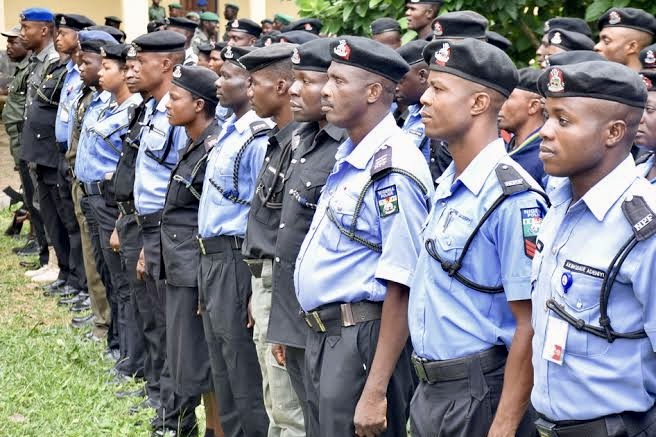
Within 24 hours, elite police Tactical Response Units, military intelligence teams and Air Force surveillance aircraft were on the ground in Makurdi.
Yet while the flurry of orders and deployments suggests urgency, security experts warn that without structural reform, such showdowns will remain fleeting.
III. Protest in Makurdi: Youths Demand Action
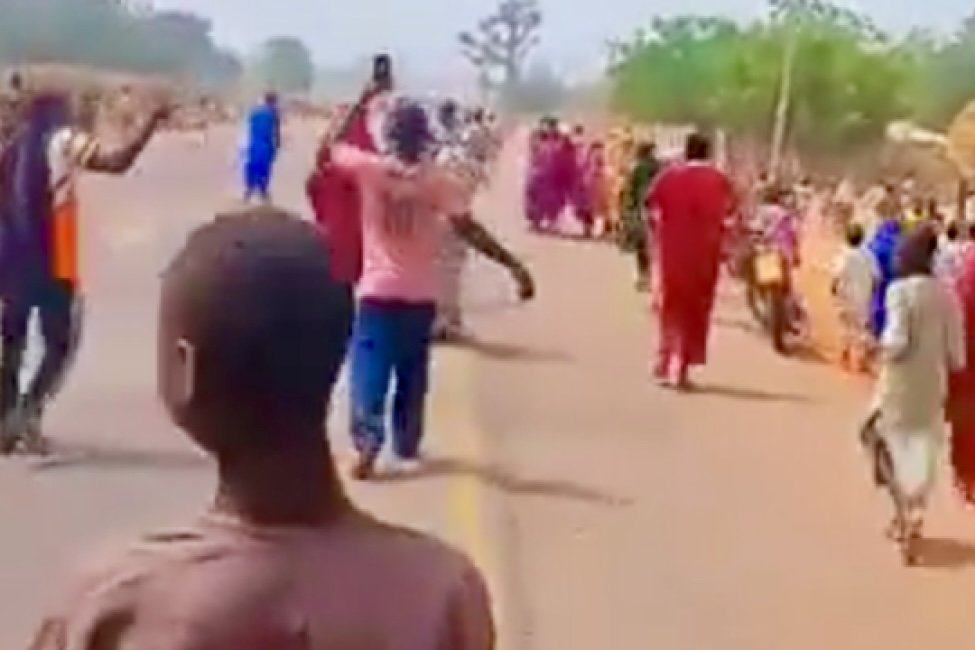
On 16 June, dawn broke over Makurdi to find Wurukum Roundabout occupied by thousands of angry youths. Armed only with tree branches, leaves and hand-painted placards reading “Stop Benue Killings” and “We Will Not Surrender to Fulani,” they sang solidarity hymns and blocked the arterial highway linking northern and southern Nigeria.
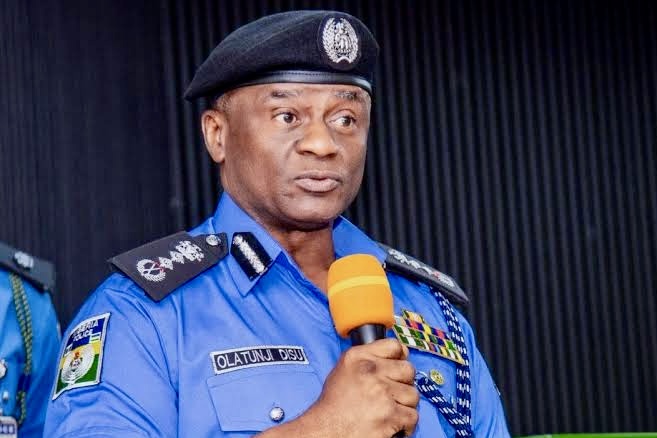
When Deputy Governor Sam Ode and Police Commissioner Emenari Ifeanyi attempted to address the crowd, protesters refused to budge, forcing law enforcement to fire teargas canisters.
The roundabout turned into a battlefield of gas and defiance until social media influencer Martins Otse—better known as VeryDarkMan—arrived. His impassioned plea for calm allowed traffic to resume after a tense five-hour standoff.
“We have seen children burnt to ashes,” Otse told the crowd, “yet we are still calling for peace. Let us Jericho-walk peacefully with our voices, not our fires.”
The scene epitomised the paradox of Benue’s crisis: seething anger coexisting with a yearning for non-violent resolution.
IV. Aerial Surveillance and Schoolgate Panic
From the skies, military helicopters now cruise regularly above Makurdi, Guma and neighbouring Gwer West Councils. An officer, speaking anonymously, confirmed that the aerial patrols are “intelligence-based,” tasked with tracking herdsmen convoys and intercepting them before they strike. But for terrified parents, the whirring blades offer scant comfort.
At Government Special Science Senior Secondary School, North Bank, hundreds of mothers and fathers besieged the gates, demanding their children be released to them.
They cited recent abductions at Joseph Tarka University and the presence of cattle grazing within school fences—evidence, they argued, of lawlessness on every front.
Their fear evoked echoes of Chibok and Dapchi, where unprotected schoolchildren became targets.
V. Historical Fault Lines: From Grazing Routes to Genocide
The Yelwata massacre cannot be divorced from decades of farmer–herder tensions. The Northern Grazing Reserve Act of 1965, introduced to regulate transhumant herding, inadvertently sowed seeds of future conflict by entrenching exclusive grazing corridors and marginalising nomadic Fulani communities.
Over ensuing decades, population growth, desertification and land degradation forced herdsmen ever deeper into agrarian territories, sparking disputes over crop destruction and water rights.
Between 2015 and 2024, the Nigeria Security Tracker recorded over 5,000 communal violence deaths in Benue—an alarming 18 percent of Nigeria’s total for that period.
The worst single-day massacre prior to Yelwata was in July 2018 at Ukpor village, where 150 villagers were butchered. Yet the frequency of mass killings has escalated: from an average of three per year in the early 2000s to over ten annually by 2024.
VI. Statistical Reality: The Numbers Speak
- 200 casualties in Yelwata (June 2025) — the highest single event in Benue to date.
- 182 abductions nationwide in May 2025 — up 12 percent on April.
- 635 fatalities from communal violence in May 2025 — a 7.6 percent month-on-month rise.
- 15 percent of all civilian deaths in rural attacks in 2025 have occurred in Benue State alone.
These figures, corroborated by HumAngle, the Nigeria Security Tracker and local NGOs, paint a stark picture: armed conflict in Nigeria’s Middle Belt is intensifying, with Benue as its epicentre.
VII. Civil Society’s Cry: “No More Inaction”
Human rights groups have lashed out at government inaction. Amnesty International Nigeria labelled the Yelwata attack “a shocking illustration of almost daily bloodletting,” demanding rapid-response forces in rural enclaves.
The Nigerian Red Cross warned of a burgeoning humanitarian catastrophe: “Survivors face severe shortages of food, shelter and psychosocial care,” its Director told The Guardian Nigeria.
On social media, lawyers and activists have campaigned under hashtags like #JusticeForYelwata and #ProtectMiddleBelt, calling for the immediate dismissal of security chiefs and the prosecution of those who “look on while Nigerians bleed.”
International observers, including the UN Special Rapporteur on Extrajudicial Killings, have urged Abuja to grant unconditional access to fact-finding missions.
VIII. Law Enforcement in Disarray
Despite Tinubu’s rallying cry, Nigeria’s rural security architecture remains fragmented. Local police commands operate in silos, military intelligence rarely shares actionable data, and night-vision equipment is scant.
A leaked Defence Ministry memo, obtained by The Punch, admits:
“We are fighting a ghost enemy with inadequate resources and fractured command structures. Current operations are reactive, not preventive.”
Front-line officers recount a litany of woes: dilapidated vehicles, broken radios and the absence of formal contingency plans.
In contrast, herdsmen convoys—often equipped with sophisticated weaponry looted from military barracks—move with impunity across porous borders.
IX. Political Strains: Abuja vs. Makurdi
Governor Hyacinth Alia, a Tinubu ally, has voiced frustration at perceived federal delays in troop deployment.
His office, through Chief Press Secretary Sir Tersoo Kula, lamented that official statements from Abuja arrive “recycled and belated.” Opposition politicians have seized on the discord.
Peter Obi, Labour Party presidential candidate, called the killings a “failure of leadership,” urging a national emergency to tackle mass violence.
Atiku Abubakar, former VP and PDP flagbearer, demanded transparent investigations, compensation for survivors and enhanced security presence in rural communities.
Analysts warn that the rift could fracture the ruling APC if state governors demand constitutional amendments to control local security budgets, potentially triggering a constitutional crisis.
X. Survivor Voices: Stories from the Ashes
In displacement camps on Makurdi’s outskirts, grief is palpable. Mrs Grace Ayo, who lost five family members, recounts fleeing barefoot through rain-soaked bush:
“I carried my baby in one arm and my father’s ashes in the other.”
Aid workers estimate that over 3,000 individuals were displaced by the Yelwata massacre, many now living under tarpaulin sheets.
Monsignor Emmanuel Uzochukwu of the Catholic Relief Services observes:
“These are not statistics; they are mothers, fathers, children who will never smile the same again.”
Psychologists warn of a wave of PTSD among survivors, compounded by inadequate mental-health services in rural Nigeria.
XI. Economic and Social Fallout
Benue’s agrarian economy—crucial for both local livelihoods and national food security—has been shattered. Yelwata’s fertile fields, once yielding cassava, yam and maize, now lie fallow and scorched.
Market traders report that food prices in Makurdi have surged by 25 percent in the fortnight following the massacre, straining poor households already battered by inflation.
Schools face closures as parents withdraw children in fear; health clinics struggle under the dual burden of treating attack survivors and coping with communicable diseases in overcrowded camps.
Traditional rulers warn that protracted insecurity could spark mass urban migration, overstretching cities like Makurdi and even Abuja.
XII. Expert Prescriptions: Beyond the Gunfire
Security analysts insist that kinetic measures alone are insufficient. Dr Aminu Suleiman, Director of the Centre for Conflict Resolution, proposes a three-pillar model:
1. Community-Based Vigilance
- Recruit and train local volunteers as auxiliary informants.
- Grant legal immunity for tipoffs that lead to arrests.
2. Restorative Justice Mechanisms
- Establish county-level truth commissions to hear grievances of farmers and herders.
- Facilitate reconciliation ceremonies under traditional and religious auspices.
3. Sustainable Livelihood Programmes
- Invest in climate-resilient crop varieties and alternative grazing corridors.
- Offer micro-loans and vocational training for displaced youths.
Without these holistic interventions, analysts warn, any spike in arrests will simply fuel revenge killings.
XIII. Accountability: The Rule of Law
Civil-society groups are calling for:
- Fast-track Prosecution
- Special courts for conflict crimes, ensuring speedy trials and victim representation.
- Parliamentary Oversight
- Public hearings on defence and interior budgets, with quarterly progress reports.
- Civilian Review Boards
- Independent panels to investigate police and military misconduct.
Legal experts stress that visible justice—rather than clandestine tribunals—will deter future atrocities and rebuild public trust.
XIV. International Solidarity: Leveraging Global Goodwill
The Pope’s pronouncement and international media coverage offer Nigeria a rare opportunity: to solicit technical assistance. Potential avenues include:
- Forensic Training by UN peacekeeping experts.
- Intelligence-Sharing Platforms in collaboration with ECOWAS and INTERPOL.
- Rapid-Response Funding from the African Union’s Peace Fund.
Diplomats suggest bundling Nigeria’s requests into the upcoming UN Security Council session on African conflicts, ensuring attention beyond Sahel crises.
XV. From Slogan to Substance: A Turning Point?
“Enough is now enough” must transcend political rhetoric. For Nigeria’s beleaguered citizens, especially those in Benue’s hinterlands, words are worthless if their children sleep in fear.
Unprecedented zeal—spurred by the Vatican’s moral authority and the clamour of Makurdi’s youth—could galvanise lasting reform, but only if:
- Security Agencies receive funding, training and accountability reforms.
- Governments at federal and state levels commit to joint command structures.
- Communities are empowered as partners, not passive recipients of aid.
Atlantic Post writers Suleiman Adamu, Osaigbovo Okungbowa & Peter Jene contributed to this report.