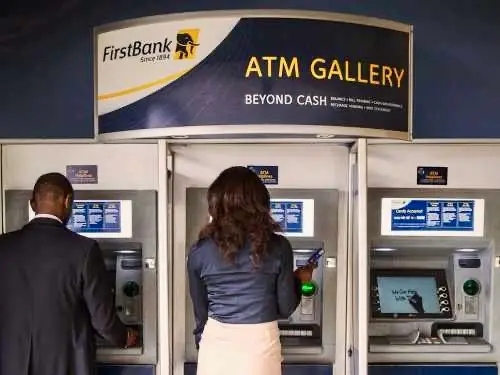
Discover how Nigeria’s commercial banks are exploiting a new N100 ATM withdrawal fee by strategically loading ATMs with cash—exacerbating the financial squeeze on everyday Nigerians. Our in‐depth report critically examines the exploitative practices underpinning this policy shift and the systemic issues in Nigeria’s banking sector.
LAGOS, Nigeria — In a dramatic development that has set tongues wagging across Nigeria’s financial landscape, commercial banks have been observed aggressively loading their ATMs with cash following the implementation of a contentious N100 ATM withdrawal fee.
The move, first witnessed on 1 March 2025, underscores not only a seismic shift in banking operations but also brings to light a broader, more troubling trend of exploitative practices that have long plagued Nigeria’s commercial banking sector.
The New ATM Fee Structure: A Controversial Mandate
On 10 February 2025, the Central Bank of Nigeria (CBN) issued a circular outlining revised ATM transaction fees, which have since ignited public outrage.
According to the directive, while withdrawals from a customer’s own bank ATMs remain free of charge, any transaction using an ATM of another bank now incurs a fee of N100 for withdrawals of N20,000 or less.
The cost escalates further when using off-site ATMs—those located outside bank premises—where an additional surcharge of up to N500 per transaction may be levied. Even international ATM withdrawals are not spared, with charges based strictly on cost recovery from international acquirers.
This fee adjustment, ostensibly designed to streamline and standardise ATM transaction charges, has instead become a lightning rod for criticism, with many arguing it places an undue financial burden on the average Nigerian, particularly those already grappling with dwindling incomes and rising living costs.
A Calculated Cash-Loading Strategy
On the afternoon of Sunday, as major banks in Lagos prepared for the fee enforcement, it was noted by observers from The PUNCH that banks were strategically loading their ATMs with cash.
This deliberate action appears aimed at encouraging customers to withdraw money from their own bank’s machines—where fees are not imposed—thereby discouraging the use of competitor ATMs that would incur additional costs.
At several prominent bank branches—including Wema Bank on Funsho Williams Avenue, First Bank, Access Bank at Ojuelegba, Zenith Bank near Empire Bus Stop, and even Guaranty Trust Bank—the message was unmistakable.
Notifications on the ATMs clearly indicated that non-affiliated cardholders would be charged an extra fee (sometimes detailed with exact amounts such as “N107.50 inclusive of VAT”) on every withdrawal.
Customers, as seen in live transactions, were prompted with confirmation pages outlining the total charges before proceeding with their withdrawals.
This calculated cash-loading manoeuvre not only reflects an orchestrated attempt to steer consumer behaviour but also highlights the banks’ broader strategy of cornering the market by imposing punitive fees on those who stray from their established banking relationships.
The Broader Context: Exploitative Practices in Nigeria’s Banking Sector
The recent fee imposition is not an isolated incident but rather part of a long-standing pattern of exploitative practices by Nigerian commercial banks.
Over the past decades, these institutions have been repeatedly accused of employing tactics that squeeze the average citizen, from hidden charges and opaque fee structures to exorbitant surcharges on essential financial services.
Despite Nigeria’s rapid strides in digital financial inclusion, many of these legacy practices persist, leaving ordinary citizens to bear the brunt of profit-driven policies.
Critics argue that while the banks and the CBN maintain that these fees are necessary for operational cost recovery and infrastructure investment, the reality is starkly different.
The fees—however modest they may appear on paper—accumulate, particularly for low-income earners who often live paycheque to paycheque. For many, even a seemingly minor surcharge represents an additional hurdle in accessing their own funds.
Furthermore, the selective application of these charges, as witnessed in the recent cash-loading episodes, suggests a concerted effort by the banks to manipulate consumer behaviour.
By ensuring that their ATMs are always well-stocked, banks effectively limit customers’ options, thereby funnelling transactions through fee-free on-us channels.
This practice not only restricts consumer choice but also cements the banks’ dominant position in the market—a trend that has long been a source of discontent among both the public and financial watchdogs.
Voices from the Ground: Consumer Anguish and Activist Outcry
The reaction from the public has been immediate and vociferous. Many Nigerians, already reeling from the cumulative impact of rising data costs, higher electricity tariffs, and other indirect charges, now face yet another financial imposition on accessing their hard-earned money. Eze Chinonso, a bank customer employed in the security sector, voiced his frustration:
“This is another cost I must pay to use my money. The cost of data has gone up and other costs as well. Honestly, this is squeezing an already stressed pocket.”
Social media has erupted with similar sentiments. Influencers and everyday users alike have taken to platforms such as X (formerly Twitter), where figures like Opel Nnenna have not hesitated to criticise the fee hike.
Sharing emails from fintech firms that outlined the charges in detail, these digital voices have decried the move as yet another example of an exploitative system that favours banking institutions at the expense of the common man.
Prominent trade bodies and civil society organisations have also joined the fray. The Trade Union Congress (TUC) and the Socio-Economic Rights and Accountability Project (SERAP) have both issued stern warnings against what they term as “exploitative policies”.
In a joint statement, TUC’s Festus Osifo and SERAP’s Comrade Nuhu Toro implored Nigerians to reject the policy and demanded an immediate suspension of the fee increase pending judicial review.
Their message resonated with many, highlighting the broader issues of economic mismanagement and the failure of government policies to shield the populace from financial hardship.
The Fintech Contrast: A Glimpse of a More Equitable Future
In stark contrast to the traditional banks, fintech firms have emerged as a beacon of hope for many Nigerians. Despite issuing millions of cards across the country, these firms do not operate physical ATMs and are not implicated in the imposition of such fees.
Their business models focus on digital transactions, which are not only more cost-effective but also inherently transparent and consumer-friendly.
This divergence between traditional banking and fintech innovation further underscores the exploitative practices prevalent among established banks.
Whereas fintech companies are steadily gaining ground by offering lower fees and greater accessibility, the major commercial banks remain entrenched in outdated policies that continue to drain the pockets of their customers.
The Economic Toll: Squeezing the Margins of the Everyday Nigerian
The economic implications of these fee structures are profound. In a country where many live on limited incomes, every naira counts. The imposition of even a modest fee like N100 per transaction compounds over time, particularly for individuals who rely on frequent ATM withdrawals for daily living.
As the cost of living escalates, such charges further erode disposable income, intensifying the financial strain on households already struggling to make ends meet.
Moreover, the additional surcharge on off-site ATMs—up to N500 per transaction—creates a disincentive for Nigerians to utilise alternative cash access points.
This, in turn, perpetuates a cycle of dependency on bank ATMs and the associated fees, ultimately reinforcing the banks’ control over cash distribution and consumer finances.
A Call for Reform: Challenging the Status Quo
The recent developments have prompted calls for a radical rethinking of Nigeria’s banking practices. With mounting pressure from consumer groups, trade unions, and civil society organisations, there is an increasing demand for transparency and fairness in the financial sector.
Critics argue that the current policy is not only economically unjust but also emblematic of a broader failure by both the government and the CBN to prioritise the welfare of the citizenry.
In this context, many are urging President Bola Tinubu and the CBN to reconsider the fee structure and take concrete steps to protect the interests of everyday Nigerians.
The call for new leadership—one that offers fresh perspectives and a commitment to economic justice—is growing louder, with voices across the country demanding that those in power address the systemic issues that have long plagued the nation’s financial institutions.
Conclusion
The imposition of the N100 ATM withdrawal fee, and the subsequent cash-loading tactics employed by Nigerian commercial banks, is symptomatic of a larger, more disturbing trend in Nigeria’s financial landscape.
It exposes an industry that prioritises profit over people, relying on a patchwork of fees and surcharges to extract revenue from a populace already grappling with economic hardship.
As the controversy unfolds, it is imperative that all stakeholders—from government officials to banking regulators and consumer rights advocates—come together to forge a more equitable financial system. One that not only meets the operational needs of banks but also safeguards the financial interests of Nigerians.
The current policies, as they stand, serve only to deepen the divide between a powerful banking elite and the vulnerable masses they purport to serve.
With the growing chorus of dissent, it remains to be seen whether the authorities will heed the calls for reform or continue down this path of exploitative practices.
For now, the everyday Nigerian is left to navigate an increasingly complex and costly financial landscape—a stark reminder of the challenges that lie ahead in the quest for true economic justice.
Atlantic Post will continue to monitor this evolving story and provide comprehensive coverage on the implications of these policies, as well as insights into potential reforms aimed at curbing exploitative banking practices.
- Additional reports by Taiwo Adebowale and Peter Jene, Atlantic Post Senior Business and National Correspondents, respectively.