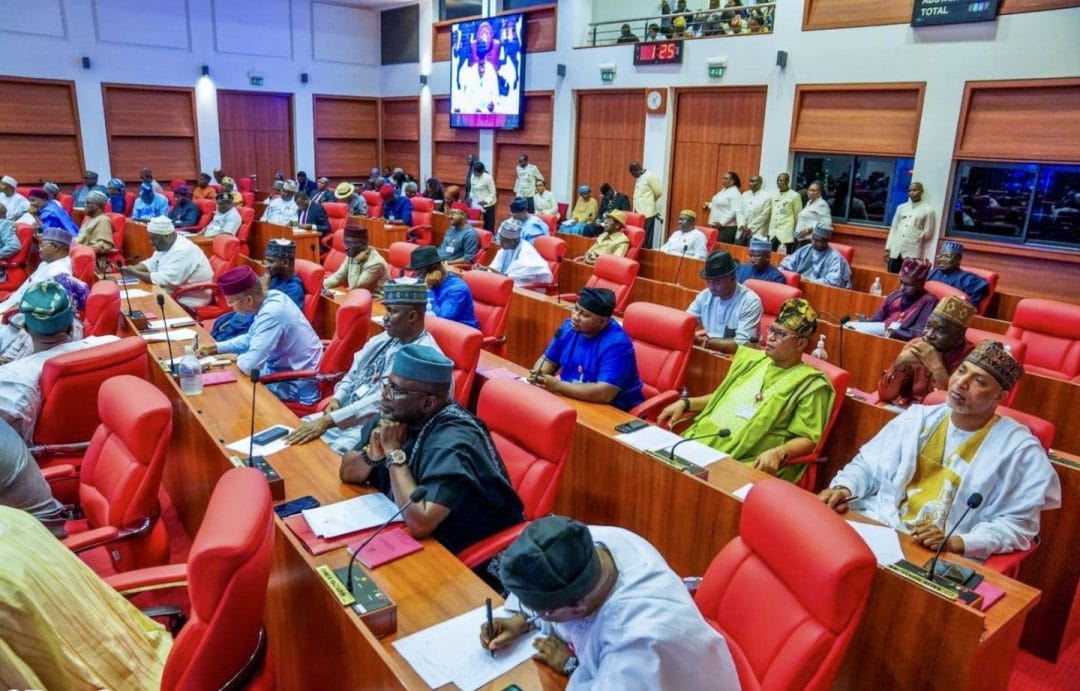
Discover why northern senators are divided on Nigeria’s tax reform bills, the stakes for regional economies, and Tinubu’s strategy for fiscal reforms. Get answers to key questions about this national debate.
Northern Senators’ Rift over Tinubu’s Tax Reforms Unveils Deep Political Divisions
The debate over Nigeria’s proposed tax reform has intensified, exposing a fissure in the northern caucus of the Senate, as regional lawmakers find themselves deeply divided on a set of four executive tax bills submitted by President Bola Ahmed Tinubu. These bills, intended to overhaul Nigeria’s tax framework, include the Joint Revenue Board of Nigeria (Establishment) Bill, 2024; Nigeria Revenue Service (Establishment) Bill, 2024; Nigeria Tax Bill, 2024; and a complementary legislation aimed at harmonising tax administration nationwide.
The controversy is a microcosm of the longstanding debates about regional equity, fiscal federalism, and economic justice in Nigeria. What began as a collective northern rejection of the bills has splintered into factions, with some lawmakers advocating for amendments while others insist on outright withdrawal.
Background: Tinubu’s Tax Gamble and the Northern Resistance
President Tinubu’s October 3 submission of the tax bills marked a pivotal moment in his administration’s economic reform agenda. Proponents argue the bills will streamline revenue generation, improve accountability, and provide much-needed resources for national development. However, the proposed laws quickly drew the ire of northern governors, who labeled them “anti-democratic” and warned of dire economic consequences for their region.
The National Economic Council (NEC), the country’s apex advisory body on economic policy, echoed these concerns, urging a temporary withdrawal to allow for more consultations. In response, the Senate moved swiftly to pass the bills through the second reading, entrusting the Senate Committee on Finance to return with recommendations within six weeks. This decision inflamed tensions, particularly among northern senators.
Borno State Governor Babagana Zulum added fuel to the fire, condemning the bills as instruments that could “crumble the north’s economy.” His critique resonated deeply in a region heavily reliant on agriculture and informal trade, where value-added tax (VAT) policies could disproportionately affect livelihoods.

Discord in the Northern Senate Caucus
The political drama escalated as Senator Shehu Buba (APC, Bauchi South) announced that northern senators, following discussions with their governors, had resolved to push for the withdrawal of the bills. Senator Ali Ndume (APC, Borno), a vocal critic, reinforced this position, emphasising the need for broader consultation.
However, cracks soon appeared in the caucus’s united front. During Wednesday’s plenary, Deputy Senate President Jibrin Barau instructed the Senate Committee on Finance to halt activities related to the bills, a move interpreted by many as a concession to the northern opposition. This apparent pause was short-lived, as Senate President Godswill Akpabio swiftly countermanded Barau, declaring that the bills remained on track for legislative scrutiny.
Anonymous sources within the northern caucus revealed a growing divide. While a vocal minority continues to advocate for withdrawal, a larger bloc has emerged, favouring amendments to address contentious clauses. According to one lawmaker, fears surrounding the VAT-sharing formula and its potential to disadvantage northern states are valid but surmountable through dialogue.
The Economic and Political Stakes
At the heart of the northern senators’ concerns lies a broader debate about Nigeria’s fiscal federalism. The VAT-sharing formula, which prioritises consumption, is seen as skewed in favor of southern states with thriving urban economies. Northern states, with their agrarian and informal economic structures, fear marginalisation under the new regime.
Critics argue that this imbalance could exacerbate existing economic disparities, undermining Tinubu’s promise of “shared prosperity.” Proponents counter that tax reforms are essential to modernise Nigeria’s outdated revenue system and reduce dependence on oil, a diminishing resource.
The stakes extend beyond economics. The debate has become a litmus test for Tinubu’s leadership, exposing the limits of his influence within the Senate and raising questions about his administration’s ability to unify a fractious legislature. It also highlights the persistent fault lines in Nigeria’s political landscape, where regional interests often clash with national imperatives.
Stakeholders Push Back: Governors and Technical Committees Enter the Fray
Amid the legislative turmoil, northern governors have doubled down on their opposition. Governor Abdullahi Sule of Nasarawa State, through his spokesperson Peter Ahemba, framed the bills as a ploy to favor southern states, particularly Lagos, Tinubu’s political stronghold. This perception has galvanised northern political actors, including the Northern Governors Forum, which has called for the president to reconsider his approach.
In a parallel development, a coalition of northern elites, led by former Kano State Governor Ibrahim Shekarau, has formed a technical committee to analyse the bills. The League of Northern Democrats (LND), a prominent regional advocacy group, announced the initiative, underscoring the need for a comprehensive review to ensure equitable outcomes.
The committee, composed of legal, economic, and academic experts, aims to present its findings within a week. Its recommendations are expected to shape the northern bloc’s negotiating position as the bills progress through the legislative process.
Rhetoric vs. Reality: Can Consensus Be Achieved?
The northern senators’ split reflects a broader challenge facing Nigeria: balancing regional interests within a federal framework. While some lawmakers argue that the bills’ flaws can be addressed through amendments, others view their passage as a betrayal of northern interests.
Despite the divisions, there is cautious optimism among moderates that dialogue with the presidency and the Attorney General of the Federation (AGF) can yield a compromise. However, the path to consensus remains fraught with political and procedural hurdles.
In the coming weeks, as public hearings and committee deliberations unfold, the tax reform bills will serve as a barometer of Nigeria’s capacity to navigate its complex socio-economic realities. The outcome will not only shape the nation’s fiscal policy but also define Tinubu’s presidency and the legislative legacy of the 10th National Assembly.
Tax Reform Tensions: North-South Rift Deepens Over Fiscal Redistribution
The tax reform controversy in Nigeria, which has roiled the Senate and the northern political caucus, exemplifies the deep-seated regional disparities that plague the country. At the heart of the debate is not just a question of fiscal policy but a battle over regional equity, economic priorities, and political control. As the controversy intensifies, the rift between northern and southern stakeholders over the proposed tax reforms is becoming more pronounced.
The Battle Over Economic Control
The northern senators’ disapproval of the tax reform bills reflects a broader concern about the distribution of wealth and resources between Nigeria’s regions. The informal economy of the North, which heavily relies on agriculture, small-scale trading, and subsistence activities, is fundamentally different from the more industrialized and corporate-driven southern states. Critics from the North argue that the proposed tax reforms, particularly those focusing on VAT collection and distribution, are designed to benefit southern states like Lagos, Rivers, and Ogun at the expense of northern states.
VAT, or Value Added Tax, has long been a contentious issue in Nigeria’s fiscal federalism. States that generate significant revenue through consumption taxes, primarily from formalized businesses and industries, stand to gain disproportionately. For northern states, where such revenue streams are minimal, the proposed reforms are perceived as exacerbating existing inequalities.
Governor Babagana Zulum of Borno State succinctly captured these concerns, warning that the reforms would “crumble the North’s economy.” This sentiment is echoed by many northern senators who see the bills as an attempt to institutionalize a fiscal system that could perpetually disadvantage their region.
The Divided Senate: A Fractured Northern Bloc
The initial united front of northern senators opposing the bills has now splintered, revealing the complexities of regional politics within the Senate. The earlier consensus to reject the tax reform bills has given way to a factionalized caucus, with some senators advocating for amendments rather than outright rejection. This shift indicates the influence of political pragmatism and possibly pressure from powerful stakeholders, including the presidency and economic advisers.
Senator Shehu Buba’s remarks to the BBC Hausa Service underscore the internal struggle within the northern caucus. While some senators maintain a hardline stance against the bills, others argue that constructive engagement is the better path forward. The latter group believes that negotiating amendments to address northern concerns would yield more equitable outcomes than an outright rejection, which risks alienating the presidency and southern lawmakers.
The intervention by Senate President Godswill Akpabio has added another layer of complexity to the situation. By rejecting Deputy Senate President Jibrin Barau’s directive to suspend activities related to the bills, Akpabio signaled his determination to push forward with the legislative process. This move has been interpreted by some as a demonstration of the Senate’s independence, while others see it as an alignment with the presidency’s agenda.
Governors’ Role: North’s Political Heavyweights Weigh In
Northern governors have emerged as pivotal actors in this unfolding drama. Their initial rejection of the tax reform bills as “anti-democratic” was a major catalyst for the opposition within the Senate. However, their influence extends beyond rhetoric. The governors’ ability to mobilize and unify their senators has been a key factor in shaping the northern caucus’s stance.
Governor Zulum’s criticism of the bills highlights the governors’ role as defenders of their regional economies. His warning about the reforms’ potential to undermine the North’s economic foundations resonates with many stakeholders. Similarly, the Northern Governors Forum’s collective call for President Bola Tinubu to withdraw the bills underscores their concerted efforts to protect the region’s interests.
However, not all northern governors are aligned in their opposition. Governor Abdullahi Sule of Nasarawa State, for example, has adopted a more cautious approach, emphasizing the need for broader consultations before drawing conclusions. This divergence among governors reflects the broader spectrum of opinions within the North, ranging from outright rejection to conditional support.
Economic Stakes: Balancing National and Regional Interests
At its core, the tax reform debate is a clash between national objectives and regional priorities. President Tinubu’s administration has framed the reforms as essential for bolstering Nigeria’s revenue base, particularly in the face of dwindling oil revenues and mounting debt. The bills aim to streamline tax collection, enhance efficiency, and ensure greater transparency in revenue distribution.
Yet, the northern backlash underscores the challenges of implementing such reforms in a deeply divided country. Critics argue that the proposed changes fail to account for the economic realities of the North, where poverty rates are higher, and industrial activity is limited. They contend that a one-size-fits-all approach to taxation risks deepening regional disparities and fueling resentment.
The proposed establishment of the Nigeria Revenue Service and the Joint Revenue Board of Nigeria has also drawn scrutiny. Proponents argue that these bodies will enhance coordination and accountability in tax administration. However, skeptics from the North view them as instruments for consolidating power in Abuja at the expense of state autonomy.
The Role of the Judiciary and Technical Committees
In an effort to address these concerns, the Senate has formed a special committee to liaise with the Attorney General of the Federation and review the contentious clauses in the bills. This move, while promising, has not quelled the opposition. Critics argue that the executive branch should have conducted more extensive consultations before introducing the bills, a sentiment echoed by members of the League of Northern Democrats (LND).
The LND’s decision to form a technical committee comprising northern experts underscores the region’s determination to assert its interests. By producing a comprehensive review of the bills, the LND aims to influence the legislative process and ensure that northern perspectives are adequately represented. This initiative highlights the growing role of civil society and professional groups in shaping Nigeria’s policy debates.
National Implications: Testing Tinubu’s Political Capital
For President Tinubu, the tax reform saga is a critical test of his political acumen and ability to navigate Nigeria’s complex federal structure. His administration’s determination to push forward with the reforms, despite widespread opposition from the North, reflects a commitment to fiscal reforms. However, it also risks alienating a key political base.
The president’s economic team, led by notable technocrats, has worked to build consensus around the reforms. Yet, their efforts have been met with skepticism in the North, where many perceive the reforms as benefiting the South disproportionately. The outcome of this debate will not only shape Nigeria’s fiscal policies but also have significant implications for Tinubu’s broader reform agenda.
As the Senate prepares for public hearings and further deliberations, the stakes could not be higher. The tax reform bills have exposed the fault lines in Nigeria’s federal system, highlighting the enduring tensions between national unity and regional autonomy. Whether these reforms will serve as a catalyst for greater equity or deepen existing divides remains to be seen.
Political Chessboard: Strategies, Alliances, and the Road Ahead
As Nigeria’s tax reform debate hurtles toward a decisive juncture, the stakes have never been higher. This third batch examines the regional strategies, political maneuvers, and economic calculations shaping the outcome. The contentious bills have not only revealed the deep fault lines in Nigeria’s federal structure but also set the stage for a battle of wits and willpower between the North and the South, the Senate and the Presidency, and the public and the elite.
Northern Strategy: Rallying for Regional Interests
The North’s opposition to the tax reforms is not without strategy. Political leaders and governors from the region are leveraging their influence to consolidate their stance, framing the debate as a fight for regional survival. By doing so, they aim to mobilize grassroots support and pressure federal lawmakers to rethink the bills.
At the heart of the northern strategy is a call for a redistribution mechanism that accounts for the region’s economic realities. Critics of the bills argue that any reforms must reflect the unique challenges faced by northern states, including widespread poverty, an agrarian economy, and limited industrial development. The establishment of the League of Northern Democrats (LND) underscores this regional pushback, as the group champions a review process to ensure the North’s interests are safeguarded.
To bolster their case, northern leaders are also seeking to engage international development partners. By framing the debate as one of equity and sustainable development, they hope to gain external support for their position. This approach underscores the region’s growing awareness of the power of global opinion in shaping national policies.
Southern Counteroffensive: The Push for Reform
In stark contrast, southern stakeholders view the tax reform bills as a long-overdue correction to Nigeria’s lopsided revenue system. Southern governors, particularly those from industrialized states like Lagos, Rivers, and Ogun, argue that the current fiscal framework unfairly penalizes their contributions to the national economy. They contend that the reforms will not only enhance revenue generation but also incentivize economic growth and efficiency.
Southern senators, buoyed by strong backing from their governors, have adopted a more aggressive posture in pushing for the bills. Their strategy hinges on leveraging their numerical strength in the Senate and forging alliances with like-minded lawmakers from other regions. Senate President Godswill Akpabio’s unwavering support for the reforms reflects this determination.
The South’s economic argument is also gaining traction among technocrats and policy analysts. By emphasizing the need for fiscal discipline and enhanced transparency, they are building a narrative that resonates with Nigeria’s international partners and investors. This narrative positions the South as the driving force behind economic modernization, casting the reforms as a necessary step toward achieving fiscal sustainability.
Presidential Gambit: Tinubu’s High-Stakes Gamble
For President Bola Ahmed Tinubu, the tax reform saga is a defining moment. His administration’s insistence on pushing the bills through Parliament reflects a strategic calculation: achieving these reforms could cement his legacy as a reformer committed to overhauling Nigeria’s struggling economy.
Yet, Tinubu’s approach is fraught with risks. The president’s decision to bypass extensive consultations before introducing the bills has drawn criticism from both northern and southern stakeholders. By framing the reforms as a non-negotiable component of his economic agenda, Tinubu risks alienating key political allies, particularly from the North.
To mitigate these risks, Tinubu’s economic team is working overtime to engage stakeholders and address their concerns. The recent establishment of a technical review committee underscores this effort. By incorporating input from northern lawmakers and governors, the administration hopes to strike a balance that satisfies regional demands without compromising the core objectives of the reforms.
Tinubu’s gamble also extends to his political capital. The president’s ability to rally support for the bills will depend on his skill in navigating Nigeria’s complex political landscape. His allies in the ruling All Progressives Congress (APC) are under pressure to deliver results, while opposition lawmakers are seizing the opportunity to challenge his administration’s agenda.
Public Sentiment: A Nation Divided
The tax reform debate has not only polarized lawmakers but also ignited public discourse across Nigeria. Citizens from different regions have expressed divergent views on the reforms, reflecting the deep regional and economic divides in the country.
In the North, opposition to the bills has galvanized civil society groups and grassroots organizations. Many view the reforms as an extension of a broader agenda to marginalize the region economically. Public protests in states like Kano, Kaduna, and Borno have underscored this sentiment, with demonstrators calling for greater equity and transparency in fiscal policymaking.
In the South, however, public sentiment is more favorable toward the reforms. Many citizens see the bills as a necessary step toward economic justice, arguing that states that generate the bulk of Nigeria’s revenue should benefit proportionately. This divide in public opinion highlights the broader challenges of achieving national consensus on fiscal matters.
Economic Calculations: Winners and Losers
Beyond the political theater, the tax reform debate has significant economic implications. Analysts warn that failure to implement the reforms could undermine Nigeria’s fiscal stability, particularly in the face of declining oil revenues and mounting debt. The reforms are designed to broaden the tax base, improve collection efficiency, and ensure more equitable distribution of revenue.
For northern states, the perceived threat lies in the potential centralization of tax administration. Critics argue that the proposed Nigeria Revenue Service and Joint Revenue Board of Nigeria could erode state autonomy and disproportionately favor southern states. However, proponents of the reforms counter that these bodies are essential for achieving fiscal transparency and accountability.
Southern states stand to gain significantly from the reforms, particularly those with strong industrial and commercial bases. The introduction of a streamlined tax system could enhance revenue generation, enabling these states to invest in infrastructure and social services. Yet, this potential benefit is tempered by the risk of deepening regional disparities, a concern that has fueled northern opposition.
The Road Ahead: Navigating a Tenuous Consensus
As the Senate prepares for a final vote on the tax reform bills, the path forward remains uncertain. The special committee’s recommendations will play a crucial role in shaping the outcome, as lawmakers weigh the competing demands of national unity and regional interests.
For President Tinubu, achieving a consensus on the reforms will require a delicate balancing act. His administration must address the legitimate concerns of northern stakeholders while ensuring that the core objectives of the reforms are not compromised. This effort will test Tinubu’s political dexterity and ability to build bridges across Nigeria’s deeply divided political landscape.
The broader implications of the tax reform debate extend beyond fiscal policy. The outcome will shape Nigeria’s federal structure, influence regional relations, and set the tone for Tinubu’s presidency. Whether the reforms succeed or fail, they have already revealed the fault lines that define Nigeria’s complex political and economic landscape.
Additional report by Osaigbovo Okungbowa and Peter Jene, Atlantic Post Senior Political and National Correspondents, respectively.