Twelve deaths are reported, a video alleges 20, and residents have fled their homes. Between vigilante violence, suspected terrorist attacks and retaliatory killings, the authorities must establish who died, who is missing and whether the danger has passed.
At least 12 people, including a police inspector, have reportedly been killed in a series of attacks in Kebbi State, where homes and shops have been burnt, motorcycles destroyed and residents forced to flee communities in Koko-Besse Local Government Area.
The reported attacks on Karwa, Kestu and Waiwayi have exposed a troubling security crisis along the Besse/Shanga riverine axis, where police accounts point to a cycle of rumoured cattle rustling, vigilante violence and reprisals that has left civilians facing mounting danger.
The Kebbi State Police Command has attributed the latest attacks to suspected Mamudawa/Lakurawa terrorists, saying joint security teams repelled the assaults.
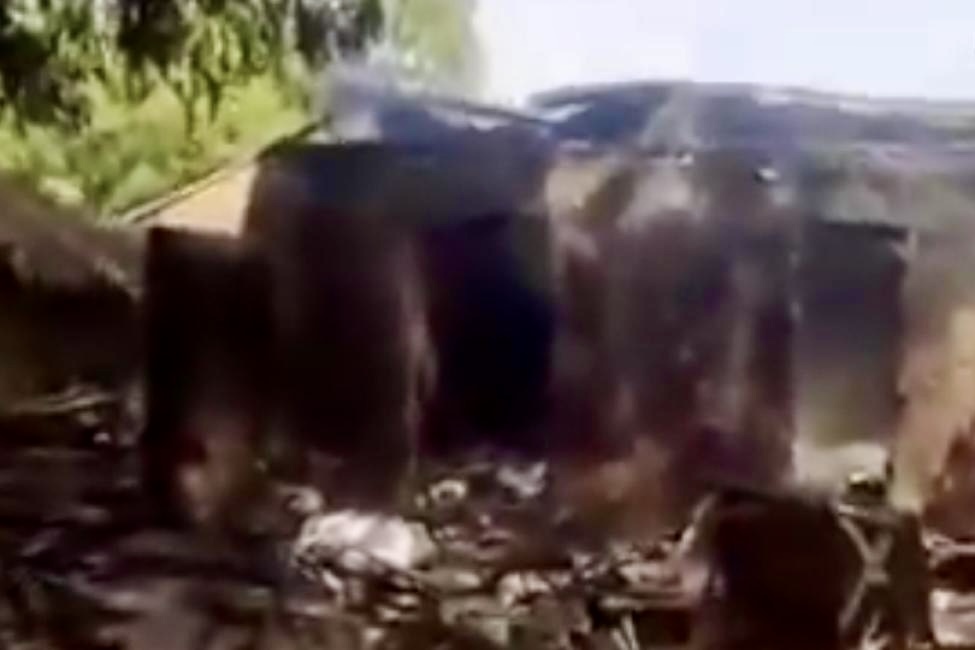
But a video obtained by SaharaReporters presents a grim picture of the aftermath in Waiwayi, with burnt buildings, damaged property and deserted streets. A man narrating the footage in Hausa alleges that the attackers killed residents, looted shops and destroyed homes and motorcycles.
He claims that as many as 20 people died. That figure has not been independently verified and differs from the police-reported toll.
The gap between the official account and the allegation in the video is significant. It raises questions about the number of people killed, the extent of the destruction and whether all casualties have been accounted for.
Waiwayi’s destruction raises questions beyond the death toll
In the footage, the narrator urges the public to circulate the images to draw attention to the devastation.
“This is Waiwayi town. The town has fallen under the control of terrorists. As you can see, these are the places that have been set on fire,” he says.
He then describes what he presents as the remains of the community.
“Look at what has happened here, my brothers and sisters. Can you see it? Look at this. You can see it. This is all that remains of the town.”
The narrator alleges that residents were driven from their homes and that assailants killed people, looted valuables and set motorcycles ablaze.
“They killed people and took whatever they wanted. They looted valuables and other belongings. You can see the motorcycles here. As you can see, they burned people’s motorcycles everywhere. They broke into shops and took whatever they wanted,” he says.
The footage offers visual evidence of serious property damage in the areas shown. It does not, on its own, establish the number of people killed, identify the perpetrators or establish when each building was burnt.
Atlantic Post has not independently authenticated the footage or confirmed the narrator’s casualty estimate.
The apparent emptiness of the streets also underlines a separate concern: the loss of civilian access to homes, livelihoods and local markets. Residents reportedly fled towards Koko town amid fears of further violence.
The police have not disclosed a verified figure for the number of people displaced.
How rumours of cattle rustling triggered a cycle of violence
The roots of the current crisis stretch back to 22 October, when violence erupted at Samanaji Market.
Kebbi State Police Command spokesperson SP Bashir Usman told PUNCH that rumours of cattle rustling by suspected Lakurawa elements, alongside warnings of an imminent attack, triggered the mobilisation of local vigilantes known as Yan Sakai.
According to Usman, armed members of the group attacked Fulani traders at the market.
“This triggered the mass mobilisation of rogue Yan Sakai, who, on October 22, 2026, invaded Samanaji Market and attacked innocent Fulani traders who had come to conduct their lawful businesses,” he said.
In an earlier account, the police spokesperson said three Fulani people were killed and three others injured in the incident. A police inspector deployed with security teams to restore order was also injured.
The Command subsequently linked the displacement of residents to retaliatory violence in Karwa, Tunga Hako and Buma, where several Fulani settlements were reportedly burnt.
“The present displacement is an offshoot of subsequent reprisal showdowns across Karwa, Tunga Hako and Buma villages where several Fulani settlements were burnt,” Usman said.
The sequence is important.
The police account does not describe a crisis involving only attacks by suspected terrorists. It also identifies alleged violence by local vigilantes against Fulani traders and subsequent reprisals against settlements.
That distinction is essential to understanding the wider security failure. A rumour of an impending attack can trigger mobilisation. An attack can provoke retaliation. Retaliation can then displace families and deepen communal suspicion, leaving civilians exposed to further violence.
These are allegations requiring investigation, not grounds for collective blame against Fulani communities, vigilantes or any other group.
The authorities must establish responsibility for each incident through evidence and identify the people who organised, participated in or enabled the violence.
Police report 12 deaths, but casualty figures remain unclear
In its latest account, the police said five people were killed in an attack on 26 October, followed by seven deaths in attacks on 28 October around Karwa, Kestu and Waiwayi.
The reported total is 12, including a police inspector.
Usman said the joint security teams repelled the latest assaults.
“Meanwhile, recent attacks on October 26 and 28 in the Karwa, Kestu and Waiwayi axis by suspected Mamudawa/Lakurawa terrorists were gallantly repelled by our joint security teams, although seven people unfortunately lost their lives, including a police inspector who paid the supreme price in the line of duty,” he said.
There is an important inconsistency requiring clarification.
The police account supplied to journalists lists five deaths on 26 October and seven on 28 October, producing a total of 12. Yet the quoted statement refers to seven deaths across attacks on both dates.
The Command needs to clarify whether the seven deaths cited in the quotation refer only to 28 October or to the combined incidents.
It must also explain how these figures relate to the three deaths recorded at Samanaji Market on 22 October and the inspector injured during that earlier incident.
The information available does not establish whether the earlier deaths are included in any later aggregate or whether the police inspector who was injured and the inspector reported killed in subsequent attacks were different officers.
The narrator’s claim of up to 20 deaths at Waiwayi introduces another unresolved discrepancy.
Until investigators produce a verified casualty list and reconcile the different accounts, neither the higher figure nor a definitive overall toll across every incident should be presented as established fact.
The same evidence gap applies to the number of missing residents, displaced families and properties destroyed.
Fresh warning suggests the danger may not have passed
The security situation remained concerning on Thursday, 29 October.
In a separate report published that day, TruthNigeria said residents of Waiwayi fled their homes after receiving warnings of an impending attack.
The publication quoted a farmer who reported seeing approximately 50 armed men travelling on motorcycles and carrying AK-47 rifles several kilometres from the community.
TruthNigeria said the armed men’s identity, precise movements and intended destination had not been independently verified. It also reported that no casualties had been recorded in the information it received at the time of publication.
The account does not establish that the men entered Waiwayi or carried out a fresh attack.
Nevertheless, the report raises a pressing operational question: whether security personnel have sufficient intelligence, presence and rapid-response capacity to protect residents after an initial assault or warning of a new threat.
The police have not publicly established in the accounts reviewed whether the reported armed group approached the village, whether the threat subsequently passed or whether residents could safely return.
These uncertainties are particularly serious for people who have already abandoned their homes.
Police deploy reinforcements as investigation continues
The Kebbi State Police Command said Commissioner of Police CP Umar M. Hadejia had ordered clearance, search-and-rescue and confidence-building operations in the affected areas.
According to Usman, additional Police Mobile Force personnel, tactical units and conventional police teams were deployed to work alongside other security agencies.
“Additional Police Mobile Force (PMF), tactical and conventional teams have been deployed to work in synergy with other security agencies to dominate the area and restore lasting peace,” he said.
The spokesperson added that investigations were continuing.
“Investigation is ongoing, and residents are urged to remain calm and disregard unverified narratives being circulated to cause panic,” he said.
The police response is an important step, but the deployment announcement does not by itself establish whether the affected communities are secure, whether all missing residents have been accounted for or whether displaced families have access to adequate shelter and essential supplies.
A meaningful assessment of the operation would require clearer information about the locations covered, the number of personnel deployed, the outcome of search-and-rescue efforts and the arrangements for protecting returning residents.
Authorities should also establish a reliable system for recording deaths, injuries, missing persons and displaced households, with information communicated consistently to families and the public.
The wider security challenge in Kebbi
The violence comes against a broader backdrop of insecurity in the state.
In October, Premium Times reported that residents had blocked the Jega–Kontagora highway to protest attacks and displacement linked to suspected Lakurawa terrorists. Separately, an International Federation of Red Cross and Red Crescent Societies field report published in September documented an emerging displacement crisis in Kebbi, reporting that more than 5,000 people had been displaced by attacks from non-state armed groups.
Those wider figures do not establish the number of people displaced by the latest incidents in Waiwayi. They do, however, show why displacement should be treated as a central measure of insecurity rather than a secondary consequence of fighting.
For families forced to flee, the damage extends beyond burnt buildings. Traders can lose stock and income. Farmers can become unable to reach their land. Children may lose access to school, while families may be separated or left without reliable access to food and medical care.
The immediate priority is to protect residents and prevent further killings. The longer-term challenge is to stop rumour-driven mobilisation and retaliatory violence from becoming a recurring feature of community life.
The questions authorities must answer
The available reporting leaves several critical issues unresolved.
First, what is the verified death toll across the incidents of 22, 26 and 28 October, and how many people remain missing?
Second, what evidence links the perpetrators of the latest assaults to the suspected Mamudawa/Lakurawa group, and what has the investigation established about the earlier attack on Fulani traders?
Third, how many homes, shops and motorcycles were destroyed, and how many residents have fled their communities?
Finally, what measures will keep civilians safe from renewed violence and allow displaced families to return voluntarily when conditions permit?
These questions are not merely administrative details. They are central to accountability, public trust and the ability of security agencies to prevent another round of bloodshed.
The tragedy in Waiwayi is therefore not just a contest between competing casualty figures. It is a test of whether the authorities can establish what happened, protect those still at risk and break the cycle of rumour, violence and reprisals.
Until the dead are properly counted, the missing accounted for and the security of displaced residents established, claims that the attacks have been contained remain incomplete.
Follow us on our broadcast channels today!
- WhatsApp: https://whatsapp.com/channel/0029VawZ8TbDDmFT1a1Syg46
- Telegram: https://t.me/atlanticpostchannel
- Facebook: https://www.messenger.com/channel/atlanticpostng


Join the debate; let’s know your opinion.