In a dramatic two-day negotiation in London concluding on 10 June 2025, the United States and China have struck a provisional framework deal to revive the Geneva trade truce and roll back export curbs on critical minerals, most notably rare earth elements and magnets.
U.S. Commerce Secretary Howard Lutnick declared the accord “puts meat on the bones” of last month’s tariff-easing agreement in Geneva, although he refrained from disclosing precise implementation details, which now await presidential sign-off in Washington and Beijing.
The Anatomy of the London Framework
At its core, the London framework proposes a mutual dismantling of export restrictions that have disrupted global supply chains.
China is set to remove its April curbs on rare earth minerals and magnets—materials indispensable for electric vehicle motors, wind turbines and defence applications—while the U.S. will roll back selected export controls on semiconductor design software, aircraft components and related goods to China.
Both sides have until 10 August 2025 to negotiate a comprehensive pact; failing that, U.S. tariffs would snap back from c. 30 per cent to 145 per cent, and Chinese rates from 10 per cent to 125 per cent.
Rare Earths: Strategic Leverage or Mutual Liability?
China’s dominance in rare earths is no longer anecdotal. The country mines roughly 60 per cent of global rare earth oxides and refines over 90 per cent of them—a near-monopoly that underpins modern green energy and defence industries.
By weaponising its rare earth exports in April, Beijing paused shipments of neodymium, dysprosium and other key elements, prompting U.S. export curbs in retaliation.
The London deal aims to neutralise this mutual threat, yet it leaves unresolved the broader strategic imbalance that gave rise to these measures in the first place.
Lessons from Geneva: Why Detail Matters
The original Geneva consensus announced in May 2025 failed to define “actions required” to dismantle curbs, leading to diverging interpretations in Washington and Beijing.
Atlantic Council geo-economist Josh Lipsky warned the parties were “back to square one” without specifics.
London’s framework seeks to rectify this by mapping out which licences will be reinstated—and how quickly—but negotiators have kept those maps under wraps.
The devil, as one market analyst quipped, “will be in the details,” particularly the proportion of rare earths bound for U.S. industry and the scope of U.S. software exports heading east.
Market Ripples: Investors Hold Breath
Global equity markets exhibited muted gains following the announcement. MSCI’s Asia-Pacific ex-Japan index rose 0.57 per cent, reflecting investor caution ahead of the yet-to-be-drafted fine print.
Chris Weston of Pepperstone in Melbourne observed that “risk assets should remain supported” so long as headlines stay constructive, but added that true relief hinges on confirmed export licences and timetable commitments.
In Shenzhen, several rare earth magnet firms—JL MAG Rare-Earth, Innuovo Technology and Beijing Zhong Ke San Huan—reported they had already secured fresh export licences, a signal that implementation may begin even before presidents formally endorse the framework.
Nigeria’s Strategic Imperative
For Nigeria—a nation seeking to develop its own critical minerals sector—the U.S.–China deal offers both opportunity and warning.
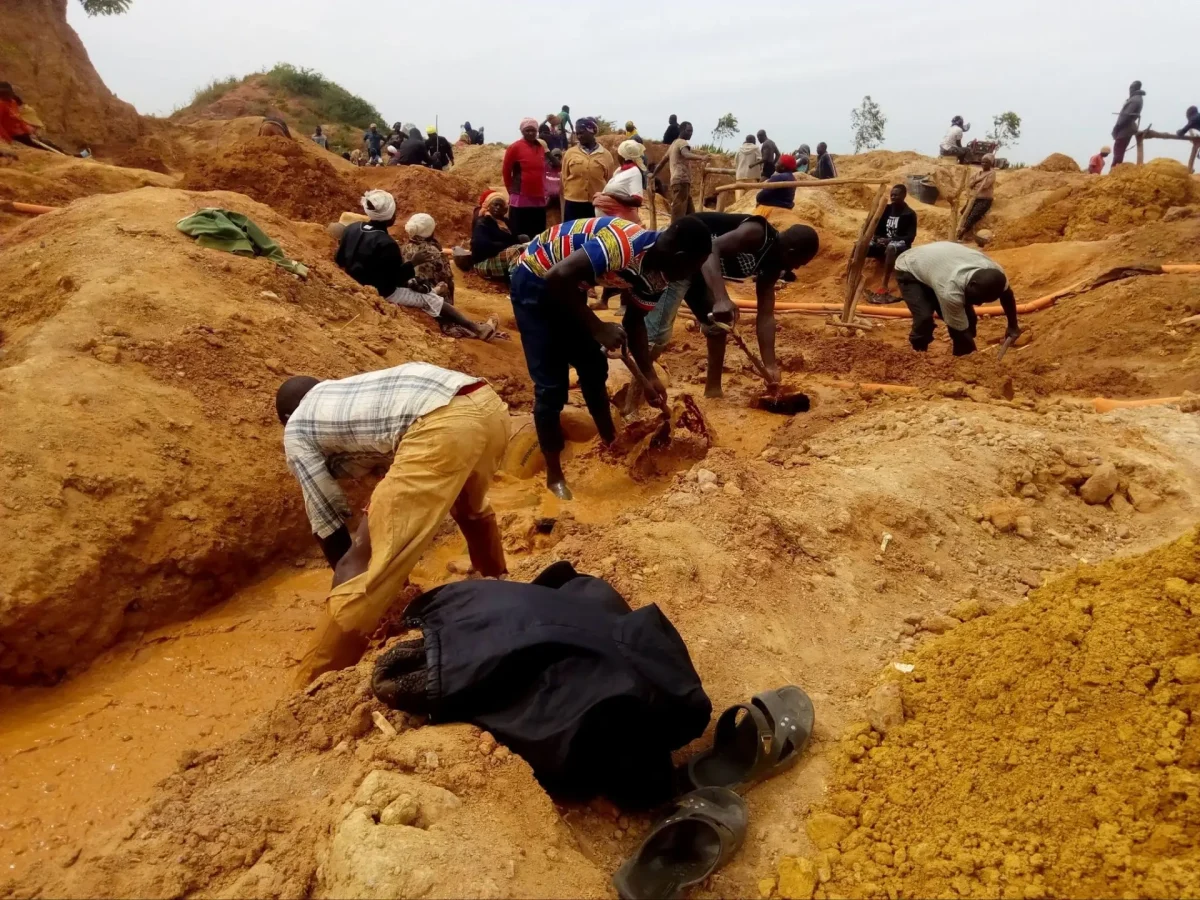
The Atlantic coast country possesses significant deposits of tantalum, niobium and other strategic minerals, yet lacks refining capacity.
Africa’s nascent rare earth projects have the potential to diversify global supply chains, but only if governments invest in processing infrastructure and regulatory frameworks.
Experts from Energy Capital & Power estimate that Africa could capture a larger share of the rare earths market by 2030, provided partnerships and technology transfers accelerate.
Global Growth at Stake
The World Bank has already trimmed its 2025 global growth forecast to 2.3 per cent, attributing the downgrade to “higher tariffs and heightened uncertainty” stemming from U.S.–China trade tensions.
For emerging economies like Nigeria, protracted uncertainty inflates import costs for machinery, disrupts export markets and undermines investor confidence.
A durable truce would not only stabilise commodity prices, but also spur investment in renewable energy and critical infrastructure across Africa.
The Unfinished Business of Tariffs
Despite London’s breakthrough, deep-seated disagreements endure over the U.S. use of unilateral, Section 232 national security tariffs and allegations of China’s state-led, export-driven economic model.
Recent court rulings have kept Trump’s sweeping reciprocal duties in limbo, sustaining a looming threat to Chinese exporters even as licences are issued.
The August deadline will test both sides’ political will: whether pragmatism can prevail over protectionism, or if the cycle of reprisals will spin anew.
Pathways to Realignment
A lasting resolution will demand more than tit-for-tat concessions. Policymakers must co-ordinate multilateral efforts to build alternative refining hubs in Australia, North America and Africa, incentivise recycling and research substitute materials.
U.S. defence officials anticipate a domestic rare earths supply chain by 2027, yet acknowledge that technical challenges and environmental standards pose steep hurdles.
Likewise, China faces the risk of catalysing investment in non-Chinese operations—undermining its market stronghold in the long term.
Conclusion: A Fragile Peace
The London framework marks a tentative step towards defusing the most consequential trade confrontation of the 21st century.
Yet without granular implementation plans, transparent timelines and parallel efforts to diversify supply chains, the truce may unravel as swiftly as it was reforged.
For Nigeria’s government and business leaders, the takeaway is clear: the era of strategic minerals requires strategic foresight.
Investing now in local capacity and forging diversified partnerships will determine whether Africa remains on the sidelines—or becomes a key player—when the next round of global economic realignment begins.
Additional reporting by Atlantic Post writer Taiwo Adebowale.