By Editor
Nigeria’s minimum wage crisis exposes President Tinubu’s policy failures, threatens economic stability, and sparks the rise of alternative labour movements. Can Tinubu salvage his presidency and restore public confidence?
NLC’s Crumbling Frontline: Will Tinubu’s Minimum Wage Promise End in Chaos?
A Fractured Labour Front: The Threat of a Failed Strike Looms
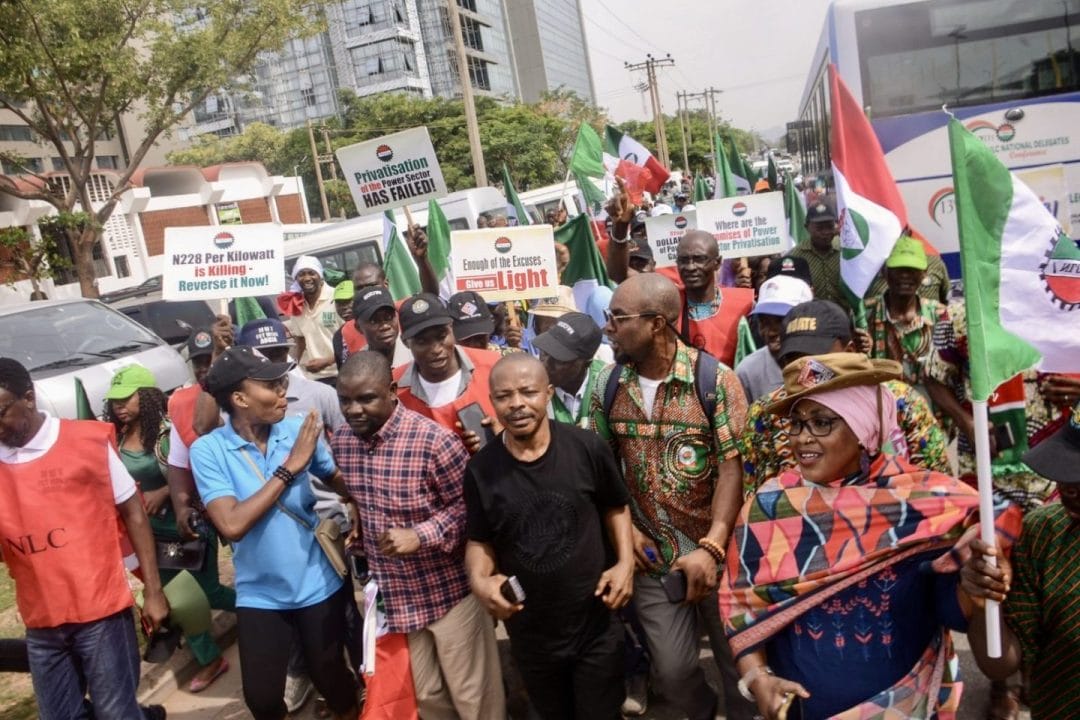
The Nigerian Labour Congress (NLC), once the formidable bastion of workers’ rights, appears to be teetering on the edge of an embarrassing implosion as the much-anticipated December 1 nationwide strike faces a disheartening collapse. The strike, meant to force state governments into compliance with the new ₦70,000 minimum wage approved by President Bola Ahmed Tinubu, is fast losing traction as key state chapters of the union are withdrawing their support, citing “successful negotiations” with their respective state administrations.
What was initially billed as a seismic showdown between the federal government and the nation’s labour force has now degenerated into a fragmented, disjointed effort, with multiple states opting out just hours before the industrial action. This raises the fundamental question: Is the NLC, under the current national leadership, capable of delivering on its mandate to protect Nigerian workers, or has it been co-opted into the murky corridors of political compromises?
Tinubu’s “Generous” Minimum Wage: A Masterstroke or a Poisoned Chalice?
President Tinubu’s announcement in July approving a new minimum wage of ₦70,000 was heralded as a landmark achievement by his administration—a bold initiative aimed at alleviating the economic suffocation many Nigerians face due to spiralling inflation, subsidy removal, and stagnant wages. For many civil servants and private sector employees, this announcement was a beacon of hope in a sea of despair.
However, as the euphoria subsided, the reality of Nigeria’s dysfunctional federal system began to rear its head. While some states, notably Lagos and Rivers, promptly pledged not only to implement the new minimum wage but to exceed it by offering ₦85,000, others have dragged their feet or outright refused to implement it. The refusal of 13 states and the Federal Capital Territory (FCT) to commence payment has exposed the deep structural and fiscal fault lines within the federation.
It is clear that Tinubu’s wage policy was rolled out without an adequate framework to enforce compliance across all states. The president’s promise to review the wage every three years appears increasingly hollow in the face of this patchwork implementation. Can the federal government compel errant states to comply, or has Tinubu inadvertently set a precedent where state governments can pick and choose which federal policies to obey?
States Pulling Out: A Calculated Betrayal or Genuine Negotiation?
The decision by Imo, Sokoto, Oyo, and Katsina states, among others, to opt out of the December 1 strike raises uncomfortable questions about the NLC’s ability to maintain solidarity among its members. In Imo State, the NLC Chairman Uche Chigaemezu categorically stated that there would be no strike, citing a favourable agreement reached with Governor Hope Uzodimma. “We have communicated our position to the national body,” Chigaemezu declared, as if to absolve himself and the state chapter from any fallout.
Sokoto State followed a similar path, with Governor Ahmed Aliyu announcing a commitment to the ₦70,000 wage, albeit with implementation delayed until January 2025. The local NLC chapter, in response, signed a memorandum of understanding with the state government, effectively withdrawing from the national strike. Oyo State’s labour leaders, in near-perfect unison, echoed similar sentiments, highlighting their “good rapport” with the state government.
But are these states genuinely committed to the welfare of their workers, or are they leveraging these last-minute negotiations as a public relations ploy to avoid industrial unrest while postponing financial obligations?
The Political Dimension: State Governors vs. Labour Leaders
The reluctance of state governments to implement the new minimum wage reveals a deeper, more troubling reality—Nigeria’s states are politically powerful but financially crippled. Many states depend heavily on federal allocations, which have been dwindling due to declining oil revenues and an economic downturn exacerbated by global uncertainties. For these governors, acceding to the new wage demands could spell fiscal disaster and plunge their states deeper into debt.
Moreover, the fragmentation within the NLC plays directly into the hands of these governors, who can now negotiate from a position of strength. By isolating the national body and dealing directly with state chapters, governors like Hope Uzodimma, Ahmed Aliyu, and Seyi Makinde have successfully co-opted the local unions, neutralising the NLC’s threat at a national level.
This divide-and-conquer strategy not only weakens the NLC but also emboldens state governments to continue sidestepping federal directives. It is a scenario that portends a dangerous precedent where national policies, no matter how well-intentioned, can be rendered impotent by state-level machinations.
The Betrayal of National Unity
The essence of a nationwide strike is solidarity—a unified front where workers across all states speak with one voice against perceived injustice. Yet, with state chapters pulling out in droves, the NLC finds itself facing a public relations nightmare. The optics of organised labour in Oyo, Imo, Sokoto, and Katsina aligning with their state governments while others like Kaduna, Nasarawa, and Zamfara prepare for battle paints a picture of disunity and confusion.
Is this the beginning of the end for the NLC as a national force? Can the union survive this internal fragmentation, or will it slowly morph into a toothless organisation, relegated to negotiating piecemeal agreements at the state level rather than championing national causes?
In the face of this crisis, the NLC’s national leadership remains defiant. National Treasurer Akeem Ambali insists that the strike will proceed as planned, dismissing the states’ withdrawal as mere “excuses.” Ambali’s rhetoric underscores the desperation within the NLC’s top echelon to salvage what remains of its credibility. “Labour will embark on strike by midnight of November 30. We have mobilised for that,” he declared with a bravado that belies the crumbling support on the ground.
Yet, for all the tough talk, it is clear that the NLC’s house is not in order. The next 24 hours will determine whether this beleaguered union can mount a credible nationwide strike or if it will face the ignominy of an aborted action that further erodes its influence in Nigeria’s socio-political landscape.
The Looming Questions
As Nigeria holds its breath, several critical questions remain unanswered:
- Will Tinubu’s federal government intervene to enforce the minimum wage across all states, or will it stand by and watch as the policy falters under state-level defiance?
- Can the NLC rally its members in the remaining states, or is the national strike destined to be a regional affair with limited impact?
- What precedent will this fractured strike set for future labour movements in Nigeria?

Economic Fallout and Political Reckoning: Tinubu’s Minimum Wage Gamble Faces Ruin
A Widening Economic Chasm: State Financial Crisis Intensifies
As the countdown to the December 1 nationwide strike unfolds, the economic ramifications of the fractured labour movement are already making waves. Nigeria’s state economies, already teetering on the brink of insolvency, are being thrust into deeper uncertainty. At the heart of the crisis lies a simple but devastating fact: most state governments are simply unable to afford the ₦70,000 minimum wage.
Nigeria’s fiscal federalism—a system where states rely heavily on federal allocations rather than internally generated revenue (IGR)—has left many states in dire financial straits. According to recent data from the Nigerian Bureau of Statistics (NBS), over 70% of Nigerian states generate less than 20% of their annual budget internally. This stark reality has exposed the financial fragility underpinning Tinubu’s minimum wage policy, which is now being seen by critics as an ill-timed and politically motivated decision designed to shore up support from a beleaguered electorate rather than addressing the structural economic issues plaguing the country.
The situation is particularly dire in states like Katsina, Zamfara, and Ekiti, where governors have cited a lack of funds as the primary reason for their inability to implement the new wage structure. In Katsina, Governor Dikko Umar Radda, despite being a key ally of President Tinubu, has openly admitted that his administration will require a bailout from the federal government to meet the wage obligations. “Without financial assistance, this new wage is unfeasible,” Radda declared, sending shockwaves across labour circles.
Similarly, in Ekiti State, Governor Biodun Oyebanji has outlined a bleak financial outlook, with state revenues falling by 12% in the last fiscal quarter. “We support the president’s vision, but we must face the harsh economic realities,” Oyebanji said, subtly shifting the blame back to the federal government for failing to provide a fiscal roadmap to implement the policy.
The Inevitable Bailout? Tinubu’s Government Caught in a Policy Trap
The federal government, under President Tinubu, now faces an unenviable dilemma: either offer a financial bailout to non-compliant states or risk a nationwide labour crisis that could cripple key sectors of the economy. Both options come with significant political and economic costs.
A federal bailout, while potentially averting immediate labour unrest, would be seen as a tacit admission of policy failure. It would also place an additional burden on the already overstretched national budget, exacerbating Nigeria’s fiscal deficit, which currently stands at a staggering ₦11.34 trillion, according to the Ministry of Finance. Furthermore, such a bailout could fuel accusations of favouritism and deepen the rift between the federal and state governments, especially in states controlled by opposition parties, where governors are already accusing the Tinubu administration of neglect and political bias.
On the other hand, refusing to intervene could lead to a prolonged labour crisis with devastating consequences for the economy. Key sectors such as education, healthcare, and public transportation are already bracing for impact, with unions in these sectors pledging solidarity with the NLC’s call for industrial action. In Kaduna State, for example, the Nigerian Union of Teachers (NUT) has announced plans to shut down all public schools in support of the strike, while the National Association of Nigerian Nurses and Midwives (NANNM) has threatened to withdraw their services, warning of an impending “healthcare catastrophe” if the strike proceeds.
The ripple effect on the private sector could also be significant, as companies dependent on government contracts and public services face potential disruptions. The Nigerian Employers Consultative Association (NECA) has already raised alarms over the potential loss of billions of naira in economic productivity if the strike goes ahead. “A nationwide shutdown will cripple businesses, deter foreign investment, and exacerbate the unemployment crisis,” NECA Director-General Adewale Oyerinde warned, highlighting the precarious balance between labour rights and economic stability.
Labour’s Betrayal: Accusations of Compromise and Sabotage
Amid the growing chaos, the leadership of the Nigerian Labour Congress (NLC) finds itself under intense scrutiny, with accusations of compromise and sabotage dominating public discourse. Critics within the labour movement have accused NLC President Joe Ajaero of failing to maintain a unified front, alleging that secret negotiations between the national leadership and state governors have weakened the union’s bargaining power.
Several rank-and-file members of the NLC have expressed disillusionment with the national leadership, accusing them of prioritising political alliances over the welfare of Nigerian workers. In a scathing open letter, the Lagos State chapter of the Trade Union Congress (TUC) condemned the NLC’s handling of the minimum wage crisis, describing it as “an abdication of responsibility and a betrayal of the working class.”
“The NLC’s failure to coordinate a unified response has left workers vulnerable to exploitation and emboldened state governments to ignore their obligations,” the letter read. “We demand accountability from our leaders, who have chosen political expediency over the welfare of those they claim to represent.”
This internal dissent threatens to further fracture the labour movement, with some state chapters reportedly considering breaking away from the NLC to form independent unions capable of negotiating directly with their state governments. If this trend continues, the NLC could face an existential crisis, potentially losing its status as the foremost labour union in Nigeria.
Tinubu’s Political Legacy at Risk: A Broken Promise?
For President Bola Ahmed Tinubu, the stakes could not be higher. His administration’s credibility is on the line, with the minimum wage crisis serving as a litmus test for his ability to navigate Nigeria’s complex socio-economic landscape. Tinubu’s promise of a “renewed hope” for Nigerian workers is rapidly unraveling, with critics accusing him of offering hollow promises without a concrete implementation strategy.
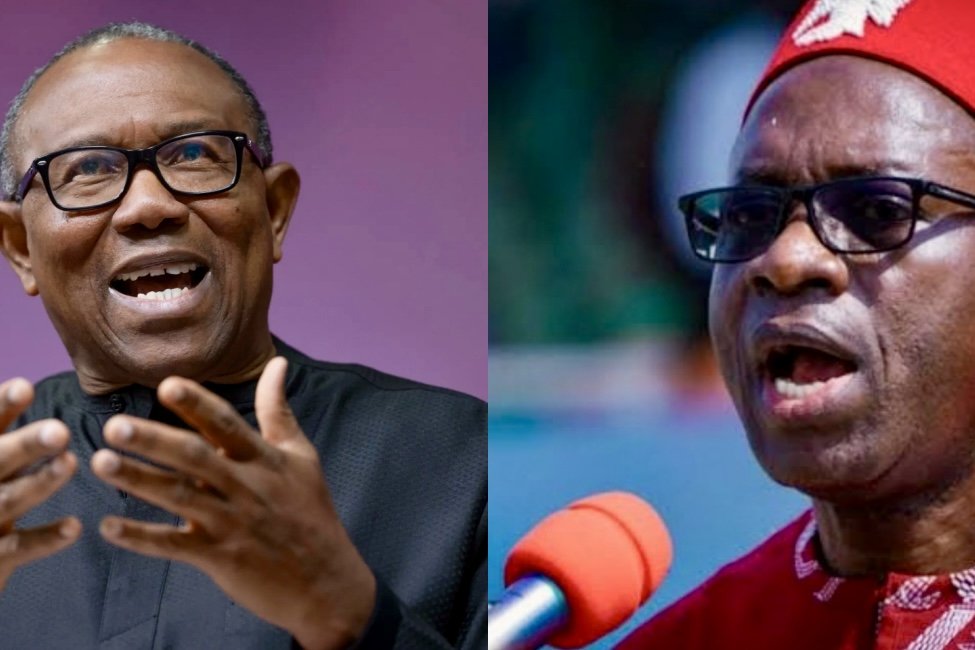
Opposition parties, particularly the Peoples Democratic Party (PDP) and the Labour Party (LP), have seized on the crisis as evidence of Tinubu’s failure to deliver on his campaign promises. Labour Party presidential candidate Peter Obi, in a recent statement, described the minimum wage crisis as “a testament to the incompetence and lack of foresight of the APC-led government.”
“The Nigerian workers deserve more than empty promises,” Obi declared. “They deserve a government that not only listens but acts decisively to improve their lives. Unfortunately, what we are witnessing is a government that is more concerned with political survival than the welfare of its citizens.”
Public Sentiment: Eroding Confidence in Government and Labour
Public sentiment towards both the federal government and the NLC has taken a hit, with many Nigerians expressing frustration and disillusionment with the handling of the minimum wage crisis. Social media platforms are abuzz with criticism, with hashtags such as #MinimumWageCrisis, #NLCStrike, and #TinubuFailedPromise trending across Twitter, Facebook, and Instagram.
“I’m tired of the endless promises and failed strikes,” lamented a civil servant in Abuja. “Every time we hope for change, we are let down by both the government and our labour leaders.”
As public confidence erodes, the Tinubu administration must grapple with the growing perception that it is out of touch with the realities facing ordinary Nigerians. For many, the minimum wage crisis is not just about financial compensation—it is a symbol of a broader failure of governance and accountability.
Long-Term Consequences of Tinubu’s Wage Crisis: Political Fallout, Socio-Economic Disintegration, and Labour’s New Dawn
The Domino Effect: Nigeria’s Economic Fragility Exposed
The current minimum wage crisis is more than just a labour dispute—it is a glaring symptom of Nigeria’s deteriorating economic foundations. For decades, successive administrations have failed to address the structural imbalances that plague the nation’s economy: over-reliance on oil revenues, weak industrial growth, an underdeveloped agricultural sector, and chronic unemployment.
President Bola Ahmed Tinubu’s wage promise, though initially hailed as a bold pro-worker policy, now appears to be the spark that could ignite a full-scale economic downturn. Economists warn that the federal government’s inability to implement the ₦70,000 minimum wage uniformly across states could lead to inflationary pressures, a sharp rise in debt accumulation, and increased poverty levels across the country.
Dr. Olusegun Awolowo, an economist at the Nigerian Economic Institute, outlined the grim forecast:
“If the wage crisis continues without resolution, we are likely to see a contraction in GDP by at least 1.5% in the next fiscal year. State governments may be forced to slash capital projects, leading to reduced economic activity, job losses, and a collapse in investor confidence. This is a slow march towards economic stagnation.”
Indeed, some states have already begun scaling back essential services. In Cross River State, Governor Bassey Otu announced a suspension of several ongoing infrastructure projects, citing insufficient funds to cover both development and the new wage obligations. In Rivers State, the education ministry has suspended plans to recruit additional teachers, further exacerbating the already dire teacher-student ratio in public schools.
The private sector, too, is feeling the heat. Small and medium enterprises (SMEs), which employ a significant portion of Nigeria’s labour force, are grappling with reduced consumer spending power and the rising cost of goods. A recent report by the Lagos Chamber of Commerce and Industry (LCCI) indicated that over 40% of SMEs are at risk of closure if the economic downturn continues for another six months.
A Crisis of Governance: Tinubu’s Credibility in Tatters
The wage crisis has also exposed a deeper crisis of governance within the Tinubu administration. Barely a year into his presidency, Tinubu’s “Renewed Hope” mantra is rapidly losing its lustre. Critics argue that the president’s failure to foresee the economic implications of a nationwide wage increase is indicative of a broader lack of strategic planning within his government.
Even within Tinubu’s All Progressives Congress (APC), rumblings of discontent are growing louder. APC lawmakers in the National Assembly, particularly those from opposition-controlled states, have expressed concerns over the president’s handling of the crisis. Some have reportedly begun discreetly lobbying for a review of the minimum wage policy, fearing that the backlash could cost the party dearly in the 2027 general elections.
An APC senator, who spoke on a condition of anonymity, did not mince words during a recent interaction:
“Our people are suffering. The minimum wage policy, while well-intentioned, was implemented without adequate consultation or consideration of its economic feasibility. This government must go back to the drawing board, or we risk losing the trust of the Nigerian people.”
The opposition has seized on this internal discord to paint Tinubu as a leader who is out of touch with the realities facing ordinary Nigerians. Peoples Democratic Party (PDP) National Publicity Secretary, Debo Ologunagba, launched a blistering attack on Tinubu during a recent media parley in Abuja:
“This is a government of failed promises, incompetence, and misplaced priorities. They promised prosperity but delivered poverty. The Nigerian people deserve better.”
Labour’s New Dawn: The Rise of Alternative Movements
As the Nigerian Labour Congress (NLC) grapples with internal dissent and waning public support, a new wave of independent labour movements is emerging, poised to challenge the NLC’s dominance. These alternative unions, driven by grassroots mobilisation and social media activism, are gaining traction among younger, more radical workers who feel disillusioned with the traditional labour leadership.
One such movement is the United Workers’ Front (UWF), a coalition of independent trade unions and civil society organisations advocating for a decentralised approach to wage negotiations. Led by activist Chika Okafor, the UWF has quickly gained a following among teachers, healthcare workers, and transport unions in Lagos, Abuja, and Port Harcourt.
Okafor, in a recent interview with the Atlantic Post, outlined the movement’s vision:
“The NLC has become a relic of the past—out of touch, compromised, and ineffective. We are building a new labour movement that is democratic, transparent, and accountable to the workers. Our goal is to negotiate directly with state governments to ensure that every worker gets a fair deal.”
The rise of these alternative movements poses a significant challenge to the NLC’s traditional monopoly over labour activism in Nigeria. Analysts warn that a fragmented labour movement could weaken collective bargaining power, but it could also inject much-needed dynamism and innovation into the labour landscape.
Socio-Political Implications: A Nation on the Brink
Beyond the economic and labour ramifications, the wage crisis is fuelling broader socio-political discontent across Nigeria. Weeks ago #EndBadGovernance protests had erupted in major cities, with demonstrators demanding not only a resolution to the wage dispute but also broader reforms to address corruption, unemployment, and poor governance.
As part of the #EndBadGovernance protests in Lagos, demonstrators blocked key highways, chanting anti-government slogans and calling for the resignation of the state governor. In Abuja, civil society organisations organised sit-ins outside the National Assembly and inside the National Stadium, demanding immediate legislative intervention to resolve the nation’s governance crisis.
Those protests, though had focused on economic grievances, have the potential to evolve into a nationwide movement challenging the very legitimacy of the Tinubu administration. Political analysts are drawing parallels to the 2012 Occupy Nigeria movement, which began as a protest against fuel subsidy removal but quickly morphed into a broader critique of government corruption and mismanagement.
The Road Ahead: Can Tinubu Salvage His Presidency?
As the minimum wage crisis continues to unfold, President Bola Ahmed Tinubu faces a critical juncture in his presidency. His ability to navigate this crisis will not only determine the fate of his administration but also shape Nigeria’s socio-economic trajectory for years to come.
To salvage his presidency, Tinubu must adopt a multi-pronged approach:
- Immediate Financial Bailouts: The federal government must provide targeted financial assistance to states struggling to implement the minimum wage, with strict conditions to ensure fiscal responsibility.
- Economic Reforms: Tinubu must prioritise structural economic reforms to diversify Nigeria’s revenue base, reduce dependence on oil, and stimulate industrial growth.
- Engage Labour Movements: The president must engage both the NLC and emerging alternative unions in transparent, good-faith negotiations to restore public trust and prevent further labour unrest.
- Public Communication: Tinubu must address the nation directly, outlining a clear roadmap for resolving the crisis and reassuring Nigerians of his commitment to their welfare.
Failure to act decisively could lead to prolonged economic stagnation, political instability, and a loss of public confidence that may prove irreparable.
Conclusion: A Nation at Crossroads
Nigeria stands at a crossroads. The minimum wage crisis is more than a policy dispute—it is a defining moment for the nation’s political, economic, and social future. For President Tinubu, the clock is ticking. Will he rise to the occasion and steer Nigeria towards stability and prosperity, or will his administration be remembered as yet another chapter in the country’s long history of broken promises and missed opportunities?
Only time will tell. But for now, the eyes of a restless nation are watching, waiting, and hoping for positive change.
Additional reports by Peter Jene, Taiwo Adebowale, Kalada Jumbo, Suleiman Adamu and Omonigho Macaulay.