By Editor

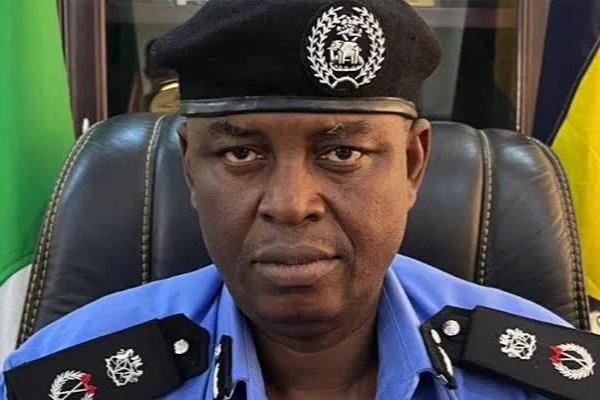
In the unfolding chaos that has become Nigeria’s oil sector, a series of disturbing revelations have surfaced regarding the leadership of the Nigerian National Petroleum Company Limited (NNPCL), under the aegis of Mele Kyari, the company’s CEO. The inflammatory op-ed penned by Ifeanyi Izeze, a seasoned commentator on Nigeria’s energy sector, strikes at the heart of this crisis, raising profound questions about the governance, transparency, and integrity of the NNPC under both the Buhari and Tinubu administrations.
The NNPC Monopoly and Kyari’s Emboldened Arrogance
One of the most striking points made by Izeze is the level of unchecked power wielded by Mele Kyari over Nigeria’s most valuable resource: crude oil. Under his leadership, Kyari has overseen NNPCL’s operations with what can only be described as impunity, making decisions that seem to fly in the face of public accountability or governmental oversight. According to Izeze, Kyari was able to solidify this influence during Buhari’s tenure, where his actions went largely unchecked.
This failure to call Kyari to account has allowed him to act with increasing boldness under the current government. The NNPC, originally created as a government-owned corporation, seems to have metamorphosed into an autonomous entity—one that, alarmingly, operates as if it is above the government itself. The president’s proclamation that “subsidy is gone” has, according to Izeze, been undermined by Kyari’s continued actions, effectively questioning the very control of Nigeria’s government over its oil assets. Kyari’s apparent refusal to respect this directive raises a chilling question: who really runs Nigeria’s oil sector—the President, or Kyari?
Subsidy: A Scam of National Proportions?
A particularly explosive element of Izeze’s critique is the matter of fuel subsidy. The nation was taken aback when President Tinubu announced during his inauguration that the fuel subsidy, long seen as an unsustainable drain on public resources, was no more. However, this celebration was short-lived. The NNPC’s subsequent actions seem to suggest that the subsidy, in some hidden form, never truly disappeared. The absurdity is further highlighted by Kyari’s claim that the NNPC has continued to augment the shortfalls in fuel costs—a rebranding of the subsidy in all but name. This deception, as Izeze emphasises, is a betrayal of public trust.
It is this very game of semantics, and the brazen refusal to respect government policy, that has plunged Nigeria’s oil sector into a dizzying spiral. How can a single individual, even one as powerful as the NNPC boss, openly flout the government’s most crucial economic directive?
Missing Profits and Mismanaged Assets
Another significant aspect of Izeze’s exposé is the shocking financial mismanagement of Nigeria’s oil wealth. According to the author, during Kyari’s tenure, Nigeria has sold millions of barrels of crude oil—yet the nation has not earned a single kobo from it. This wasn’t a one-time occurrence or an anomaly—it happened repeatedly, and nobody raised the alarm. For a country as oil-dependent as Nigeria, the idea that its largest source of revenue could be haemorrhaging money without consequence is unfathomable. The fact that the leadership of the NNPC could face the country’s highest authorities and provide such explanations without being questioned is, as Izeze argues, emblematic of a deeper systemic rot.
Moreover, the international borrowing spree that Kyari has embarked upon raises even more red flags. In his role as NNPC’s CEO, Kyari has borrowed billions of dollars in exchange for the nation’s future crude oil production. This was allegedly done to stabilise the Naira—a task that is traditionally the Central Bank of Nigeria’s (CBN) responsibility. Here, Izeze shines a spotlight on the absurdity of NNPC’s overreach: why is an oil company, whose primary role is to manage Nigeria’s oil resources, dabbling in monetary policy and foreign exchange stabilisation? The clear violation of the separation of responsibilities between national institutions is yet another indictment of Kyari’s leadership.
The Shadow of Campaign Finance: NNPC Funds for Political Gain?
Perhaps one of the most damning allegations in Izeze’s piece is the suggestion that NNPC funds may have been diverted to finance President Tinubu’s election campaign. This is a deeply troubling assertion that, if true, would indicate a level of corruption and political interference that would further erode public trust in the NNPC and the Tinubu administration.
While there is no hard evidence provided to substantiate these claims, the very fact that such accusations are being raised underscores the urgent need for greater transparency in how NNPC’s finances are managed. If Kyari is indeed using public funds for political purposes, it would represent a flagrant abuse of power—one that should be thoroughly investigated by independent bodies.
The Inflationary Domino: Fuel Prices and Economic Hardship
As if these revelations weren’t enough, Izeze draws a direct line between the mismanagement of the oil sector and the skyrocketing cost of living in Nigeria. The removal of the fuel subsidy, followed by NNPC’s unilateral decision to raise fuel prices to unprecedented levels, has triggered a devastating inflationary spiral. What began with a modest price increase to N557 per litre has since ballooned to N897, with some regions reporting prices as high as N1,500 per litre.
These fuel price hikes have had a cascading effect on the cost of basic goods and services, making life increasingly unbearable for ordinary Nigerians. Izeze’s frustration is palpable as he lays the blame for this economic hardship squarely at the feet of Mele Kyari and the NNPC. According to him, the arrogance and impunity with which NNPC raised fuel prices without government consultation or approval has exacerbated the suffering of millions of Nigerians.
Where is the Oversight? The Silence of the National Assembly and the President
One of the most glaring issues raised by Izeze is the absence of any meaningful oversight of NNPC’s activities. The National Assembly, whose primary function is to represent the people and hold public institutions accountable, has remained conspicuously silent on the matter. This inaction, Izeze argues, is a betrayal of the Nigerian people.
Why has the National Assembly not summoned Mele Kyari to explain his actions? Why has there been no inquiry into the NNPC’s opaque financial dealings, its borrowing practices, or its role in fuelling inflation through reckless price hikes? These are questions that demand answers, yet the silence from the corridors of power is deafening.
Even more troubling is the silence of President Tinubu, who, as the Minister of Petroleum, should be directly involved in overseeing the NNPC’s operations. The fact that the President has not publicly addressed the growing scandal surrounding NNPC’s activities raises suspicions of complicity. Izeze’s critique of Tinubu’s role is sharp: the President, he asserts, cannot wash his hands of the NNPC’s actions when he himself is responsible for overseeing the oil sector.
A Call for Accountability
In sum, Ifeanyi Izeze’s op-ed is a scathing indictment of both Mele Kyari and the broader system of governance that has allowed the NNPC to operate with impunity. From the apparent deception surrounding fuel subsidies, to the reckless financial mismanagement of Nigeria’s oil wealth, to the crushing burden of skyrocketing fuel prices on ordinary Nigerians, the evidence of systemic failure is overwhelming.
The NNPC’s transformation from a government-controlled corporation to a rogue entity acting without oversight or accountability is a dangerous development that threatens the very foundation of Nigeria’s economy. Izeze’s call for accountability is clear: Mele Kyari must be held to account for his actions, and the government must reassert its control over the nation’s oil assets before it is too late.
The Nigerian people deserve answers, and they deserve leaders who will protect their interests—not enrich themselves at the expense of the nation.
Mele Kyari, the CEO of the Nigerian National Petroleum Company Limited (NNPCL), has addressed some of the concerns and criticisms levelled against him, especially those related to the management of Nigeria’s oil sector, fuel subsidies, and the ongoing economic challenges. While Kyari has not provided a comprehensive response to every specific allegation, several key statements and positions from him offer insights into his stance on these issues.
On the Removal of Fuel Subsidy
Kyari has consistently defended the NNPCL’s decision to remove the fuel subsidy, aligning with the federal government’s economic reforms. According to him, the subsidy was unsustainable, costing Nigeria billions of dollars annually, and its removal was necessary for the country’s economic recovery. He often emphasised that continuing the subsidy would have led to deeper fiscal problems, including the depletion of foreign reserves and the collapse of the Naira.
In response to the backlash over fuel price hikes, Kyari has argued that market forces, rather than government intervention, should determine fuel prices. He reiterated that deregulation of the oil sector, as mandated by the Petroleum Industry Act (PIA) of 2021, necessitates the removal of subsidies and allows for price fluctuations based on global oil prices and foreign exchange rates.
On the Debt Owed to International Oil Traders
Regarding the alleged $6.8 billion debt owed to international oil traders, Kyari has acknowledged that there are outstanding obligations. However, he has maintained that the NNPCL is working to resolve the issue, and much of the debt is a legacy of the subsidy system and the challenges of managing foreign exchange availability in Nigeria.
Kyari has also noted that these obligations are part of broader efforts to secure the country’s energy needs and stabilise the Naira, which has suffered from significant volatility due to falling oil revenues and currency depreciation.
On the Alleged Mismanagement of Oil Revenues
Kyari has repeatedly denied accusations of mismanaging oil revenues or diverting funds for political purposes. He has highlighted that the NNPCL’s operations, especially since its transition to a limited liability company, are more transparent than in the past. Kyari often points to the NNPCL’s 2021 and 2022 financial reports, where the company declared record profits (N287 billion in 2021), as evidence of better governance and management under his leadership.
While Izeze’s accusations of unaccounted revenue and lack of remittances to the Federation Account are serious, Kyari has maintained that fluctuating oil prices, crude oil theft, and production challenges are the primary reasons behind lower revenues. He has also underscored efforts to combat oil theft, claiming significant reductions in illegal bunkering activities, which have plagued the sector for years.
On NNPCL’s Borrowing and Dollar-Denominated Debt
Kyari has defended NNPCL’s decision to borrow billions from international lenders, stating that the loans were necessary to fund critical infrastructure projects in the oil sector, including refinery rehabilitation and pipeline upgrades. He explained that this borrowing is in line with international practices and that the funds will help improve the nation’s long-term energy security and economic stability.
Kyari has also noted that the loans were taken to ease pressure on the Naira, especially during a time of severe foreign exchange shortages. He claims that these efforts are part of a broader strategy to support the Central Bank of Nigeria (CBN) in stabilising the currency.
On Accusations of Undermining the Presidency
The assertion that Kyari acts independently or undermines the authority of the presidency is one he has implicitly rejected. In various public statements, Kyari has expressed his commitment to supporting the government’s economic agenda, particularly under President Tinubu. He has also highlighted his role in implementing key decisions, such as the removal of the subsidy and the deregulation of the oil sector, in line with presidential directives.
Kyari has reiterated that the NNPCL is a state-owned enterprise that operates within the broader framework of government policies and has no agenda beyond ensuring the sustainable management of Nigeria’s oil and gas resources.
On Fuel Price Hikes
On the issue of fuel price increases, Kyari has been unequivocal in stating that these hikes are a result of global market dynamics and exchange rate pressures, not arbitrary decisions by the NNPCL. He has explained that the company no longer controls fuel prices due to the deregulated market, and as such, prices are dictated by global crude oil prices, refining costs, and foreign exchange rates.
Kyari has frequently warned that without addressing the root causes of fuel price volatility—such as exchange rate instability and the need for local refining capacity—prices will continue to fluctuate.
Kyari’s Broader Defence
Throughout his tenure, Kyari has consistently positioned himself as a reformer committed to cleaning up Nigeria’s oil sector. He points to ongoing efforts to rehabilitate Nigeria’s refineries, reduce the country’s reliance on imported fuel, and combat oil theft as evidence of his commitment to transparency and improved governance.
Kyari’s public appearances and speeches often stress the complexities of managing the NNPCL in a challenging global economic environment, where oil prices, geopolitics, and domestic fiscal pressures intersect. He has portrayed himself as someone working tirelessly to balance these competing interests while ensuring that the NNPCL remains profitable and serves the Nigerian people.
Mele Kyari’s response to the numerous allegations levelled against him and the NNPCL has been a mix of defence and explanation. He stands firm on his management of the company, pointing to necessary economic reforms and global market conditions as the root of most criticisms. However, the underlying public distrust in the NNPCL’s operations, combined with the transparency issues raised by commentators like Izeze, suggests that Kyari’s leadership will continue to face intense scrutiny until these concerns are fully addressed.
Despite his defence, Kyari remains a polarising figure in Nigeria’s oil sector, with many calling for more accountability and transparency in how the country’s oil wealth is managed.
President Bola Tinubu’s stance on the ongoing controversies surrounding the Nigerian National Petroleum Company Limited (NNPCL) and its CEO, Mele Kyari, particularly in relation to fuel subsidies, oil revenue management, and fuel price hikes, has been shaped by his administration’s broader economic and energy reforms. While he has not directly addressed every specific allegation made against Kyari, his actions and policies provide a clear framework of his position on these critical issues.
On the Removal of Fuel Subsidy
One of Tinubu’s first major policy announcements was the removal of fuel subsidies, made during his inaugural address on May 29, 2023. In that speech, Tinubu declared that “subsidy is gone,” signalling a significant shift in Nigeria’s economic policy. This decision was in line with his campaign promises to reform Nigeria’s economy, reduce government waste, and reallocate funds from the costly subsidy programme to other critical sectors like infrastructure, healthcare, and education.
Tinubu has defended the removal of the subsidy as a necessary step to halt the massive drain on government resources. He has repeatedly argued that the subsidy was not benefiting the average Nigerian but rather fuelling corruption, enriching a few powerful individuals and corporations. According to the President, continuing to subsidise petrol was no longer sustainable, and the funds saved would be better utilized for long-term economic growth.
His administration’s position on this is clear: the subsidy had to go, and despite the immediate hardship it caused, it was a difficult but necessary reform for Nigeria’s economic future. Tinubu sees the deregulation of the oil sector as key to attracting investments, especially in refining capacity, which would eventually stabilise prices and reduce Nigeria’s dependence on imported fuel.
On Fuel Price Hikes
Tinubu has maintained that fuel price hikes, a direct result of subsidy removal, are a consequence of global market forces. The administration argues that since the market has been deregulated, the government no longer has control over fuel prices, which are now determined by international oil prices, refining costs, and the exchange rate.
Although the sharp increase in fuel prices has led to widespread discontent, Tinubu has called for patience, suggesting that the long-term benefits of deregulation will outweigh the short-term pain. He acknowledges the hardship but insists that Nigeria can no longer afford the subsidy, especially with the country’s dwindling oil revenues and rising debt burden.
In a bid to mitigate the impact of higher fuel prices, Tinubu’s government has introduced various palliatives, such as a proposed wage increase for public sector workers and the introduction of buses to ease transportation costs. His administration has also hinted at plans to stimulate local production and refining, which could eventually bring down the cost of petrol.
On Mele Kyari and the NNPCL
Tinubu has not publicly criticised Mele Kyari, the CEO of NNPCL, and his actions since taking office suggest a level of support for Kyari’s leadership of the national oil company. Kyari’s continuation in his role as head of NNPCL after Tinubu assumed office is itself an indication that the President values his expertise or at least sees no immediate need to replace him.
Tinubu’s administration appears to have a broader agenda of reforming and restructuring the oil and gas sector, with Kyari at the helm of NNPCL’s transition from a government-controlled corporation to a private entity, albeit state-owned. Tinubu’s economic team seems to believe that Kyari’s leadership will be crucial in stabilising the sector, attracting foreign investment, and ensuring Nigeria’s energy security.
However, there is a clear expectation that NNPCL under Kyari should operate with greater efficiency, transparency, and accountability. Tinubu’s administration is under pressure to ensure that the oil company aligns with national interests and does not operate independently or recklessly. The President has emphasised that reforms in the oil sector must be transparent and beneficial to Nigerians, which implies that Kyari and the NNPCL will need to answer for any perceived lapses or misconduct.
On Oil Revenue Management
Tinubu’s position on oil revenue management ties directly into his broader economic vision for Nigeria. He has expressed a desire to maximise the nation’s oil wealth for the benefit of all Nigerians, focusing on reducing corruption, boosting transparency, and increasing efficiency within the oil sector. He has pushed for reforms that ensure oil revenues are properly accounted for and directed towards national development rather than being siphoned off by corrupt officials or wasted on subsidies.
In this context, the allegations by Ifeanyi Izeze regarding unaccounted revenues and NNPCL’s handling of the nation’s crude oil sales during Kyari’s tenure would be of concern to Tinubu’s administration. However, the President has not publicly addressed these specific allegations. Instead, his focus remains on the overall reform of the oil sector, suggesting that his administration will likely deal with these issues as part of a broader restructuring process.
On Borrowing by NNPCL
Tinubu’s administration seems to view NNPCL’s foreign borrowing and dollar-denominated debt as part of a necessary strategy to maintain the country’s energy security and stabilise the Naira. Given Nigeria’s foreign exchange challenges, the administration appears to support the idea that NNPCL, as the country’s primary revenue generator, should play a role in attracting investment and managing financial shortfalls.
However, there is likely an expectation from the Tinubu administration that these borrowings be managed prudently and that they contribute to long-term investments in the country’s oil and gas infrastructure, particularly in refining capacity. Tinubu’s team has emphasised the need for greater local refining, which would reduce Nigeria’s dependence on fuel imports and stabilise prices over time.
On Accountability and the National Assembly
Tinubu has not directly commented on the calls for accountability regarding NNPCL’s actions under Kyari, nor has he publicly responded to suggestions that Kyari should be summoned by the National Assembly to explain his decisions. However, Tinubu’s broader emphasis on transparency and good governance suggests that he would not oppose efforts by the legislature to hold NNPCL accountable, provided they are done in a manner that aligns with his administration’s reform agenda.
The President likely views these accountability measures as part of the necessary checks and balances in a democratic government, but he has been careful not to publicly undermine Kyari’s leadership, perhaps recognizing that too much instability at the top of NNPCL could negatively affect the country’s already fragile oil sector.
On the Future of NNPCL
Under Tinubu’s administration, there is a clear push for NNPCL to continue its transformation into a more commercially viable and transparent organisation. Tinubu has consistently emphasised that Nigeria’s oil wealth must be used to benefit the entire country, not just a select few. Therefore, it is likely that his government will support further reforms in the NNPCL to ensure that it operates efficiently and transparently.
President Tinubu’s stance on the controversies surrounding NNPCL and Mele Kyari is shaped by his broader economic reforms aimed at stabilising Nigeria’s economy and ensuring that the country’s oil wealth is managed more effectively. While he has not publicly addressed all the specific allegations made by critics like Ifeanyi Izeze, Tinubu’s actions — particularly his support for subsidy removal, market deregulation, and reforms in the oil sector — indicate a belief that these changes are necessary for Nigeria’s long-term economic stability.
At the same time, Tinubu’s administration will need to ensure that the NNPCL operates with greater transparency and accountability to avoid the perception of impunity and mismanagement, especially as the company plays a critical role in the country’s economic recovery.