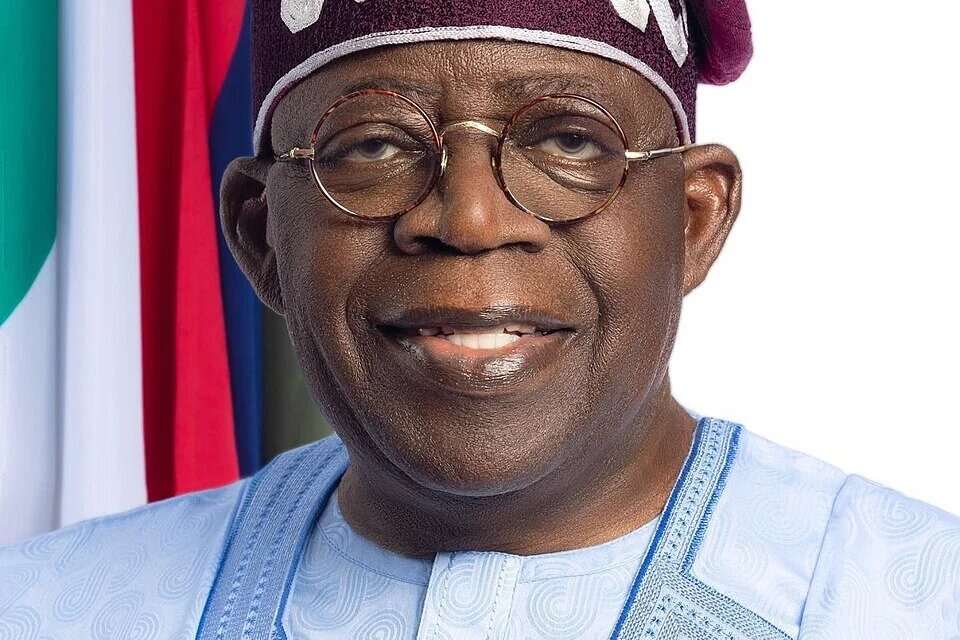
President Tinubu’s recent assertion that “the economy has turned the corner” and that there is “light at the end of the tunnel” has been met with scepticism. While his administration hails two years of bold reforms, independent data paints a far more mixed picture. Nigerian inflation remains in the 20–30% range – a level that has plunged millions into hardship – and the naira has lost roughly 40% of its value against the dollar since 2023.
Below we examine the key economic indicators cited by Mr. Tinubu and ask whether ordinary Nigerians can truly “enjoy the fruits of the reforms” as promised.
Inflation: A Relentless Cost-of-Living Spike
Figure: Crumpled naira banknotes – Nigeria’s currency plunged roughly 40% in 2024.
Inflation has been the biggest test of Tinubu’s reforms. When he took office in May 2023, consumer inflation was already above 18%. Within months, his fuel subsidy removal and naira devaluations caused a historic surge. By July 2024 official inflation hit 34.2%, a 28‑year high. Twelve months later it was still over 34% in November 2024 – “the most severe cost-of-living crisis in decades”.
In mid-2025 some technical factors have cooled the numbers. The statistics agency rebased the inflation basket early in 2025, which by itself cut the headline rate to the mid‑20s. Indeed, by June 2025 CPI was reported at 22.2% and 21.9% in July. But even at ~22%, inflation is still far higher than under the prior government (around 18–20%). And food prices remain stubborn: food inflation was 40.9% in June 2024 and still about 22–23% by mid-2025. In short, price increases have moderated only from record highs, not back to comfort.
- Key point: Inflation soared above 30% after Tinubu’s reforms. It is finally easing (to ~22% mid-2025) but remains one of Africa’s highest rates. Most Nigerians still face daily price shocks.
The Naira’s Free Fall and Recovery Hype
Tinubu has repeatedly claimed that exchange rates have “stabilised,” but the numbers tell a different story. When he took office, Nigeria floated a unified FX market – letting the naira find its own level – and began selling dollars to shore up reserves. Yet in calendar 2024 the official naira/dollar rate tumbled from ~₦907 to ₦1,535 – a 40.9% depreciation. In parallel (street) markets the naira ended 2024 near ₦1,660/$, up from ₦1,215 the year before. This collapse made Nigeria’s currency one of the worst-performing worldwide in 2024.
By late 2025 there are signs of a slight rebound. World Bank data showed official reserves climbing into the low-$40‑billion range, and the naira has firmed somewhat toward the mid-₦1,400s. Even so, as of September 2025 the naira was still around ₦1,498/$ – a far cry from the ₦907 level of early 2023. (Tinubu had boasted of achieving ~₦1,450 by now, but independent data put it nearer ₦1,530 in late Aug 2025.) In practice, Nigerians still spend far more naira to buy dollars than they did two years ago.
- Key point: After liberalising FX, the naira collapsed ~40% in 2024. It has since recovered slightly, but official rates still hover near ₦1,500/$ in late 2025. The “stabilisation” that Tinubu touted remains fragile.
GDP Growth: Good News – on Paper
Economic growth has picked up under Tinubu – but the gains are mostly cyclical and technical. In 2024 Nigeria’s GDP grew about 3.4%, up from 3.0% in 2023. Quarterly data show a surge in late 2024: the economy expanded 4.6% year-on-year in Q4 2024, its fastest pace in years. By Q2 2025 growth was 4.23%, fuelled by higher oil output and robust industry/agriculture. These rates sound healthy, but part of the explanation is a rebasing of GDP to reflect new industries and statistical methods, and a bounce-back from a pandemic-era trough.
Moreover, growth has not yet translated into broad-based prosperity. The oil sector’s 20% expansion owes to increased drilling, but millions of Nigerians earn a living outside oil. Non-oil growth has been much more modest, and few new jobs have emerged to keep pace with population growth. The government has set an ambitious 7% growth target for 2025 (up from 6%), but analysts warn that sustaining double-digit growth will require diversification beyond oil and coal.
- Key point: Nigeria’s GDP growth is recovering (around 4–4.5% in 2024–25), but this partly reflects statistical rebasing and oil production gains. Ordinary Nigerians question whether they feel faster growth when inflation remains sky-high.
Fuel Subsidy Removal: Panacea or Pain?
One of Tinubu’s signature reforms was scrapping Nigeria’s decades-old petrol subsidy. The Presidency claims this saves $7.5–7.9 billion per year (some figures even say N20 trillion in two years). In theory, the money saved can fund schools, roads and power. In practice, fuel prices jumped massively: at launch in mid-2023 diesel went from ~₦180 to ₦620 per litre, and by late 2024 had soared above ₦1,200/litre nationwide. This hit consumers and small businesses immediately, as petrol is the fuel for most generators and transport.
Figure: A petrol station attendant at work in Nigeria. Fuel subsidy cuts have tripled petrol prices since 2023.
Critics argue that subsidy removal has had uneven effects. On one hand, the government has indeed freed cash – but even after the cuts it still had to borrow over $21 billion in 2025 to meet budget shortfalls. Meanwhile, Nigerian consumers have faced chronic fuel shortages and queueing. Local media and labour unions point out that if truly huge subsidy savings are available, it is puzzling why fiscal holes remain and road projects are incomplete.
The long-term effect on Nigeria’s finances remains to be seen. Some analysts accept that removing subsidies was economically necessary – but warn that without parallel reforms (e.g. better electricity to replace generators), the poorest bear the brunt. The World Bank notes that recent reforms “have begun to stabilize the economy, but inflation remains high, dampening demand and continuing to undermine the purchasing power of Nigerians”. Fuel subsidy elimination was meant to ease government spending and unify fuel prices. Yet in the short run it has sharply increased household costs and raised the poverty line.
- Key point: Cutting petrol subsidies saved perhaps $7–8 billion per year, but petrol now costs 3–4× more. The windfall to the treasury has come at huge cost to consumers – and borrowing remains large, raising questions about the true fiscal gains.
Poverty, Jobs and Public Sentiment
Tinubu thanked Nigerians for “their patience and support,” but many citizens remain anxious. Real wages have not kept up with inflation, so purchasing power has plunged. The World Bank reports that poverty has surged: over 42 million more Nigerians fell into poverty since 2019, so that by 2024 more than half (≈54%) of Nigerians lived below the poverty line. These negative gains predated Tinubu, but his policies did little to reverse the slide. In fact, the Bank notes “recent macroeconomic reforms have begun to stabilize the economy, but inflation remains high… pushing many Nigerians – particularly in urban areas – into poverty”.
Unemployment is another sore point. Official labour surveys under Buhari showed over 30% of people jobless or under-employed. The Tinubu administration argues that by ILO standards (now using a new survey), unemployment is only ~4–5% – akin to peers. However, critics counter that these low figures mask underemployment (many work only a few hours) and that youth joblessness is still rampant. The truth is hard to pin down, but there is consensus that jobs are scarce and businesses face high costs (electricity, fuel, FX). Monthly protests by labour unions for higher minimum wages and affordable fuel underscore the hardship.
Tinubu’s claims of stability are sharply contested in the media and among experts. For example, a Guardian analysis of his mid-2025 speeches calls his assertions “a bunch of disinformation”. It notes that Tinubu even misstated facts about borrowing and exchange rates. Available data showed Nigeria was still borrowing heavily for the 2025 budget, contrary to his claim of no new debt. And whereas Tinubu boasted the naira would be ₦1,450 to the dollar by now, actual rates were around ₦1,530–1,498. “None of what the President said was correct,” the columnist concludes.
- Key point: Social indicators remain grim. Over 50% of Nigerians live in poverty, and most feel inflation’s bite. Jobs are limited and wages stagnant. Independent observers note a sharp disconnection between official rhetoric and on-the-ground reality.
A Historical and Regional Perspective
Nigeria’s economy is still fragile by historical standards. Under past administrations, growth often faltered around 3–4% and inflation remained in the low teens. The Tinubu era began with a collapse in reserves (after years of corruption) and a collapsing currency, so some disruption was inevitable. It is true that the economy is now posting double-digit growth rates – impressive compared to many African peers – but much of that is catch-up from the troughs of 2020–2022.
By contrast, many other oil-exporters in Africa and beyond are experiencing inflation too, but few have seen spikes as severe as Nigeria’s 2023–24 surge. For example, Ghana and Zambia have also devalued, but their consumer inflation rates have tended to stay below 30%. In that sense, Nigeria’s inflation spike is particularly sharp. On reserves, the rebuilding to over $40 billion is encouraging (up from $30–35bn in 2024), but still low for a population of 220+ million.
The comparative takeaway is that Tinubu’s reforms were always a tradeoff: exchange-rate flexibility and subsidy cuts for short-term pain but hoped-for mid-term gain. Early returns show improved fiscal metrics (deficits narrowed, revenues up) and stronger growth. Yet these have come with very high inflation and social strain.
Whether the “light” is truly at the end of the tunnel depends on if and when inflation falls back to the single digits, if local manufacturing rises, and if jobs expand. For now, most indicators show Nigeria only tentatively on a better track, with significant headwinds still ahead.
Conclusion
President Tinubu’s jubilant claims of an economy turned around are only partly borne out by the facts. In headlines, Nigeria’s GDP is growing and the naira’s slide has slowed. But for ordinary Nigerians, sky-high prices and dollar shortages remain the daily reality.
As one analyst put it, to convince citizens the crisis is over, “we have not yet felt the real light.” The administration’s continued reforms may eventually pay off, but the current data suggest we are still closer to mid-tunnel darkness than dawn.
In examining Tinubu’s press release vs. the data, we find a mix of modest achievements and lingering challenges.
Citations: Official statistics and reporting from Reuters, Punch, NBS, and international agencies have been used to substantiate this analysis.
Follow us on our broadcast channels today!
- WhatsApp: https://whatsapp.com/channel/0029VawZ8TbDDmFT1a1Syg46
- Telegram: https://t.me/atlanticpostchannel
- Facebook: https://www.messenger.com/channel/atlanticpostng