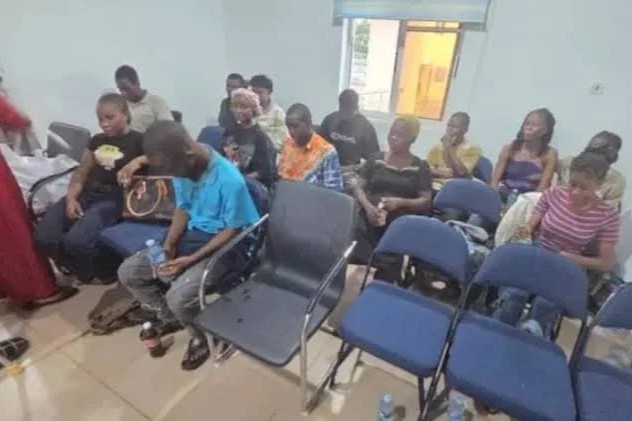
ABUJA, Nigeria — President Bola Ahmed Tinubu has announced the successful rescue of 21 Nigerians, including all 15 National Youth Service Corps (NYSC) members abducted in Kogi State, in a major joint security operation that ended days of uncertainty for the victims’ families.
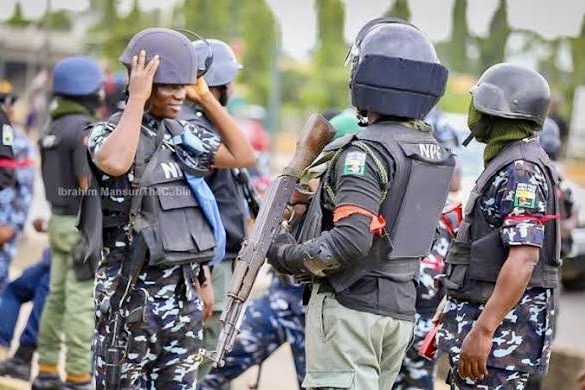
The President said the 21 abductees, which include eight males and 13 females, were recovered from kidnappers’ hideouts in the forests of Ofu Local Government Area, Kogi State, on Monday afternoon, 31 August 2026, during a coordinated Search and Rescue operation involving the military, Nigeria Police Force, Department of State Services (DSS) and local vigilantes.
But beneath the relief surrounding the announcement lies a significant question about the handling of information during the five-day ordeal: security authorities issued different figures about the number of NYSC members rescued before the Presidency announced that all 15 corps members, along with six other abductees, had been freed.
That is an important discrepancy, particularly for families who spent days trying to establish whether their relatives were alive, rescued or still being held in the bush.
Tinubu announces full rescue
In a statement, Tinubu said he was relieved by the development and praised the joint security operation for securing the release of all 21 victims.
“I am delighted to receive the news that the fifteen members of the National Youth Service Corps and six other innocent and law-abiding Nigerians abducted last week in Kogi State by some criminal elements have regained their freedom.”
The President said the victims were rescued from a kidnappers’ den in the Ofu forests following what he described as a well-coordinated SAR operation.
“The well-coordinated Search and Rescue (SAR) operation carried out by a combined team of personnel of the military, the Nigerian Police Force, the Department of State Services, and local vigilantes safely rescued all twenty-one abductees, made up of eight males and thirteen females, from the den of kidnappers in the forests of Ofu Local Government Area of Kogi State this afternoon.”
Tinubu added that the rescued corps members and other victims were receiving medical attention before being reunited with their families.
Channels Television also reported that the rescued victims were expected to be reunited with their families after medical checks.
The figures changed as the rescue unfolded
The most striking element of the development is the changing official account.
When the abduction first became public, reports said 15 NYSC members had been taken along the Aloma–Egane Expressway in Ofu LGA on 26 August.
On 28 August, the Kogi State Police Command said 11 abducted victims, including the drivers of the two buses attacked, had been rescued. Police spokesperson ASP Saliu Oyiza Afusat said most of those rescued were NYSC members.
However, by Monday afternoon, the Kogi police command issued another clarification saying 10 of the 15 corps members had been rescued from Egume Forest, while 11 people had been recovered in a separate tactical operation. The command said security agencies were still searching for the remaining victims.
Around the same time, the Defence Headquarters, through Director of Defence Media Operations Major General Michael Onoja, was reported as saying that 10 NYSC members had been rescued, with the operation continuing to locate the remaining five.
Then came the Presidency’s announcement that all 15 NYSC members and six other abductees — 21 people in total — had been rescued.
The available public statements do not yet provide a detailed operational breakdown explaining precisely how the earlier figure of 10 rescued corps members was reconciled with the later presidential confirmation of all 15.
That unanswered question is not merely administrative. During kidnapping crises, accurate victim accounting is itself a security issue because families make decisions, ransom negotiations take place and public confidence depends on credible information.
The Students’ Union Government of the Federal University of Agriculture, Abeokuta, had earlier called for authorities to release verifiable information because families were still uncertain about the whereabouts of some victims despite reports that 11 people had been rescued.
How the Kogi ambush happened
The abduction occurred at about 4:40pm on Wednesday, 26 August, according to the Kogi State Police Command.
Police said armed assailants emerged from the bush around Ogene Zaria, close to the Ogene Zaria/Onicha-Igo Junction, and blocked two buses travelling in opposite directions.
Some passengers were abducted while others escaped into the surrounding bush.
Two abandoned vehicles were subsequently recovered: a Peace Mass Transit white Hummer bus and a yellow 18-seater bus. Police then began a coordinated bush-combing and rescue operation.
The NYSC members were returning to Abuja after completing their orientation programme at the NYSC Permanent Orientation Camp in Kolokuma/Opokuma Local Government Area of Bayelsa State. They were members of the 2026 Batch ‘B’ Stream II.
That journey exposed one of the enduring weaknesses in Nigeria’s internal security architecture: large groups of young Nigerians travelling on major inter-state routes can still become vulnerable within minutes of entering heavily forested corridors.
Rescued corps member describes terrifying ordeal
The human cost of the incident became clearer after one of the rescued corps members, David Ayodele, described what happened inside the forest.
Ayodele said the kidnappers forced the victims from their vehicle and marched them into the bush while firing shots.
“Driver tried to escape, but he said, ‘Who’s the driver?’”
He said the victims were then subjected to violence.
“Then we made our way to the bush with flogging and kicking and shouting and stuff.”
According to Ayodele, the abductors threatened to keep the captives in the forest for a month before killing them.
“We reached one kind of bushy area; they asked us to sit down… that we would be here for one month, so they would kill all of us.”
He said the victims were warned not to move without permission because anyone who attempted to escape could be shot.
After their rescue, Ayodele expressed gratitude to the security forces.
“So we moved a lot, a lot, a lot, a lot and then thank God the Nigerian Army came to meet us.”
He also confirmed that he had completed his orientation in Bayelsa before travelling towards Abuja following his relocation.
His account gives the rescue operation a human dimension often absent from official security briefings: the victims were not simply figures on an operational dashboard but young Nigerians who spent days expecting that a mistake or attempted escape could cost them their lives.
The ransom question adds another layer
Before the reported full rescue, conflicting reports also emerged over ransom demands.
One report citing a family member said kidnappers demanded ₦35 million for the release of one of the abducted corps members.
A later report cited another family source as saying the kidnappers demanded ₦20 million for each victim.
Neither ransom figure was independently confirmed in the official police and Defence Headquarters statements reviewed for this report.
The conflicting accounts reinforce a broader problem in Nigeria’s kidnapping economy: families often become the first source of information during an abduction crisis, while official agencies may withhold operational details for legitimate tactical reasons. The resulting information vacuum can quickly produce conflicting narratives.
Ofu has become a serious security concern
The latest incident also cannot be viewed in isolation.
Earlier in August, a separate joint security operation in Ofu Local Government Area rescued 16 kidnap victims after troops tracked their abductors towards the Adumu area of neighbouring Dekina Local Government Area and engaged them in a gun battle. The operation involved the Army, Navy, police, vigilantes and hunters.
That incident, followed only weeks later by the abduction of NYSC members along another corridor in the same wider area, raises questions about the ability of criminal groups to exploit forest cover and highway vulnerabilities despite repeated security operations.
The issue is therefore bigger than the rescue of 21 people. It is whether the state can turn successful rescue operations into sustained disruption of the kidnapping networks responsible for repeatedly targeting the same corridors.
Tinubu orders continued manhunt
Tinubu made clear that, in his view, the rescue does not end the operation.
“While the abductees have been safely rescued, our gallant security forces are still on the trail of the routed kidnappers, in line with my directive to sustain the pressure on all criminal elements.”
He warned that those behind the attack and anyone who assisted them would be pursued.
“Those responsible will face the full weight of the law, and our security agencies will pursue everyone who aided this crime.”
The President also reiterated a key promise that has become central to his administration’s security messaging:
“My administration remains committed to ensuring that every Nigerian can travel across our country without fear.”
He praised the security personnel involved and expressed sympathy with the victims’ families.
“I wholeheartedly commend the combined SAR team for their courage and appreciate families and loved ones of the abductees for their understanding during the ordeals of their loved ones.”
He further reassured families of corps members that his administration remained committed to their safety.
“As I share in the relief and joy of the parents and loved ones of the rescued individuals, I want to once again, assure parents and loved ones of our dedicated corps members that my Administration remains committed to ensuring the safety of their lives and property, as well as those of other Nigerians.”
Tinubu concluded by commending Nigeria’s security and intelligence personnel:
“God bless the men and women of our Security and Intelligence agencies.
“God bless the Federal Republic of Nigeria.”
Rescue success, but the security test continues
The rescue is unquestionably a major operational success. Twenty-one people who entered a forest under armed guard are now reported free, and a group of young Nigerians who had only recently completed their national service orientation are alive to tell the story.
But the bigger security question remains unanswered.
Recent research cited by Reuters, drawing on SBM Intelligence data, estimated that 7,825 people were kidnapped in Nigeria between July 2025 and June 2026, while ransom payments associated with civilian abductions reached about $5.79 million. The figures illustrate how kidnapping has evolved into a substantial criminal economy rather than a series of isolated attacks.
Against that backdrop, the Kogi rescue should be measured not only by the number of captives recovered but by what follows.
Will the abductors be identified?
Will the kidnappers’ local intelligence networks be dismantled?
Will anyone suspected of financing, supplying or facilitating the operation be arrested?
And, perhaps most importantly for road users, will the security presence along vulnerable Kogi corridors be strong enough to prevent another ambush?
Tinubu has now ordered security forces to maintain pressure.
For the families who spent five days living between hope and fear, however, the immediate relief is simpler: their sons and daughters are coming home.
The next measure of success will be whether the people who put them there are brought before the law — and whether other travellers can use the same roads without becoming the next headline.
Follow us on our broadcast channels today!
- WhatsApp: https://whatsapp.com/channel/0029VawZ8TbDDmFT1a1Syg46
- Telegram: https://t.me/atlanticpostchannel
- Facebook: https://www.messenger.com/channel/atlanticpostng