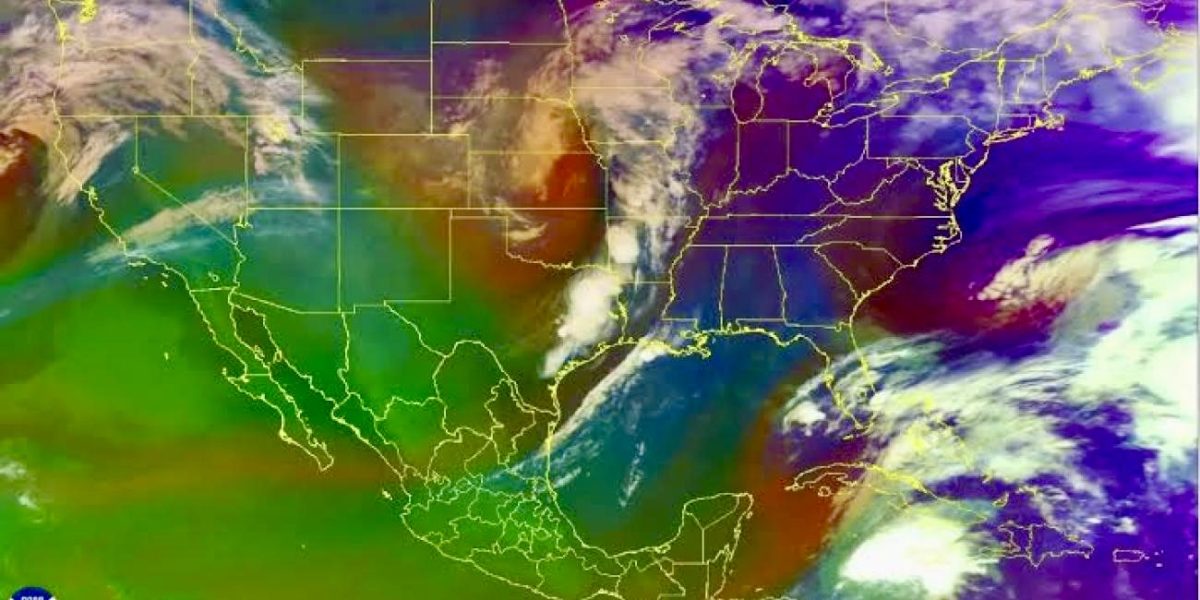
Nearly one million US utility accounts lost power at the storm’s peak as coastal flooding, heavy snow and travel chaos exposed the vulnerability of essential services and raised questions about America’s preparedness for extreme weather.
The Thanksgiving holiday was supposed to bring millions of Americans together. Instead, powerful weather conditions exposed how quickly essential services can be disrupted when electricity networks, transport infrastructure and coastal communities face simultaneous threats.
By Friday, November 27, more than 650,000 US utility customers were still without electricity after a powerful storm battered the East Coast with winds reaching 70mph, torrential rain and coastal flooding.
The disruption extended beyond the electricity network. Flights were cancelled, roads disappeared beneath floodwater, emergency workers rescued stranded motorists, and authorities in parts of California prepared communities for exceptionally high coastal tides.
The central concern is no longer simply how much damage the storms have caused. It is whether America’s infrastructure and emergency response systems can withstand increasingly complicated weather emergencies.
Nearly One Million Customers Left Without Electricity
The scale of the electricity disruption was among the clearest indicators of the storm’s impact.
PowerOutage.us recorded approximately 961,000 utility customers without electricity at the height of Thursday’s disruption, November 26.
Although restoration efforts had reduced the figure by Friday, 656,377 customers remained without power as of 9:40 a.m. Eastern Time, according to data reported by Anadolu Agency.
Pennsylvania recorded approximately 147,184 outages, followed by New Jersey with 126,088 and Maryland with 86,796.
Virginia recorded another 80,034 outages, while Missouri had 78,693 and New York 52,096.
These figures represent utility customers or service accounts, not individual people. The number of residents affected could therefore be considerably higher.
Wind gusts reaching 70mph brought down trees and power lines, while heavy rainfall saturated the ground, increasing the risk of trees collapsing onto electricity infrastructure.
The combination raises a familiar but important infrastructure question: how much of the damage could be prevented through stronger distribution networks, vegetation management and more resilient electricity infrastructure?
For households without electricity, the consequences extend beyond darkness. Refrigerated food becomes vulnerable, heating and communications can be interrupted, and people dependent on electrically powered medical equipment face additional risks.
Flooding Turns a Weather Emergency Into a Public Safety Crisis
Coastal flooding created another major challenge along the eastern seaboard.
New Jersey Governor Mikie Sherrill declared a state of emergency across all 21 counties ahead of the storm.
The order, effective from Wednesday evening, November 25, authorised the state’s emergency management authorities to coordinate operations across government agencies and local authorities.
Sherrill said:
“My first responsibility as Governor is the safety of the people of New Jersey.”
She warned that damaging winds, heavy rainfall and severe tidal flooding threatened communities, particularly those along the coast and bays.
The consequences became visible in communities including Avalon, Ocean City and Sea Isle City, where floodwaters covered streets and obstructed roads.
Avalon’s Business Administrator, Scott J. Wahl, described the flooding as among the worst in the community’s history.
In New York City, emergency workers rescued people from vehicles trapped by floodwater. Mayor Zohran Mamdani issued a warning that captured the danger facing holiday travellers.
“There is no destination worth your safety,” he said.
Flooding also disrupted transport infrastructure. Parts of the Chesapeake Bay Bridge-Tunnel were temporarily closed because of high winds, while North Carolina’s Highway 12 was shut after seawater breached coastal dunes.
The damage demonstrated how one weather event can affect several interconnected public services, leaving roads inaccessible, slowing emergency response and disrupting regional movement.
When Electricity Problems Threaten Water Supplies
One of the more significant developments involved Maryland’s water infrastructure.
Nearly two million water customers in Montgomery and Prince George’s counties were asked to restrict consumption after storm-related power disruptions affected two water filtration plants.
Residents were advised to conserve water while authorities assessed the impact on supplies.
The request was subsequently lifted on Friday after the facilities resumed producing sufficient treated water.
WSSC Water said:
“Both water filtration plants are producing safe, clean drinking water to meet customer demand as disruptions from yesterday’s massive storm have diminished.”
The episode exposes an important vulnerability that receives less attention than electricity outages.
Electricity and water infrastructure are closely connected. Water treatment, pumping and distribution facilities depend on reliable power, meaning a disruption to one essential service can threaten another.
The restoration of power alone is not necessarily enough to restore normal public services. Water treatment facilities, telecommunications networks, traffic systems and emergency operations must also remain functional.
For emergency planners, the Maryland disruption provides another reason to examine backup power arrangements and the resilience of critical public infrastructure.
California’s King Tides Create a Different Emergency
While the East Coast dealt with powerful winds and heavy rain, California faced a separate combination of exceptionally high tides, large waves and coastal flooding.
The situation stretched from Humboldt County in northern California to Ventura County near Los Angeles.
However, the evacuation measures varied between communities.
In Humboldt County, authorities ordered residents in the King Salmon evacuation zone to leave on November 24 because of the threat of flooding from king tides, storm surge and high surf.
The evacuation order was lifted on Thursday, November 26, following improved conditions and safety assessments.
In Ventura, residents west of Pierpont Boulevard received an evacuation warning. This was a precautionary instruction to prepare to leave if conditions deteriorated, rather than a mandatory evacuation order.
California’s emergency management authorities also pre-positioned fire engines, rescue teams and heavy equipment in several coastal counties, including Humboldt and Ventura, to strengthen their ability to respond to flooding.
The National Weather Service warned that coastal flooding could return in parts of northern California on Friday and Saturday.
It also forecast a stronger weather system for Sunday and Monday, bringing moderate to locally heavy rainfall and stronger coastal winds.
The underlying concern extends beyond this particular Thanksgiving.
NOAA identifies rising sea levels, sinking land and the loss of natural coastal barriers as factors making high-tide flooding increasingly common.
The agency reports that high-tide flooding is now twice as frequent in US coastal communities as it was 20 years ago.
This does not establish that climate change caused every incident in the Thanksgiving emergency. It does demonstrate that rising baseline sea levels can make otherwise predictable tidal events more damaging.
The distinction matters. Communities cannot prevent astronomical tides, but governments can improve flood defences, protect vulnerable infrastructure and reconsider development in repeatedly flooded areas.
Midwest Snow Adds Another Dimension to the Crisis
The storm-related disruption was not confined to coastal communities.
Heavy snowfall affected Missouri and Illinois, creating dangerous driving conditions and additional electricity problems.
The National Weather Service recorded 7.3 inches of snowfall at St Louis Lambert International Airport, while Ste Genevieve, Missouri, recorded 14 inches.
The heavy, wet snow placed additional weight on trees and electricity infrastructure.
In the St Louis metropolitan area, more than 70,000 utility customers were reported without electricity on Friday morning.
Ameren Missouri warned that restoring electricity could take several days.
“Given the extent of the damage and ongoing weather conditions, restoration efforts are expected to continue for multiple days,” the utility said.
The weather also damaged infrastructure beyond the electricity network.
In Wentzville, Missouri, the roof of an ice arena collapsed during the early hours of Thursday while the building was empty.
The incident underlined the danger posed by heavy snow accumulation, particularly to structures that may not be adequately prepared for exceptional winter conditions.
Thanksgiving Travel Disrupted Across America
The disruption also reached the aviation industry during one of the country’s busiest holiday travel periods.
FlightAware recorded 462 cancellations and 2,744 delays involving US flights on Thanksgiving Day.
By 8:15 a.m. Eastern Time on Friday, approximately 100 additional cancellations and 600 delays had been reported.
The figures reflected conditions at different points in the live tracking system and were subject to change.
For travellers, the consequences included missed connections, disrupted family gatherings and uncertainty over when delayed journeys could resume.
The postponement of New York’s Macy’s Thanksgiving Day Parade provided another indication of the severity of the weather.
The 100th edition of the event was moved from Thursday to Saturday, November 28, with organisers prioritising public safety.
It was the first time the parade had been postponed because of severe weather.
New York’s rules prohibit the giant balloons from flying when sustained winds exceed 23mph or gusts rise above 34mph.
The decision illustrated the difficult balance facing organisers of major public events when extreme weather creates risks that cannot be managed through normal operational adjustments.
Trump’s Response Raises Questions About Federal Disaster Assistance
The financial consequences of the emergency also raise questions about the federal government’s response.
President Donald Trump was asked on Thursday whether additional disaster funding would be provided for flooding along the East Coast.
His response was:
“Well, we’re going to look at that. We have some requests from others.”
He added:
“I think Florida maybe got hit the worst.”
The comments came during a separate announcement concerning federal assistance for Florida communities affected by earlier flooding.
Trump approved approximately $100 million in federal assistance for Florida, including funding previously approved in connection with Hurricane Isaias.
That assistance was separate from the Thanksgiving-related damage across the East Coast.
His remarks did not amount to an announcement of a new federal assistance package for the affected eastern states.
The distinction is important because emergency declarations, federal disaster assistance and local recovery funding are separate processes.
For affected communities, the next questions will concern the scale of eligible losses, the speed of federal support and whether public infrastructure receives sufficient funding to prevent similar damage.
The Real Test Begins After the Storm
The Thanksgiving emergency has exposed a problem extending beyond forecasting and weather warnings.
America’s electricity networks, water treatment facilities, coastal roads and transport systems are interconnected. When one fails, pressure quickly transfers to others.
The immediate priority remains restoring electricity, repairing damaged infrastructure and ensuring that affected communities have access to essential services.
But the longer-term responsibility lies with the institutions that design, regulate, maintain and fund those systems.
How many of the affected electricity networks have adequate protection against falling trees and extreme winds? Are coastal flood defences sufficient for communities repeatedly exposed to exceptional tides? Can water treatment facilities maintain operations during prolonged electricity failures? And how quickly will federal assistance reach communities facing expensive repairs?
These are questions that should not disappear when the holiday travel rush ends.
The Thanksgiving storms disrupted a national celebration. Their more important legacy may be the evidence they leave behind about the resilience of America’s public infrastructure and the accountability of the institutions responsible for protecting it.
Follow us on our broadcast channels today!
- WhatsApp: https://whatsapp.com/channel/0029VawZ8TbDDmFT1a1Syg46
- Telegram: https://t.me/atlanticpostchannel
- Facebook: https://www.messenger.com/channel/atlanticpostng



Join the debate; let’s know your opinion.