By Editor
The Nigerian Senate’s closed-door screening of Lt. Gen. Olufemi Oluyede for Chief of Army Staff sparks controversy. Will his appointment mark a new era of reform or signal further regression for Nigeria’s military and democracy?
Senate’s Secrecy Raises Alarming Questions Over Army Leadership

The Nigerian Senate’s decision to screen the acting Chief of Army Staff, Lt. Gen. Olufemi Oluyede, behind closed doors has sparked a whirlwind of speculation, criticism, and concern across political and civil society circles. In an era where transparency is touted as the bedrock of democratic governance, the cloak-and-dagger approach adopted by the Senate Committee on the Army, chaired by Senator Abdulaziz Yar’Adua, sends a chilling message about the state of Nigeria’s military oversight and its accountability to the Nigerian people.
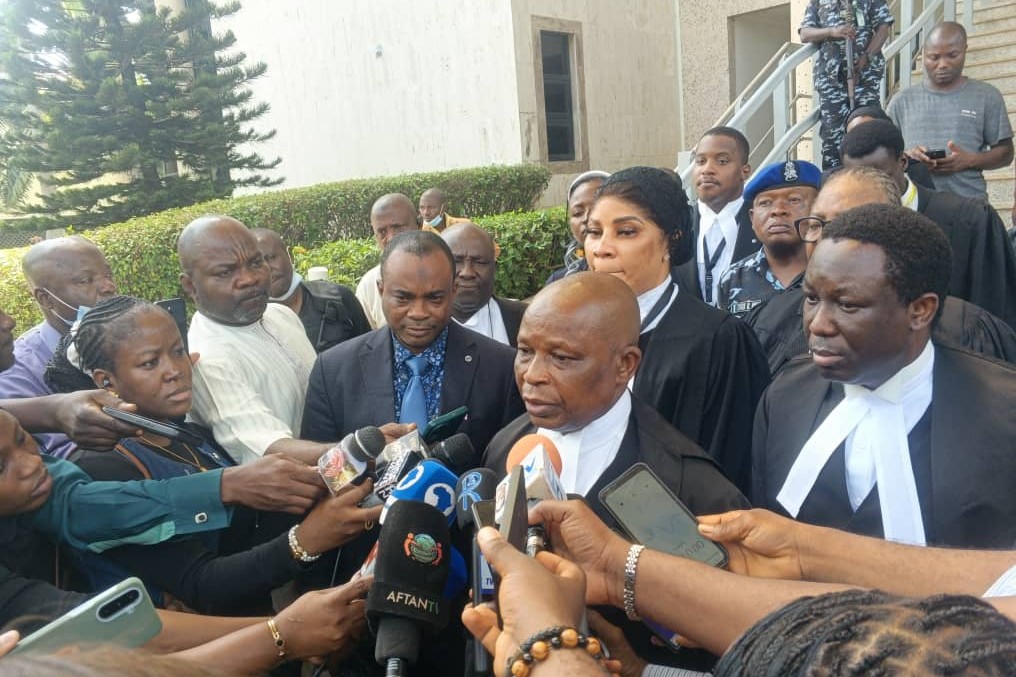
The screening, which took place in Room 211 of the Senate New Building at the National Assembly Complex on Wednesday, was shrouded in secrecy, fuelling widespread debate on the implications of such a covert procedure. Yar’Adua, in his opening remarks, painted a picture of a routine legislative process, underscoring the constitutional duty of the National Assembly to ensure peace, order, and good governance. However, critics argue that the closed-door session contradicts the very principles of openness and accountability that Yar’Adua claimed to champion.
A Question of Transparency or Security?
Yar’Adua justified the decision to bar the public and media from the proceedings by citing the “sensitive nature” of the deliberations. He emphasised the need for the nominee to speak freely about his vision for strengthening Nigeria’s security sector without the pressure of public scrutiny. While this reasoning may hold some merit in a country grappling with multifaceted security challenges, it raises a fundamental question: At what point does the quest for security override the public’s right to know?
Nigeria’s military has historically operated in the shadows, with limited civilian oversight and accountability. This opaque culture has often been linked to allegations of corruption, human rights abuses, and inefficiency in addressing the nation’s security crises. By conducting the screening in secrecy, the Senate appears to be perpetuating this troubling tradition, effectively sidelining the Nigerian public from a critical national discourse.
Civil society organisations, human rights advocates, and political commentators have been quick to condemn the closed-door session as a betrayal of democratic principles. “This is not just about screening a military officer; it’s about the future of Nigeria’s security architecture,” said Dr. Oluwaseun Adebayo, a political analyst and security expert. “The people have a right to know the strategic vision of the man who will be leading the Nigerian Army at a time when the country is facing existential threats.”
The Man in the Spotlight: Lt. Gen. Olufemi Oluyede
Lt. Gen. Olufemi Oluyede, the man at the centre of this controversy, is no stranger to Nigeria’s security landscape. A seasoned military officer with decades of experience, Oluyede has held various command positions and has been instrumental in several counter-insurgency operations across the country. His nomination by President Bola Tinubu is seen by some as a strategic move to inject fresh leadership into the Nigerian Army, which has been criticised for its inability to decisively quell the insurgency in the Northeast, banditry in the Northwest, and the growing secessionist agitation in the Southeast.
However, Oluyede’s track record is not without blemish. His involvement in certain military operations has raised questions about his commitment to human rights and adherence to international humanitarian laws. These concerns, coupled with the opaque nature of his screening, have only heightened public anxiety about his suitability for the role.
In his letter to the Senate, President Tinubu highlighted Oluyede’s “exceptional leadership qualities, strategic acumen, and commitment to national service.” But without a transparent screening process, how can Nigerians independently verify these claims? How can the public assess Oluyede’s vision for military reform, his proposals for improving the welfare of personnel, and his strategy for tackling the complex security challenges facing the nation?
Yar’Adua’s Paradox: Championing Openness in Secrecy
Senator Abdulaziz Yar’Adua, in his capacity as the Chairman of the Senate Committee on the Army, finds himself walking a tightrope between upholding legislative integrity and managing public perception. In his opening remarks, he acknowledged the immense sacrifices made by the Nigerian Armed Forces in curbing terrorism, insurgency, and other criminal activities. He also emphasised the committee’s commitment to evaluating the nominee’s professional skills and strategic vision.
Yet, Yar’Adua’s words ring hollow in the face of the committee’s decision to hold the screening behind closed doors. How can a process shrouded in secrecy inspire public confidence in the Senate’s ability to hold the military accountable? How does this align with the National Assembly’s constitutional mandate to ensure transparency and good governance?
Political observers have noted the irony of Yar’Adua’s stance. “It’s a paradox,” said Dr. Adebayo. “You can’t claim to be committed to transparency while simultaneously conducting one of the most critical legislative functions in secrecy. It sends a conflicting message to the public.”
Implications for Civil-Military Relations
The Senate’s handling of Oluyede’s screening could have far-reaching implications for civil-military relations in Nigeria. Over the years, the military has been accused of operating as a state within a state, with minimal civilian oversight. This perception has eroded public trust in the armed forces and has hindered efforts to foster a healthy civil-military relationship.
By conducting the screening behind closed doors, the Senate risks reinforcing the narrative that the military is above public scrutiny. This could further alienate the civilian population and weaken the democratic oversight of the armed forces. In a country where the military has a history of intervening in political affairs, such a development is both dangerous and unacceptable.
The Role of the Media and Civil Society
In the face of this secrecy, the role of the media and civil society becomes even more critical. Journalists and activists must continue to demand transparency and accountability from both the Senate and the military. The public has a right to know the outcome of the screening, the questions posed to the nominee, and his responses. Without this information, Nigerians are left in the dark, unable to hold their leaders accountable for the decisions that impact their security and well-being.
As the Senate Committee on the Army prepares to submit its report and recommendations to the Senate, the Nigerian people must remain vigilant. The confirmation of the Chief of Army Staff is not just a legislative exercise; it is a matter of national importance. The security of over 200 million Nigerians hangs in the balance, and they deserve nothing less than full transparency and accountability from their elected representatives.
The Shadow of Controversy: Oluyede’s Record and Political Intrigues
As the Nigerian Senate Committee on the Army retires behind closed doors to scrutinise the suitability of Lt. Gen. Olufemi Oluyede as the next Chief of Army Staff (COAS), whispers of discontent and skepticism are rippling across the nation. While President Bola Tinubu’s letter to the Senate extolled Oluyede’s virtues as a leader of “exceptional skill” and “unwavering commitment to national service,” many Nigerians remain unconvinced. The question looms: is Lt. Gen. Oluyede the right man to lead an army that has struggled to overcome its challenges, or is his nomination another political chess move designed to consolidate power at the expense of national security?
A Military Record Under Scrutiny
Lt. Gen. Olufemi Oluyede’s military career is a complex tapestry of commendable achievements and controversial actions. His name has been linked to several high-profile military operations, some of which earned him accolades for bravery and strategic brilliance. However, others have left a trail of unanswered questions and allegations that now haunt his path to confirmation.
One of the most significant stains on Oluyede’s record stems from his involvement in the controversial Operation Forest Storm—a counter-insurgency operation launched in the Northwest aimed at dismantling bandit camps terrorising local communities. While the operation initially appeared successful, with the military announcing the capture and elimination of several bandit leaders, human rights organisations later raised alarms over reports of extrajudicial killings and civilian casualties. Local eyewitnesses claimed that several innocent villagers were mistakenly targeted in the operation, prompting calls for an independent investigation—a call that was conveniently ignored by military authorities.
Similarly, during his tenure as a Brigade Commander in the volatile Northeast, Oluyede was tasked with leading a campaign against Boko Haram insurgents in Borno State. While the general’s strategy was lauded for reclaiming several territories previously held by the insurgents, allegations of human rights abuses by his troops, including illegal detentions and torture, continue to mar his legacy. The International Human Rights Watch (IHRW) issued a scathing report accusing his brigade of “gross violations of human rights” and called on the Nigerian government to hold him accountable. Yet, in a country where military impunity often goes unpunished, no action was taken.
Political Forces at Play: Tinubu’s Strategic Calculations
The timing of Lt. Gen. Oluyede’s nomination has not gone unnoticed by political analysts who view it as part of President Tinubu’s broader strategy to consolidate control over Nigeria’s security apparatus. Since assuming office, Tinubu has faced mounting pressure to address the deteriorating security situation across the country. From escalating banditry in the North to secessionist agitations in the Southeast, Nigeria’s internal security challenges have grown into a national crisis, threatening to undermine the legitimacy of his administration.
Oluyede’s appointment, therefore, appears to be a calculated move by Tinubu to install a trusted ally at the helm of the Nigerian Army. Sources within the presidency have hinted at Oluyede’s close ties to key figures in Tinubu’s political camp, raising concerns about the politicisation of the military under his leadership. Critics argue that the nomination is less about Oluyede’s competence and more about ensuring loyalty to the presidency—a dangerous precedent in a fragile democracy like Nigeria.
Dr. Gideon Ibe, a political scientist at the University of Lagos, highlighted the potential risks of such a move. “The military is supposed to be an apolitical institution, focused solely on defending the nation’s territorial integrity,” Ibe explained. “However, when political loyalty becomes a criterion for appointing service chiefs, it erodes the professionalism of the armed forces and compromises their ability to act in the national interest.”
This view is shared by several opposition lawmakers, who have expressed reservations about Oluyede’s nomination and the lack of transparency surrounding his screening. One Peoples Democratic Party (PDP) senator described the closed-door session as “a dangerous attempt to shield the nominee from public scrutiny,” warning that it sets a troubling precedent for future military appointments.
A Divided Senate and Rising Tensions
While the Senate Committee on the Army, led by Senator Abdulaziz Yar’Adua, has remained tight-lipped about the proceedings, reports from insiders suggest that the committee is far from united on Oluyede’s nomination. Some senators have reportedly raised concerns about his human rights record and the potential backlash from civil society if he is confirmed without a thorough and transparent vetting process.
“There are voices within the committee calling for a more rigorous examination of Oluyede’s record, particularly his handling of counter-insurgency operations in the Northeast,” revealed a Senate aide who spoke on the condition of anonymity. “But there is also significant pressure from the executive to fast-track the confirmation, given the urgent need for stable military leadership.”
This internal division mirrors the broader polarisation within the National Assembly, where partisan politics often dictate legislative outcomes. With Tinubu’s All Progressives Congress (APC) holding a majority in the Senate, it is widely expected that Oluyede’s confirmation will eventually sail through. However, the manner in which the process is conducted could have long-term implications for the Senate’s credibility and its relationship with the Nigerian public.
Senator Udeze and other opposition lawmakers have hinted at the possibility of staging a walkout or issuing a dissenting report if their concerns are not adequately addressed. Such a move would be unprecedented and could further escalate tensions between the legislative and executive branches, already strained by disagreements over key policy issues.
The Ghost of Past Appointments
Oluyede’s nomination is not the first time a military appointment has sparked controversy in Nigeria. The country’s history is littered with instances of service chiefs being appointed based on political considerations rather than merit, often with disastrous consequences. The tenure of Lt. Gen. Yusuf Buratai, former Chief of Army Staff, serves as a cautionary tale. Buratai, who was widely perceived as a loyalist of former President Muhammadu Buhari, faced persistent criticism for his handling of the Boko Haram insurgency and allegations of corruption within the military. Despite public outcry, Buratai remained in office for six years, during which Nigeria’s security situation continued to deteriorate.
Analysts fear that Oluyede’s appointment could follow a similar trajectory if proper oversight is not exercised by the Senate. “The lessons of the past are clear,” warned Dr. Adebayo. “When service chiefs are appointed based on loyalty rather than competence, the military suffers, and so does the country.”
Public Outcry and Civil Society’s Demand for Accountability
As news of the closed-door screening spreads, civil society organisations and human rights groups are mobilising to demand greater transparency and accountability. The Coalition for Democratic Accountability and Transparency (CDAT) has issued a statement calling on the Senate to release detailed minutes of the screening and to hold a public hearing before the final confirmation vote.
“Secrecy breeds suspicion,” the statement read. “The Nigerian people deserve to know who will be leading their army and what vision he has for addressing the security challenges facing the nation. Anything less is a disservice to democracy.”
The call for transparency has also been echoed by international observers, who have expressed concerns about the implications of a secretive confirmation process on Nigeria’s democratic credentials. The United States and the European Union, both key partners in Nigeria’s security sector, are reportedly monitoring the situation closely and have privately urged the Nigerian government to ensure a transparent and merit-based appointment process.
A Nation on Edge
As the Senate Committee on the Army prepares to submit its report, Nigeria remains on edge, caught between hope and apprehension. Will Oluyede’s confirmation mark the beginning of a new era of military reform and accountability, or will it be yet another chapter in the country’s long history of opaque governance and political patronage?
Consequences Loom as Oluyede’s Confirmation Hangs in the Balance
As Nigeria teeters on the edge of a security precipice, the confirmation of Lt. Gen. Olufemi Oluyede as Chief of Army Staff (COAS) could mark a turning point—either for progress or further descent into chaos. With the Senate Committee on the Army’s report looming, Nigerians, civil society groups, and international partners are anxiously awaiting the outcome of this controversial appointment. What will the ramifications be for Nigeria’s fragile democracy, embattled military, and delicate international alliances? Will Oluyede prove to be the military reformer Nigeria desperately needs, or will his tenure mirror past failures, marked by political patronage, human rights abuses, and strategic missteps?
A Tipping Point for National Security
Nigeria’s security situation is dire. In the northern states, bandits and terrorists continue to wreak havoc, displacing thousands and rendering large swathes of land ungovernable. In the Southeast, secessionist movements led by groups like the Indigenous People of Biafra (IPOB) have intensified their activities, challenging the sovereignty of the Nigerian state. Meanwhile, in the Niger Delta, simmering tensions over resource control and environmental degradation threaten to reignite militant insurgency.
Lt. Gen. Oluyede will inherit an army that is overstretched, underfunded, and plagued by low morale. Reports from military insiders indicate that many soldiers feel abandoned by a system that fails to provide adequate welfare, equipment, or clear strategic direction. The Nigerian Army, once a respected institution, is now struggling to maintain cohesion and effectiveness in the face of mounting internal and external threats.
Dr. Musa Idris, a security analyst and former military officer, highlighted the urgency of reform in a recent interview. “The Nigerian Army is at a breaking point,” Idris warned. “Without significant reforms in leadership, strategy, and resource allocation, the army may not be able to withstand the pressures it is currently facing. The appointment of the new COAS is critical in determining whether the military can regain its footing or continue to spiral into dysfunction.”
Oluyede’s confirmation, therefore, carries immense weight. His ability—or inability—to address the systemic issues plaguing the Nigerian Army will have far-reaching consequences for the country’s stability. But can a man whose career has been marred by allegations of human rights abuses and opaque decision-making rise to the occasion? Skeptics remain doubtful.
The Shadow of Human Rights Violations
One of the most significant challenges facing Oluyede’s confirmation is the shadow of human rights violations that has followed him throughout his military career. Civil society organisations have been vocal in their opposition, arguing that appointing a COAS with such a controversial record sends a dangerous message about Nigeria’s commitment to human rights and the rule of law.
The Human Rights Advocacy Network (HRAN), a coalition of over 50 civil society organisations, recently issued a statement condemning Oluyede’s nomination. “The Nigerian government must prioritise human rights in its security operations,” the statement read. “Appointing a military leader with a history of alleged abuses undermines public trust and alienates the very communities that the military is meant to protect.”
The allegations against Oluyede are not trivial. In addition to accusations of extrajudicial killings during Operation Forest Storm and human rights abuses in Borno State, there are also reports of his involvement in covert operations that targeted political opponents under the guise of counter-terrorism. These allegations, though unproven, have raised serious concerns about his respect for civilian oversight and adherence to democratic norms.
If confirmed, Oluyede will face intense scrutiny from both domestic and international watchdogs. The international community, particularly Western allies like the United States and the European Union, have made it clear that continued military aid and cooperation are contingent on Nigeria’s adherence to human rights standards. A COAS with a tarnished record could jeopardise these critical partnerships, further isolating Nigeria on the global stage.
The Politicisation of the Military
Oluyede’s nomination has also reignited debates about the politicisation of Nigeria’s military—a trend that analysts warn could have dire consequences for the country’s democracy. The Nigerian military has a long history of political interference, with numerous coups and interventions shaping the nation’s political landscape. Although the country has enjoyed two decades of uninterrupted civilian rule, the military’s influence remains a potent undercurrent in Nigerian politics.
Critics argue that Oluyede’s close ties to President Tinubu and other political elites signal a troubling continuation of this trend. “The military must remain apolitical to function effectively,” said Professor Chinedu Nwankwo, a political scientist at Ahmadu Bello University. “When service chiefs are appointed based on loyalty rather than competence, it erodes the military’s professionalism and undermines its ability to serve as a neutral arbiter in times of national crisis.”
This concern is not unfounded. In recent years, there have been instances where the military was accused of being used to suppress political dissent and manipulate elections. The fear is that with Oluyede at the helm, the Nigerian Army could become a tool for advancing the political agenda of the ruling party, rather than safeguarding the nation’s security.
The Senate’s Role: Rubber Stamp or Gatekeeper?
As the Senate prepares to deliberate on the committee’s report, the spotlight is now on the lawmakers. Will they fulfill their constitutional duty as gatekeepers of Nigeria’s democracy, or will they simply rubber-stamp Oluyede’s confirmation without addressing the legitimate concerns raised by civil society and the opposition?
Historically, the Nigerian Senate has been criticised for its lack of independence and its tendency to align with the executive branch. However, there have been moments when the Senate stood its ground, rejecting controversial appointments and demanding greater accountability from the executive. This moment presents an opportunity for the Senate to demonstrate its commitment to transparency, accountability, and good governance.
Opposition lawmakers have called for a public hearing before the final vote, arguing that the closed-door screening was insufficient for such a critical appointment. “The Nigerian people deserve to know the qualifications, vision, and ethical standards of the man who will lead their army,” they insist. “Anything less is a betrayal of our democratic principles.”
If the Senate fails to act, it risks further eroding public trust in the legislative process and reinforcing the perception that it is merely a rubber stamp for the executive. Such a development could have long-term implications for Nigeria’s democratic institutions, which are already under strain from widespread corruption, political polarisation, and growing public disillusionment.
What Lies Ahead: Reform or Regression?
As the final decision on Oluyede’s confirmation draws near, Nigeria stands at a crossroads. Will the appointment of a new Chief of Army Staff usher in an era of military reform, accountability, and strategic vision, or will it signal a return to the opaque, politically driven leadership that has plagued the Nigerian military for decades?
For many Nigerians, the answer to this question will determine the country’s trajectory in the coming years. A strong, competent, and apolitical military is essential for addressing the nation’s security challenges and safeguarding its fragile democracy. Conversely, a politicised and unaccountable military could exacerbate existing crises and push Nigeria closer to the brink of instability.
In the coming days, all eyes will be on the Senate as it makes its decision. The stakes could not be higher. The future of Nigeria’s security, democracy, and international standing hangs in the balance, and the Nigerian people deserve nothing less than a transparent, accountable, and competent leader for their army.