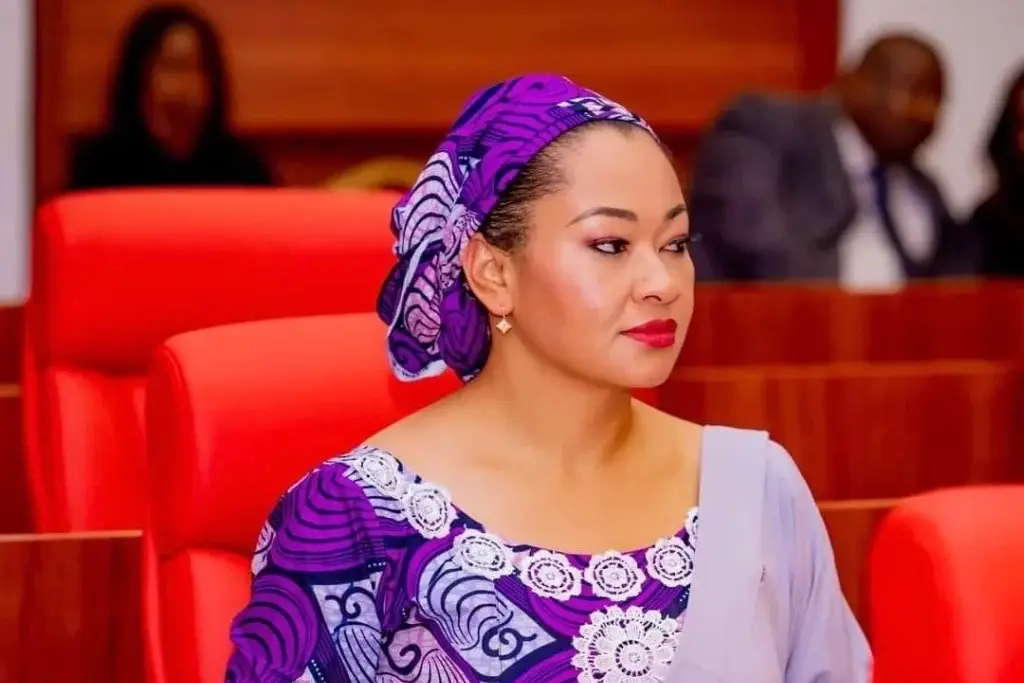
An in-depth report on the escalating feud between Senate President Godswill Akpabio and Kogi lawmaker Natasha Akpoti-Uduaghan. This exposé delves into sexual harassment allegations, traditional authority interventions, and the political fallout rocking Nigeria’s National Assembly.
In what can only be described as a seismic tremor in Nigeria’s political landscape, allegations of sexual harassment levied against Senate President Godswill Akpabio have ignited a firestorm of controversy and dissent within the corridors of power. The latest twist in this unfolding drama was delivered by High Chief Emmanuel Uduaghan, husband of the embattled Kogi lawmaker, Senator Natasha Akpoti-Uduaghan.
Atlantic Post brings you an exclusive, in-depth report on this high-profile feud—its origins, its explosive developments, and the potential ramifications for Nigeria’s revered legislative body.
A Clash of Titans in the National Assembly
The origins of the feud trace back to a contentious episode in the Senate’s Red Chamber. Sources reveal that the Kogi lawmaker’s seat was abruptly relocated without her prior consent, an act that not only delayed plenary proceedings but also ignited an atmosphere of disrespect and derision.
It was in the aftermath of this debacle that Senate President Akpabio allegedly ordered security personnel to physically remove Natasha from the chamber—a decision that was met with immediate intervention by other legislators determined to uphold the decorum of the institution.
Adding fuel to the fire, Natasha, in a candid interview on the Arise Television Breakfast Show, accused Akpabio of subjecting her to unwarranted sexual advances. She maintained that her rejection of these advances had led to an ongoing ordeal that escalated far beyond the boundaries of professional conduct.
The allegations, deeply personal and politically explosive, have sent shockwaves through the Senate and ignited impassioned responses from various quarters of Nigeria’s political and social spectrum.
High Chief Uduaghan: A Traditional Leader’s Intervention
In a move that underscored the gravity of the situation, High Chief Emmanuel Uduaghan, revered as the Alema of Warri Kingdom, issued a statement from Warri that has since become central to the unfolding saga.
Speaking with a measured yet fervent tone, Uduaghan revealed that he had previously engaged with Akpabio on the matter, seeking to resolve the allegations amicably on behalf of his wife.
“It is clear that certain sentiments are being stirred up unnecessarily, distracting from the serious underlying allegations,” he asserted. His words resonated with the notion that the issue transcends mere political sparring—it is a matter of personal honour and family values.
Uduaghan’s statement was laden with emotion and resolve. He emphasised that his wife was not only a duly elected representative but also a woman of immense integrity and commitment to quality representation.
Despite an agreement reached with the Senate President, Natasha’s concerns persisted. Uduaghan’s plea for Akpabio to treat his wife with the respect and dignity befitting her status was both a declaration of personal pride and a broader call for adherence to core family and cultural values in the conduct of public officials.
The Senate Speaks: Calls for Transparency and Due Process
Not content with private interventions, the matter has drawn the attention of other high-profile political figures. Former Senate President Bukola Saraki has entered the fray with a measured call for a transparent investigation.
In a statement that harked back to his own experience of facing unfounded allegations during his tenure, Saraki urged that the Senate’s Ethics and Privileges Committee should conduct an impartial inquiry into the claims against Akpabio.
He recalled a similar incident during the eighth Senate when he was forced to clear his name amidst a storm of misinformation and partisan attacks.
Saraki’s intervention is particularly noteworthy because it reflects a commitment to the institution of the Senate as a bastion of democracy and integrity.
His insistence on adhering to constitutional protocols and the Senate’s internal regulations underscores a belief that no individual—regardless of rank or influence—should be above scrutiny.
“The transparent manner in which the investigation and the debate on the report were handled assured everybody that there was no case,” Saraki recollected, setting a benchmark for the current crisis.
Public Outcry and the Power of Protest
The reverberations of this political drama have extended far beyond the hallowed halls of the National Assembly. A group of women from Akwa Ibom State and the broader Niger Delta region has taken to the streets in a show of solidarity with Akpabio’s defenders.
These demonstrators, brandishing placards and voicing fervent protests, warned that any further attempts to malign the Senate President would invoke divine retribution.
One protester, Mrs Grace Mathias, was quoted as saying that the women of Akwa Ibom would not tolerate disrespect towards their “son”—a term of endearment that symbolises their deep-seated cultural reverence for male authority and leadership.
This public display of protest adds an intriguing dimension to the conflict. On one side, we have the allegations of sexual harassment and the ensuing legal and ethical battle; on the other, an emotive, almost tribalistic defence of honour that reflects entrenched cultural values.
The duality of these responses encapsulates the complexity of modern Nigerian politics, where personal grievances often intertwine with broader societal norms and historical legacies.
The Legal Battlefield: Courtrooms and Counsel
With both camps now seeking recourse through legal channels, the saga has entered a new phase that promises to be as contentious as it is transformative. While the Senate’s Ethics and Privileges Committee is poised to release its report next week, both Akpabio’s camp and Natasha’s supporters have simultaneously initiated court actions.
In a dramatic turn of events, Natasha’s legal team, headed by her lawyer Victor Giwa, issued a letter addressed to Akpabio’s wife. The letter, dated 1 March 2025, categorically advised that Akpabio should be allowed to defend himself against the allegations in the appropriate judicial forum, without undue interference from family members.
This legal manoeuvre is strategic. By drawing a clear line between personal vendettas and institutional responsibility, Natasha’s camp aims to shift the focus onto the veracity of the allegations rather than descending into a battle of personal animosities.
The emphasis on legal evidence and proper judicial processes is a critical aspect of the evolving narrative, as both sides seek to leverage the weight of the law to vindicate their positions.
A Pattern of Accusations: History Repeating Itself
The current storm is not the first time that Senate President Akpabio has found himself embroiled in controversy. In 2020, while serving as the Minister of Niger Delta Affairs, he faced similar allegations of sexual harassment from Joy Nunieh, a former acting Managing Director of the Niger Delta Development Commission.
Nunieh’s claims, which emerged during an interview on the very same television platform where Natasha later aired her grievances, cast a long shadow over Akpabio’s reputation.
Although Akpabio dismissed Nunieh’s accusations as the product of a volatile temperament, the parallels between the two episodes are striking and cannot be ignored.
The recurrence of such allegations has ignited debates about accountability and the standards of conduct expected of public officials in Nigeria.
Critics argue that the repeated nature of these claims points to a systemic issue within the corridors of power, one where personal ambition and unchecked authority often converge to create a breeding ground for misconduct.
The current confrontation, therefore, is not merely a clash between two individuals—it is emblematic of a broader crisis of ethics and accountability that threatens to erode the credibility of the Nigerian Senate.
Voices from the Political Underground: Reno Omokri’s Call for Investigation
Adding another layer to the complex tapestry of this dispute is the involvement of Reno Omokri, a former Special Assistant to ex-President Goodluck Jonathan. Omokri, whose own reputation has been the subject of contentious debate, has called on the Senate leadership to launch a full-scale investigation into the allegations.
In a statement posted on his X (formerly Twitter) handle, he distanced himself from the feud, urging that the focus remain solely on unearthing the truth.
Omokri’s insistence on an impartial Senate inquiry resonates with the growing demand for transparency and accountability within Nigeria’s political sphere.
His remarks have rekindled memories of past political scandals, serving as a stark reminder that the stakes in this confrontation are not limited to personal vendettas but are intrinsically linked to the integrity of the nation’s legislative processes.
Omokri’s call for evidence-based inquiry is a clarion call for due process—a reminder that every allegation, no matter how politically charged, must be scrutinised under the unforgiving lens of truth and justice.
The High Stakes of a Divided Senate
At the heart of the matter lies a bitter struggle over the sanctity of the Senate—a revered institution that has, for decades, been the cornerstone of Nigeria’s democratic ethos. The current feud between Akpabio and Natasha is emblematic of deeper fissures within the legislative body.
With factions forming along ideological, cultural, and personal lines, the ensuing chaos threatens not only the reputation of individual senators but also the collective credibility of the institution.
Political analysts have long warned that such internal strife could have far-reaching implications for policy-making and governance in Nigeria.
As the Senate grapples with allegations that challenge the very core of its ethical framework, questions are being raised about the future of legislative oversight and the rule of law in the country.
The need for a transparent, impartial investigation has never been more urgent, as the nation watches with bated breath to see whether the Senate can emerge from this crisis unscathed.
A Battle of Narratives: Personal Honour versus Institutional Integrity
The narratives emerging from this feud are as diverse as they are contentious. On one side stands Natasha Akpoti-Uduaghan, a lawmaker who insists that her ordeal is a testament to the abuse of power by a high-ranking official.
Her insistence on speaking out, even in the face of overwhelming opposition from powerful political figures and traditional custodians of honour, reflects a burgeoning movement towards greater accountability and gender sensitivity in Nigerian politics.
Conversely, the staunch defence mounted by figures like High Chief Uduaghan and the vociferous protests from Akwa Ibom’s women paint a picture of a deeply conservative society where personal honour and traditional values reign supreme.
Their impassioned declarations, replete with metaphors of spiritual retribution and familial loyalty, reveal a segment of society that is unwilling to tolerate any affront to its established order.
This battle of narratives—between the quest for justice and the preservation of traditional honour—underscores the complex interplay of modernity and tradition in contemporary Nigerian politics.
Implications for Nigerian Democracy
The reverberations of this high-profile feud extend far beyond the confines of the Senate chamber. For many Nigerians, the controversy serves as a microcosm of the challenges facing the nation’s democratic institutions.
The allegations against Akpabio, the subsequent legal wrangling, and the public protests all point to a crisis of confidence that could have lasting repercussions on the country’s political stability.
At a time when Nigeria is striving to consolidate its democratic gains, episodes like these risk undermining the public’s trust in elected officials and the mechanisms of accountability.
As political loyalties are tested and the lines between personal vendetta and public duty become increasingly blurred, the need for a robust, transparent investigative process becomes paramount.
Only through such measures can the sanctity of the Senate—and, by extension, Nigerian democracy—be restored.
The Road Ahead: Awaiting the Committee’s Verdict
With the Senate’s Ethics and Privileges Committee expected to release its report in the coming week, all eyes remain fixed on the impending verdict. The committee’s findings will not only determine the fate of Senate President Akpabio but will also set a crucial precedent for how similar cases are handled in the future.
In a climate where allegations can either catalyse reform or deepen existing divides, the outcome of this investigation is being viewed as a litmus test for the nation’s commitment to justice and accountability.
As the report is prepared and the legal battles continue in parallel courtrooms, both camps remain steadfast in their resolve.
For Natasha, the pursuit of justice is inextricably linked to a broader mission of defending Nigerian women against abuse of power.
For Akpabio and his supporters, the challenge lies in defending an honour that is perceived to be under relentless attack by politically motivated adversaries.
In this delicate balancing act, the coming days will be critical in shaping not only the future of individual political careers but also the enduring legacy of the Senate itself.
A Nation Divided: Reflecting on the Cultural Underpinnings
Beyond the immediate political implications, the Akpabio–Natasha feud provides a revealing insight into the cultural dynamics that shape Nigerian society. Traditional values, gender roles, and the sanctity of familial honour are deeply interwoven into the fabric of the nation.
The vehement responses from various quarters, ranging from high-ranking traditional leaders to impassioned street protesters, underscore the emotional intensity that such issues evoke.
In a society where respect for elders and male authority is often inviolable, allegations of sexual harassment represent a seismic challenge to the established order.
The resulting conflict is not merely about individual conduct but reflects a broader struggle over the evolution of societal norms—a battle between the old guard and progressive voices advocating for reform and accountability.
Conclusion: A Turning Point in Nigeria’s Political Chronology
The current feud between Senate President Godswill Akpabio and Senator Natasha Akpoti-Uduaghan is a vivid reminder of the volatile interplay between personal honour, institutional integrity, and cultural tradition in Nigerian politics.
As both sides prepare for the legal and ethical battles ahead, the nation finds itself at a crossroads—a moment that could redefine the parameters of accountability within the National Assembly and, indeed, the broader democratic framework of Nigeria.
For those who believe in the sanctity of the Senate and the principles of justice, the coming days offer a beacon of hope. A transparent investigation, free from partisan bias and external influence, is not only essential for resolving this high-profile dispute but is also critical for reaffirming the values that underpin Nigeria’s democratic ethos.
Only by confronting such challenges head-on can the nation hope to move forward, united in its pursuit of integrity, respect, and justice.
As the drama unfolds and the Senate’s committee prepares to deliver its long-awaited report, the eyes of the nation—and indeed the world—remain fixed on this unfolding saga.
It is a story that transcends political manoeuvrings and touches upon the very soul of Nigerian society—a story of power, honour, and the unyielding quest for justice in a nation at the crossroads of tradition and modernity.
Atlantic Post will continue to follow this developing story closely, providing timely updates and comprehensive analyses as the saga unfolds.