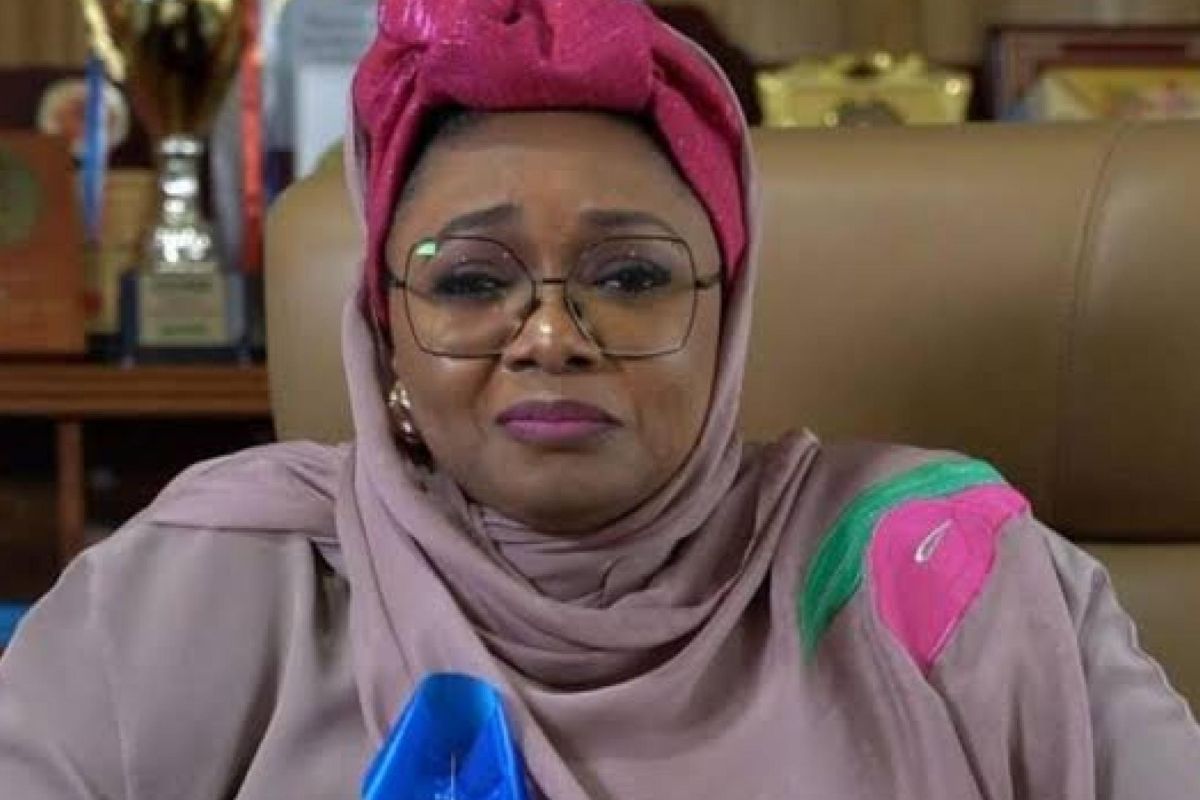
Dr. George Nwaeke has accused suspended Governor Siminalayi Fubara of orchestrating the bombing of Rivers State’s House of Assembly to maintain power and thwart impeachment efforts. These serious allegations highlight systemic corruption and threaten the state’s governance and democratic integrity, prompting calls for an independent inquiry and political reforms in Nigeria.
Bombs, Betrayal and Breakdown: The Tumultuous Collapse of Rivers State’s Legislative Halls
PORT HARCOURT, Nigeria — In a development that has rocked the political landscape of Rivers State and sent shockwaves across Nigeria, former Head of Service (HoS) Dr George Nwaeke has levelled explosive allegations against suspended Governor Siminalayi Fubara.
In a statement that could redefine the balance of power in one of Nigeria’s most volatile states, Dr Nwaeke asserted that Fubara not only instigated the bombing of the state House of Assembly complex on Moscow Road, Port Harcourt, but also engineered a broader campaign of destruction to secure his political future.
This claim, if substantiated, casts a dark shadow on the legacy of Fubara’s administration and raises grave questions about governance, accountability and the misuse of state funds.
A Sinister Plot Unveiled
During a highly charged news briefing last Friday, Dr Nwaeke—who recently resigned from his position as Head of Service—revealed that he witnessed first-hand the transfer of a mysterious bag of money to Edison Ehie, Fubara’s former Chief of Staff.
According to the former civil servant, the funds were earmarked for an attack on the Assembly Complex, an act that would later be interpreted as an attempt to thwart an impending impeachment.
“First, it all started with the Rivers State House of Assembly, where Governor Siminalayi Fubara directed his Chief of Staff to burn down the Assembly to avert his impeachment,” Dr Nwaeke declared with unmistakable gravitas.
This startling revelation has already set tongues wagging in political circles. The allegation that a sitting governor would resort to such extreme measures to maintain his grip on power is unprecedented in Rivers State—a region long plagued by political unrest and intense factional rivalries.
For many seasoned observers of Nigerian politics, the incident is emblematic of a broader malaise that threatens the country’s democratic foundations.
Critics have long accused the Fubara administration of prioritising personal vendettas and ego-driven decisions over the public good, and this latest development may well be the damning proof that these accusations were not entirely unfounded.
The Mechanics of Destruction
Dr Nwaeke’s detailed account did not stop at the bombing of the main Assembly building. He went further to allege that an additional plot was hatched to demolish the residential quarters of the lawmakers—a move that rendered the legislative branch inoperative and led to an unprecedented collapse of state governance, according to a subsequent Supreme Court of Nigeria judgement.
“Another attempt was also made to destroy the residential quarters of the House of Assembly members. If not for the press conference held there by Rivers youths, Rivers elders and National Assembly members, that would have been another barbaric demolition in Rivers State,” he recounted.
This dual-pronged attack, aimed at both the physical infrastructure and the institutional integrity of the legislative branch, underscores a chilling readiness to sacrifice state assets and democratic processes for the sake of political survival.
The very idea that a state governor might contemplate—or indeed, order—the obliteration of his own state’s democratic stronghold is not only shocking but also deeply corrosive to the public’s trust in government.
The Political Fallout
In the wake of these allegations, Governor Fubara has issued a vehement rebuttal, dismissing the claims as “laughable” and a desperate attempt by Dr Nwaeke to “discredit” his administration.
In his statement, Fubara painted the ex-HoS as a compromised figure, allegedly paid or coerced into fabricating a narrative that would undermine his administration and the peace process championed by the national leadership of President Bola Tinubu.
The governor’s statement, however, has done little to allay the growing suspicions among political analysts and civil society groups, who see in these denials a thinly veiled effort to obfuscate a history of corruption, mismanagement and authoritarian impulses.
The political implications of this scandal are manifold. At its heart lies a dramatic power struggle—a battle where state assets, political loyalties and the very survival of the democratic process are at stake.
With the legislative branch now teetering on the brink of collapse, the traditional checks and balances that have long regulated the exercise of executive power in Rivers State appear to be in imminent danger of being overthrown by a ruthless political elite.
Implications for Governance and the Rule of Law
The alleged bombing of the Assembly complex is more than a mere act of political theatre; it represents a potential turning point in the governance of Rivers State. With the collapse of its legislative branch, the state risks falling into a governance vacuum that could lead to the erosion of democratic norms.
Such a scenario would not only diminish public confidence but might also embolden other autocratic tendencies within Nigeria’s federal system.
In an environment where power is increasingly concentrated in the hands of a few, the voice of the people is at risk of being silenced by machinations that are as dangerous as they are opaque.
The scandal also lays bare the broader issues of corruption and mismanagement that have long plagued the Nigerian political system. The use of state funds for what can only be described as a personal vendetta is a damning indictment of a leadership that appears to have lost sight of its mandate to serve the public.
Instead, Fubara’s actions—if proven true—demonstrate a disturbing willingness to subvert democratic processes in favour of consolidating power, even if it means destroying the very institutions meant to safeguard that power.
The Broader Regional and National Impact
Beyond the confines of Rivers State, the fallout from these revelations could have significant repercussions for the Nigerian political landscape at large. With Nigeria’s political stability already under strain from various regional and ethnic tensions, the scandal involving Fubara and his inner circle threatens to further inflame partisan divisions.
Opposition figures and civil society groups have seized upon the allegations to demand a full investigation into the incident, calling for accountability and transparency in an era when trust in public institutions is at an all-time low.
Political commentators have noted that the unfolding crisis in Rivers State is symptomatic of a wider malaise—a system in which state and federal authorities are too often entangled in a web of patronage, corruption and personal ambition.
The drama unfolding in Port Harcourt is not merely a local affair but a harbinger of the potential unravelling of Nigeria’s democratic fabric. In this context, the press and other watchdog entities play a crucial role in shining a light on the dark corridors of power, ensuring that those who betray public trust are held accountable.
A Call for Accountability and Reforms
As Rivers State braces for what may be a prolonged period of political instability, many are calling for an independent inquiry into the allegations. Dr Nwaeke, whose resignation was seen by many as an act of conscience, has vowed to provide further details, challenging Fubara to an open confrontation.
This call for transparency is resonating with a populace that has long been disenfranchised by political elites who operate with near impunity.
The citizens of Rivers State, as well as concerned Nigerians across the country, are now demanding that those responsible for what appears to be an orchestrated campaign of violence and intimidation face the full force of the law.
Moreover, there is growing sentiment that this scandal should serve as a catalyst for sweeping reforms. Critics argue that only by overhauling the systems of accountability and governance can Nigeria hope to stave off further crises of this nature.
The current political turbulence, marked by sensational allegations and high-stakes power struggles, underscores an urgent need for structural reforms that will ensure the separation of powers and reinforce the rule of law.
A Stark Warning for Future Administrations
For those in power, the events in Rivers State are a stark reminder of the consequences of unchecked authority. The allegations levied against Governor Fubara, if substantiated, could set a dangerous precedent for future administrations—not only in Rivers State but across Nigeria.
The idea that public office can be wielded as a weapon to silence opposition and secure personal political survival is an affront to the democratic ideals upon which Nigeria was founded.
It is incumbent upon all stakeholders—politicians, civil society, and the media—to ensure that such abuses of power are neither tolerated nor repeated.
Conclusion
The unfolding saga in Rivers State is a potent mix of political intrigue, betrayal and the reckless abuse of power. As Dr George Nwaeke’s explosive allegations continue to dominate headlines, the fate of the state’s legislative branch hangs in the balance.
With the spectre of violence looming large and the integrity of state institutions in jeopardy, the need for a robust and independent inquiry has never been more urgent.
Whether this scandal will precipitate a fundamental reordering of political power in Rivers State remains to be seen, but one thing is clear: the era of impunity may soon be drawing to a close.
In a nation where political manoeuvring often skirts the boundaries of legality, the alleged bombing of the Assembly complex is a clarion call to all Nigerians.
It is a call for transparency, accountability and, above all, a reaffirmation of the democratic principles that must guide every leader entrusted with the public trust.
As the nation watches with bated breath, the coming days promise to be a turning point—not just for Rivers State, but for Nigerian democracy as a whole.