The killing of Ayatollah Ali Khamenei in coordinated strikes attributed to the United States and Israel has set off a chain reaction of violence and political alarm across continents and on Nigerian streets.
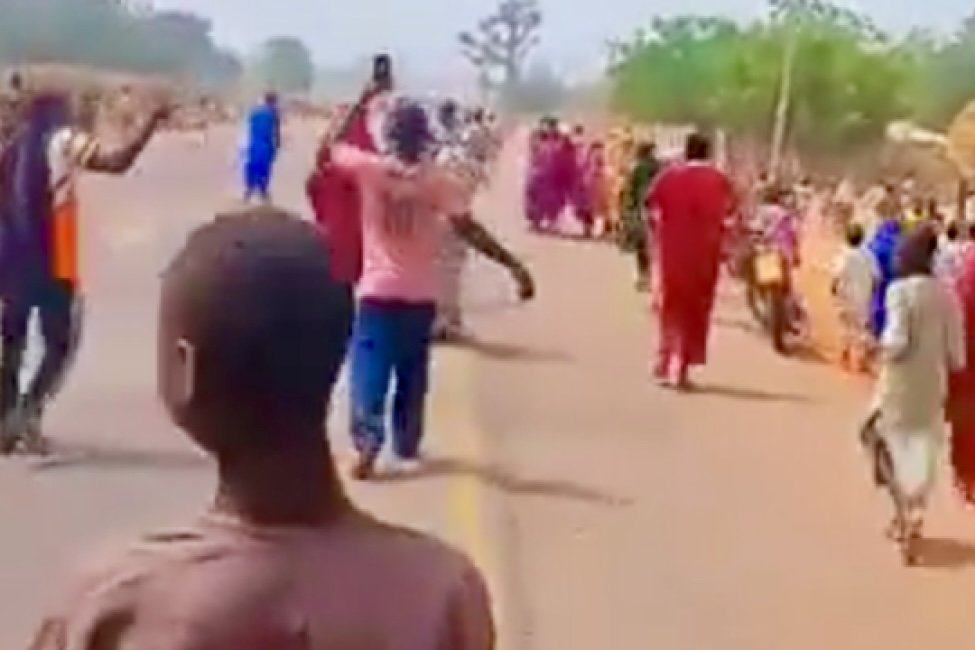
Within days of the attacks that Tehran and international outlets say struck the leadership compound in Tehran, members of the Islamic Movement in Nigeria staged peaceful demonstrations in several northern states.
They also organized a prominent march through the Maryland axis of Lagos. These actions were to register solidarity with Iran and condemn what they called foreign aggression.
The demonstrations were widely peaceful but politically potent.
In Lagos, the South West leadership of the Movement marched with placards. They denounced an “invasion” of Iran. They demanded that the Federal Government repudiate the presence of foreign troops. The organisers also described the strikes as extrajudicial and called for their rejection.
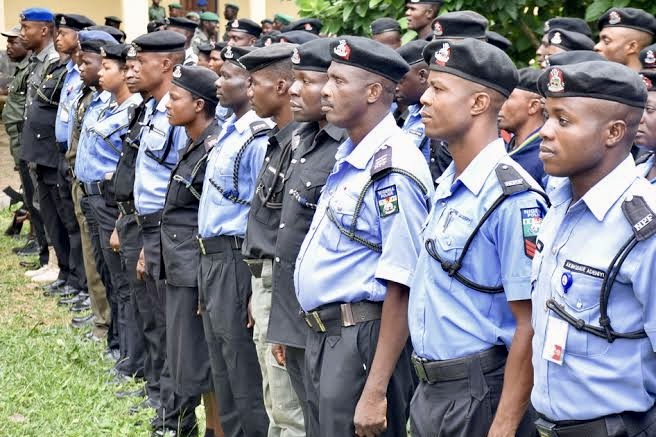
Security personnel monitored the procession and there were no reports of breaches of the peace. Local coverage said the protest ended without incident.
Northern states saw similar shows of mourning and defiance. In Kano IMN members gathered at the Fegge Central Mosque, kneeling on roads, holding white shrouds and lighting candles.
In Gombe and Bauchi civic displays were comparable, with organisers urging calm even as emotions remained raw. State police commands said they deployed officers after receiving intelligence and escorted protesters to ensure orderly conduct.
Those deployments highlight the double challenge facing security agencies. They must protect the right to peaceful demonstration. At the same time, they need to guard against the risk that local grievances could be inflamed by an international crisis.
The United States has moved to warn its citizens in Nigeria of potential disruptions and heightened threats.
A worldwide caution and related advisories were released. They urged Americans to enroll in travel registration services. Americans were also advised to follow embassy security channels for updates.
The advisory also flagged the possibility of airspace closures and travel disruptions linked to the broader regional escalation.
For security planners in Abuja and Lagos, the US notice is an unwelcome confirmation. A distant strike on Tehran can produce immediate operational headaches at home.
At the heart of the mobilisation is a transnational narrative. Organisers framed the protests as a defence of sovereignty and a response to the perceived targeting of a religious symbol.
Statements that circulated among IMN leaders stressed solidarity rather than belligerence.
Muftau Zakariya, the South West coordinator, told supporters the protests would be peaceful. He called on the federal authorities to distance the country from foreign military footprints.
Another IMN leader in Kano, Muhammad Abbari, condemned the strikes but urged followers to remain calm and law abiding.
Those public reassurances matter to security services seeking to prevent opportunistic violence by fringe actors. (Quotes supplied by local organisers and media.)
Yet the international backdrop is stark. Reporting by major foreign outlets and international agencies shows a rapid escalation of strikes. Counterstrikes have already resulted in missiles launched at US bases in the Gulf. There have also been exchanges between Israel and Iran linked to a wider regional conflict.
The prospect of retaliatory operations by Iran aligned militias is worrying. Additionally, the risk of cyber and kinetic spillover is significant. These factors have prompted warnings from intelligence services.
In short, this is no longer a bilateral confrontation confined to the Gulf. The crisis is bearing political and security consequences for countries far from the battle zone.
For Nigeria the immediate risks are several.
First, demonstrations might swell or fragment, creating flashpoints that could draw in opportunistic criminals or extremists.
Second, diplomatic and consular operations may be disrupted, complicating travel and trade.
Third, there is reputational risk if protests turn violent. There is also risk if foreign missions perceive Nigeria as unable to protect their citizens and assets.
Those are practical concerns for the Federal Government and the security architecture that must balance civil liberties and public order.
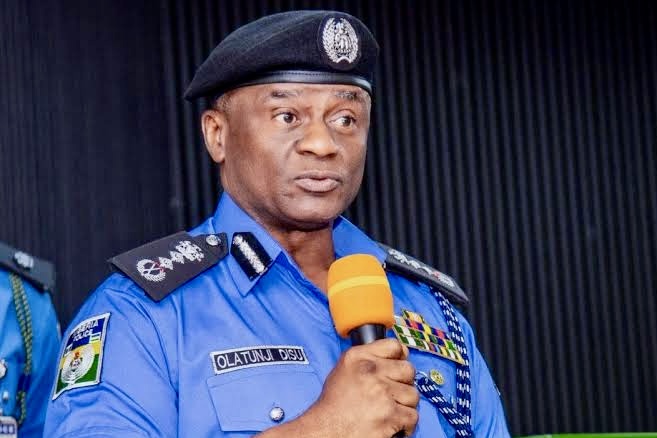
Local police commanders told press outlets they were coordinating with community leaders to reduce friction and maintain order.
Analysts say the Nigerian security establishment must also guard against narrative contamination. International crises create fertile ground for misinformation and emotional mobilisation.
In the past social media rumours have transformed small local actions into national disturbances.
In recent days, security briefings have been shared with senior officials. They have reportedly emphasised the need for proportionate, intelligence driven responses. There is also a need for rapid, transparent public communication to undercut incendiary claims.
The measured posture of some IMN leaders presents an opportunity. Authorities can de-escalate through dialogue instead of using heavy-handed suppression.
There is also a diplomatic element. Nigeria hosts diverse communities with transnational ties. How Abuja frames its response will affect relationships with Western partners and with regional actors.
Calls from IMN leaders for the government to reject US military presence in Nigeria complicate those relations.
Federal officials have not yet issued a singular public position on the strikes in Iran. So far, they have only made routine appeals for calm and respect for the law. Behind closed doors diplomats and security chiefs will be measuring the domestic fall out of a remote war.
What should be done next? Security services must maintain visible but restrained deployments at likely flashpoints. They should also keep lines of communication open with faith leaders and community elders.
Intelligence agencies should share timely assessments with state police commands so escorts and containment plans can be calibrated.
The Foreign Ministry and missions must keep warning channels open for foreign nationals and ensure contingency plans remain updated.
Finally, the media have a responsibility to verify claims before amplification. They must provide context that reduces public fear rather than increases it.
This episode is a reminder. In an interconnected age, a decision taken in one theatre of war can have immediate ripple effects in another.
For Nigeria, the task is to treat protests as a legitimate expression of grievance. At the same time, they must prevent the external crisis from becoming a catalyst for local instability.
That will need discipline from organisers, professionalism from security services and steady leadership from the political class.
The country can’t afford to be a collateral casualty of a conflict its leaders did not choose.
Follow us on our broadcast channels today!
- WhatsApp: https://whatsapp.com/channel/0029VawZ8TbDDmFT1a1Syg46
- Telegram: https://t.me/atlanticpostchannel
- Facebook: https://www.messenger.com/channel/atlanticpostng