Explore the fiery national debate ignited by Bayo Onanuga’s amplification of Abdulsamad Rabiu’s support for President Tinubu’s economic reforms. A nation divided on hope and hardship.
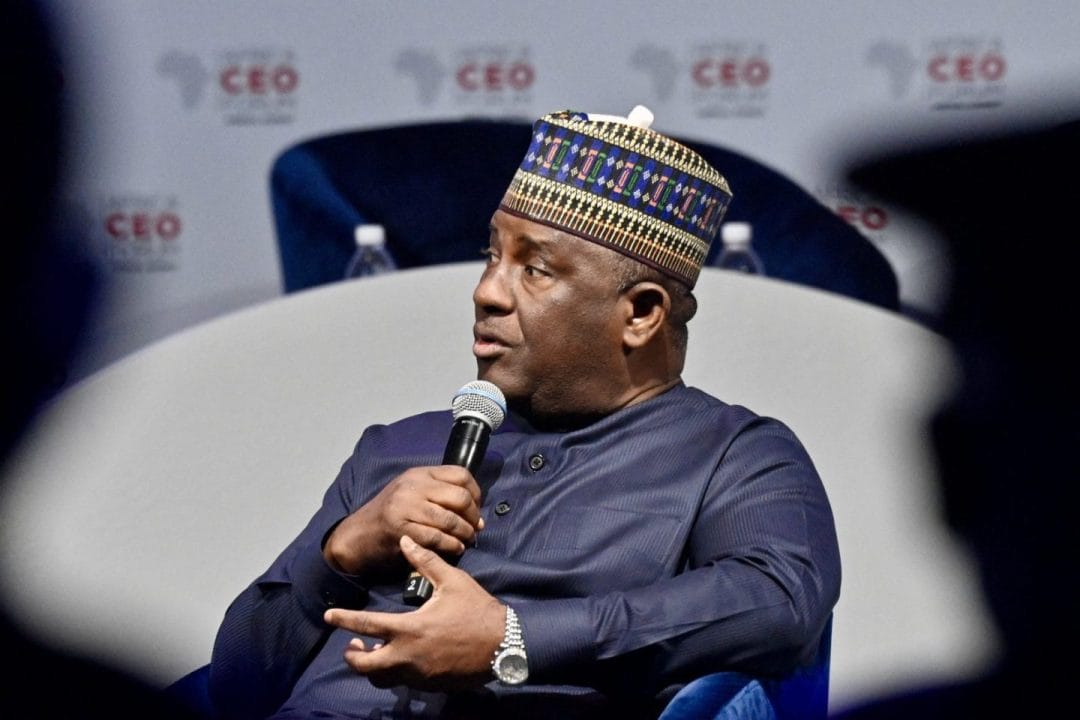
LAGOS, Nigeria — The economic landscape of Nigeria continues to provoke intense debate as the policies of President Bola Ahmed Tinubu take centre stage. A new catalyst for this discourse emerged when Bayo Onanuga, the Special Adviser to President Bola Ahmed Tinubu on Information and Strategy, took to the X platform (formerly Twitter) to amplify Abdulsamad Rabiu’s optimistic remarks about the administration’s economic reforms. Rabiu, a prominent industrialist and Chairman of BUA Group, expressed confidence in the government’s policy trajectory during a visit to President Tinubu in Lagos.

Rabiu’s Affirmation of Tinubu’s Policies
“President Tinubu’s economic reforms are good for Nigeria,” Rabiu asserted confidently. Addressing the volatile exchange rate, he noted that unification of the currency was a necessary, albeit challenging, move. “You will remember that the exchange rate was at N500 and then outside it was N800. That was not acceptable. So that has actually been unified and initially it was quite difficult; we saw the exchange rate at a point hit maybe almost N2,000. Now it’s finding its balance, we are at about N1,500 – N1,550 naira, and I’m sure we’ll see the rate come down even further,” Rabiu remarked.
He further highlighted the government’s strategic actions aimed at stabilising the economy. “Mr. President is doing a lot; the government is really doing so much to ensure that there is stability within the economy and other sectors of the economy,” Rabiu concluded. His optimistic tone was amplified by Onanuga, sparking both commendation and backlash across Nigeria’s vibrant digital landscape.
A Nation’s Divide on Economic Policies
The reactions to Rabiu’s endorsement, as shared by Onanuga, reveal a deeply polarised populace. While some Nigerians lauded the government’s bold moves, others expressed outrage, dismissing the so-called reforms as ploys to further impoverish the masses.
Voices of Optimism
Among the voices of support was @dare_akiode, who urged patience and optimism despite the current economic hardships. “Politely, what do you produce, sir? Are we going to rise to this overnight? No! So let’s embrace the change going on and be optimistic; with time, all will fall in place. I do understand your point that the government should take a bold step toward that. With time hopefully.”
Other commentators, like @lasunhonesty, pointed to the positive contributions of the manufacturing sector to GDP growth as evidence of progress. This group believes that the reforms, though painful, are laying the foundation for a more robust and self-reliant economy.
A Chorus of Criticism
However, the criticisms were far more vocal and scathing. @OnunaKuDr dismissed the current reforms as superficial, noting, “The only thing that will seriously give you a reasonable and stable exchange rate is a production-driven economy. Right now, there’s nothing on the table or on the drawing board that points in that direction.”
Another vocal critic, @Cherylking007, lambasted the reforms as exploitative, accusing President Tinubu of using the guise of reforms to extort Nigerians. “Tinubu is doing no reforms. The scam he calls reforms are nothing but strategies to extort and squeeze out as much money as possible from Nigerians. As an international criminal, he knows if he comes out direct to extort, Nigerians will resist. He had to frame it as reform.”
@AbokorEme16180’s sentiments were equally damning, branding the government as “pure anti-people.” “Why are Nigerians getting poorer while their government officials live very large?” he demanded.
The Economic Reality: Currency and Cost of Living
Central to the debate is the state of the naira and its impact on the everyday lives of Nigerians. Rabiu’s optimistic projection of a stabilised exchange rate contrasts sharply with the experiences of ordinary citizens grappling with skyrocketing prices. The unification of the exchange rate, while intended to attract foreign investment, has yet to yield visible benefits for the majority. Instead, it has led to an immediate increase in the cost of imported goods and services, further exacerbating inflation.
The Ripple Effects of Exchange Rate Unification and Structural Reforms
The unification of the exchange rate, a cornerstone of Tinubu’s economic policy, has sent ripples across Nigeria’s socio-economic fabric. While policymakers and industrialists like Rabiu argue that the reform is a necessary step toward long-term stability, its immediate consequences have left many reeling.
Impact on the Manufacturing Sector
Proponents of the exchange rate unification highlight its potential benefits for the manufacturing sector. By eliminating multiple exchange rates, the policy aims to create a level playing field for businesses, making it easier for manufacturers to plan and execute their operations. As @lasunhonesty noted, the sector has already shown signs of resilience, contributing significantly to recent GDP figures.
However, critics argue that the policy disproportionately favours large corporations while small and medium-sized enterprises (SMEs) struggle to adapt. The cost of imported raw materials has skyrocketed, forcing many SMEs to either scale back production or shut down entirely. This has led to job losses and heightened economic insecurity for millions of Nigerians.
The Burden on Ordinary Citizens
For the average Nigerian, the unification of the exchange rate has translated into higher prices for essential goods and services. The cost of living has surged, with inflation reaching record highs. Commodities like food, fuel, and medicine have become increasingly unaffordable, leading to widespread dissatisfaction.
“The government’s policies are making life unbearable for the common man,” lamented @AbokorEme16180. This sentiment is echoed across social media, where many Nigerians express frustration over the lack of tangible benefits from the so-called reforms.
The Question of Government Accountability
Critics also question the government’s commitment to transparency and accountability. Accusations of corruption and mismanagement have marred the administration’s credibility, with many Nigerians skeptical of the government’s intentions. @Cherylking007’s allegation that the reforms are a guise for extortion underscores the deep-seated mistrust between the government and its citizens.
Looking Ahead: Can Optimism Prevail?
Despite the challenges, there are those who remain hopeful about Nigeria’s economic future. Industrialists like Rabiu and commentators like @dare_akiode believe that the reforms, though painful, are necessary steps toward a more stable and prosperous nation. The question remains: Can the government deliver on its promises and regain the trust of its people? Or will the reforms deepen the divide between the administration and the citizenry?
Charting the Path Forward and Weighing Policy Outcomes
As Nigeria grapples with the consequences of its economic reforms, the discourse around the policies of President Bola Ahmed Tinubu continues to intensify. In this concluding segment, we explore the potential pathways for recovery, the effectiveness of government interventions, and the broader implications of the current economic trajectory.
Policy Adjustments and Strategic Interventions
To address the immediate fallout of the exchange rate unification, experts have called for targeted policy adjustments. Subsidies on critical goods like food and fuel, combined with tax incentives for businesses, could alleviate some of the economic pressures on citizens. Additionally, investments in infrastructure and energy are essential to revitalising the manufacturing sector and reducing dependency on imports.
“A production-driven economy is the only way forward,” argued @OnunaKuDr. “Without addressing fundamental structural issues, any short-term gains will be unsustainable.” This perspective underscores the need for a comprehensive approach that prioritises industrialisation, job creation, and technological innovation.
The Role of Public-Private Partnerships
Public-private partnerships (PPPs) have been identified as a key mechanism for driving economic growth. Industrialists like Abdulsamad Rabiu have a crucial role to play in collaborating with the government to implement reforms effectively. By leveraging the expertise and resources of the private sector, Nigeria can accelerate the pace of development and enhance the efficiency of public services.
Citizen Engagement and Trust-Building
Rebuilding trust between the government and its citizens is another critical challenge. Transparent communication, coupled with tangible results, can help bridge the gap. Initiatives that prioritise community engagement and participatory governance could foster a sense of ownership and accountability among Nigerians.
“The government must demonstrate that it is working for the people, not against them,” emphasised @Cherylking007. This sentiment reflects the broader demand for a more inclusive and people-centric approach to governance.
The Broader Economic Outlook
Despite the current challenges, Nigeria’s long-term economic prospects remain promising. With its abundant natural resources, youthful population, and strategic geopolitical position, the country has the potential to become a regional economic powerhouse. However, realising this potential requires bold leadership, strategic planning, and unwavering commitment to reform.
As the nation navigates this critical juncture, the stakes have never been higher. The success or failure of President Tinubu’s economic policies will not only shape Nigeria’s future but also serve as a litmus test for the resilience and adaptability of its people.
Conclusion: A Nation at a Crossroads
Bayo Onanuga’s post and the ensuing reactions encapsulate the complexities of Nigeria’s economic journey. While some see hope and opportunity, others remain mired in doubt and discontent. The road ahead is fraught with challenges, but it also holds immense promise. As Nigerians, policymakers, and stakeholders chart the path forward, one thing is certain: the choices made today will reverberate for generations to come.
Additional report: Taiwo Adebowale and Osaigbovo Okungbowa, Atlantic Post Senior Business and Political Correspondent, respectively.