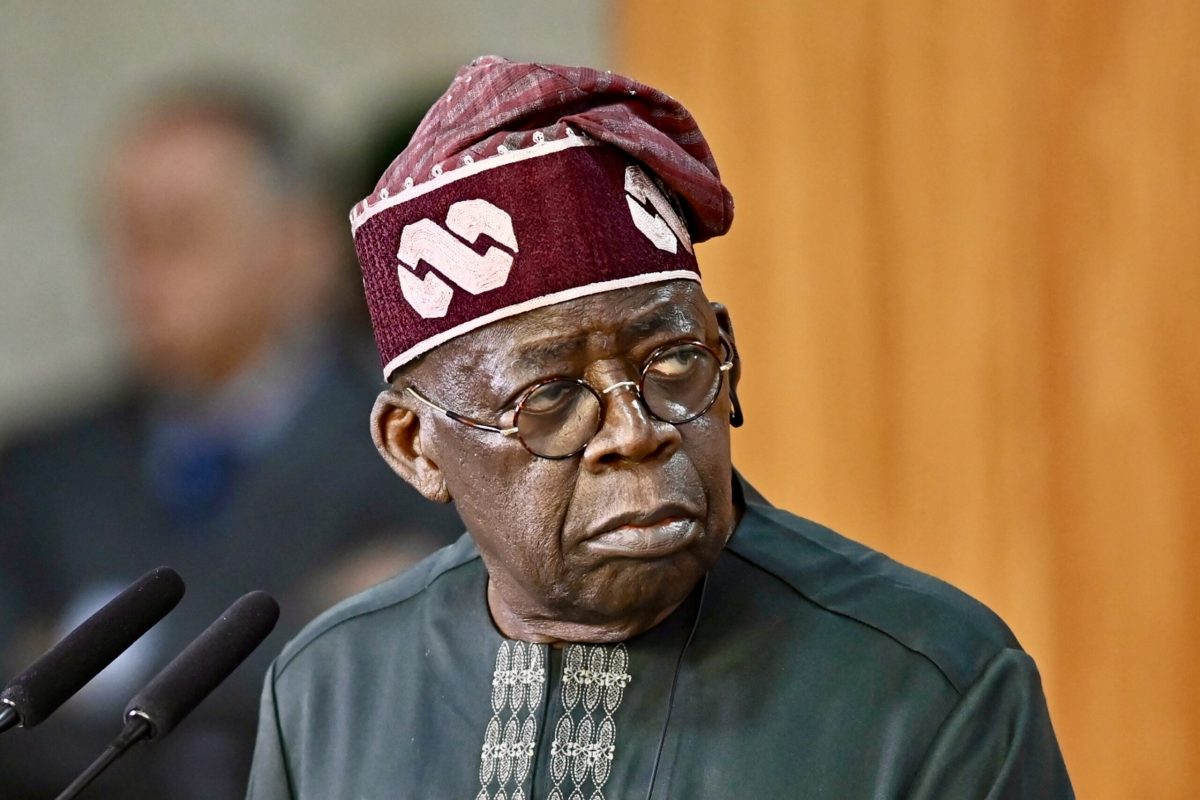
PROF says nationwide protests will continue on Monday as retired officers demand presidential assent to legislation seeking to remove the Nigeria Police Force from the Contributory Pension Scheme. Government officials have acknowledged the pension dispute but have yet to announce a public timetable for resolving it.
Seven Months After the Bill Reached the Presidency, Police Retirees Prepare for Another Protest
ABUJA, Nigeria — Retired Nigerian police officers are preparing to resume nationwide peaceful protests, accusing senior police officials and two prominent figures in President Bola Tinubu’s administration of frustrating legislation they say could secure their financial future after decades of service.
The Police Retiree Officers Forum of Nigeria (PROF) says its campaign will continue on Monday, October 19, unless the Federal Government addresses its demand for presidential assent to the bill seeking to establish a dedicated pension board for the Nigeria Police Force (NPF).
In a message to fellow retirees on Sunday, the forum’s National Coordinator, retired Chief Superintendent of Police (CSP) Raphael Irowainu, called for a fresh mobilisation, directing participants to assemble at their national secretariat at the Federal Secretariat in Abuja.
He said their next destination would be determined collectively after a briefing.
“Our national peaceful protest will continue tomorrow,” Irowainu declared.
He urged retired officers across the federation to participate, insisting that the passage of the proposed legislation by the National Assembly had already fulfilled the original objective of their agitation.
“I want to seize this opportunity to call on all the retirees to please come out en masse once again, to register our displeasure, to call on President Bola Ahmed Tinubu to prevail on him to give assent to our bill,” he said.
The immediate dispute is about presidential assent. The deeper question is why a bill passed by the legislature has remained unresolved while retirees continue to campaign for a change to their pension arrangements.
Gbajabiamila, Akume and IGP Named in Allegations
Irowainu accused Inspector-General of Police Olatunji Rilwan Disu, the police management team, the Police Special Company and individuals he described as collaborators within the Presidency of working against the retirees’ interests.
He specifically named presidential Chief of Staff Femi Gbajabiamila and Secretary to the Government of the Federation George Akume.
The allegations are serious, but they should not be mistaken for established findings of wrongdoing.
The coordinator’s message did not provide documentary evidence detailing the alleged roles of the named individuals in obstructing the bill. Nor did the official statements reviewed for this report contain a specific response from Gbajabiamila or Akume to these accusations.
That leaves a central investigative question unanswered: Who, if anyone, is actively opposing the bill, and what evidence shows that the legislative process is being deliberately frustrated?
The question matters because the retirees are not merely complaining about administrative delays. They are alleging that identifiable people within the country’s political and security leadership are undermining a legislative measure intended to address their welfare.
Those allegations require evidence, transparent explanations and responses from the people concerned.
From National Assembly Approval to Presidential Delay
According to Irowainu, the protest began on September 29, 2025, with the principal objective of securing the National Assembly’s approval of the retirees’ proposed legislation.
He said the legislature passed the bill on December 4, 2025.
The measure, commonly described as the Police Exit Bill, seeks to establish the Nigeria Police Force Pension Board and exempt police personnel from the Contributory Pension Scheme (CPS) under the Pension Reform Act 2014.
Reports published in April 2026 stated that the bill was transmitted to the Presidency on March 16, 2026. That means the measure had remained unresolved for more than seven months by October 18, 2026.
Irowainu insists the retirees are not seeking an open-ended review of pension policy. They want the specific legislation passed by lawmakers to receive presidential assent.
“When we started this protest on 29th of September 2025, our major demand was for the Senate or the National Assembly to pass our bill, which they have graciously done on 4th of December 2025,” he said.
He rejected proposals for alternative reforms, arguing that they would not resolve the retirees’ fundamental concerns.
“And this bill has spelt out all the modalities that will take care of police retirees as far as pension arrangements are concerned. We never debated, we never agitated, we never solicited for any kind of reform,” he added.
His position places the Presidency at the centre of the dispute. But the available public record does not establish why the bill remains unresolved or demonstrate that the delay is the result of deliberate obstruction by the officials he named.
What Is at Stake in the Pension Scheme Dispute?
The Contributory Pension Scheme operates through retirement savings accounts funded by contributions and investment returns. A defined-benefit arrangement, by contrast, generally determines retirement benefits through an established formula rather than relying solely on the balance in an individual contributory account.
PROF wants the police removed from the existing framework and placed under a dedicated arrangement, with a Police Pension Board responsible for administering their pensions.
The forum says current pension arrangements leave many retirees struggling with inadequate payments, rising living costs and healthcare expenses.
Irowainu has characterised the existing scheme as exploitative and described efforts to preserve it as an attempt to keep officers trapped in what he called an “exploitative and slavery-contributive pension scheme”.
He argued that the legislation passed by the National Assembly should take precedence over alternative reforms being promoted by pension authorities and police management.
“The law passed by the National Assembly is superior to any reform being canvassed by DG PACOM, by the police management teams and their collaborators,” he said.
The coordinator also rejected what he called “Option B”, alleging that the alternative was designed to undermine the bill.
“We are saying it once again, we are not waiting for Option B, that is, in the first place, not in existence,” he said.
“Option B was conscripted, was planned to truncate the passage, to truncate the assent to the police bill as it is currently before the President,” he added.
Those claims remain the forum’s allegations. The message did not provide a formal document identifying the authors, terms or approval status of the alternative arrangement.
There is also a fiscal question that the public debate has yet to settle conclusively. Moving police personnel into a different pension structure would require a transparent assessment of existing liabilities, accrued entitlements, future obligations and the cost of administering the proposed board.
Without a published financial assessment and transition plan, retirees and taxpayers cannot properly judge how the proposed arrangement would be funded or whether it would deliver the promised improvements.
The government itself has acknowledged that the change requires more than a simple administrative decision.
Government Assurances Have Not Produced a Public Timeline
The assertion that all government authorities are working against the retirees is not fully consistent with the public record.
On October 5, the Federal Ministry of Police Affairs reported a meeting with PROF in Abuja. The ministry said the Federal Government remained committed to addressing police pension and welfare concerns.
Permanent Secretary Ogbonnaya Anuma Nlia, representing Police Affairs Minister Ibrahim Gaidam, said the ministry had already communicated its position to the Presidency and would send a further reminder.
He also said the transition from the contributory scheme to a defined-benefit arrangement would require “careful policy, legal and executive consideration”.
The ministry identified outstanding pension arrears, death benefits, insurance liabilities, allowances and other welfare issues as matters under review by a ministerial and stakeholder committee.
Both sides said they were committed to continued engagement and a peaceful resolution.
The Nigeria Police Force has also publicly stated that Disu is committed to retirees’ welfare. A police statement following a meeting with a PROF delegation on July 30 said the IGP regarded their welfare as a priority and would maintain engagement with them.
Separately, the National Pension Commission’s public website says Tinubu directed its director-general to urgently resolve the longstanding police pension issue. The notice, however, does not provide a deadline for resolving the dispute or explain the status of the Police Exit Bill.
These statements establish that consultations and official assurances have taken place. They do not establish that the retirees’ central demand has been met.
That distinction is crucial. An administration can acknowledge a welfare problem, hold meetings and promise further engagement without delivering a decision that pensioners can see and measure.
The retirees are demanding an outcome, not another assurance.
A Constitutional Question Remains
The delay also raises a procedural question about presidential assent.
Section 58(4) of the Nigerian Constitution provides that where a bill is presented to the President for assent, the President shall indicate within 30 days whether he assents or withholds assent. Section 58(5) provides for a two-thirds majority in each chamber to override a presidential refusal of assent.
The bill’s reported transmission to the Presidency on March 16 makes the absence of a publicly explained resolution particularly significant.
The outstanding questions are straightforward: Has assent been formally withheld? Has the Presidency requested amendments or further consideration? Have lawmakers considered any constitutional steps available to them?
The public material reviewed for this report does not answer those questions conclusively. The constitutional provisions therefore make the need for procedural clarity more pressing, without by themselves resolving the bill’s legal status.
The Presidency and the National Assembly should explain the stage the bill has reached and what steps, if any, remain before a final decision.
Retiree Divisions Could Complicate the Campaign
The pension dispute is also taking place against a background of competing positions among retired police officers.
Irowainu referred to the emergence of another platform representing retired senior officers, including Commissioner of Police Fatai Owoseni and CP Amadi John. He alleged that some individuals associated with the alternative platform became involved only after the formation of a Retired CP Forum in June 2026.
He insisted that PROF represents retirees across ranks, including commissioners, deputy commissioners and assistant commissioners of police.
“And as I’m talking to you, I want the whole nation to know that in PROF, we have CPs, we have DCPs, we have ACPs in our midst,” he said.
He added that the forum did not oppose freedom of association but would reject attempts by another group to impose its leadership or position on PROF.
“We are not against anybody. We are not against anybody in line with the Constitution of the Federal Republic of Nigeria. Everybody has freedom of association,” he said.
“But you cannot impose, you cannot use your association to impose yourself on us. It will never be accepted.”
The existence of different retiree platforms does not invalidate the grievances of any group. It does, however, create a challenge for the authorities: they must distinguish between demands for a complete exit from the contributory scheme and proposals for improvements within the existing framework.
A separate retired-police association reported by Channels Television on October 12 gave the Federal Government, PenCom and the IGP until October 15 to fulfil reported commitments concerning gratuity and pension enhancements. It warned of another protest on November 2 if the commitments were not fulfilled. The report did not establish that this was the same negotiating position or organisation as PROF.
That separate deadline highlights a wider problem: the government’s engagement with retirees involves both the proposed structural change and questions about benefits under existing arrangements.
A durable settlement will require officials to state clearly which commitments have been made, which have been implemented and which remain under consideration.
Why the Dispute Matters for National Security
Irowainu argues that the treatment of retired officers has implications beyond their personal welfare.
He warned that attempts to frustrate the retirees’ demands were working against the country’s interests.
“And we are saying it, that what they are doing is not working against us, they are working against the interests of the entire country. Because their action is tantamount to undermining the national security,” he said.
The statement is the forum’s assessment, not proof that the pension dispute has directly caused a specific security failure.
But the underlying concern deserves serious consideration. Police officers face risks during active service, and confidence that retirement benefits will be available can form part of an institution’s wider welfare and personnel framework.
A pension dispute alone does not establish that serving officers will perform less effectively or that national security has been compromised. It does raise questions about institutional trust, the government’s obligations to former personnel and the credibility of welfare commitments made to serving officers.
The issue is also a test of accountability. If lawmakers approve a measure, the executive should provide a clear explanation of its next steps. If the administration opposes the measure, it should explain its concerns and the alternative it considers viable.
Leaving the dispute unresolved while retirees repeatedly take to the streets risks deepening the perception that assurances are easier to issue than decisions are to deliver.
‘We Deserve Honour, Comfort, Dignity in Retirement’
For Irowainu, the argument comes down to the years police personnel have spent serving the country.
He said many retirees had devoted as much as 35 years of their lives to policing, often under difficult conditions, while some colleagues were killed in the line of duty.
“So that they will hear our voice and they will know that police have served this nation for 35 years, used their youthful period to serve this nation. Many of them are killed in the course of this duty,” he said.
“We deserve honour, comfort, dignity in retirement. And this will never be compromised,” he added.
Those words capture the human dimension of a dispute too often reduced to pension policy and legislative procedure.
The retirees’ demand is specific: presidential assent to the Police Pension Board bill. The allegations against senior officials, meanwhile, require independent evidence and responses from those named.
As Monday’s planned protest approaches, the central test for the Tinubu administration is whether it can move beyond general assurances and provide a credible account of the bill’s status, the legal and financial issues still to be resolved, and a timetable for action.
Until then, a law passed by the National Assembly will remain at the centre of a dispute in which retired officers say their service to the country has not been matched by the dignity of retirement.
Follow us on our broadcast channels today!
- WhatsApp: https://whatsapp.com/channel/0029VawZ8TbDDmFT1a1Syg46
- Telegram: https://t.me/atlanticpostchannel
- Facebook: https://www.messenger.com/channel/atlanticpostng

Join the debate; let’s know your opinion.