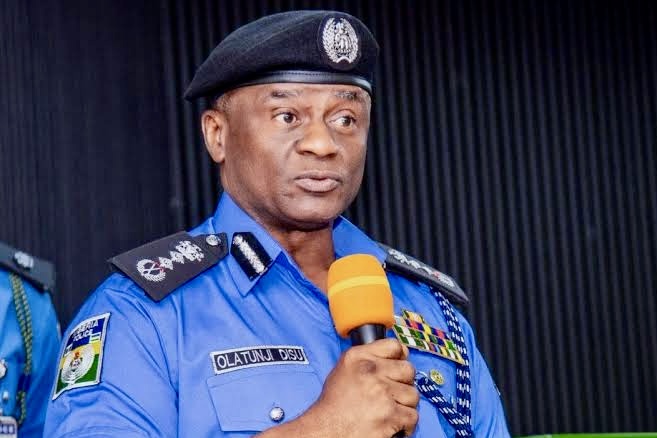
The Nigeria Police Force reports arrests across 11 states, two kidnapped victims rescued, firearms seized and three suspected stolen vehicles recovered. But the 48-hour scorecard leaves questions about evidence, prosecution and an unexplained terrorism allegation.
Nigeria’s police say they arrested 32 suspects during a series of operations conducted on 21 and 22 October, recovering an AK-47 rifle, locally fabricated firearms, ammunition, three suspected stolen vehicles and livestock, while rescuing two abducted men.
The operations, detailed in a 15-item state-by-state executive summary issued by Force Public Relations Officer CSP Ani Iniedu, also included the disruption of suspected car theft, kidnapping and armed robbery networks, raids on alleged cult hideouts and responses to attacks by armed groups.
The figures suggest a police force pursuing criminal suspects on several fronts. Yet the more important question is what happens after the arrests.
How many suspects will face prosecution? How much of the recovered property can be traced to identified victims? Will investigators establish the alleged links between individuals and organised criminal groups? And will communities exposed to kidnapping and armed attacks experience lasting improvements in safety?
The police statement provides an operational snapshot, not answers to these questions.
An item on the Force’s official X account confirms the reported arrest of seven suspects at Bawaje Forest in Kano State and the recovery of an AK-47 rifle, among other exhibits.
XThe wider figures in this report are tallied from the supplied 15-item police summary and have not been independently audited.
32 Arrests, 15 Incidents and 11 States
Counting the arrests listed in the summary produces a total of 32 suspects across 11 states. The tally covers multiple allegations, ranging from kidnapping and armed robbery to cultism, murder and unlawful possession of firearms.
The reported arrests break down as follows.
| State | Reported arrests | Principal operation |
|---|---|---|
| Kano | 7 | Suspected kidnapping network and weapons recovery |
| Kogi | 12 | Suspected cultists |
| Delta | 1 | Firearm and ammunition recovery |
| Lagos | 3 | Suspected car theft network and firearm possession |
| Imo | 1 | Firearm recovery; competing group labels require clarification |
| Ebonyi | 3 | Suspected armed robbery, murder and attempted murder |
| Bayelsa | 2 | Firearm recovery |
| Gombe | 3 | Suspected robbery |
| Zamfara | 0 reported arrested | Kidnap victim rescued and one suspected bandit reportedly killed |
| Kebbi | 0 reported arrested | Attack on police patrol repelled |
| Niger | 0 reported arrested | Armed attack repelled; tracking operations ongoing |
Source: Arithmetic tally of the supplied NPF operational summary for 21–22 October 2026. The figures reflect the listed incidents, not independently verified arrests or court records.
The concentration of 12 arrests in Kogi and seven in Kano accounts for 19 of the 32 reported arrests. Lagos contributes three more, while the remaining arrests are distributed across Delta, Imo, Ebonyi, Bayelsa and Gombe.
Those figures measure immediate police activity. They do not establish how many crimes have been solved, how many criminal networks have been dismantled or whether the suspects arrested were responsible for the offences attributed to them.
That distinction matters. An arrest is an investigative step, not a conviction.
Kano: An AK-47, 63 Animals and Suspected Kidnap Proceeds
One of the most substantial operations took place at Bawaje Forest in Bebeji Local Government Area of Kano State.
According to the police, operatives of the Anti-Kidnapping Squad arrested seven suspects. They recovered an AK-47 rifle bearing breech number 9490, a magazine, 18 rounds of live ammunition, two motorcycles, 33 cows, 30 sheep and ₦730,500 in cash suspected to be proceeds of kidnapping.
The police said efforts were continuing to track down the alleged principal suspect and other members of the group.
The operation raises questions that go beyond the volume of exhibits recovered.
Investigators will need to establish whether the rifle was used in any reported offence, whether the motorcycles can be linked to suspected kidnappings and whether the livestock belong to victims of cattle theft or other identifiable owners.
The cash also requires tracing. The police describe it as suspected kidnap proceeds, but the summary does not provide details of a ransom payment, an identified victim or other evidence establishing its source.
These questions are not evidence that the police operation failed. They are the tests that can turn a promising arrest into a prosecutable case.
The continued search for the alleged principal suspect is equally significant. If the suspect remains at large, investigators must establish whether the seven people arrested can provide evidence leading to the wider network, and whether that network extends beyond the individuals already in custody.
Kogi: Twelve Arrests, but What Did Investigators Establish?
In Kogi State, a joint intelligence-led operation targeting identified cult hideouts led to the arrest of 12 suspects, according to the police.
The operation was conducted under Operation Order No. 25/2026 and led by the Area Commander in Ajaokuta. The suspects were transferred to the Violent Crime Response Unit in Lokoja for further investigation.
The arrest of a dozen people in a targeted operation could provide investigators with opportunities to establish the structure of an alleged cult network, identify its members and determine whether particular individuals were involved in specific offences.
But the statement does not identify the group allegedly involved, specify the suspected offences attributed to each person or explain what evidence was recovered during the raid.
Those omissions leave the public unable to assess the extent of the alleged criminal activity.
The legal position remains important: membership allegations, intelligence reports and arrests must be tested against evidence. Investigators should distinguish people suspected of committing identifiable offences from those merely believed to associate with a group.
Zamfara: A Rescue, a Fatal Encounter and an Unfinished Manhunt
Zamfara State recorded two distinct developments.
In Maguru Village, Kaura Namoda Local Government Area, security teams rescued Labaran Bawa unharmed and reunited him with his family, according to the police.
In a separate operation at Ruwan Doruwa Village, Maru Local Government Area, operatives exchanged gunfire with armed men described by the police as bandits. The Force said one suspected bandit was killed and the remaining attackers fled.
The police said efforts were continuing to rescue other abducted victims and arrest those responsible.
The rescue of Bawa is an immediate outcome that matters to the victim and his family. Yet the wider picture remains incomplete while other abductees remain unaccounted for and the alleged perpetrators have not all been apprehended.
There was also a separate military announcement covering operations in Zamfara and Kebbi on 21 October. According to a report by Vanguard, troops rescued four kidnapped people in operations in the two states. Those were military-reported rescues, and the available reports do not establish that they involved the same incidents or victims described in the police summary.
The distinction is necessary because multiple security operations may occur in the same state within a short period. Combining figures without verifying the incidents could inflate rescue totals or create a misleading account of who carried out an operation.
For communities affected by kidnapping, the critical measure is not simply the number of reported rescues. It is whether missing victims are found, whether suspects are brought before the courts and whether the security response prevents further abductions.
Kebbi and Niger: Repelling Attacks Is Not the End of the Threat
In Kebbi State, the police reported that a large group of armed men suspected of belonging to the Mamudawa terrorist group attacked Police Mobile Force personnel during a patrol in Illo.
The officers reportedly repelled the attackers, who fled into the bush with gunshot wounds. Inspector Samaila Bala and civilian Okashatu Umar sustained injuries and were taken to General Hospital Illo for treatment.
The incident illustrates the danger faced by police officers and civilians in areas where armed groups can launch attacks and retreat into difficult terrain.
But a successful defensive response does not necessarily eliminate the threat. The police summary does not state how many attackers were involved, whether any weapons were recovered or whether subsequent operations located those who fled.
In Niger State, conventional and mobile police personnel reportedly engaged armed men who invaded Tugan Karo Village through Makera District in Mashegu Local Government Area.
The attackers were forced to retreat, while joint security forces were placed on red alert and tracking and rescue operations continued.
Both incidents demonstrate the importance of rapid deployment and coordination. They also show why reports of repelled attacks should be followed by information about the condition of affected communities, the status of missing people and whether fleeing attackers have been traced.
An attacker leaving a village does not, by itself, establish that residents are safe from another assault.
Lagos: Three Suspected Stolen Vehicles Recovered
The police also reported a development in Lagos that could help address the market for stolen vehicles.
Tactical operatives arrested Abayomi Shuaibu, 31, and recovered an unregistered Toyota Camry from his possession. Follow-up investigations led to the arrest of Salisu Abdulazeez, described by the police as an alleged receiver, at a hideout in the Satellite area.
A search of that location reportedly yielded two additional vehicles: a Toyota Corolla bearing registration number SMK-312-JN and an unregistered Hyundai Sonata.
The recovery of three vehicles could provide investigators with an opportunity to reconstruct how the vehicles were obtained, transported, stored and potentially offered for sale.
The central issue is ownership. Registration records, chassis and engine numbers, complaints from vehicle owners and evidence of possession or transfer could help establish whether the cars were stolen and whether the suspects knew their origins.
The police have announced arrests and recoveries. The summary does not specify whether the vehicles have been linked to named complainants, returned to owners or connected to other members of a suspected theft network.
That information would help the public understand whether the operation has merely recovered vehicles or uncovered a wider criminal enterprise.
Imo: A Terrorism Label That Needs Explanation
One of the most important unresolved issues appears in the entry from Imo State.
The police headline describes the operation as the arrest of a suspected IPOB/ESN terrorist. The accompanying narrative says operatives arrested Prosper Victor, 27, at an uncompleted building in Obinekele Amata Community, Ikeduru Local Government Area, following a distress call.
The police say a search yielded a locally made revolver pistol, ammunition, suspected hard drugs and items described as criminal charms. The statement further says the suspect confessed to membership of the Neo Black Movement of Africa, also known as Black Axe.
The summary does not explain the evidential basis for the IPOB/ESN designation or how the alleged Black Axe membership relates to the initial terrorism label.
These are distinct allegations. One should not be treated as proof of the other.
The police should clarify whether investigators have evidence connecting the suspect to IPOB or the Eastern Security Network, whether the initial description was an error, or whether the investigation has identified separate alleged affiliations.
The reported recovery of a firearm is relevant to an investigation, but possession alone does not establish membership of a particular organisation or responsibility for a terrorist offence.
The distinction is more than a matter of wording. Terrorism allegations carry serious consequences for an accused person and can influence public perceptions of insecurity in an already tense region.
The evidence must support the label, rather than the label substituting for evidence.
Firearms Across Multiple States: Recovery Is Only the First Step
The police report also describes weapons recovered in Delta, Ebonyi, Bayelsa and Lagos.
In Delta State, operatives of the Special Anti-Kidnapping Unit raided the residence of Richard Nmorsi, 62, in Ekuku-Agbor Community, Ika South Local Government Area. The police said a search warrant led to the recovery of a locally fabricated single-barrel firearm, 24 live cartridges and substances suspected to be cannabis. Nmorsi was arrested.
In Ebonyi State, detectives arrested Iseh Ndubuisi, 30, during a raid on a suspected criminal hideout in Isimkpuma Okpoto Forest, Ishielu Local Government Area. A locally made double-barrelled pistol and a live cartridge were reportedly recovered. Police allege the suspect was linked to armed robberies along the Abakaliki–Okpoto–Enugu Express Road.
In Bayelsa State, officers on stop-and-search duty along the Mbiama–Yenagoa Road arrested two people, aged 17 and 21, and reportedly recovered a locally fabricated Beretta-style pistol.
Another Lagos operation at Iyana Isashi led to the arrest of Lukman Sanni, 24, after police allegedly recovered a locally made pistol loaded with two live cartridges.
These operations highlight the importance of taking suspected illegal firearms out of circulation. They do not, however, establish that every weapon recovered was used in a particular crime.
Ballistic testing, weapon identification, ammunition examination and comparison with evidence from reported shootings may help establish such connections where applicable.
The police summary does not provide the results of any such examinations.
Ebonyi and Gombe: Serious Allegations Require Strong Evidence
Several of the remaining cases involve allegations of serious violence.
In Gombe State, police arrested Zainab Usman Kachalla, 18, alongside Musa Mohammed, 25, and Auwalu Suleiman, 23. The three were accused of conspiring to rob Bashir Shuaibu of ₦250,000 in cash and a Redmi mobile phone valued at ₦220,000.
The police said efforts continued to arrest other alleged principal suspects.
In Ebonyi, police arrested Nweke Sunday, 35, over the alleged killing of his 71-year-old grandmother, Mrs Nkwuda Edeukwu. The police account says the victim was attacked at night and struck on the head with a pestle. Detectives reportedly documented the scene and took the body for preservation and autopsy.
The autopsy and other investigative findings will be important in establishing the cause of death and supporting any charge brought before a court.
In a separate Ebonyi incident, police arrested Ebuka Alfred over the alleged assault of a six-month-old infant and the stabbing of Donald Nweze and Stella Nwakpa. The victims were taken to Alex Ekwueme Federal University Teaching Hospital in Abakaliki for urgent medical treatment, according to the statement.
These cases involve allegations with potentially grave consequences. Their seriousness makes a sound investigative process more, not less, important.
Witness accounts, medical records, forensic findings and other admissible evidence must establish what happened and who was responsible.
The public deserves information about progress, but suspects must not be treated as convicted offenders before the courts have determined their cases.
The Missing Link: From Police Activity to Justice
The most revealing feature of the 48-hour summary is not the number of arrests. It is the status attached to the cases.
The entries repeatedly identify State Criminal Investigation Departments or specialised investigation units as responsible for continuing inquiries. That indicates that the police themselves are presenting the cases as matters still under investigation.
It would be premature to treat the arrests as proof that all the alleged crimes have been solved.
Nigeria’s constitutional safeguards are explicit. Section 36(5) provides that anyone charged with a criminal offence is to be “presumed to be innocent until he is proved guilty”.
For the police, the next stage is to convert intelligence, searches, exhibits and witness accounts into properly documented evidence. For prosecutors, the task is to assess whether the evidence supports charges. For the courts, guilt must be determined through due process.
A stronger public reporting system would connect operational announcements to subsequent milestones, including charges filed, court appearances, recovered property returned to owners and cases resolved.
That would not require the police to disclose sensitive investigative details or compromise ongoing operations. It would require the Force to explain, when appropriate, what happens after suspects and exhibits leave the scene of an arrest.
Without that follow-through, the public can count arrests but cannot reliably measure how many cases progress towards justice.
What Nigerians Should Watch Next
The latest report records potentially meaningful developments: kidnapped victims rescued, attacks repelled, suspected stolen vehicles recovered and firearms taken into police custody.
Those outcomes should not be dismissed. Rescue operations can prevent further harm, and effective investigations can disrupt criminal networks.
But a scorecard is the beginning of a public accountability process, not its conclusion.
The outstanding questions are concrete. Will the alleged principal suspect in Kano be arrested? Will investigators substantiate the allegations against the 12 suspects in Kogi? Can Lagos police identify the owners of the three recovered vehicles? Will forensic evidence connect the recovered firearms to specific offences? And will the Imo Command explain the basis of the competing organisational descriptions in its own statement?
These are the questions that would allow Nigerians to judge the practical value of the reported operations without confusing arrest figures with proven guilt.
The real test of the police operation will not be how many names appear in a 48-hour bulletin. It will be how many cases withstand scrutiny, how many victims receive justice and how much safer the affected communities become.
Follow us on our broadcast channels today!
- WhatsApp: https://whatsapp.com/channel/0029VawZ8TbDDmFT1a1Syg46
- Telegram: https://t.me/atlanticpostchannel
- Facebook: https://www.messenger.com/channel/atlanticpostng

Join the debate; let’s know your opinion.