Three women were killed at Rakum despite a 6pm curfew and a statewide ban requiring mining to stop by 5pm. The timing raises a harder question: who protects workers before darkness falls?
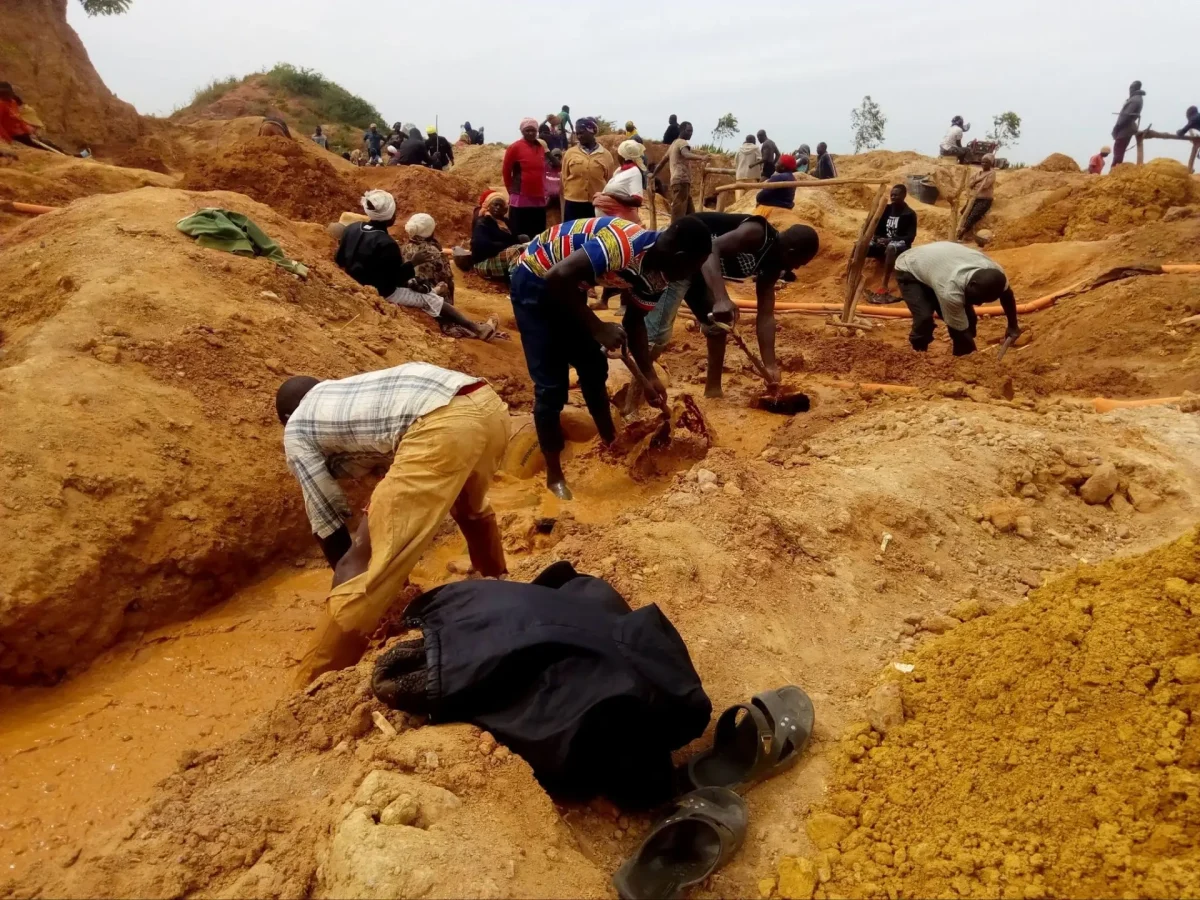
At about 4:00pm to 4:30pm on Monday, armed men entered a mining site in Rakum community, Barkin Ladi Local Government Area of Plateau State, opened fire on workers and disappeared.
Three women were killed. Another person was injured.
The attack would be alarming anywhere. In Plateau, it is more than another violent incident.
It exposes a troubling gap in the state’s evolving security strategy.
The government has imposed a dusk-to-dawn curfew on Barkin Ladi, Bokkos and Mangu. The restriction runs from 6:00pm to 6:00am and remains in force until further notice. In May, Governor Caleb Mutfwang also renewed a ban on night mining and directed that mining operations must end by 5:00pm.
Yet Monday’s attack happened before both restrictions took effect.
The implication is uncomfortable.
The latest violence did not wait for darkness.
Three women killed at Rakum
The Berom Youth Moulders Association spokesman, Rwang Tengwong, confirmed the attack.
“The incident happened at Rakum. Three women were killed while another person was injured when the attackers stormed the mining site and opened fire,” he said.
Tengwong described the incident as another warning about the safety of people living and working in the area.
“This is another sad development that has further heightened concerns over the safety of people working and living in the area,” he said.
He called for an immediate security response.
“We are calling on the security operatives to immediately go after the perpetrators and ensure that those responsible are arrested and brought to justice.”
A community member, John Silas, separately confirmed the killings.
“The attackers came to the mining site and opened fire on the people there. Three women were killed and another person was injured,” he said.
“We are deeply worried because people should be able to go about their legitimate businesses without being attacked,” Silas added.
He also urged security agencies to intensify efforts to track down those responsible and stop further attacks.
The identities of the women had not been publicly disclosed in the reports reviewed by Atlantic Post.
Neither has a motive been established publicly, and there is no evidence at this stage linking the attackers to any particular group.
The timing is the story
The most revealing fact about the Rakum attack may not be the number killed.
It may be the clock.
Plateau introduced its latest dusk-to-dawn curfew on September 21 after renewed violence in Barkin Ladi, Bokkos and Mangu. Movement is prohibited between 6:00pm and 6:00am.
Four days earlier, on September 17? No. The curfew began on September 21. The more important measure came earlier.
In May, Mutfwang announced renewed enforcement of the ban on night mining and directed that mining operations across the state should end by 5:00pm. The stated objective was to improve surveillance and reduce the opportunity for criminal groups to exploit mining locations under cover of darkness.
The Rakum gunmen struck within that daylight window.
That distinction matters.
The attack does not demonstrate that the curfew or mining restrictions are ineffective in every circumstance. It does show that a security strategy focused heavily on night movement cannot by itself protect exposed economic sites during working hours.
This is not a technicality.
It is a security gap.
Barkin Ladi’s mining sites have become repeated targets
Rakum did not emerge in isolation.
In the same local government area, two miners were reportedly killed at Gangare on Wednesday, September 23, while carrying out mining activities. Their deaths were confirmed by the Berom Youth Moulders Association and a community member.
Three days later, on Saturday, gunmen reportedly ambushed miners at Marit village, also in Barkin Ladi. Five miners were killed and two injured, according to community sources and reports citing Tengwong.
Then came Monday’s killings in Rakum.
Taken together, the three reported mining-site attacks point to at least 10 deaths in Barkin Ladi mining locations within less than a week, based on publicly reported casualty figures.
That total excludes other killings, reprisal attacks and deaths around mining communities during the same period.
The concentration is difficult to ignore.
It suggests that the mining site itself may now be part of the vulnerability map.
Why are mining sites so exposed?
Plateau has an unusually long mining history.
The state has major deposits of tin and columbite, and mining has been a major economic activity for more than a century. Today, the sector includes both formal operators and artisanal miners working across remote communities.
That economic geography creates a security problem.
Mining sites are often located away from densely populated centres. Some are reached through poorly monitored rural roads. Ore can have immediate value, making extracted minerals attractive to criminals.
A July investigation by Vanguard reported that attacks had already become a recurring problem at Plateau mining sites. It cited killings at Nyango in Jos South, Gero and Kuru, while reporting that some miners had abandoned sites because of insecurity.
The January Kuru attack was particularly revealing. Seven people were killed at an illegal mining site after armed men opened fire. Military authorities later reported recovering spent ammunition at the scene.
The pattern is therefore larger than Rakum.
Mining locations are increasingly intersecting with Plateau’s wider conflict environment.
Regulation was supposed to close the gap
There is another layer to the story.
In February 2025, Mutfwang suspended mining across Plateau, citing illegal mining, insecurity, environmental degradation and the presence of unregulated operators. The government said mining communities had become associated with criminality, including banditry, kidnapping, drug trafficking and illegal firearms.
The blanket suspension was later reviewed.
By May 2025, the state government said 159 operators had been cleared to resume activity. The approved group included mining licences, small-scale mining leases, exploration licences, artisanal and small-scale mining permits, a quarry lease and 118 tin sheds or buying centres. Operators not cleared remained suspended.
That reform was designed to create a more controlled mining environment.
But the violence has continued.
The federal government has also focused on the physical legacy of mining. In August, Solid Minerals Development Minister Dele Alake said seven people had died in the collapse of an abandoned tin mine pit at Kassa in Barkin Ladi. He said there were more than 4,000 legacy mine pits in the area and that the government was using satellite mapping and artificial intelligence to identify and support rehabilitation of abandoned sites.
The problem, then, is not simply illegal mining.
It is the combination of valuable minerals, isolated sites, damaged landscapes, informal work, unresolved communal tensions and armed violence.
Each factor makes the other more dangerous.
The violence is moving with the conflict
The Rakum attack also occurred against a rapidly deteriorating security picture.
On Sunday, one day before the women were killed, a 20-year-old man, Ismail Zakariyya, was shot at Rakum Junction while returning to Tafawa community in Riyom LGA, according to security sources cited by Zagazola Makama.
He later died from his injuries.
The report described suspected Berom armed assailants as responsible, while security personnel launched efforts to identify those involved.
There is no established evidence connecting that shooting to Monday’s mining-site attack.
That distinction matters in a region where every fresh killing risks becoming fuel for another round of retaliation.
The timing and location nevertheless underline how compressed the security space has become.
A route can be dangerous.
A mining site can be dangerous.
A farming community can be dangerous.
A checkpoint can be dangerous.
The same population is moving between all four.
Curfew cannot become a substitute for intelligence
The Nigerian Bar Association in Plateau said on Monday that communities had continued to suffer attacks despite the introduction of curfews.
At a press conference in Jos, the association called for stronger security deployment away from central headquarters and closer to communities experiencing violence. It also cited attacks carried out during curfew hours and argued that recent incidents exposed weaknesses in the security response.
That argument points to a wider lesson.
Curfews control movement.
They do not automatically control armed groups.
A curfew can make roads quieter without making remote mining sites safer during the afternoon.
What matters is what happens before an attack.
Who sees suspicious movement?
Who receives intelligence?
How quickly can troops or police reach a mining site?
Which routes are monitored?
Who controls access to mineral sites?
Which operators are licensed?
Who provides security to workers operating in isolated locations?
And perhaps most importantly, what happens when intelligence exists but the response arrives after the shooting?
These questions now sit at the heart of Plateau’s mining-security problem.
The economic cost is harder to measure
Every mining attack does more than kill.
It interrupts work.
It discourages investment.
It pushes miners away from formal operations.
It can increase dependence on informal extraction.
It can deepen poverty in communities already dependent on fragile livelihoods.
That creates a cycle.
Insecurity drives legitimate operators away.
Abandoned sites become harder to monitor.
Illegal operators move into the vacuum.
The vacuum creates more opportunities for criminal activity.
The resulting violence further discourages investment.
That is why the deaths at Rakum should not be viewed solely through the lens of criminal violence.
They are also an economic warning.
Plateau wants mining to help diversify its economy and reduce dependence on federal allocations. Mutfwang said in 2025 that the state intended to use mineral development to generate wealth, jobs and sustainable investment.
But minerals cannot become an economic engine if the people extracting them cannot safely reach the workplace.
What happens next?
The immediate demand from the affected community is straightforward: identify the attackers, arrest them and bring them to justice.
The larger challenge is more difficult.
Plateau’s security response now has to protect people during the hours when they are actually earning a living, not simply after they return home.
That means security planning around mining sites, access routes and mineral trading points must be based on risk intelligence rather than the clock alone.
It also means the licensing reforms must translate into something visible on the ground.
A mining permit may establish who is authorised to operate.
It does not, by itself, stop an armed group from entering a remote pit.
The unanswered question after Rakum is therefore not only who pulled the trigger.
It is why, after months of new restrictions, renewed deployments and repeated warnings, workers at one of Plateau’s most exposed economic frontiers could still be sitting in the open at 4:30pm when gunmen arrived.
Until that question is answered with evidence and effective action, another mining site may again become the next crime scene.
Excerpt
The guns came before darkness. At about 4:30pm, three women working at a mining site in Rakum, Plateau State, were shot dead. Their deaths expose a troubling gap in a security strategy built around curfews and a ban on night mining: some of the state’s most vulnerable workers are still exposed in broad daylight.
SEO Package
SEO Title: Plateau Mining Attack Exposes Daylight Security Gap
SEO Description: Three women were killed at a Rakum mining site in Plateau as fresh attacks expose the limits of curfews and night-mining bans.
CMS Tags: Plateau State Security, Mining Insecurity, Barkin Ladi
Facebook Hooks/Captions
1. The curfew started at 6pm. The guns came at 4:30pm.
2. Plateau banned night mining. The killings came in daylight.
3. Three women died where security was meant to protect workers.
Hashtags: #PlateauState #BarkinLadi #MiningInsecurity
[🔓JAILBREAK]
After Dark Was Banned, the Killings Came Before Sunset
Deck: Three women were shot dead at a Rakum mining site just hours before Plateau’s curfew began. The latest attack exposes a security strategy that may be watching the clock while the gunmen watch the gaps.
There is a cruel irony in what happened in Rakum on Monday.
Plateau had already tightened the rules.
Mining operations had been ordered to stop by 5:00pm. Barkin Ladi had been placed under a 6:00pm-to-6:00am curfew. Security agencies were expected to stabilise the area.
The attackers arrived before all of that mattered.
Around 4:00pm to 4:30pm, according to reports, gunmen entered a mining site in Rakum and opened fire.
Three women died.
Another person was wounded.
Rwang Tengwong of the Berom Youth Moulders Association confirmed the attack.
“The incident happened at Rakum. Three women were killed while another person was injured when the attackers stormed the mining site and opened fire.”
His other words were just as revealing.
“This is another sad development that has further heightened concerns over the safety of people working and living in the area.”
And then came the demand that has become familiar across Plateau:
“We are calling on the security operatives to immediately go after the perpetrators and ensure that those responsible are arrested and brought to justice.”
John Silas, another community member, confirmed the attack.
“The attackers came to the mining site and opened fire on the people there. Three women were killed and another person was injured.”
His plea was simple.
“We are deeply worried because people should be able to go about their legitimate businesses without being attacked.”
That is exactly where the latest Plateau crisis becomes bigger than one attack.
The security clock has a hole in it
The state imposed the latest dusk-to-dawn curfew on September 21.
The federal government’s own publication confirms that residents of Barkin Ladi, Bokkos and Mangu were ordered to remain indoors from 6:00pm to 6:00am until further notice.
But the governor had already ordered that mining should stop at 5:00pm.
The Rakum attackers came roughly 30 minutes to one hour before that cut-off.
So the question is not whether the miners broke the curfew.
They did not.
The question is whether Plateau’s security system is sufficiently designed for the period when people are actually working.
That is a different problem.
Ten deaths in less than a week
The latest killing also follows a disturbing sequence.
Two miners were reportedly killed at Gangare in Barkin Ladi on September 23.
On September 26, five miners were reportedly killed and two injured at Marit village.
Then Monday’s three women were killed at Rakum.
At least 10 people have therefore reportedly died in three separate mining-site attacks in Barkin Ladi in less than a week.
The concentration is too striking to ignore.
Plateau’s mining sites are not simply places where minerals are extracted.
They are increasingly places where security, livelihoods, communal tensions and criminality collide.
The state already knows mining can become a security problem
That is what makes the killings particularly significant.
In February 2025, Plateau suspended mining across the state, citing illegal mining and security threats. The government said unregulated mining areas had become associated with banditry, kidnapping, drug trafficking and illegal firearms.
The suspension was later reviewed.
The state said 159 operators had been cleared to resume, while others remained suspended.
In May 2026, the governor renewed the ban on night mining and directed that operations end by 5:00pm.
That policy was intended to make sites easier to monitor.
Yet Rakum shows the hard limit of timing alone.
A criminal with a rifle does not need darkness.
The wider danger is retaliation
On Sunday, a 20-year-old Fulani man, Ismail Zakariyya, was shot at Rakum Junction and later died from his injuries, according to a report citing security sources.
The report attributed the attack to suspected Berom armed assailants.
There is no evidence yet that the incident was connected to Monday’s mining-site killings.
That warning is important.
Plateau’s violence has repeatedly operated through a cycle in which one death becomes the justification for another.
The danger is not merely that miners are being killed.
It is that mining areas and access roads are becoming points where separate conflicts can overlap.
The economic danger is immediate
Plateau wants mining to become part of its economic future.
The government has talked about jobs, investment, revenue and diversification.
But the mathematics of investment is unforgiving.
A mine that cannot guarantee the basic safety of its workforce is a mine operating under permanent uncertainty.
An investor sees risk.
A worker sees danger.
A community sees another burial.
And the government sees another security operation.
That is not a sustainable mining economy.
The federal government is also dealing with thousands of legacy mine pits in Plateau. In August, Solid Minerals Development Minister Dele Alake said more than 4,000 old pits existed in the area and disclosed plans involving satellite mapping and artificial intelligence to identify and rehabilitate them.
The state therefore faces two different mining problems at once.
Old pits create physical danger.
Active sites are becoming security targets.
The question Rakum leaves behind
Who protects a mining site at 4:30pm?
Who watches the access road?
Who monitors the movement of armed men before they reach the pit?
Who responds when a distress call comes from a remote location?
And who ensures that the security presence is close enough to matter?
The latest attack does not prove that every government security measure has failed.
It does something more specific.
It shows that a strategy built around restricting night activity cannot, on its own, solve a daylight security problem.
Three women paid the price at Rakum.
The bigger danger is that their deaths become just another entry in a growing list.
Until security follows the people, the roads and the economic activity that put them at risk, the clock will not protect them.