The Peoples Democratic Party’s latest rebuttal has thrown fresh petrol on an already raging fire, with the Alhaji Abdulrahman Mohammed and Senator Samuel N. Anyanwu camp dismissing as illegal a claimed “103rd NEC meeting” and a purported caretaker committee reportedly associated with Senator Adolphus Wabara and Kabiru Tanimu Turaki, SAN.
In a hard-edged statement released on May 4, 2026, the faction insisted that “no such meeting was convened by the leadership of the Party” and declared that any outcomes from the gathering were “null, void, and of no effect.”
This is not a routine internal disagreement. It is the latest public clash in a leadership war that has already drawn in the party’s Board of Trustees, governors, national lawmakers and senior legal figures.
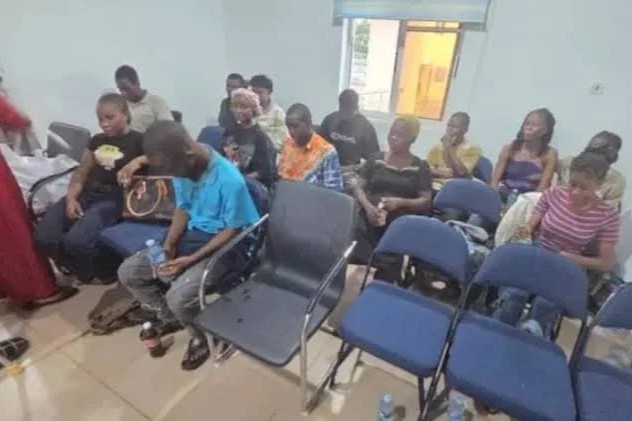
Channels Television reported on May 4 that a Turaki-linked meeting in Abuja had on its agenda the proposed inauguration of a caretaker committee, with figures such as Adolphus Wabara, Seyi Makinde, Jerry Gana and Zainab Maina reportedly in attendance.
TheCable also reported that the BoT faction backed by Turaki said it had assumed leadership after the Supreme Court voided the 2025 Ibadan convention, while ThisDay said the rival camp claimed the BoT had taken over to avert a vacuum.
The Mohammed-Anyanwu camp is trying to frame the dispute as one of legality, not mere factional preference. Its argument is simple: the gathering did not have the authority to speak for the PDP, and therefore could not lawfully create a caretaker structure.
That line is reinforced, at least on paper, by the PDP Constitution, which says the Board of Trustees is to “act as the conscience of the Party”, “offer advice on party matters”, and undertake other functions referred to it by the National Executive Committee or National Convention.
The same constitution also states that only National Officers of the party have the authority to create legal relationships binding on the party.
That constitutional point matters because the statement is also an attack on the claim that the BoT can step into executive control. The party’s governing document does not describe the BoT as an executive arm; rather, it gives it a supervisory and advisory character.
It can mediate, advise and call officers to order, but the constitution reserves executive and binding authority elsewhere.
On that reading, the faction’s insistence that Wabara and Turaki could not simply manufacture a caretaker committee has a textual basis, even though the wider political legitimacy question remains bitterly contested.
The strongest legal plank in the statement is its reliance on the Electoral Act 2026. Section 82 of the Act requires every registered political party to give INEC at least 21 days’ notice of any convention, congress, conference or meeting convened for electing executive bodies, other governing bodies or nominating candidates.
The same section says the Commission “shall attend and observe” such meetings, and failure to notify INEC renders the primaries, convention, congress and conferences invalid. That means the party’s argument is not just political theatre; it is tied to a real statutory notice requirement.
Even so, the statement goes further than the law alone. It seeks to delegitimise the rival camp morally and politically. The faction described the move as “ironic and disappointing”, accusing those involved of first arguing that the PDP Constitution did not allow a caretaker committee and then turning around to claim they had constituted one.
It also said the episode reflected “the opportunistic and self-serving nature” of the actors involved, presenting the affair as a contradiction too blatant to defend.
The attack on Senator Wabara is especially significant. The release says he had been expelled at ward level for anti-party activity after supporting Governor Alex Otti and therefore lacks “moral and constitutional standing” to assume any leadership role.
That allegation should be treated as the party’s position, not an independently verified fact, but it fits the broader struggle over who can legitimately speak for the PDP after the Supreme Court judgment.
The PDP Constitution also says a BoT member loses membership if expelled from the party, and that BoT members are to be removed through the procedures set out in the constitution.
The broader implication is that the PDP is now fighting on three fronts at once: legality, legitimacy and succession.
One camp says the Supreme Court judgment stripped the rival structure of authority and left Mohammed and Anyanwu standing. The other camp says the ruling created a vacuum that the BoT must fill.
In the middle sits a national party machinery trying to convince Nigerians that it still has a functioning centre of command.
The party’s own public messaging has become part of the crisis, with conflicting claims about who leads, who has expired, and who can summon whom to a meeting.
For now, the political damage is obvious. A party that should be preparing for the 2027 battlefield is instead spending May 2026 arguing over whether a meeting existed, whether INEC was notified, whether the BoT can act, and whether a caretaker committee is even permissible.
The Mohammed-Anyanwu camp wants the public to “completely disregard this illegitimate assembly and its outcomes”, but the rival camp’s Abuja gathering shows the dispute is far from over.
Until there is a recognised and broadly accepted settlement, the PDP risks entering the next election cycle as a house still fighting over its own front door.
Follow us on our broadcast channels today!
- WhatsApp: https://whatsapp.com/channel/0029VawZ8TbDDmFT1a1Syg46
- Telegram: https://t.me/atlanticpostchannel
- Facebook: https://www.messenger.com/channel/atlanticpostng