The People’s Democratic Party remains riven as a court in Ibadan on Friday validated the November 15–16, 2025 national convention that produced a National Working Committee led by Tanimu Turaki.
The ruling, delivered by Justice Ladiran Akintola of the Oyo State High Court, granted all 13 reliefs sought by the claimant and formally upheld the Turaki outcome.
Within hours, the faction of the party aligned to Nyesom Wike dismissed the decision. They viewed it as legally impotent. It has no bearing on the Independent National Electoral Commission.
The Wike-backed caretaker committee is led by Mohammed Abdulrahman and Senator Samuel Anyanwu. They issued a blunt statement. The statement was made through its National Publicity Secretary Jungudo Mohammed. It insists that the November convention remains invalid.
The dispute centers on the legal status of competing court orders. Another issue is whether a state high court ruling can bind a regulatory agency that was not a party to the suit.
The Wike faction argues that earlier Federal High Court judgments expressly restrained the Independent National Electoral Commission. This commission is commonly known as the Independent National Electoral Commission. It was prevented from attending, monitoring, or recognising the Ibadan exercise. They maintain that those federal orders remain operable.
The faction stressed the Oyo court did not join INEC to the action. Therefore, the judgment can’t decide the commission’s conduct.
Legal and political analysts say the contradiction between state and federal rulings is not merely academic.
Under Nigeria’s constitutional dispensation, a hierarchy is created by superior courts and the federal jurisdiction of certain courts. This makes questions of enforceability complex and fact-specific.
Federal High Court orders exist and have been obeyed by INEC. A subsequent state court validation risks producing parallel claims of legitimacy. These claims could be tested on appeal.
The Court of Appeal heard consolidated matters in mid February and has reserved judgment. That pending appellate decision will be decisive for the immediate legal arc of the dispute.
Politically the timing is fraught. Governors who backed the Ibadan convention had overseen a transition from former Chairman Umar Damagum to the Turaki team.
The Wike camp formed a 13-member caretaker committee on December 8. It also called for a fresh national convention in Abuja from March 29 to 30, 2026. This underlines that neither side is prepared to cede ground ahead of the 2027 general elections.
The parallel mobilisation threatens to deepen factional cleavages at a moment when the opposition can ill afford distraction.
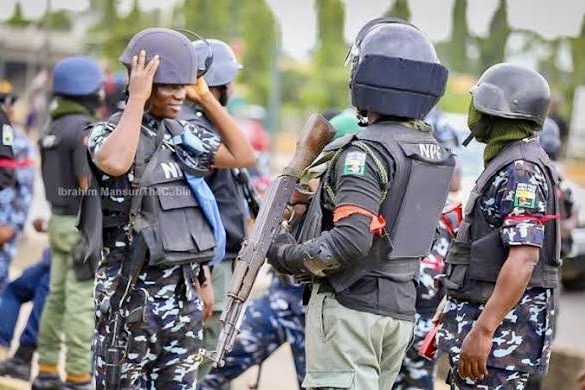
Operationally the dispute has already had tangible consequences. Both camps attempted to assemble at the PDP secretariat in Abuja. This descended into violence in November 2025. Consequently, the police sealed the national secretariat.
INEC has so far declined to recognise either set of leaders. This decision is pending a final judicial resolution. This outcome restricts the party’s ability to hold recognised primaries. It also limits the ability to regularise candidate lists for 2027.
The commission’s practical reticence is grounded in caution as much as in legal obligation.
For the Wike faction the Oyo ruling is a peripheral irritant. Its statement described the judgment as a mere academic exercise. It reiterated that INEC was neither joined nor represented in the suit. This omission deprives the ruling of legal purchase over the commission.
The faction referred to the Federal High Court in Ibadan. On January 30, 2026, the court had nullified the Ibadan convention. It ordered the Turaki team to cease parading itself as the party leadership.
That federal order, the Wike camp says, remains the operative injunction.
For the Turaki camp the Oyo High Court vindication affords a renewed claim of normalcy. Supporters argue that a state high court has competence over internal party matters. They believe that the validation will buttress the Turaki leadership’s public posture.
Whether that posture holds depends on the appellate route. It also depends on the strategic calculations of INEC. Their recognition or continued non-recognition will have the most immediate effect on the party’s administrative life.
Looking ahead there are three critical flashpoints.
First, the Court of Appeal’s forthcoming judgment on consolidated matters will decide the path of the legal contest. It will either compress the legal contest or prolong it by sending questions back to trial courts.
Second INEC’s stance will determine which leadership can lawfully be recorded as the party for electoral purposes.
Third, the capacity of party stakeholders to agree on a negotiated settlement will be crucial. It will determine if the PDP heads into 2027 as a united opposition or as a fragmented collection of rival machines.
The deeper lesson is institutional. A party that cannot settle leadership through its constitution or internal mechanisms will be forced into courts. Once in courts, politics and law intermingle in ways that favour delay and uncertainty.
For the PDP the costs are not merely reputational. They are material and strategic and will be felt in candidate selection, fundraising and grassroots mobilisation.
The Court of Appeal needs to pronounce a decision. INEC must state, with legal clarity, which outcome it will respect. Until then, the PDP’s calendar remains at risk of further disruption.
Both camps have signalled readiness to fight on legal and political fronts. The general election is less than two years away. The party’s ability to manage the dispute within its ranks will be crucial. It will be the single most important determinant of its electoral fortunes.
Follow us on our broadcast channels today!
- WhatsApp: https://whatsapp.com/channel/0029VawZ8TbDDmFT1a1Syg46
- Telegram: https://t.me/atlanticpostchannel
- Facebook: https://www.messenger.com/channel/atlanticpostng