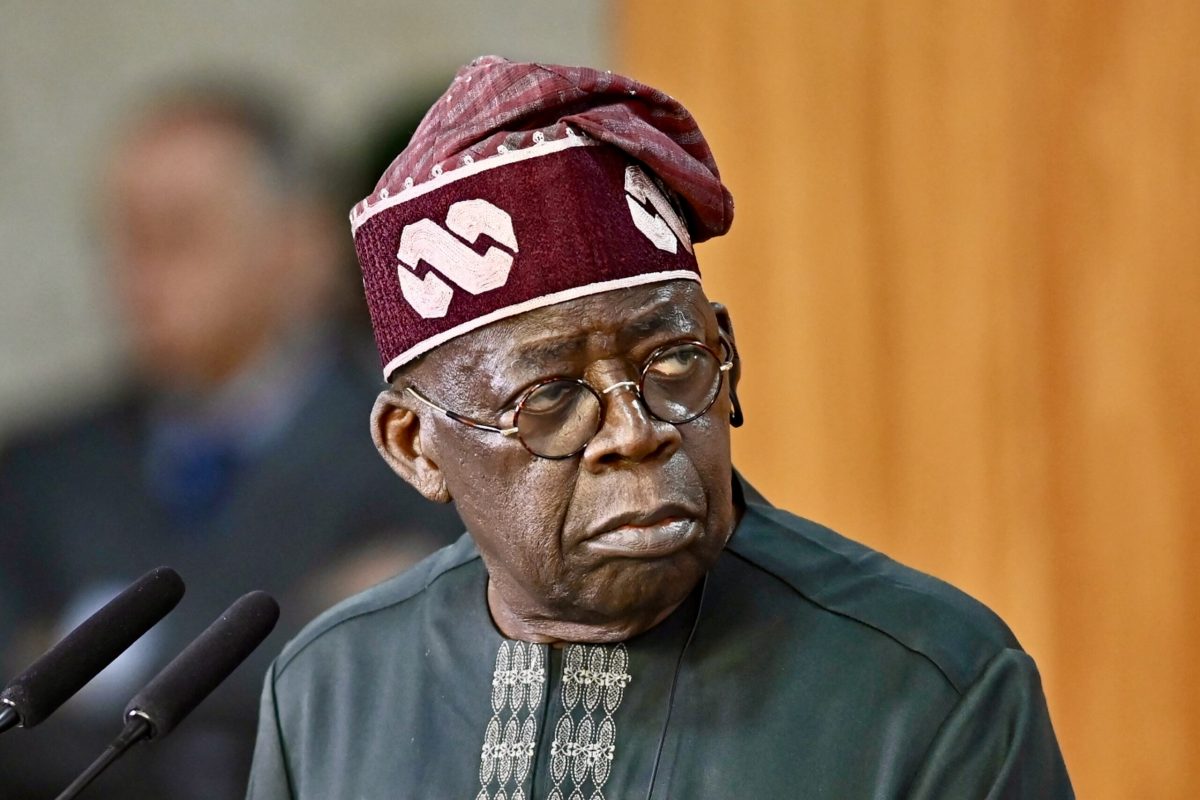
President Bola Ahmed Tinubu’s recent public pledge to “create a state police” can be read as the most consequential policy promise on domestic security since the 1999 Constitution was imposed.
The words were unambiguous. They were delivered at the State House after a delegation from Katsina led by Governor Dikko Radda and came against a national background of mass killings, kidnappings and the collapse of public confidence in the Nigeria Police Force.
Yet the machinery of government that must translate rhetoric into law and boots on the ground continues to groan and stall.
The National Economic Council has deferred deliberations repeatedly, the National Assembly has not enacted the constitutional changes required, and governors and interest groups are manoeuvring for advantage. Meanwhile citizens are dying.
This investigation sets out the politics, the law, the history and the hard logistics of creating state police in Nigeria.
It assembles the latest figures on violence, traces the constitutional roadblocks, examines models from federations that delegate policing powers, and interrogates the real risk that a localised police could become an instrument of partisan power.
Above all it asks the vital question: will change come in time to save ordinary Nigerians who feel unprotected now.
A moment of truth or a rhetorical reprieve
On the day President Tinubu received the Katsina delegation he was direct. “I am reviewing all the aspects of security; I have to create a state police,” he told the visitors and later repeated the commitment in interviews and State House releases.
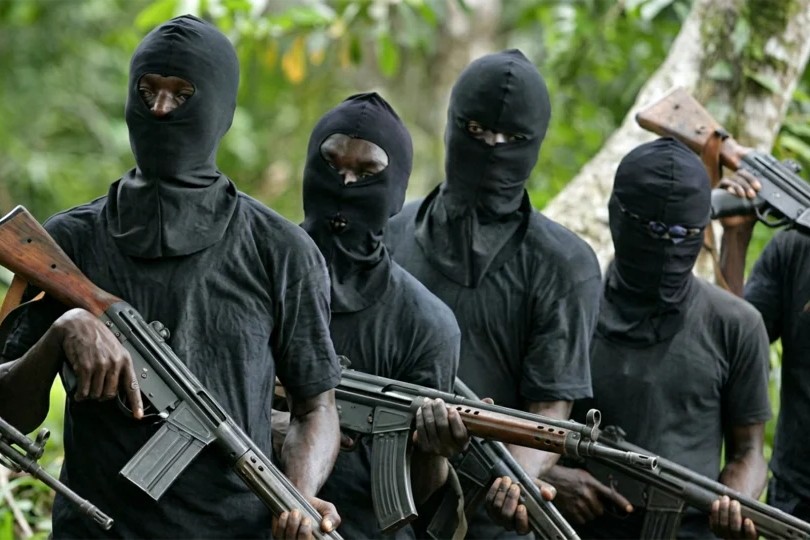
The statement followed an emergency season of bloodletting — an attack on a mosque in Katsina that left scores dead, airstrikes that freed dozens of hostages and an NHRC tally that showed conflict related deaths surging in the first half of 2025.
President Tinubu coupled his pledge with promises to equip forest guards and to buy surveillance technology and drones, suggesting the state police pledge is part of a multi layered plan rather than a single magic fix.
For activists and regional leaders the language was redemptive. Pan Yoruba group Afenifere and the Pan Niger Delta Forum described the pledge as long overdue and urged urgent action.
The Middle Belt Forum and many northern civil society groups said state police are intrinsic to true federalism and to the restoration of security in ungoverned spaces.
The chorus of voices demanding accelerated implementation grew louder after the mosque massacre in Unguwan Mantau where dozens were killed during prayers, a crime that crystalised the sense that centralised policing can be absent, slow or irrelevant to local risks.
But the demand side of politics is only one part of the equation. The constitutional and institutional mechanics remain unresolved, and those mechanics are where promises too often die.
The constitutional hurdle and the long legislative road
Nigeria’s military-era imposed 1999 Constitution effectively establishes the Nigeria Police Force as the national instrument for law enforcement under section 214. Any formal creation of state police therefore requires amendment or termination of the Constitution.
Bills and memoranda have been circulated. The Constitution Alteration Bill for establishment of state police and proposals such as HB 617 have sought to insert provisions to allow state forces while delineating federal and state responsibilities.
But constitutional amendment in Nigeria is arduous. It requires a two thirds majority in both chambers of the National Assembly and the approval of two thirds of state assemblies, a political mountain that can be climbed only with concerted consensus between the presidency, governors and legislature.
The National Economic Council, the forum that coordinates federal and state input on such major reforms, began the formal process in February 2024 by requesting detailed plans from each state. By March 2024 sixteen states had responded. By December 2024 all 36 states had filed reports but NEC has repeatedly deferred substantive debate.
In April 2025 the Council postponed discussion citing lack of time, and at a later meeting in August it set a timetable for four jurisdictions to supply positions by early September and indicated a final decision might not be reached until January 2026.
That slippage has fuelled scepticism. Critics argue delay amounts to denial for millions living in high risk areas. Supporters of the delay counter that the stakes are too high for a rushed constitutional overhaul.
The scale of the crisis driving the debate
The urgency of the argument is not theoretical. The National Human Rights Commission and independent monitors report a catastrophic rise in violent deaths in 2025.
The NHRC’s count for the first half of 2025 stands at roughly 2,266 people killed in conflict related incidents, more than double the figure for the same period in 2024 and already higher than the full year total for 2024.
The figures, compiled from field reports, government data and civil society monitoring, show a country in the grip of multiple violent theatres — banditry and kidnappings in the northwest, Boko Haram and ISWAP activity in the northeast, communal violence and resource conflicts in the Middle Belt, and simmering secessionist violence in parts of the southeast.
A single, centralised police force spread thin across 923,000 square kilometres is struggling to maintain presence, let alone control.
High profile incidents underline the human cost. The mass killing at a mosque in Katsina and the rescue of 76 hostages by airstrike operations are recent flashpoints that demonstrate both the ferocity of attacks on soft targets and the gaps in ground intelligence and community policing that a state police model promises to close.
Analysts point out that many attackers operate inside communities and exploit local knowledge and terrain. Kaduna Governor Uba Sani and others have argued that decentralised policing would increase the number of “boots on the ground” and improve response times. Opponents point to risks of politicisation and abuse. The debate is therefore not about whether the police should be reformed but how.
History warns and the ghosts of the native authority police
Calls to revive localised policing are not new. At independence Nigeria operated various local and regional policing models including native authority and regional police forces which delivered a measure of local control.
These structures were dismantled in the post-coup centralising reforms of the 1960s and thereafter replaced by a unified national police. Scholars and former officials argue the abolition had political roots.
The 1966 military regime endorsed central control as a means of national stability, but it also erased local mechanisms that in some contexts provided more responsive policing.
Historical accounts warn that past local police were themselves abused, particularly under military and authoritarian governments, and that such abuses inform the caution many constitutional lawyers now register.
This double memory — of effective local presence and of political abuse — frames the present contest. Proponents say modern state police would be constitutionalised with safeguards, professional standards and independent oversight. Opponents ask whether governors will resist such limits when political survival is at stake.
The legal architecture proposed and the practical problems
The draft alteration bills and policy papers prepared by civic groups and think tanks show a common architecture. Section 214 would be amended to allow for federal and state police, with the National Assembly empowered to set out the structure, funding arrangements and oversight mechanisms.
Bills propose a federal police with national responsibilities such as borders, air transport, national security intelligence and cross border crime, and state police charged with general law and order, community policing and protection of lives and property within state boundaries.
Some versions propose national minimum standards for recruitment, training and equipment plus shared funding formulas to avoid dangerously hollow state forces funded by local patronage.
But the practical hurdles are enormous. Training and recruitment will take years and hundreds of billions of naira. Equipment and logistics must be standardised to avoid creating militia style units. Recruitment must be meritocratic. Oversight institutions including state police councils, independent police complaints systems and judicial review would have to be created and seeded with capacity. Political trust must be built between federal and state institutions.
None of this is cheap. None of it is quick. And in the present fiscal squeeze and institutional distrust, it would be surprisingly easy for governors with partisan aims to capture nascent units unless constitutional and statutory protections are ironclad.
Comparative lessons from federations
Federations with state or provincial policing show both promise and pitfalls. In India, policing is a state subject and each state maintains its own force with a Directorate General of Police as head. The central government retains certain coordinating roles and supplies senior officers through the Indian Police Service.
That system permits local responsiveness while maintaining national standards but relies on a shared elite police cadre and long service norms.
In the United States almost every state maintains some form of statewide agency with functions ranging from highway patrol to full service state police. These agencies play an essential coordinating role and supplement local forces.
The comparative lesson is that decentralisation can work if it is built on clear national standards, robust oversight and intergovernmental coordination. But the lesson also warns that politicisation, uneven resourcing and weak accountability can turn state forces into instruments of repression.
Who gains and who loses in the politics
The politics of state police are naked. Governors will gain operational control over their security apparatus and the political leverage that control confers.
For opposition governors, a properly insulated police service provides local security without fear of federal interference. For ruling party governors, state police could offer direct advantage in elections and suppression of dissent. National politicians and the presidency have reasons to hesitate.
A centralised police that answers to federal hierarchy is also a tool of national power the executive rarely surrenders lightly. This power asymmetry explains much of the hedging, the delay and the “approach avoidant” body language critics attribute to the federal government.
Former senior police officers note with bitter irony that the present system, flawed as it is, entrenches the interests of those who benefit from a pliant instrument of force.
Civil society groups, human rights organisations and community leaders are split. Groups like CLEEN Foundation and many regional bodies argue for state policing accompanied by strict limits and oversight.
Human Rights Watch and other watchdogs warn that without guarantees a new system could replicate or magnify past abuses.
The National Youth Council warns state police could be a misplaced priority when the existing force is underfunded and short staffed.
All these positions are credible. What is less credible is perpetual delay masked as caution when people are dying now.
Financing the force and the national resource question
Policing costs money. Training, wages, pensions and equipment will require sustained funding. Proposals on the table envisage a shared financing model where federal allocations for policing would be supplemented by state contributions and special security levies.
Critics fear regressive financing, and some regions argue that poorer states could be left behind, creating zones of insecurity.
Conversely, ad hoc reliance on local security levies or arrangements could produce private security markets and further fragment authority.
Fiscal realism suggests the creation of state police must be accompanied by a national financing framework that prevents a race to the bottom and protects human rights budgets.
A security reform agenda that puts citizens first
If state police are to be more than a political slogan they must be embedded in a broader strategy that addresses root causes. Analysts and groups such as MOSOP argue that structural economic grievances, youth unemployment and poor governance drive recruitment to violent groups.
Security is not only about arms and patrols but social investment, reconciliation, intelligence reform and judicial capacity. A practical roadmap would combine immediate measures to upgrade local policing capacity with medium term constitutional amendment and long term social investment.
In the short term that means improved intelligence sharing, increased community policing, rapid response units, and properly supervised vigilante integration where necessary.
In the medium term it means constitutional reforms, statutory safeguards, national training standards and independent oversight institutions.
Accountability, oversight and human rights protections
Any credible state police model must lock in robust accountability mechanisms. Independent state and national police complaint commissions, parliamentary scrutiny, transparent recruitment and deployment processes, guaranteed judicial redress and clear prohibitions on political interference are non negotiables.
The 2020 Nigeria Police Act reforms offer some scaffolding but do not displace the need for constitutional amendment that sets the legal architecture and non negotiable protections.
Without legal entrenchment and strong civil society monitoring the spectre of politicised policing is real. Human rights groups insist that the final architecture must make abuse more difficult not easier.
The narrow window and the political calendar
Time is an enemy. The NEC timetable and the President’s public language suggest a process that could stretch into 2026. The political calendar — with 2027 elections looming — raises the prospect that state police debates will be refracted through electoral advantage.
Some commentators warn the risk of governors using the promise of state police as a campaign tool rather than a public safety reform. Others insist that 2026 is not too late if the process is genuine and fast tracked.
The critical test will be whether the National Assembly initiates and follows through with amendment procedures, and whether state assemblies treat the question as a constitutional duty rather than sectional bargaining.
Law, logistics and the lives at stake
Nigeria today stands at a fork. One path leads to a carefully constructed decentralisation of policing underpinned by constitutional reforms, national standards and ironclad oversight. That path is costly, slow and requires political courage.
The other path is drift — the perpetuation of a centralised system that is visibly failing in many localities while the institutions that could repair it wrangle and delay. For victims and communities in Katsina, Zamfara, Plateau and other flashpoints, time is not a neutral factor. It is a multiplier of risk.
President Tinubu’s words mark a potential departure from federal timidity. But rhetoric without legislated architecture will be cold comfort to families who fear dusk.
If the presidency, the governors and the National Assembly truly mean what they say, they must translate the pledge into a public timetable, initiate concrete constitutional reform process, agree minimum standards, fund recruitment and training, and legislate independent oversight. Anything less will be politics at the cost of lives.
Follow us on our broadcast channels today!
- WhatsApp: https://whatsapp.com/channel/0029VawZ8TbDDmFT1a1Syg46
- Telegram: https://t.me/atlanticpostchannel
- Facebook: https://www.messenger.com/channel/atlanticpostng