Peter Jene, Senior National Correspondent
The unfolding drama between Zhongshan Fucheng Industrial Investment Company Limited and the Ogun State Government has taken a sensational turn, catapulting Nigeria into an international diplomatic quagmire. What began as a contractual disagreement has escalated into a full-blown crisis, culminating in the seizure of three Nigerian presidential jets—a Dassault Falcon 7X, a Boeing 737, and an Airbus 330—by a French court. The seizure, prompted by an alleged maltreatment of the company’s top officials, has sparked widespread outrage, raising questions about governance, accountability, and the implications for Nigeria’s international standing.

A Crisis Rooted in Contractual Fallout
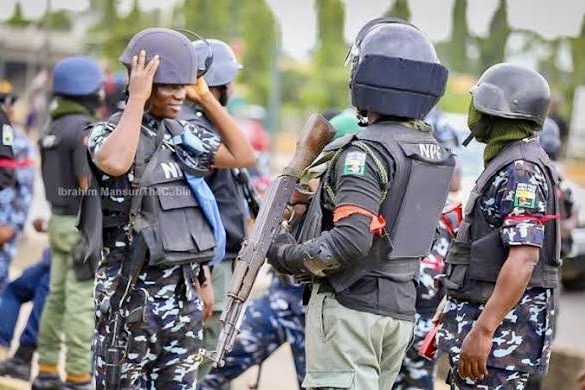
The seeds of this crisis were sown years ago when the Ogun State Government entered into an agreement with Zhongshan Fucheng for the management of an export processing zone. However, the relationship between the two parties soured, leading to the termination of the contract. Zhongshan claimed that this termination was not only abrupt but also unjustified, resulting in significant financial losses. The situation spiraled out of control when Zhongshan accused the Ogun State Government of resorting to draconian measures, including the use of police force to intimidate and physically assault its officials.
According to Zhongshan, the Nigerian authorities, under the directive of the Ogun State Government, unlawfully detained and brutalised its Chief Financial Officer, Wenxiao Zhao, and other top officials of its subsidiary, Zhongfu Nigeria Ltd. The company alleges that these actions were part of a broader scheme to force its personnel out of the country and prevent them from seeking legal redress. In response to these alleged violations, Zhongshan sought justice through the French legal system, leading to the court-ordered seizure of Nigerian assets abroad.
The Legal Battle and Its Implications
The arbitral tribunal awarded Zhongshan a staggering $74.5 million in compensation, a sum that the Ogun State Government has allegedly refused to pay. The company’s decision to pursue the matter in a French court, resulting in the seizure of Nigerian government assets, marks a significant escalation in the dispute. The legal ramifications of this case are profound, as it sets a precedent for how international corporations can hold sovereign states accountable for breaches of contract and violations of human rights.
The Nigerian government’s failure to honour the arbitral award has exposed the country to severe reputational damage. The seizure of the presidential jets, two of which were recently put up for sale, and the Airbus 330, which was purchased but not yet delivered, is a stark reminder of the high cost of governmental irresponsibility. It raises critical questions about the rule of law in Nigeria and the extent to which state governments are held accountable for their actions.
Human Rights Violations and Diplomatic Fallout
At the heart of this dispute are the serious allegations of human rights violations. Zhongshan’s claims of physical assault and unlawful detention of its officials by Nigerian police officers, acting on orders from the Ogun State Government, have cast a dark shadow over the country’s human rights record. The company’s statement of claim paints a harrowing picture of the treatment meted out to its personnel, with Zhao recounting the physical and psychological trauma he endured during his detention.
These allegations have sparked outrage within the international community, with human rights organisations calling for a thorough investigation into the conduct of the Nigerian authorities. The diplomatic fallout from this incident is already being felt, as Nigeria’s image as a law-abiding nation is being called into question. The country’s ability to attract foreign investment is likely to be severely impacted, as potential investors may now view Nigeria as a risky and unpredictable destination.
Ogun State Government’s Defense: A Case of Misinformation?
In response to the allegations, the Ogun State Government has distanced itself from the incident, claiming that the events in question occurred before the current administration took office. The Special Adviser to the Ogun State Governor on Media and Strategy, Kayode Akinmade, stated that the present administration knows nothing about the claims made by Zhongshan and therefore cannot respond to them. This statement, however, does little to absolve the government of responsibility, as the underlying issue revolves around the actions of state authorities, irrespective of the change in administration.
The Ogun State Government’s attempt to dissociate itself from the dispute raises concerns about transparency and accountability. If the current administration is indeed unaware of the actions taken by its predecessors, it suggests a lack of continuity and oversight within the government. This, in turn, could have far-reaching implications for governance in Nigeria, as it underscores the need for more robust mechanisms to ensure that state actions are consistent with the rule of law, regardless of changes in leadership.
The Nigerian Government’s Response: A Diplomatic Tightrope
The Nigerian government now finds itself walking a diplomatic tightrope as it seeks to resolve this crisis without further damaging its international reputation. The seizure of the presidential jets, particularly the Airbus 330 needed for President Bola Tinubu’s scheduled meeting with French President Emmanuel Macron, has placed the government in an untenable position. In a rare gesture of goodwill, Zhongshan agreed to lift the seizure on the Airbus 330, allowing it to be used for the president’s trip. However, this concession does little to mitigate the broader implications of the dispute.
The government’s initial silence on the matter has been widely criticised, with many accusing it of downplaying the severity of the situation. The lack of a swift and decisive response has fuelled speculation that the government is either incapable or unwilling to address the underlying issues. This perceived inaction could embolden other foreign entities to take similar legal actions against Nigeria, further eroding the country’s standing on the global stage.
Next Steps: Seeking Resolution or Escalation?
As the crisis unfolds, the Nigerian government is faced with a critical decision: whether to seek an amicable resolution with Zhongshan or to escalate the matter further by challenging the French court’s ruling. The latter option, while potentially preserving the government’s pride, risks deepening the country’s diplomatic isolation and further damaging its economy.
A more pragmatic approach would involve engaging in sincere negotiations with Zhongshan to reach a settlement that addresses the company’s grievances while minimising the financial and reputational costs to Nigeria. This would require the government to acknowledge its role in the dispute and take concrete steps to prevent similar incidents from occurring in the future.
Moreover, the Nigerian government must urgently address the broader issues of governance and human rights that this case has brought to the fore. This includes ensuring that state governments are held accountable for their actions and that foreign investors are protected from arbitrary and unjust treatment. Failure to do so could have long-lasting consequences for Nigeria’s ability to attract and retain foreign investment, which is crucial for the country’s economic development.
Public and International Reactions: A Test of Nigeria’s Global Standing
The public and international reactions to this dispute will play a crucial role in shaping its outcome. Within Nigeria, there is likely to be significant public outrage over the government’s handling of the matter, particularly given the high-profile nature of the assets that have been seized. The government’s ability to manage public opinion will be key to maintaining domestic stability in the face of growing discontent.
On the international stage, Nigeria’s allies and partners will be closely monitoring the situation. The country’s response to the crisis will be seen as a litmus test of its commitment to upholding the rule of law and respecting the rights of foreign investors. A failure to address the issues raised by Zhongshan could result in a loss of confidence in Nigeria as a reliable partner, with potential consequences for its diplomatic and economic relations.
A Turning Point for Nigeria?
The dispute between Zhongshan Fucheng and the Ogun State Government represents a critical juncture for Nigeria. The outcome of this case will have far-reaching implications for the country’s governance, human rights record, and international reputation. As the government grapples with the fallout from this crisis, it must take decisive action to restore confidence in its ability to uphold the rule of law and protect the rights of all individuals and entities within its borders.
This incident should serve as a wake-up call for Nigeria to reassess its approach to foreign investment and contractual agreements. The government must ensure that state authorities are held accountable for their actions and that foreign investors are treated with the respect and fairness they deserve. Only by addressing these underlying issues can Nigeria hope to emerge from this crisis with its reputation intact and its future prospects secured.
Public reaction to the ongoing dispute between Zhongshan Fucheng Industrial and the Ogun State Government, particularly the seizure of Nigerian presidential jets, has been a mix of outrage, concern, and embarrassment.
National Outrage and Public Embarrassment
Many Nigerians view the situation as a national embarrassment, with widespread criticism aimed at the government’s handling of the matter. The fact that the country’s presidential jets were seized by a foreign court has been seen as a significant blow to Nigeria’s international reputation. Public sentiment on social media platforms has been overwhelmingly negative, with many questioning how such a situation was allowed to escalate to this point.
Condemnation of Government Incompetence
Critics have lashed out at the Ogun State Government for what they describe as incompetence and negligence. The public is particularly disturbed by the allegations that the state government used the police to unlawfully detain and brutalize the Chinese firm’s officials. This has sparked a broader debate about the abuse of power and corruption within Nigerian governance structures. The alleged human rights violations have only added fuel to the fire, leading to calls for accountability and reform.
Diplomatic Concerns
There is also growing concern about the diplomatic implications of this incident. Some commentators and international relations experts have warned that this could strain Nigeria’s relations with France and other international partners. The fact that a foreign court took such drastic measures indicates a significant level of distrust in Nigeria’s legal and governance systems, which could have long-term repercussions for foreign investment in the country.
Support for Zhongshan Fucheng Industrial
A segment of the public, particularly those critical of the Nigerian government’s treatment of foreign investors, has expressed sympathy for Zhongshan Fucheng Industrial. They argue that the company’s decision to pursue legal action abroad and the subsequent seizure of assets was justified, given the alleged abuses they suffered at the hands of the Nigerian authorities. This perspective highlights the broader issue of how Nigeria treats foreign investors, which could have serious implications for the country’s economy.
Political Fallout
Politically, the situation is creating tension within Nigeria. Opposition parties and activists have used this incident to criticize the current administration, accusing it of failing to protect Nigeria’s sovereignty and international standing. The release of one of the seized jets for President Bola Tinubu’s trip to France has been met with skepticism, with some questioning whether this signals a capitulation to foreign powers.
Call for Judicial and Governance Reforms
There is a growing call for judicial and governance reforms to prevent such incidents from occurring in the future. Many believe that the dispute with Zhongshan Fucheng Industrial and the resulting international embarrassment are symptoms of deeper systemic issues within Nigeria’s legal and political frameworks.
Overall, the public reaction reflects deep dissatisfaction with the current state of governance in Nigeria and a strong demand for accountability and reform. The incident has not only exposed weaknesses in Nigeria’s dealings with foreign investors but has also sparked a broader conversation about the need for more transparent and effective governance.