Tinubu’s latest assent keeps the 2025 capital budget open until December 31, placing an old spending plan alongside the 2026 budget and reopening questions about execution, accountability and Nigeria’s elusive single budget cycle.
Abuja, Nigeria — The Budget Year That Would Not End
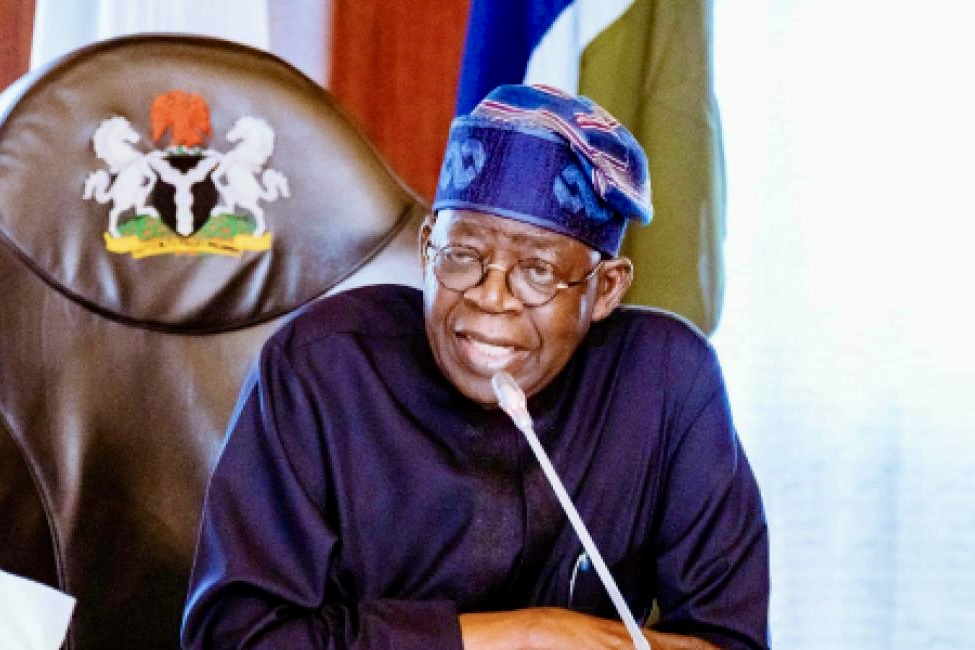
President Bola Ahmed Tinubu has signed legislation extending the implementation of the 2025 federal budget until December 31, 2026.
The development is important for a reason that goes beyond the extra three months granted to ministries, departments and agencies.
It means a capital spending framework originally designed for 2025 will remain legally available deep into another financial year, even though Nigeria already has a separate 2026 Appropriation Act in force.
The State House announced on September 30 that Tinubu had assented to the Appropriation (Amendment) (No. 4) Bill, 2025, after both chambers of the National Assembly passed the amendment on September 29. The Presidency said the extension would give MDAs more time to complete ongoing capital projects and ensure that already appropriated funds are utilised without interrupting critical programmes.
The critical word in the legislative record is capital.
The Senate described the measure as the fourth extension of the capital component of the 2025 Appropriation Act. It said the latest amendment moved the deadline from September 30 to December 31, 2026.
That distinction is important..
The extension does not amount to a fresh N54.99 trillion budget being handed to government for another year. It keeps existing capital appropriations available for implementation within the amended legal timeframe.
The 2025 budget, signed by Tinubu on February 28, 2025, authorised total expenditure of N54.99 trillion.
The real story, then, is not that Nigeria has created another N54.99 trillion spending plan.
It is that the capital projects inside an old budget still require more time to reach completion.
And this is where the latest extension touches one of the oldest weaknesses in Nigeria’s public finance system.
Four Extensions, One Unfinished Problem
The history of the 2025 capital budget now tells its own story.
Its original implementation deadline was December 31, 2025.
It was subsequently extended to March 31, 2026.
Another extension moved the deadline to June 30.
A third moved it to September 30.
Now, a fourth extension has pushed the deadline to December 31, 2026.
In practical terms, the capital component of a 2025 appropriation has been given another full year beyond its original deadline.
Lawmakers say the reasons are straightforward.
Senate Leader Opeyemi Bamidele argued that capital projects had not reached optimal levels despite releases to MDAs. He said the additional period would help complete projects already funded and prevent unfinished works from being abandoned. The Senate also said the measure is not intended to introduce new projects.
Bamidele described the extension as “compelling and pragmatic”.
The Presidency has made essentially the same case.
Its argument is that money already appropriated should not be stranded while projects already under way are left incomplete.
That is the administrative case for the extension.
The fiscal question is different.
Why did a budget approved for 2025 still require a fourth extension in 2026?
The Number That Helps Explain the Delay
There is an important clue in Tinubu’s own December 2025 presentation of the 2026 budget.
At the time, the President acknowledged that implementation of the 2025 budget had been affected by “transition and competing execution demands”.
He disclosed that only N3.10 trillion, which he described as about 17.7 per cent of the 2025 capital budget, had been released by the third quarter of 2025. He said the government had concentrated on completing priority projects carried over from the 2024 capital budget.
That disclosure is significant because it moves the debate away from the language of merely extending deadlines.
It points towards the execution chain itself.
A budget can be approved.
A project can appear in the appropriation.
Funds can be released.
A contract can be awarded.
Yet a project can still remain incomplete because of procurement delays, mobilisation problems, administrative bottlenecks, contractor performance, cash-flow constraints or other execution issues.
The June 2026 extension was itself justified on grounds including project delays, procurement bottlenecks and administrative constraints.
The September extension therefore did not emerge from nowhere.
It was the latest stage in a problem that had already been visible for months.
The Promise of a Single Budget
The sharpest question hanging over the September extension comes from the President’s own budget reform message.
When Tinubu presented the 2026 budget in December 2025, he declared that Nigeria would move away from overlapping budget cycles.
His statement was unusually explicit:
“From April, Nigeria will operate on a single budget backed by a single revenue cycle — no overlaps, no excuses, no rollovers.”
He also said previous capital liabilities would be closed by March 31, 2026.
The government subsequently enacted the 2026 Appropriation Act. The State House said in April that the N68.32 trillion 2026 budget would come into force from April 1. At the same time, Tinubu signed an amendment extending the 2025 capital budget from March 31 to June 30.
By June, the deadline moved again to September.
Now it has moved to December.
The result is a direct factual tension between the timetable promised in December 2025 and the position reached in October 2026.
The government is not hiding the overlap.
The legal amendment itself creates it.
What This Means for Nigeria’s Budget System
Nigeria’s financial year is January 1 to December 31 under the Financial Year Act, while the Constitution provides for annual estimates and appropriation through the National Assembly. The Constitution also requires legislative authorisation before money can be withdrawn from the Consolidated Revenue Fund for ordinary expenditure.
That means an extension passed by both legislative chambers and assented to by the President is not, by itself, evidence of spending outside the law.
The issue is what repeated extensions do to the discipline and visibility of the budget process.
A financial year is supposed to provide a clear frame within which government can set targets, release resources, execute projects and measure results.
When capital projects repeatedly move from one year into another, that measurement becomes more complicated.
A road counted as a 2025 project may still be under execution in 2026.
A contract described as part of one annual budget may generate expenditure, obligations and physical work across more than one fiscal cycle.
That does not automatically mean the project is badly managed.
Some major infrastructure projects naturally take longer than a year.
The problem is knowing the difference between a legitimate multi-year project and an appropriation that repeatedly needs more time because implementation has not moved as planned.
That distinction cannot be established from the extension announcement alone.
It requires project-by-project disclosure.
The Accountability Test Now Begins
The strongest test of the new law will not be the President’s signature.
It will be the information government publishes between now and December 31.
The Fiscal Responsibility Act requires the Federal Government, through the Budget Office, to monitor and evaluate implementation of the annual budget and report quarterly on performance. It also provides for publication of budget-execution information and a consolidated execution report showing performance against physical and financial targets.
That creates a practical accountability checklist.
How much of the 2025 capital budget remains unutilised?
How much has been released?
How much has actually been paid?
How much has been contractually committed?
Which projects are at 25 per cent completion, 50 per cent or 90 per cent?
Which projects qualify for the extension because they are genuinely close to completion?
Which projects have barely started?
Which contracts have required variations or revised costs?
And, crucially, which projects are also reflected in the 2026 appropriation?
Those questions matter because “utilising appropriated funds” is not the same as proving that public money has translated into completed infrastructure.
The Overlap With the 2026 Budget
The timing makes the issue even more important.
The 2026 budget was enacted with N68.32 trillion in aggregate expenditure and entered into force from April 1, according to the State House.
The 2025 capital budget is now also alive until December 31.
For much of 2026, therefore, MDAs have operated within a system where the current budget exists alongside capital allocations inherited from the previous one.
That is precisely the kind of overlap the President said he wanted to eliminate.
There is a legitimate administrative explanation.
The government may argue that abandoning an advanced project simply because the calendar changes would destroy value, waste funds and leave contractors unpaid.
There is also a legitimate accountability concern.
Repeated extensions can make it harder for citizens, legislators, auditors and analysts to establish exactly when a project was supposed to be completed, how much it was supposed to cost and which year should carry the expenditure.
Those are not competing facts.
Both can be true at once.
The Hidden Risk Is Not the Extension
The most important risk may not be that the government has granted another three months.
It is what happens inside those three months.
If the extension is used to finish projects already funded and substantially under way, the extra time can serve a clear administrative purpose.
If it simply becomes another deadline at the end of another cycle, the deeper problem remains unresolved.
The government itself has already identified the underlying challenge.
In December 2025, Tinubu said overlapping budgets had been associated with abandoned projects, inherited obligations and multiple budgets competing for the same inflows. He argued that the system undermined planning and governance.
The fourth extension puts that reform promise under a harder test.
This is now less about whether Nigeria has enough laws to authorise spending.
It is about whether the country can execute those laws within predictable periods.
What Nigerians Should Watch Before December 31
The new deadline creates one more window.
It should also create one more public record.
Before the year ends, Nigerians should be able to see which projects were saved by the extension, how much money remained available, how much was spent, what physical progress was achieved and what obligations, if any, survive beyond December.
The Budget Office already publishes budget documents and implementation reports, including materials for the 2025 and 2026 budget cycles.
That reporting trail is essential.
Because the real measure of a budget is not how long lawmakers can keep it legally alive.
It is whether the projects and services attached to it are delivered, accounted for and closed within a system that citizens can understand.
Nigeria’s 2025 capital budget has now been given until December 31, 2026.
That is the fourth extension.
The question left hanging over the new deadline is simple:
Will this be the final administrative bridge to project completion, or another bridge to another extension?
Follow us on our broadcast channels today!
- WhatsApp: https://whatsapp.com/channel/0029VawZ8TbDDmFT1a1Syg46
- Telegram: https://t.me/atlanticpostchannel
- Facebook: https://www.messenger.com/channel/atlanticpostng