The police say their preliminary inquiry found no evidence of extortion. But the driver whose allegation triggered the investigation has not yet been interviewed, leaving the central claim without his formal statement and raising questions about what evidence will ultimately settle the dispute.
The Oyo State Police Command is investigating an alleged extortion incident involving two officers of the Federal Highway Patrol Unit along the Idi-Ayunre/Ijebu-Ode Expressway in September 2026.
The case has produced an unusual split in the evidence.
The police have questioned the two officers and taken statements under caution. Their preliminary inquiry, according to the command, has found no evidence that the officers extorted the commercial bus driver.
But the man who made the allegation has not yet appeared before investigators.
That means the police have reached a preliminary finding before obtaining a formal statement from the person at the centre of the complaint.
It is this unresolved gap, rather than the allegation alone, that now makes the case worth watching.
The command said the investigation was ordered by the Commissioner of Police to establish what happened during the encounter and determine whether the allegation against the officers was supported by evidence.
The statement was issued on Thursday, October 1, by the command’s Police Public Relations Officer, DSP Ayanlade Olayinka.
The Encounter on the Expressway
According to the police account, the incident began when a commercial bus driver allegedly overtook a truck that Federal Highway Patrol officers were stopping.
The manoeuvre, the command said, almost caused a serious road crash.
The driver then reportedly stopped after sighting a Safer Highway Patrol team ahead.
An officer identified as ASP Oyetade Olayinka approached the bus and requested the driver’s licence and other relevant vehicle documents.
The police said the driver refused to produce them.
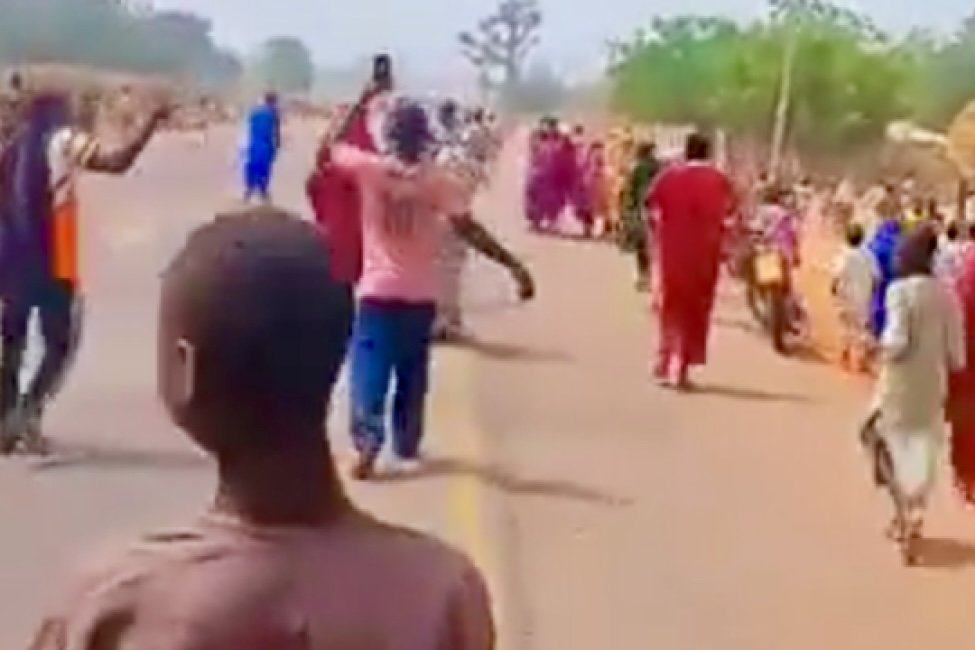
At that point, the incident shifted from a traffic encounter into a confrontation that drew the attention of people outside the immediate police operation.
The driver contacted the chairman of Onitsha Garage, identified by the command as Mr BJ.
He arrived with other members of the park leadership in a Toyota Sienna bus.
According to the police, the arrival of the group increased activity around the scene and required officers from both the Safer Highway and Federal Highway Patrol teams to work together to control the situation.
Their stated priority was to prevent further disruption to traffic and protect lives and property.
The driver, meanwhile, began recording the incident with his mobile phone.
The police said he made allegations against the officers while the encounter was being recorded.
The chairman of the park later intervened and appealed to the officers as efforts were made to settle the immediate dispute.
What the Police Investigation Found
The allegation was serious enough to trigger an internal investigation.
The two officers were invited to Police Headquarters, interviewed and asked to make statements under caution.
The command said its preliminary investigation found no evidence that the officers extorted the driver.
That finding is important.
But so is the word preliminary.
The command has not said that the case is closed. Instead, it says further investigative steps are continuing.
The leadership of Onitsha Garage has also been invited to assist.
According to the command, the park leaders undertook to produce the driver so that he can make his own statement and explain the basis of his allegation.
Until that happens, one of the most important pieces of evidence remains outstanding.
That does not establish that the allegation was false.
It also does not establish that the officers committed extortion.
It means the competing accounts have not yet been fully tested.
The Missing Piece May Be in the Phone
The most obvious piece of evidence may be the mobile-phone recording reportedly made by the driver.
A recording could potentially establish far more than a verbal account given after the event.
Depending on what was captured, it could show the officers’ words, the demands made at the scene, the presence of the park officials, the sequence of events and the condition of the encounter before and after the chairman arrived.
It could also show what was not said.
For investigators, the crucial question is therefore not simply whether the driver recorded the incident.
It is whether the original recording still exists and whether it contains the part of the encounter relevant to the extortion allegation.
The timing, continuity and authenticity of the video would matter.
So would the evidence of people who were physically present.
Mr BJ and the other members of the park leadership may be particularly important because the police say they arrived before the dispute was resolved.
Their accounts could help establish what they personally saw and heard.
A Traffic Stop Is Not Automatically an Extortion Case
There is another distinction that should not be lost in the controversy.
The mere fact that police officers stopped a commercial vehicle, asked for documents or investigated an apparent traffic incident does not by itself establish extortion.
The Nigeria Police Act 2020 gives police officers powers to stop and search people and vehicles in specified circumstances, including where reasonable grounds for suspicion exist. It also requires safeguards around the conduct of searches, including identifying the officer and explaining the object and grounds of a search.
The law also provides for search records containing details such as the vehicle, purpose, grounds, date, time, location, result and identity of the officer where a search is conducted.
That distinction matters in this case.
The police allegation against the driver concerns a dangerous overtaking manoeuvre and subsequent refusal to produce vehicle documents.
The driver’s allegation concerns what he says happened after the intervention.
Those are separate questions.
Investigators must therefore establish not only whether the initial stop was justified, but also whether anything unlawful happened during the interaction.
Why the Location Matters
Idi-Ayunre is in Oluyole Local Government Area of Oyo State and sits at the Oyo end of the Ibadan-Ijebu-Ode corridor.
The route is one of the major transport corridors linking Ibadan and Ijebu-Ode.
In August 2026, the Federal Government formally flagged off the reconstruction of the 56.5-kilometre Ibadan-Ijebu-Ode Road at the Idi-Ayunre end, highlighting the strategic importance of the corridor.
That makes the conduct of enforcement teams on the road especially consequential.
The Federal Highway Patrol and Safer Highway teams are not ordinary roadside groups. The Nigeria Police Force identifies both among the police units deployed for highway stop-and-search and road safety operations. The Force has also instructed personnel on such operations to remain polite, civil and firm, while maintaining its ban on conventional roadblocks.
The success of such operations ultimately depends on a simple exchange of trust.
Drivers must believe that lawful enforcement will not become an opportunity for illegal payment.
Police officers must be able to enforce the law without every disputed stop automatically becoming proof of misconduct.
The Oyo Police Command Has a Recent Test Case
The latest controversy also comes against a backdrop of the Oyo Command publicly emphasising the need to prevent extortion during road enforcement.
In August, the command launched Operation Velvet to improve compliance with road regulations and check vehicle documentation.
The Commissioner of Police, according to the command’s public statement, specifically warned that the exercise must not become an avenue for harassment or extortion and said personnel found attempting to exploit motorists could face disciplinary action.
That makes the current investigation more than a dispute involving one driver and two officers.
It is also a test of whether the command’s stated commitment to accountability works when the allegation is made against personnel carrying out enforcement duties.
What Investigators Still Need to Establish
The unanswered questions are now fairly clear.
Was the driver’s alleged dangerous overtaking manoeuvre witnessed by the officers or captured on camera?
What exactly did ASP Oyetade Olayinka ask the driver to produce?
Why did the driver refuse?
What happened immediately after he contacted the chairman of Onitsha Garage?
What exactly did the driver say while recording?
Does the recording contain the complete encounter?
Were any demands for money made?
If money was demanded, by whom, in what words and for what stated purpose?
Were any documents seized or retained?
Was a formal search conducted?
Were other motorists or independent witnesses present?
And, critically, why has the driver not yet given investigators his own formal statement?
These questions should be answered before the public is asked to treat the matter as settled.
Accountability Requires Evidence From Both Sides
The police command deserves scrutiny for how it handles the complaint.
But scrutiny does not mean presuming guilt.
Equally, a preliminary police finding of no evidence of extortion should not be treated as the final word while the complainant’s formal account remains outstanding.
The Police Service Commission maintains a public complaints and disciplinary structure for allegations concerning police personnel, including public complaints and matters referred for investigation or review.
The Nigeria Police Force has also continued to use internal disciplinary mechanisms for alleged breaches of professional conduct. In April 2026, the Force said 167 senior officers were facing disciplinary review over alleged professional breaches and related offences.
The principle is straightforward.
An allegation should be investigated.
An officer should not be condemned without evidence.
A complainant should not be dismissed without being heard.
And a preliminary finding should remain preliminary until the outstanding evidence has been tested.
The Real Test Is What Happens Next
For now, the Oyo Police Command has produced one side of the story in greater detail than the other.
The officers have been interviewed.
Park leaders have been contacted.
The police have stated their preliminary conclusion.
The driver is still awaited.
Until his statement is taken and the reported recording, witness accounts and any documentary trail are examined together, the case remains incomplete.
The most revealing part of the investigation may therefore come after the initial headline has faded.
Because the real question is no longer simply whether two officers extorted a driver.
It is whether the investigation can produce enough independently testable evidence for the public to understand exactly what happened on that stretch of the Idi-Ayunre/Ijebu-Ode road.
That is the standard an accountability process should meet.
And that standard should apply equally to the officers and the man who accused them.
Follow us on our broadcast channels today!
- WhatsApp: https://whatsapp.com/channel/0029VawZ8TbDDmFT1a1Syg46
- Telegram: https://t.me/atlanticpostchannel
- Facebook: https://www.messenger.com/channel/atlanticpostng