The reported arrest of OK Movement coordinator Elijah Noah after a last-minute police ban on an Independence Day march has exposed a difficult public-safety question: where does legitimate crowd control end and unlawful interference with peaceful assembly begin?
Uyo, Akwa Ibom — A planned Independence Day political march in Uyo has ended in a confrontation between supporters of the Obi-Kwankwaso movement and the police, with reports of tear gas being deployed and the movement’s Akwa Ibom coordinator, Elijah Noah, arrested.
The incident is now drawing attention beyond the politics of the 2027 election because the sequence of events raises a more fundamental public-safety question: what happened between the police decision to cancel the procession and the reported detention of one of its organisers?
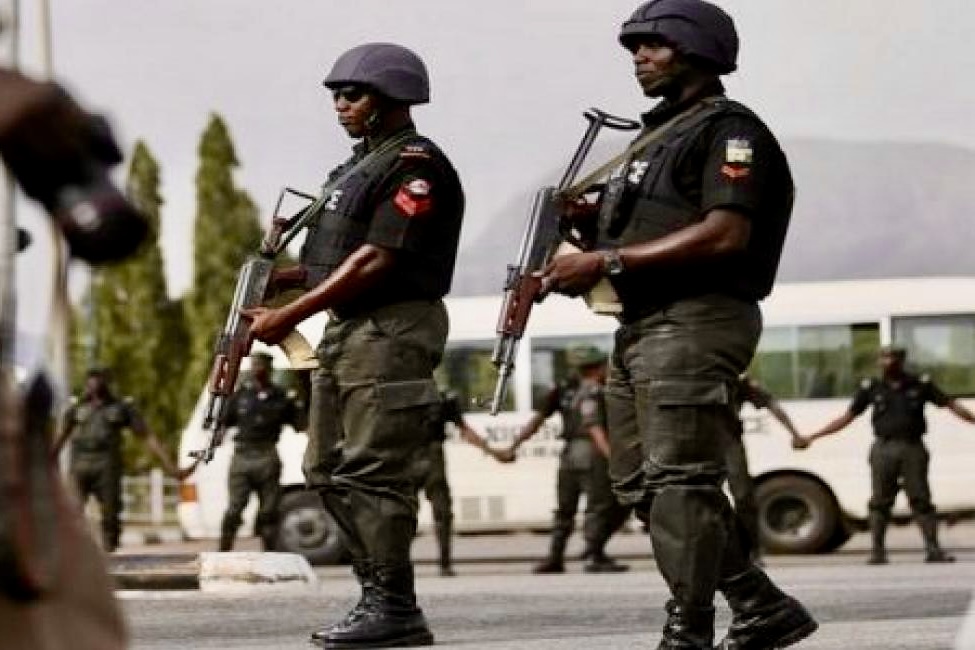
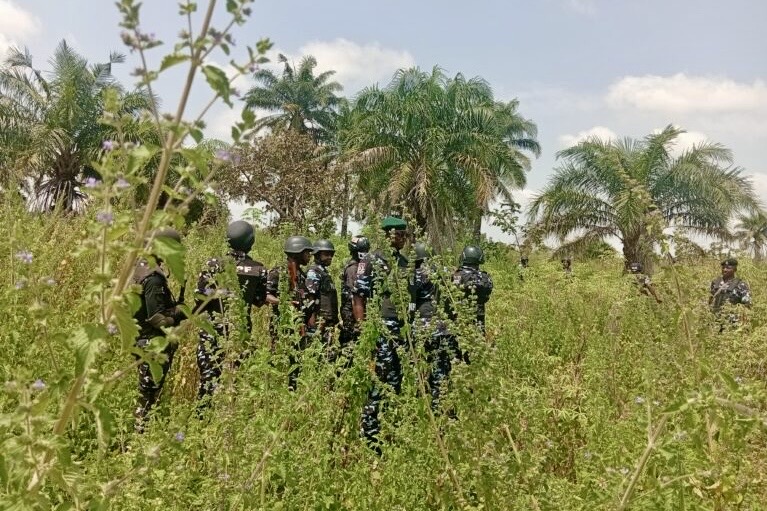
The Akwa Ibom State Police Command announced on September 30 that all political rallies, meetings, processions and related public activities scheduled for October 1 were to be rescheduled. The Command said intelligence indicated that some people intended to exploit political gatherings to cause disturbances and threaten public peace. It directed organisers to liaise with the police for alternative dates.
On Thursday, October 1, supporters of Peter Obi and Rabiu Kwankwaso nevertheless gathered in Uyo for what organisers called a “Two Million Man March”.
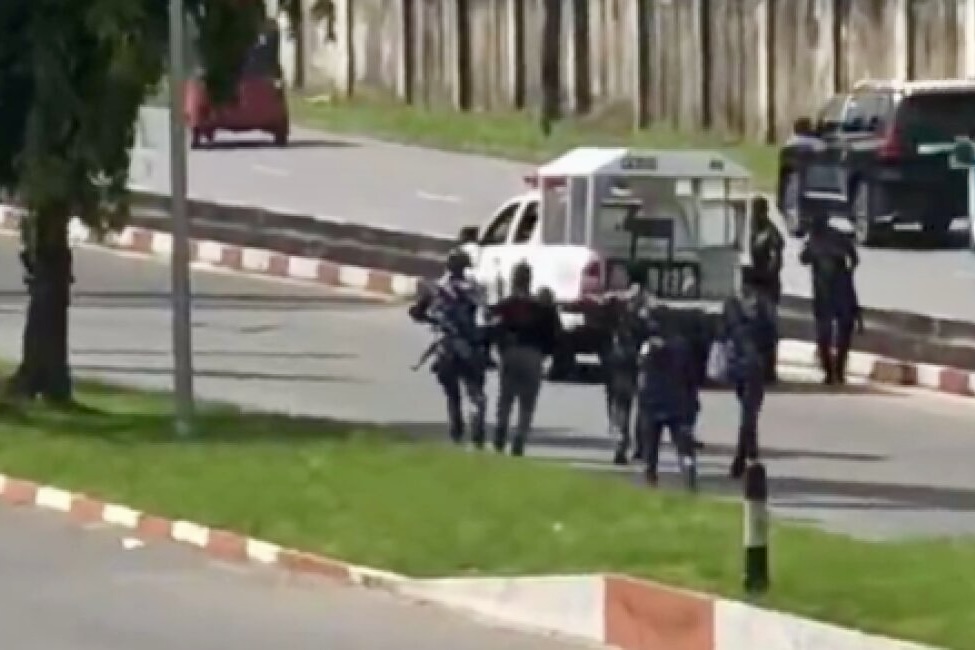
Multiple reports said Noah was arrested during the confrontation. A video circulated online and cited by several news organisations appears to show armed police officers surrounding and moving a man identified as Noah towards a police vehicle. The exact circumstances of the arrest, the officers involved and the offence allegedly suspected have not been publicly explained in the sources reviewed.
Esther Umoh, a media aide to Obi, said: “The OK Movement Coordinator for Akwa Ibom State has been arrested by the Akwa Ibom State Police while marching peacefully.” She also alleged that “Tear gas is being fired at Peter Obi supporters in Akwa Ibom as we speak.”
Those claims remain allegations. A report published by Newsdrop on Thursday said it could not independently confirm either the arrest or the reported use of tear gas from the sources it reviewed. No separate police statement specifically confirming Noah’s arrest or explaining any tear-gas deployment was located in the material reviewed for this report.
The police order came first
The chronology is important.
The Command’s September 30 statement was not directed at the Obi-Kwankwaso movement alone. It covered political parties, groups, associations and other stakeholders across Akwa Ibom.
The police said credible intelligence suggested scheduled political activities could be exploited to create disturbances, cause a breakdown of law and order or endanger members of the public.
The Command described the measure as “purely precautionary” and “non-partisan”. It instructed affected organisations to propose alternative dates.
That distinction is important because the public record presently shows two competing explanations for what happened in Uyo.
The official public explanation centred on intelligence, public safety and the risk of disorder.
The organisers have offered a more specific account.
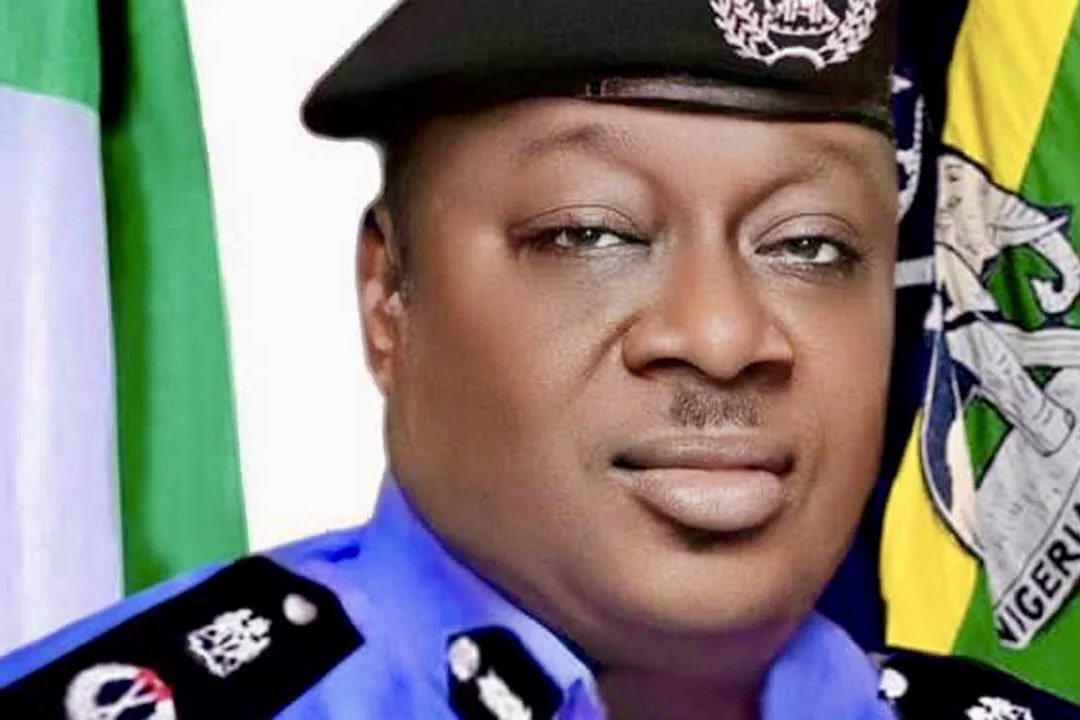
Dr Benjamin Smith, the Akwa Ibom State Director of the Obidient Movement, said organisers met Commissioner of Police Baba Mohammed Azare on September 29. According to Smith, the commissioner told them the police would not have enough personnel to secure a two-million-person procession on a day when the Peoples Democratic Party was also expected to hold political activities in the state.
Smith said the police were concerned that simultaneous political events could create a clash.
According to his account, the commissioner told organisers: “I can’t approve two political parties to clash, which may result in a security breach.”
The police statement issued publicly on September 30 did not refer specifically to insufficient manpower or a PDP clash. It referred instead to intelligence pointing to possible disturbances and threats to public peace. Smith’s account of the September 29 meeting has not been independently verified by Atlantic Post.
That gap deserves an explanation.
If the real operational problem was inadequate manpower and competing political events, the public should know.
If new intelligence emerged indicating a more serious threat, the police should also explain, at least in broad terms, what changed between the earlier security arrangements and the blanket October 1 directive.
Those questions are central to public confidence in policing.
The organisers say they had spent millions
Smith said the organisers had spent more than ₦20 million on mobilisation, branding and logistics across the state’s 31 local government areas.
He described the cancellation as an afterthought and said the movement had previously planned the event on the basis of police engagement.
Smith also said a similar Independence Day solidarity march had been held in Akwa Ibom in 2022 without a security breach.
“We want Nigerians to know that the police have violated the Police Act,” he said, adding that the action violated the constitutional right to freedom of assembly.
The ₦20 million figure is the organisers’ estimate, not an independently audited figure.
The more important issue is what happened to the security plan after the police and organisers had already entered into discussions about the event.
There is presently insufficient public evidence to establish whether the organisers had received a formal approval, whether that approval was subsequently withdrawn in writing, what conditions were attached to it, or precisely when those conditions changed.
That paperwork could become significant if the dispute enters the courts.
What does Nigerian law say about an assembly?
Nigeria’s Constitution provides in Section 40 that every person is entitled to assemble freely and associate with other persons.
That right is not absolute.
Section 45 permits laws that restrict rights under Sections 37 to 41 where the restrictions are reasonably justifiable in a democratic society in the interests of defence, public safety, public order, public morality or public health, or to protect the rights and freedoms of others.
The Nigeria Police Act 2020 also places public safety and public order within the police mandate. Section 83 states that the police are responsible for maintaining and securing public safety and public order and must uphold constitutional rights and treat people fairly regardless of their political beliefs or affiliations. The same section provides that where a person or organisation notifies the police of an intention to hold a rally or procession, the police officer responsible for the area shall mobilise personnel to provide security cover.
There is another important legal marker.
In Inspector-General of Police v All Nigeria Peoples Party, decided by the Court of Appeal in 2007, the court held that the requirement for a police permit for rallies or processions under the then Public Order Act was unconstitutional. The case remains a major reference point in discussions about assembly and protest rights in Nigeria.
But the legal question in Uyo is more complicated than whether police can issue a “permit”.
The present dispute concerns a police command withdrawing or suspending political activity for a particular date on security grounds, followed by an alleged enforcement operation.
The crucial questions are whether the decision had a lawful basis, whether it was necessary and proportionate, whether organisers were given a meaningful alternative and whether officers acted within their powers when the gathering continued.
Those are questions ultimately capable of judicial determination.
Tear gas changes the public-safety calculation
A peaceful political gathering can become dangerous. Equally, the method used to disperse a crowd can create its own danger.
The United Nations guidance on less-lethal weapons says force must meet strict requirements of necessity and proportionality. It treats tear gas as a weapon with wide-area effects and calls for particular restraint because of its inherently indiscriminate nature. The guidance says tear gas should be used only in response to widespread violence when less-targeted measures cannot contain the threat.
That does not establish what happened in Uyo.
The available reporting does not yet establish whether tear gas was actually fired, who authorised it, how many canisters were used, whether warnings were issued, whether violence had broken out before deployment or whether anyone was injured.
Those are important details.
A tear-gas canister used after widespread violence is one factual scenario.
Tear gas used against a crowd that is merely refusing to leave is another.
The distinction cannot be settled by social-media captions alone.
Then came the arrest
The reported arrest of Noah is the most immediate unanswered question.
Why was he arrested?
Was he suspected of committing an offence?
Was he arrested for disobeying a lawful police order?
Was he detained to prevent a suspected offence?
Or was the arrest connected to the broader confrontation?
The public record reviewed for this report does not answer those questions.
The Constitution protects personal liberty and sets out circumstances in which a person may lawfully be deprived of it. It also provides safeguards for people arrested or detained.
The Police Act allows an officer, in certain circumstances, to arrest without a warrant where there is reasonable suspicion of a plan to commit an offence and the officer believes the offence cannot otherwise be prevented. That power does not remove the requirement for lawful grounds and due process.
That is why the charge sheet, arrest record, station diary entry or police explanation for Noah’s detention would be important documents in establishing what actually happened.
A second dispute complicates the story
There is an additional political layer, though it should not be confused with the public-safety issue.
The Nigeria Democratic Congress recently disowned a 59-member Presidential Campaign Council announced by the OK Movement. NDC National Chairman Cleopas Moses said the structure did not emanate from the party and should be disregarded.
Peter Obi subsequently said publicly that the council had been formed without his approval.
“First, NDC is the political party we all belong to,” Obi said, adding that support groups should support the party rather than assume the party’s role.
The OK Movement rejected the NDC’s position, arguing that it did not require approval from an individual within the party to perform its organisational functions.
That disagreement establishes that the movement and the party have not been entirely aligned over organisational authority.
It does not, by itself, establish why Noah was arrested in Uyo.
Nor does it establish that the police action was connected to the internal dispute.
The two issues should remain separate unless evidence links them.
The unanswered evidence
For the public-safety story to move beyond competing social-media claims, several facts now need clarification.
The police should explain the legal basis for the October 1 shutdown, whether previously granted arrangements were formally withdrawn, what intelligence triggered the decision, and whether the ban applied equally to every political organisation in the state.
The Command should also state whether Noah was arrested, where he was taken, what offence he was suspected of committing and whether he has been released or charged.
The circumstances surrounding the alleged use of tear gas should be equally clear.
Organisers, for their part, should publish any written approval, correspondence, route plan and security agreement they relied upon in proceeding with the march after the police directive.
That evidence would allow the public to distinguish between a legitimate attempt to prevent a potentially dangerous confrontation and a dispute in which the boundaries between security management and political assembly became blurred.
For now, the strongest verified fact is that the police ordered all October 1 political activities in Akwa Ibom to be rescheduled.
The reported arrest and tear-gas deployment are supported by multiple reports and circulating video, but the specific circumstances have not yet been independently established.
That is precisely why Uyo matters.
The real test is not whether police can prevent disorder. They plainly have a public-safety responsibility.
The test is whether the exercise of that responsibility remains transparent, lawful, proportionate and politically neutral when the crowd in front of the officers is supporting a political cause.
On Nigeria’s Independence Day, that question has become bigger than one march.
It is now a question about what the country’s public-safety institutions do when security concerns collide with the right to assemble.
Follow us on our broadcast channels today!
- WhatsApp: https://whatsapp.com/channel/0029VawZ8TbDDmFT1a1Syg46
- Telegram: https://t.me/atlanticpostchannel
- Facebook: https://www.messenger.com/channel/atlanticpostng