Inspector Mercy Bassey died before treatment after a black Toyota Highlander allegedly struck her on the Third Mainland Bridge while she was on route-lining duty for a presidential movement. Nearly four hours later, President Bola Tinubu arrived in Lagos. The driver remains unidentified.
At about 2:25pm on Tuesday, September 29, Inspector Mercy Bassey was doing a job most Lagosians barely notice until something goes wrong.
She was on route-lining duty on the Third Mainland Bridge, reportedly deployed for a presidential movement.
Minutes later, the security operation became a crime scene.
A black Toyota Highlander SUV struck Bassey at the Adekunle intersection, inward Lagos Island, according to a police situation report cited by SaharaReporters and the account supplied for this report.
The vehicle did not stop.
Instead, the driver reportedly accelerated away.
Police officers gave chase but the SUV escaped, leaving an inspector of the Nigeria Police Force critically injured on one of Lagos’s busiest arteries.
Bassey was taken to General Hospital, Ebute Metta.
She died while awaiting treatment.
By early evening, President Bola Ahmed Tinubu had arrived in Lagos after ending his extended working vacation in Europe. Reports put the arrival of the presidential aircraft at the presidential wing of Murtala Muhammed International Airport at about 6:22pm.
The timing gives the tragedy a disturbing dimension.
The officer was reportedly helping secure a route for the President’s movement.
The President’s security operation was still unfolding.
But one of the officers assigned to it was dead.
The unanswered question is not only who was driving
The immediate police objective is straightforward.
Find the Highlander.
Identify its registration number.
Identify its driver.
Recover the vehicle.
Establish exactly how the collision happened.
The Motor Traffic Division has opened an investigation, while detectives are reportedly seeking CCTV footage from Control 5 at Adekunle to trace the vehicle.
That footage could become the most important piece of evidence in the case.
It may establish the exact moment Bassey entered the roadway, the direction from which the SUV came, the speed and movement of other vehicles and whether the driver had any realistic opportunity to avoid the collision.
It could also answer a question that should not disappear beneath the simpler headline of a hit-and-run.
What was the traffic-control arrangement around an officer who was deployed specifically because a presidential movement was taking place?
That is not an allegation against any officer or agency.
It is an operational question.
A proper investigation should determine whether Bassey was standing in a designated position, whether traffic was being held or diverted, what instructions she had received, what other personnel were deployed around the intersection and whether any escort or traffic-control vehicles were present.
Those details matter because route-lining is supposed to create a controlled environment around a VIP movement.
If an officer working that operation can be struck and killed by an unidentified vehicle, the investigation must look beyond the fleeing driver and examine the entire sequence.
The law required the driver to stop
There is little ambiguity about one part of the incident.
Section 26 of the Lagos State Road Traffic Law 2012 states that where an accident causes injury, the driver must immediately stop, provide relevant identification details and, where necessary, take reasonable steps to assist the injured person and obtain medical attention. It also requires the accident to be reported to the police or traffic authority.
The same law also provides that causing death through reckless or dangerous driving is an offence punishable, upon conviction, by up to seven years’ imprisonment.
Those provisions will become relevant only after investigators establish the facts and the applicable offences.
For now, the central allegation is that the driver left the scene without stopping.
That decision potentially transformed a road crash into a criminal investigation involving a death and an unidentified suspect.
Why CCTV now matters so much
The police statement reportedly says investigators are working to obtain CCTV footage from Control 5, Adekunle.
That detail is more significant than it may first appear.
Modern road investigations increasingly depend on digital evidence because vehicles can disappear within seconds while cameras remain behind as witnesses.
The Nigeria Police Force itself has been pushing a more technology-driven approach to investigation.
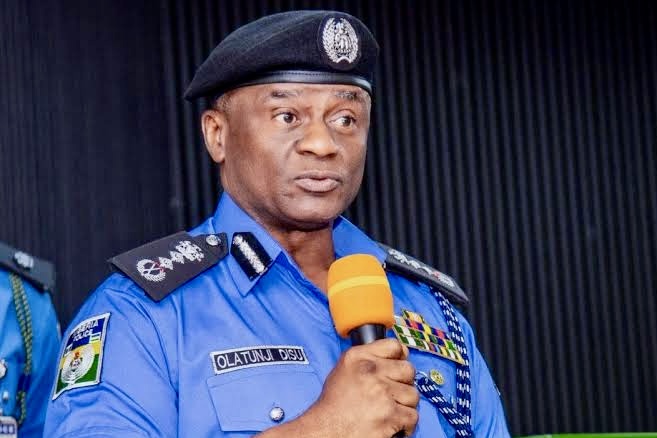
In June, Inspector-General of Police Olatunji Disu said policing increasingly depended on “timely, accurate and actionable data”, while describing the Force’s Crime and Incident Database Centre as an important tool for improving investigations and linking incidents across jurisdictions.
The Bassey case presents a direct test of that philosophy.
Can police move from an eyewitness account of a black SUV to a verified registration number?
Can they establish the vehicle’s movement before and after the collision?
Can they identify the owner even if the person driving was not the registered owner?
Can investigators establish whether the vehicle was privately owned, hired, borrowed or operating under another arrangement?
Those are the questions that CCTV, vehicle-registration records, eyewitness testimony and physical examination of the vehicle should resolve.
The President’s return puts the timing under a brighter spotlight
The presidential connection is not speculative in one important respect.
The Federal Ministry of Information announced before Tuesday that President Tinubu would return to Nigeria through Lagos on September 29 after his European working vacation. The State House separately confirmed that he had departed Paris for Lagos and was expected to arrive at the Murtala Muhammed International Airport later that day.
The supplied police account says Bassey was on route-lining duty for a presidential movement.
Taken together, the timing establishes that a major presidential movement was taking place in Lagos that day.
It does not, by itself, establish precisely which movement Bassey was deployed for or whether any failure in the security arrangement contributed to the collision.
That distinction matters.
An investigative report should not turn coincidence into causation.
But it should ask the questions that the coincidence raises.
A police officer died doing a public duty
There is another dimension to the tragedy.
Bassey was not reportedly involved in a pursuit, gun battle or anti-kidnapping operation.
She died on a road.
She was reportedly performing a routine public-safety function that required her to stand close to moving traffic.
The vulnerability of officers working such assignments is easily overlooked.
A police uniform does not stop a vehicle.
A presidential security detail does not automatically make every officer on the outer edge of the operation safe.
The responsibility for safety therefore extends beyond protecting the VIP.
It includes protecting the police personnel deployed to make that movement possible.
That principle is consistent with the public mandate repeatedly articulated by the government.
When President Tinubu appointed Disu as Acting Inspector-General in February, he told him to “ensure that the safety of lives and property remains our highest priority”.
Bassey’s death now puts those words against a painful real-world test.
What investigators should establish
The strongest investigation into the death should not end with an arrest.
It should reconstruct the scene minute by minute.
Investigators will need to establish where Bassey was positioned, what instructions she had received, the precise traffic pattern at the time, whether motorists had been stopped or diverted, and whether the SUV violated any traffic instruction before the impact.
The vehicle itself may tell part of the story.
A damaged bonnet, windscreen, side panel, mirror or front bumper could provide forensic evidence.
Paint transfer, broken components and debris at the scene can potentially be matched to a recovered vehicle.
The driver’s actions after the collision will also matter.
Police reportedly pursued the SUV but lost it.
That raises a practical question: how far did the vehicle travel after the crash, and how many cameras could have captured it along the escape route?
Lagos has an extensive network of public and private surveillance systems.
The investigation therefore has a window of opportunity that depends heavily on speed.
CCTV is often overwritten.
Vehicle damage can be repaired.
A suspect can move a vehicle, change its appearance or attempt to obscure evidence.
The sooner investigators identify the Highlander, the greater the evidentiary value of the vehicle and the surrounding footage.
The hospital timeline should also be examined
The police account says Bassey was taken to General Hospital, Ebute Metta, where she died while awaiting treatment.
That fact deserves documentation, not speculation.
Investigators should establish the precise time she arrived, the injuries recorded on admission, the treatment available, who received her and when she was declared dead.
The purpose is not to shift attention away from the road crash.
It is to establish the complete chain of events from impact to death.
In fatal-accident investigations, minutes can matter.
So can the quality of the initial scene documentation.
The police say the remains were to be transferred to the Infectious Diseases Hospital Mortuary in Yaba for preservation.
That should allow the relevant medical and forensic records to be preserved alongside the traffic investigation.
The case now has two searches running at once
One search is for the driver.
The other is for an explanation.
Who was behind the wheel?
Where is the Highlander?
What was its registration number?
Was the vehicle properly registered?
Who owns it?
Was the driver the owner?
What exactly did CCTV capture?
Was Bassey’s position consistent with the route-lining instructions given that day?
Were adequate traffic-control measures in place?
And, most importantly, could anything in the operational chain have prevented a police officer assigned to protect a presidential movement from being exposed to a fatal collision?
The first questions concern criminal accountability.
The final questions concern institutional accountability.
They should not be confused.
At publication time, the driver had not been publicly identified and there was no verified finding establishing that any police or traffic-management failure caused the collision.
What is established in the supplied police account is stark enough.
Inspector Mercy Bassey went to work.
She was reportedly protecting a presidential route.
A black SUV struck her.
The driver allegedly fled.
Bassey died.
And the cameras at Adekunle may now hold the crucial evidence that tells Lagos what happened in those few seconds.
That evidence should not be allowed to disappear.