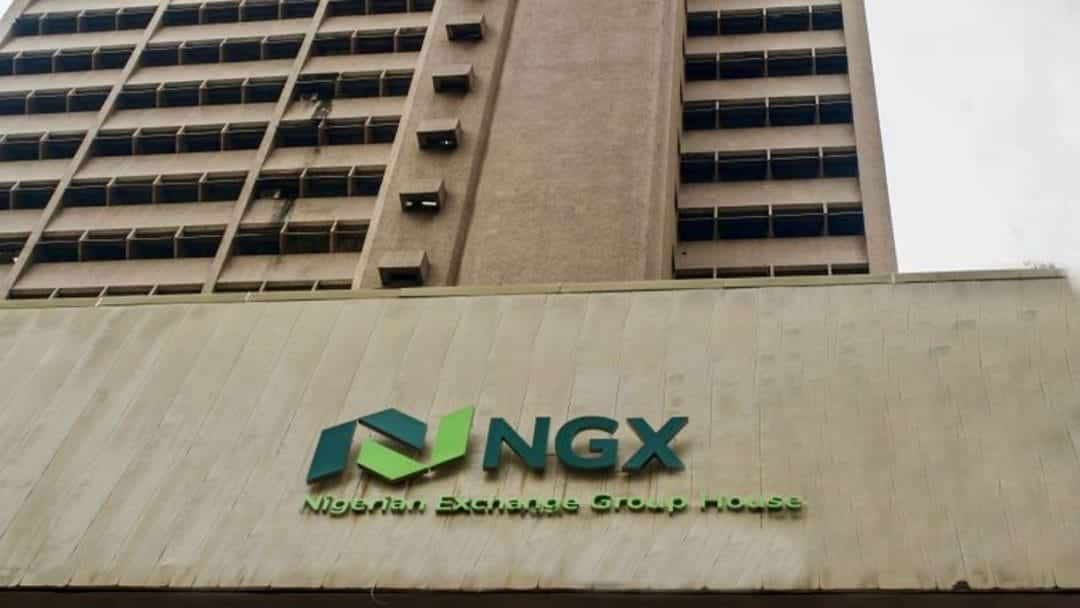
Nigeria’s equities market has suffered a significant N1.4 trillion loss over four weeks, raising concerns about investor confidence and economic stability. The Nigerian Exchange Limited’s capitalisation fell to N65.819 trillion, with declines across most sectors. Although some analysts see potential buying opportunities, uncertainties persist amid global influences and domestic macroeconomic challenges.
LAGOS, Nigeria — In an unprecedented display of market turmoil, Nigeria’s equities arena has been rocked to its core as investor confidence nosedives, resulting in a staggering N1.4 trillion wipeout within a mere four-week span.
The Nigerian Exchange Limited (NGX) now finds itself at a crossroads, with market analysts and seasoned investors alike questioning whether this downturn is a temporary aberration or the harbinger of deeper economic malaise.
A Market in Freefall
The latest figures paint a grim picture: the market capitalisation of listed equities plunged from an impressive N67.193 trillion as of February 28 to a beleaguered N65.819 trillion at the close of last Friday’s trading.
This 2.1 per cent decline, translating to a N1.4 trillion loss, underscores an emerging narrative of investor apathy that has gripped the market for the fourth consecutive week.
Equally alarming is the decline in the all-share index (ASI), which dropped by 2,858.43 points – a 2.7 per cent tumble to 104,962.96 points from a preceding high of 107,821.39 points.
Despite recent signs of easing inflation, as reflected in the Consumer Price Index (CPI) report for February 2025 – which heralded the second consecutive month of a downward trend – optimism remains elusive.
Instead, investors remain gripped by broader macroeconomic uncertainties. Concerns over global financial market volatility, erratic foreign exchange rates, and a shadow of doubt over the direction of Nigeria’s monetary policy have all contributed to this sustained bearish sentiment.
Sectoral Struggles and Stark Contrasts
A closer look at the sectoral performance reveals a bifurcated market landscape. Out of the six major indices, five have registered losses, with the NGX industrial index taking the hardest hit by falling 3.39 per cent.
Heavy sell pressure on industrial giants such as BUA Cement, UPDCREIT, and Cutix Plc has exacerbated the downturn, signalling deep-rooted concerns over Nigeria’s industrial performance amid global supply chain disruptions and fluctuating commodity prices.
Conversely, the NGX consumer goods index managed a modest 0.06 per cent gain, buoyed by slight upticks in stocks like Neimeth, Northern Nigeria Flour Mills (NNFM), NASCON Allied Industries, and Dangote Sugar.
This marginal improvement, however, does little to offset the overarching negative sentiment pervading the market. Financial sectors have not been spared either, as both the NGX insurance and banking indices recorded significant declines of 2.8 per cent and 2.5 per cent respectively.
Notable financial institutions, including Universal Insurance, Sovereign Trust Insurance, FCMB Group, FirstBank HoldCo, and AccessCorp, have all suffered substantial sell-offs in recent trading sessions.
Trading Volumes and Investor Hesitancy
The repercussions of this prolonged market slump are also starkly evident in the trading data. Trading activity has contracted significantly, with the volume of shares traded dipping by 11.5 per cent to 2.90 billion units.
Meanwhile, the total value of transactions tumbled by an eye-watering 24.3 per cent to N48.06 billion. Such a drastic reduction in trading activity is indicative of investors’ growing reluctance to engage in aggressive market participation.
With both month-to-date and year-to-date returns faltering at -2.7 per cent and +2 per cent respectively, it is clear that momentum is waning, and the prevailing uncertainty has left many market participants on the sidelines.
Macroeconomic Uncertainty and Global Influences
The market’s woes are not isolated to domestic factors alone. A confluence of global financial market volatility and evolving monetary policies has further intensified the climate of caution.
Investors are increasingly wary of how external factors—such as fluctuations in global oil prices, international interest rate changes, and geopolitical tensions—might ripple through Nigeria’s financial landscape.
The Central Bank of Nigeria’s (CBN) upcoming policy moves, in particular, are being closely watched by market insiders who fear that any abrupt adjustments could precipitate further market instability.
Expert Opinions: Bearish Today, Bullish Tomorrow?
Despite the pervasive gloom, a silver lining appears on the horizon for those with a long-term investment vision. Analysts at Cowry Asset Management have highlighted that the current market conditions, characterised by an ‘oversold’ state, may in fact present lucrative buying opportunities.
“The ongoing pullback has created an environment where dividend-paying stocks are becoming increasingly attractive,” remarked one analyst, emphasising that improved dividend yields could incentivise a future market rally.
Furthermore, as March trading draws to a close, several market pundits anticipate a strategic repositioning of portfolios ahead of the dividend season.
Historically, this period has been known to unlock capital appreciation and bolster income generation as investors flock towards stocks that offer robust dividend returns.
Meanwhile, analysts at Cordros Capital caution that short-term volatility is unlikely to abate anytime soon. They project continued fluctuations as the market braces for a slew of audited corporate earnings reports and dividend announcements in the coming week.
These financial disclosures will undoubtedly be pivotal in shaping market sentiment, potentially paving the way for a corrective rebound or further downturn.
The Road Ahead: Caution Meets Opportunity
For now, the NGX stands at a critical juncture. While some investors see the current bearish trend as a harbinger of further declines, others believe it is merely a temporary pullback in a fundamentally sound market.
With robust stocks displaying strong fundamentals, resilient earnings growth, and consistent dividend payouts likely to weather the current turbulence better, the debate is set to intensify among market participants.
This dichotomy is emblematic of the broader economic challenge facing Nigeria: balancing immediate market concerns with long-term growth prospects.
As the global economy continues to evolve amid shifting fiscal policies and uncertain geopolitical dynamics, the Nigerian equities market will have to navigate these headwinds with strategic foresight.
Conclusion: A Market at the Crossroads
The recent N1.4 trillion loss at the NGX underscores a period of profound market distress that is unlikely to be resolved by easing inflation figures alone.
The extended period of negative sentiment, compounded by sector-specific downturns and volatile trading volumes, paints a complex picture of investor psychology in an era of macroeconomic uncertainty.
While long-term investors may find solace in the prospect of improved dividend yields and strategic market repositioning, the immediate future remains fraught with challenges.
As Nigeria’s financial markets grapple with this prolonged bear phase, the emphasis on cautious yet opportunistic stock selection could be key to unlocking the next chapter of market recovery.
The coming weeks, laden with corporate earnings reports and pivotal monetary policy decisions, will undoubtedly serve as a litmus test for the resilience of the NGX.
In these tumultuous times, only time will tell if the current market debacle is a mere transient setback or the onset of a more enduring economic contraction.
- Additional report from Taiwo Adebowale, Atlantic Post Senior Business Correspondent