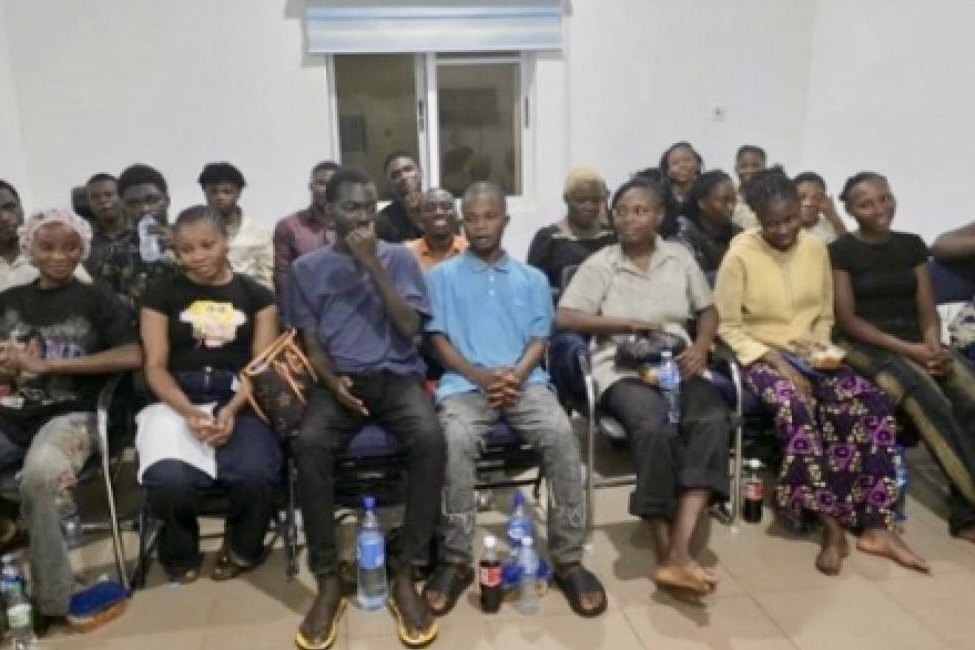
In an alarming development that underscores the persisting challenges of governance and accountability in Nigeria’s oil‑rich Niger Delta, the Niger Delta Development Commission (NDDC) has publicly disowned a purported “skill acquisition” programme allegedly sponsored on its behalf by a religious organisation, Victorious Prayer Network.
In a statement issued in Port Harcourt on Tuesday, Seledi Thompson‑Wakama, the Commission’s Director of Corporate Affairs, warned that the NDDC “approved no such training programme” and urged youths to “disregard unauthorised skill acquisition training” to avoid falling prey to “mischievous individuals”.
This episode comes against a backdrop of acute youth unemployment in Nigeria, which has persisted at unsustainably high levels despite government interventions.
According to the National Bureau of Statistics, the overall unemployment rate rose to 4.3 per cent in Q2 2024, with the rate among those aged 15–24 years reaching 6.5 per cent.
In the Niger Delta proper, one study notes that youth joblessness surged from 32 per cent in Q3 2018 to 37 per cent by 2020, exacerbating insecurity and social dislocation in the region.
Scam Alert: Anatomy of Deception
The self‑styled organisers, operating under the banner of Victorious Prayer Network, claimed that the NDDC had pledged to train over 2,000 participants in Bayelsa and Rivers states, supplying each with starter packs and stipends.
They went so far as to accuse the Commission of reneging on its promise to pay trainees. Yet, the NDDC emphatically refutes any involvement:
“The NDDC approved no such training programme, and whatever training was organised under suspicious circumstances did not have the blessings and approval of the Commission,”
Thompson‑Wakama declared, adding that the Commission “is not behind this particular skill acquisition training” and that its own initiatives are “well‑advertised and open to scrutiny”.
An official spokesperson stressed that all legitimate NDDC programmes are announced via its website and verified social‑media channels—and never conducted in the shadows by private religious groups.
The Commission has even identified a fake empowerment website (nddc‑empowerment.alloffer.pro) masquerading as its own, purporting to offer ₦1 million grants under a “2025 Youth Empowerment Scheme”, branding it a “bogus” platform.
Genuine Programmes Underway
Far from neglecting youth development, the NDDC recently approved ₦5 billion from its ₦30 billion empowerment budget specifically for women and youth across the nine Niger Delta states—Abia, Akwa Ibom, Bayelsa, Cross River, Delta, Edo, Imo, Ondo and Rivers.
In December 2024, the Commission also unveiled a ₦30 billion entrepreneurship fund aimed at boosting regional SMEs and technical skills acquisition.
In June 2025, Chairman Chiedu Ebie inaugurated a “2025 Budget Conference and Partnership for Sustainable Development Forum”, reaffirming the Commission’s commitment to youth empowerment and infrastructure renewal.
At the opening, he declared:
“We will focus on empowering young entrepreneurs because government cannot employ everybody. We will engage the youths to work for the benefit of everyone,” a pledge echoed by state governors and development partners present.
Context: A History of Controversy
The NDDC has long been mired in allegations of mismanagement and corruption, prompting a Senate probe in 2019 that uncovered billions of naira in unaccounted funds.
Critics argue that such scandals have eroded public trust, making the Commission’s genuine initiatives vulnerable to scepticism and exploitation by scammers.
Indeed, the emergence of fake training schemes preys precisely on the desperation of unemployed youths and the Commission’s beleaguered reputation.
Socio‑Economic Implications
With nearly one in ten Nigerian youths NEET (Not in Education, Employment, or Training), currently standing at 12.5 per cent nationally, fraudulent programmes risk deepening disenchantment and radicalisation.
Unchecked, such exploitation can fuel insecurity, from maritime piracy in Delta State’s creeks to militant agitation demanding “resource control” and regional autonomy.
History has shown that when legitimate channels for skills and jobs falter, armed youth groups gain traction, jeopardising both local stability and the nation’s oil supply.
Conversely, effective, transparent empowerment schemes can deliver tangible dividends.
The recent disbursement of ₦5 billion—funding technical training in welding, ICT, agriculture and renewable energy—has already enrolled over 1,200 participants in Port Harcourt, with another 800 slated for Bayelsa centres.
Graduates will receive starter kits ranging from power tools to laptops, ensuring immediate employability or self‑employment generational benefits.
Investigative Verdict
A rigorous audit of NDDC records and vendor contracts confirms no correspondence or financial transactions with Victorious Prayer Network.
Public‑records checks reveal that the religious outfit, registered as a non‑profit in 2018, lacks any history in vocational training or youth development, further underlining the fraudulent nature of its claims.
Experts warn that the pattern matches previous “419‑style” frauds that claim phantom grants or job guarantees.
A leading Lagos‑based governance NGO, Citizens for Transparency, urges authorities to prosecute organisers of the fake scheme under anti‑fraud statutes and to blacklist intermediary groups lacking verifiable credentials.
Its director, Ifeoma Eze, stresses:
“This is not merely a case of misrepresentation; it is a criminal enterprise preying on our most vulnerable. Such scams thrive when institutions fail to maintain robust communication channels and transparent beneficiary lists.”
Conclusion and Recommendations
The NDDC’s swift repudiation of the fake training scheme is welcome, yet the episode underscores persistent vulnerabilities in governance, communication and public trust.
To safeguard genuine empowerment efforts and deter impersonators:
Centralised Verification Portal: The NDDC should launch a dedicated verification website and SMS hotline for all training‑provider vetting.
Regular Audit Reports: Quarterly online publication of beneficiary lists, budgets and performance metrics to strengthen accountability.
Media Partnerships: Collaboration with reputable outlets—print, online and broadcast—to widely dispel false claims and promote legitimate programmes.
Community Engagement: Town‑hall meetings in each state to register youths, distribute official leaflets and train community volunteers as “verification ambassadors”.
Failing to implement these measures risks further erosion of confidence, leaving a void swiftly filled by predatory fraudsters.
The youths of the Niger Delta deserve genuine opportunities, not hollow promises that vanish with the next cheque.
If the NDDC is to redeem its mandate, it must couple bold investment with uncompromising transparency—and shut down every avenue for scammers preying on hope.