MOPOL 20 Officer Dies In Accident While Travelling To Niger State, Others Injured
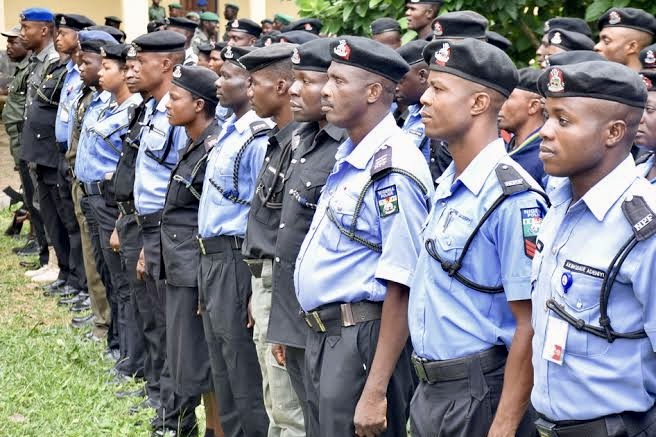
A police deployment intended to strengthen security in Niger State has ended in tragedy after an officer attached to the Nigeria Police Mobile Force, MOPOL 20, was killed in an accident while reportedly travelling to Kontagora for a special duty assignment.
The incident, according to information reaching Atlantic Post, also left other members of the team injured, raising fresh questions about the hazards confronting police personnel long before they reach the operational theatres where they are expected to confront criminals, bandits and other violent threats.
The dead officer was said to be part of a team travelling from Lagos towards Kontagora in Niger State when the accident occurred.
At the time of filing, however, the Nigeria Police Force had not publicly released a detailed statement establishing the precise location of the crash, the circumstances that led to it, the type of vehicle involved, or the confirmed number of casualties.
That distinction is importantw.
In an incident involving armed security personnel travelling on a special assignment, the difference between a road traffic crash, a vehicle plunging into water, a mechanical failure, a collision or another operational mishap is not a minor detail. It determines the questions that must be asked about planning, transport, supervision, emergency response and the safety of officers deployed far from their home commands.
Police officer dies on journey to Kontagora
The deceased officer was attached to MOPOL 20, one of the Nigeria Police Force’s Mobile Police Force squadrons based in Ikeja, Lagos.
Public records place the MOPOL 20 complex at Oduduwa Street in Ikeja GRA. The facility has also been publicly identified in recent corporate and institutional records as a location associated with the MOPOL 20 command.
MOPOL personnel are routinely deployed beyond their home bases for tactical operations, reinforcement duties and other assignments, meaning their work frequently involves long-distance movement across Nigeria’s difficult security terrain.
In this case, the destination was reportedly Kontagora, one of Niger State’s important commercial and security corridors.
The circumstances of the journey, however, remain largely unresolved.
An account circulating in connection with the incident says the team was travelling towards Kontagora when the accident occurred and that one officer died while several others sustained injuries.
A video described as having been obtained by SaharaReporters reportedly showed the body of the deceased officer inside a canoe after the incident.
The imagery, if accurately linked to the accident, immediately raises another unanswered question: what exactly happened to the vehicle or convoy?
At present, there is insufficient independently verified information to conclude whether the canoe was used during a rescue operation, whether the accident happened close to a waterway, or whether the vehicle carrying the policemen entered water.
Those details should be established by the police investigation and emergency responders rather than inferred from a video clip.
Colleagues mourn fallen officer
The strongest emotional response to the incident has come from the officer’s colleagues, who described the death as a painful reminder of the dangers associated with police service.
In a condolence message, the colleagues said:
“Let us remember them in our prayers. May Almighty Allah forgive the deceased, grant him eternal rest, and give his family, friends and colleagues the strength to bear this painful loss.”
They also appealed for prayers for the officers who survived the accident but were injured.
“May Allah also grant a speedy recovery to those who were injured.”
Their words underline the human cost of a security system in which officers are frequently moved from one part of the country to another with little public visibility into the logistics supporting those deployments.
The colleagues further appealed for divine protection for other members of the force, saying:
“This is the nature of our duty, and we continue to face risks in the line of service. May Almighty Allah continue to protect us, keep us safe from every danger, and always bring us back home safely.”
For the families of the officers involved, however, the incident is no longer an operational statistic. It is a death that has altered a household permanently.
The unanswered questions
The immediate temptation in a breaking tragedy such as this is to focus only on the death toll.
But a serious investigation must go further.
At least six critical questions require answers.
First, where exactly did the accident occur?
The destination is reportedly Kontagora, but the location of the crash has not been independently established.
Second, what caused the accident?
Was there a collision? Did a vehicle suffer mechanical failure? Was speed a factor? Did poor road conditions contribute? Was the team travelling in a convoy? Or was there a separate incident involving a waterway?
Third, how many officers were travelling?
The information available to Atlantic Post establishes one death and reports injuries, but does not provide an authoritative casualty figure.
Fourth, what transport arrangements were provided for the deployment?
Were the officers travelling in a police operational vehicle, a hired vehicle, a civilian bus or another form of transportation?
Fifth, how quickly did emergency responders reach the scene?
This becomes particularly important if the reference to a canoe reflects a rescue or recovery effort near water.
Sixth, was the team operating under a formal movement order and risk assessment?
These are questions for police command, not speculation for the public.
The bigger security picture
The tragedy comes at a particularly difficult moment for Nigeria’s security forces.
Only days before this incident, the Nigeria Police Force confirmed that 10 police personnel were killed in a fierce encounter with suspected bandits in Sakaba Local Government Area of Kebbi State.
According to the Force, the officers had intercepted heavily armed suspects moving between Zamfara and Kebbi. Two additional police personnel were injured.
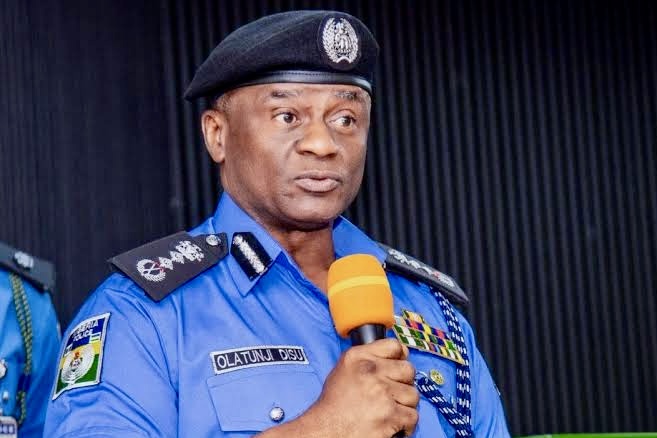
The scale of that loss was severe enough for Inspector-General of Police Olatunji Disu to order strengthened security measures and intensified operational efforts after the Kebbi attack.
That context makes the MOPOL 20 accident particularly sobering.
Police officers are not only exposed to gunfire, ambushes and attacks by criminals once they arrive at an operational theatre. They are also vulnerable while travelling to those theatres.
For a force operating across vast distances, road safety and deployment logistics are therefore security issues in their own right.
The Nigeria Police Force currently operates under IGP Olatunji Disu, who assumed the post in February 2026 after President Bola Tinubu appointed him following the resignation of Kayode Egbetokun. The Police Council subsequently endorsed Disu’s appointment as substantive Inspector-General.
The challenge for the present police leadership is not merely to mourn dead officers, but to ensure that preventable operational risks are identified and addressed.
Are police deployments being adequately supported?
The question of officer safety does not end with weapons, body armour and tactical training.
Transport is part of the operational chain.
So are vehicle maintenance, driver competence, journey planning, rest periods, communication equipment, medical support and emergency evacuation procedures.
Where officers are moved thousands of kilometres for special duties, every link in that chain matters.
A fatal accident can instantly turn a security deployment into a rescue mission, and a rescue mission into a casualty-management operation.
That is why the MOPOL 20 tragedy deserves an investigation that goes beyond a routine accident report.
The police command should establish the sequence of events from the moment the team left its point of departure to the moment rescuers arrived at the scene.
It should also determine whether the vehicle or vehicles involved were mechanically fit, whether the driver was properly authorised, whether the route had known hazards and whether the officers had appropriate emergency support.
None of these questions amounts to an allegation of negligence.
They are basic questions that must be answered whenever a security officer loses his life while being transported for official duty.
MOPOL risks extend beyond the battlefield
The Nigeria Police Mobile Force has historically been one of the country’s principal tactical formations, frequently deployed to politically sensitive areas, conflict zones, highways and communities facing violent threats.
That means MOPOL personnel often serve far from home and under conditions that can be physically and psychologically demanding.
The broader environment in which they operate is already under strain.
An investigative report by the International Centre for Investigative Reporting published in February 2026 documented severe deterioration in police accommodation at MOPOL 20 and other Ikeja barracks, describing some structures as unsafe and highlighting wider welfare concerns among officers and their families.
While accommodation conditions are separate from the latest accident, the broader issue is relevant: the safety of security personnel depends on the quality of the systems surrounding them, not merely on their courage at the point of confrontation.
An officer can survive an armed encounter and still die because of an avoidable failure somewhere else in the chain.
What the police owe the public
The public deserves clarity.
The family of the deceased officer deserves even more.
Until the Nigeria Police Force releases a formal account, reports about the accident should be treated as provisional.
The circumstances reported so far are serious enough to warrant a transparent investigation covering the cause of the crash, the location, the transport arrangements, the number of officers involved, the condition of survivors and the identity of the deceased.
The identities of injured personnel should be handled responsibly, particularly until their families have been formally informed.
There is also a need to resist the growing tendency to allow dramatic social-media videos to become substitutes for official investigation.
Images can show a body.
They cannot, by themselves, explain how the person died.
A canoe can show where a body was placed during recovery.
It cannot establish why the canoe was there.
That distinction is crucial in a case with operational and institutional implications.
A death that should not become just another statistic
For the public, the death of a police officer travelling for special duty may become another headline within hours.
For the police family, it is a much heavier reality.
One officer has reportedly failed to return home.
Others are recovering from injuries.
Families are waiting for confirmation, explanation and, in one case, the final journey of a loved one.
The colleagues’ prayer — “always bring us back home safely” — may be the most powerful line in the entire account.
It captures the reality of policing in Nigeria better than any official slogan.
Officers are asked to confront heavily armed criminals, patrol dangerous territories and respond to emergencies under enormous pressure.
But the obligation to protect those officers does not begin when they arrive at a crime scene.
It begins when they leave their barracks.
As of 19 August 2026, Atlantic Post could not independently verify from a publicly available Nigeria Police Force statement the precise cause of this latest accident, the exact number of injured officers or the full circumstances surrounding the reported canoe recovery.
Those details must now be established.
Until then, the death of the MOPOL 20 officer should be remembered not only as a tragedy, but as a warning that the safety of Nigeria’s security personnel must be treated as an operational priority from departure to deployment and, most importantly, all the way back home.
Follow us on our broadcast channels today!
- WhatsApp: https://whatsapp.com/channel/0029VawZ8TbDDmFT1a1Syg46
- Telegram: https://t.me/atlanticpostchannel
- Facebook: https://www.messenger.com/channel/atlanticpostng