Officers allege more than 1,000 applications have stalled. The paper trail, police command structure and a crucial timeline raise questions beyond one commissioner.
KANO, Nigeria — More than a thousand rank-and-file police officers in Kano are allegedly trapped in an administrative limbo after applying to join the Police Mobile Force, popularly known as MOPOL.
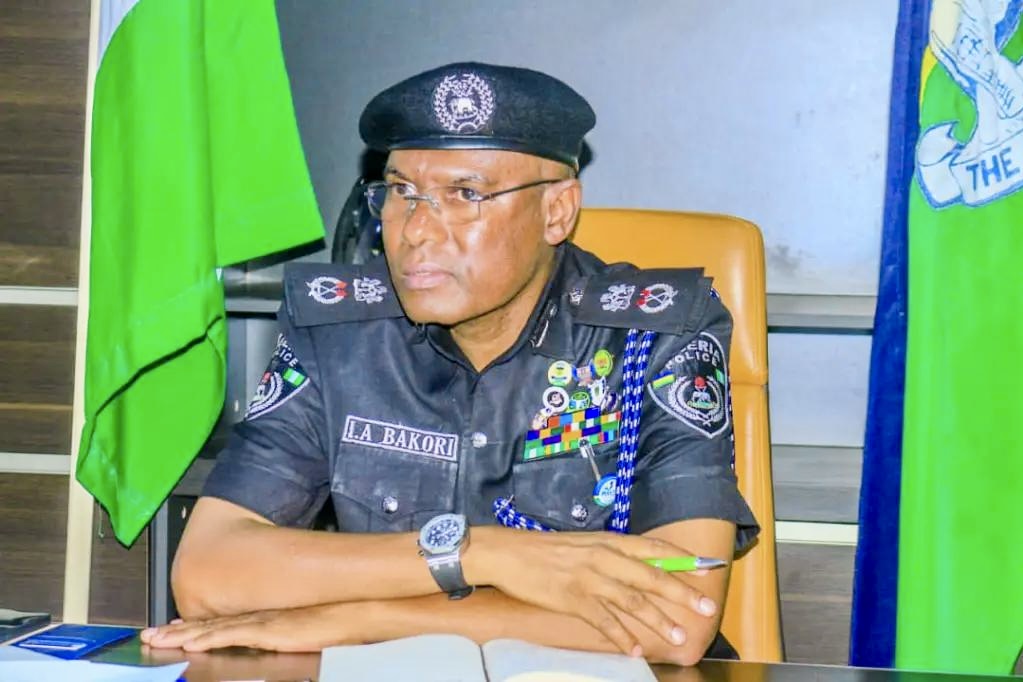
The officers say they applied from early 2024, yet their requests were allegedly never forwarded to Force Headquarters in Abuja. In distress messages cited by SaharaReporters, some accused Kano State Commissioner of Police Ibrahim Adamu Bakori of blocking their transfer and frustrating their career progression.
One officer said: “There are thousands of us that the Commissioner denied our right, which is enshrined in the Police Act.”
Another pleaded: “Please help us, the Commissioner denied us our right.”
The allegation is serious.
The more important question, though, is narrower and more revealing: what happens inside the Nigeria Police Force between the moment an officer applies for a specialist posting and the moment the application reaches the authority with power to decide it?
That paper trail is where the Kano dispute now points.
Publicly available records reviewed by Atlantic Post show that the Police Act gives state commissioners command and control over police in their states, while the Inspector-General retains the wider command structure and authority over operational control. The Police Service Commission has statutory responsibilities covering appointments, promotions and discipline.
The publicly accessible Police Act does not appear to create an automatic entitlement for every serving officer to be transferred into MOPOL simply because an application has been submitted.
That does not dispose of the officers’ complaint.
It changes the question.
If the current regulations or Force Administrative Instructions require a state command to process and forward eligible applications, then the issue is whether that administrative duty was performed.
If no such duty applies in the circumstances, then the crucial question becomes why applications were allegedly left unresolved for so long.
Either way, the documentary record matters more than the allegation alone.
The chronology raises the first hard question
There is an important problem in the timeline that should not be overlooked.
The officers say they began applying to join MOPOL in early 2024.
CP Ibrahim Adamu Bakori did not become Kano Commissioner of Police until March 2025. The Nigeria Police Force announced his posting on 17 March 2025, describing him as a senior officer with operational, investigative and administrative experience.
That means the earliest applications described by the officers predate Bakori’s arrival by roughly a year.
Bakori could have inherited outstanding applications from his predecessor. The complaint could also concern what happened after he assumed command.
But the chronology does not support a simple assertion that Bakori personally caused every delay dating back to early 2024.
The files, dates, acknowledgement slips, command signals and forwarding records would settle that question.
Without them, the allegation remains an allegation.
What the Police Act actually establishes
Section 13 of the Police Act 2020 gives a state Commissioner of Police command and control over police in the state to which the officer is assigned, subject to the Act. A CP can also perform duties delegated by the Inspector-General.
Section 16 gives the Inspector-General power to issue standing orders dealing with operational control of the Police Force. It also gives the Police Service Commission authority, subject to the Act, to make standing orders dealing with appointments, promotions and disciplinary control.
That distinction matters.
A state command can exercise substantial operational authority without necessarily possessing the final legal power over every personnel decision involving a Force-wide specialist formation.
The PSC itself says it is responsible for appointment and promotion functions within the police establishment and has an appeals and petitions structure for aggrieved officers. Its Police Promotion Department specifically handles complaints involving long-overdue promotion, improper placement and other personnel grievances.
The Commission’s discipline structure also handles appeals, petitions and public complaints.
There is another internal route.
Section 131 of the Police Act establishes Police Complaints Response Units at Force Headquarters and in state commands. Section 133 expressly provides for complaints concerning police misconduct made by one police officer against another.
That creates an institutional test for the Kano allegation.
Were formal petitions filed?
Were the applications entered into a personnel register?
Were officers screened and found ineligible?
Were the applications recommended or rejected?
Were they forwarded?
Were they returned?
Were vacancies available?
Was there an operational directive restricting transfers?
Those questions can be answered from records.
MOPOL is not an ordinary posting
The importance of the dispute becomes clearer when the structure of the Police Mobile Force is examined.
In April 2025, the Nigeria Police Force announced a major reorganisation of the PMF, describing it as a key tactical arm created to respond to riots, emergencies and serious violent threats.
The then-IGP also raised concern about PMF personnel being diverted to non-core duties such as private escort and guard assignments and ordered measures to restore the unit’s operational readiness.
In April 2026, IGP Olatunji Rilwan Disu again placed emphasis on PMF training, leadership and welfare during a programme for squadron commanders. The Force said the PMF was to remain a disciplined and reliable tactical arm of the organisation.
That makes the Kano complaint more than a dispute over an ordinary transfer.
MOPOL is part of the Force’s national tactical architecture.
An officer moving from a conventional state command into a PMF squadron is therefore moving into a different operational environment, not simply changing desks inside one state command.
That distinction may explain why the approval chain matters.
It also makes the claimed year-long delay harder to dismiss as routine paperwork if the applications were complete and eligible.
The Kano contradiction
The allegation comes at an awkward moment for the Kano Command.
In July 2026, the command conducted intensive combat and weapon-handling training for a first batch of 200 officers drawn from the rank and file, with training taking place at PMF formations in Hotoro and Challawa. Reports of the exercise quoted Bakori as saying capacity building must be continuous.
Then, on 2 September, another 250 officers completed a similar one-month course and were deployed to border local government areas to strengthen security and rapid response. The Federal Information Centre reported that the training was conducted at No. 9 PMF, Hotoro, and No. 52 PMF, Challawa.
This is where the officers’ complaint becomes difficult to ignore as a mere administrative argument.
The command is actively building personnel capacity around PMF facilities while serving officers say their own applications to enter those formations have remained unresolved.
That does not prove discrimination or deliberate obstruction.
It does create a question that should be answered with numbers:
How many serving Kano officers applied for PMF between 2024 and 2026, how many were processed, how many were approved, how many were rejected and how many remained pending?
A simple personnel audit could answer it.
A factual correction matters
The news update supplied for this report states that Kano deployed 250 newly trained MOPOL personnel in July 2026.
The published record is slightly different.
Available reports show a first batch of 200 officers completed the combat and weapons training on 20 July. A separate 250-officer batch passed out and was deployed in early September.
The distinction is not cosmetic.
In an investigation about personnel movement, dates and numbers are evidence.
A three-month difference can determine which command approved an exercise, which officers were involved and whether a disputed application existed before or after a particular deployment.
The Bakori history needs the same caution
The Kano Command has experienced several personnel disputes.
In April 2024, about 40 police officers attached to the Kano State Public Complaints and Anti-Corruption Commission were withdrawn and directed to report back to police headquarters. Kano police said the move followed a staff audit ordered by then-IGP Kayode Egbetokun and was intended to correct staffing and operational anomalies. The chairman of the anti-corruption commission publicly disputed the rationale and criticised the withdrawal.
That episode is relevant to Kano’s history of disputes over police personnel.
It should not be presented as evidence against Bakori personally.
It happened before he became Kano Commissioner.
The distinction is important because a report that combines separate personnel controversies without respecting their dates risks turning institutional history into personal accusation.
Then came the 2025 governor-police dispute
Bakori later became embroiled in a very public confrontation with Kano Governor Abba Kabir Yusuf.
On 1 October 2025, Yusuf called for Bakori’s removal following the withdrawal of police personnel from the state’s Independence Day event. The governor accused the commissioner of conduct that undermined the state’s security arrangements and demanded federal intervention.
Bakori subsequently said his relationship with the governor remained cordial and described their relationship as professional and cooperative.
None of that proves anything about the MOPOL applications.
It does explain why claims about the Kano command deserve careful documentary treatment rather than assumption.
The new police reform framework raises the stakes
The timing is also significant because Nigeria introduced updated Police Regulations in 2026.
The Ministry of Police Affairs said the Nigeria Police Regulations (Amendment) 2026 were signed in November 2025, gazetted in February 2026 and introduced clearer structures for accountability, recruitment and career progression. The ministry said the regulations were designed to strengthen professionalism and transparency across the Force.
That places the present controversy inside a broader reform test.
Nigeria now has a renewed policy framework promising stronger personnel systems.
The practical test is whether an ordinary police constable or other rank-and-file officer can track a personnel application through the system without becoming dependent on informal power at command level.
That is the issue the Kano complaint exposes.
Another warning comes from the MOPOL allowance controversy
The Kano allegation also follows a separate dispute involving MOPOL officers deployed from Kano to Plateau State.
In July 2026, officers told media organisations that they had gone about seven months without receiving promised monthly allowances. They alleged the money was being diverted. One officer described the situation as a “violation of our rights.” The officers called for intervention by the Inspector-General.
The police position reported in subsequent coverage was that the affected personnel were operating under the Joint Task Force structure of Operation Safe Haven and that the allowances were not administered directly by the Nigeria Police Force.
Again, allegations about one issue do not prove another.
The pattern does reveal something important about MOPOL personnel administration: once officers move between commands, states, formations and special duties, responsibility can become fragmented.
That fragmentation creates room for delays.
It also creates room for conflicting explanations.
The paper trail now matters more than anonymous claims
There is a straightforward way to establish what happened in Kano.
The IGP and PSC would need to obtain the applications submitted since 2024, the relevant personnel registers, forwarding letters, endorsements, rejection notices, vacancy information and deployment signals.
They should establish whether the officers met the applicable criteria.
They should identify the officer or office that last handled each application.
They should establish how long each file remained at each stage.
And they should compare Kano’s processing record with other state commands.
That last comparison could be particularly revealing.
If similar applications in other states move to Force Headquarters within weeks while Kano applications remain pending for a year or more, the explanation would require scrutiny.
If the same delays are widespread, the problem would point to a national administrative weakness rather than one commissioner.
That distinction matters.
The IGP already has an accountability route
The present IGP has repeatedly spoken about stronger internal accountability and officer welfare.
In July 2026, Disu said during a ceremony honouring officers involved in a major rescue operation: “A policeman is first of all a human being.”
The Kano command has also publicly demonstrated welfare activity. In September, Bakori presented more than N34.3 million in benefits to 62 families of fallen officers and personnel involved in accidents under the IGP’s welfare scheme.
Those actions do not answer the transfer allegations.
They do establish that personnel welfare and career management are now central themes in the Force’s public reform agenda.
The unanswered question is whether that commitment reaches the administrative files of officers who are trying to change formations.
What remains unproven
At the time of publication, several critical facts remain unverified.
There is no publicly released list confirming that more than 1,000 Kano officers submitted PMF applications.
There is no publicly available document establishing that Bakori personally ordered that all such applications be withheld.
There is no evidence in the public domain reviewed for this report showing that every applicant met the eligibility requirements for PMF.
And the specific Force Administrative Instruction cited by the officers as establishing an enforceable right to the transfer has not been independently produced for public examination.
Those gaps do not invalidate the complaints.
They define the investigation that should follow.
The Kano Police Command, the IGP and the Police Service Commission can resolve most of the uncertainty with a simple audit.
The result would be more useful than another round of anonymous accusations and denials.
It would show whether the officers were denied, delayed, rejected or simply caught in a system in which nobody clearly tells them who holds the file.
That is the real story behind the Kano MOPOL dispute.
A police officer may be ordered to move anywhere in the service when the Force needs him.
The harder question is what happens when the officer himself asks to move, and his application disappears into the chain of command.
As of publication, SaharaReporters reported that Kano Police Public Relations Officer Abdullahi Haruna Kiyawa had not responded to its enquiries concerning the allegations.
Follow us on our broadcast channels today!
- WhatsApp: https://whatsapp.com/channel/0029VawZ8TbDDmFT1a1Syg46
- Telegram: https://t.me/atlanticpostchannel
- Facebook: https://www.messenger.com/channel/atlanticpostng