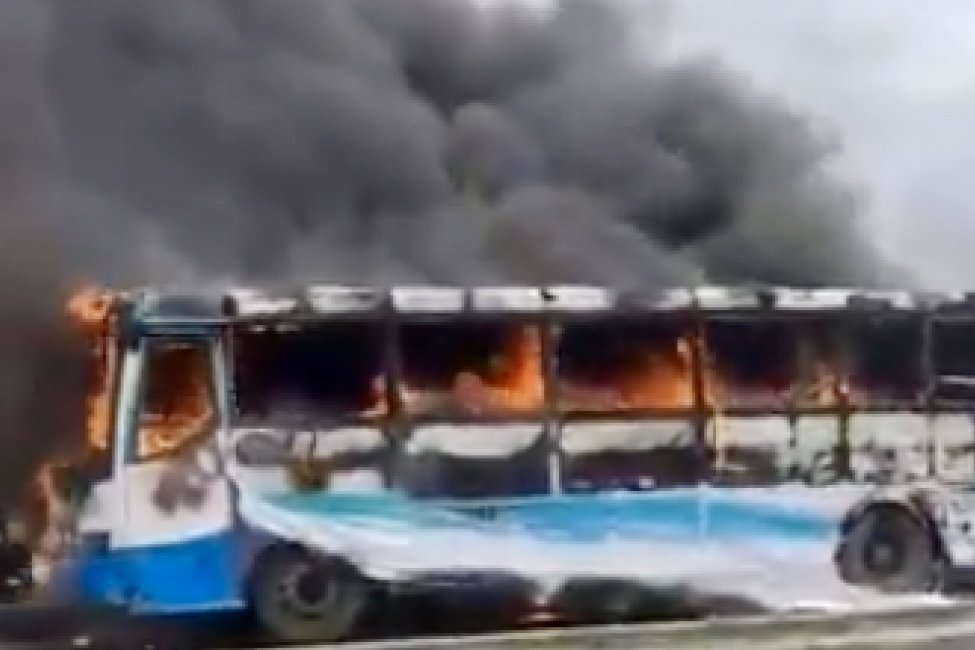
On the night of 20 June 2025, 12 innocent wedding guests travelling from Zaria, Kaduna State to Qua’an Pan in Plateau State were brutally murdered when their bus lost its way and was set ablaze by an enraged mob in Mangun village, Mangu Local Government Area.
The Plateau State Police Command, led by CP Emmanuel Olugbemiga Adesina, swiftly dispatched reinforcements from the State Intelligence Department (SID), State CID and Tactical Teams, rescuing 14 unhurt survivors and evacuating 21 wounded victims to hospital for treatment.
In an extraordinary display of “speed justice,” 22 suspects have already been arrested in connection with this heinous crime, as the police intensify efforts to bring all perpetrators to book.
The Plague of Mob Justice in Nigeria
This latest atrocity is far from an isolated incident. Over the past decade, Amnesty International documented at least 555 deaths from mob violence in Nigeria across 363 separate “jungle justice” episodes, fuelled by rumours of theft, witchcraft or blasphemy.
Investigations by SBM Intelligence reveal that since 2019 there have been no fewer than 391 mob-related killings nationwide, a staggering indictment of both societal breakdown and institutional impotence.
Mob justice corpses are often left exposed in public as warning signs, eroding confidence in Nigeria’s criminal justice system and softening the rule of law.
Plateau State: A History of Bloodshed
Plateau State, despite its reputation as the “Home of Peace and Tourism,” has endured recurring waves of violence. Just two months ago, gunmen massacred at least 52 villagers in Bokkos district, displacing nearly 2,000 people in the worst outbreak since December 2023.
Underlying tensions between agrarian communities and nomadic herders, compounded by ethnic and religious fault lines, have rendered rural roads perilous, where a wrong turn can prove fatal.
The Mangu attack follows a grim pattern of reprisals and vigilante responses that have long blighted central Nigeria.
Police Response: Tokenism or True Action?
While CP Adesina’s rapid arrests and site visit convey resolve, critics argue that such displays risk amounting to tokenism unless followed by transparent prosecutions and convictions.
Amnesty International’s report, Nigeria: Instantly killed!, warns that impunity for mob perpetrators emboldens further violence, especially where law enforcement fails to shield victims or hold criminals accountable.
Community leaders on the ground lament that intelligence-gathering teams often lack grassroots penetration, allowing “jungle judges” to operate with near-invulnerability.
Why It Matters
This slaughter strikes at the heart of Nigeria’s stability and international reputation. Wedding ceremonies, emblematic of communal harmony, should never become death traps.
The fact that the victims were predominantly fellow Nigerians—belonging to the Basawa community of Zaria—underscores the senselessness of ethnically tinged fanaticism.
The incident will inevitably raise alarm among investors, diplomats and human rights observers, who expect the Federal Government to match rhetoric with rigorous judicial follow-through.
The Road to Justice
For justice to be served in Plateau, the arrested suspects must face open trials under provisions of the Administration of Criminal Justice Act (2015), with full media scrutiny and victim-family participation.
Beyond retribution, authorities must invest in early-warning systems, community policing initiatives and public education campaigns that denounce vigilante culture.
CP Adesina’s emergency numbers (0705-947-3022, 0803-890-7662, 0807-539-1844, 0905-387-2296) should be complemented by an independent oversight committee to monitor arrests and ensure due process is upheld.
As Plateau State mourns yet another senseless bloodletting, the Nigerian nation faces a pivotal choice: continue on the path of reactive enforcement and systemic injustice, or seize this moment to confront mobocracy head-on and uphold the fundamental right to life for all its citizens.