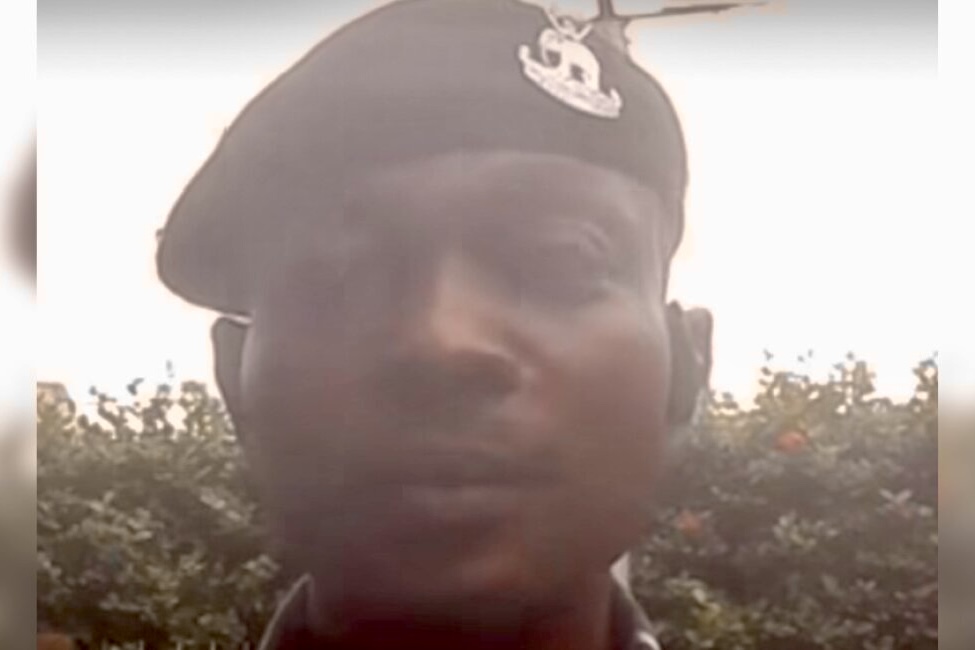
LAGOS, Nigeria — In a series of events that have sent shockwaves through Lagos, the brutal murder of a 42-year-old e-hailing driver has highlighted the escalating insecurity that now plagues Nigeria’s ride-hailing industry. The murder of Yusfat Ayinde, confirmed by the Lagos State chapter of the Amalgamated Union of App-Based Transporters of Nigeria (AUATON), has not only left a family and a community in mourning but has also raised serious questions about the safety of thousands of drivers who ply the city’s treacherous roads.

A Night of Horror: The Murder of Yusfat Ayinde
Late last Friday evening, while on duty and responding to a routine ride request through a popular e-hailing application, Yusfat Ayinde arrived at his designated pickup point only to be ambushed by a band of unidentified hoodlums.
According to AUATON’s chairman, Jaiyesinmi Azeez, the attackers struck with ruthless precision—fatally stabbing Ayinde and then making off with his vehicle.
His lifeless body was later discovered dumped along Agindigbi Road in the Ikeja area, a grim tableau that has shocked the community and left many questioning the state of law and order in the megacity.
Azeez, speaking to PUNCH Metro, lamented the loss of the respected driver, who was not only an active member of the union but also the administrator for a body of professional chauffeurs in the state.
“Comrade Yusfat Olawale Ayinde was a dedicated driver whose life was brutally cut short in an attack that seems both premeditated and callous,” he said.
The union’s task force is currently working in close collaboration with the victim’s family and law enforcement to gather evidence, determine the method through which the ride request was made, and ultimately track down the perpetrators.
A Pattern of Predation: A Second Incident Unfolds
As if the tragedy of Ayinde’s murder were not enough, another disturbing incident has come to light. In a related development reported by PUNCH Metro, Lagos State Police Command has arrested a 21-year-old US returnee, David Segun, along with two accomplices—Emeka Akwara (19) and Samuel Ariori (21)—in connection with the murder of another Uber driver.
This separate case occurred when the trio, after ordering a ride from Chevron in Lekki, allegedly targeted the driver once they reached a desolate area in Obalende at midnight on Thursday, 9 January.
Commissioner of Police Ishola Olanrewaju detailed how the suspects ambushed the driver in a deserted locale, stabbing him multiple times in the neck—a particularly gruesome detail that has added to the growing alarm among Lagos residents.
Although the assailants attempted to snatch the vehicle, quick intervention by passersby thwarted their efforts. The victim’s body was later recovered and taken to a morgue for further examination, while the arrested suspects now face serious charges.
Rising Insecurity: An Industry Under Siege
These twin incidents—one a callous murder with the body dumped on a public road, and the other a violent ambush in a secluded area—underscore a disturbing trend: e-hailing drivers are increasingly becoming targets for criminal gangs.
The modus operandi appears disturbingly similar in both cases, with assailants ambushing drivers under the cover of darkness, using brutal methods to ensure that their victims are silenced before they can alert authorities.
The union’s alarm is palpable. AUATON’s leadership is now advocating for immediate and comprehensive security measures for all drivers operating within Lagos. Among the proposed measures are:
Enhanced Surveillance: Installation of additional cameras and the use of GPS tracking systems to monitor high-risk areas.
Emergency Response Systems: Implementation of panic buttons and direct links to local law enforcement for immediate assistance during an emergency.
Passenger Verification Protocols: Stricter checks and a more robust verification process for ride requests to prevent criminals from exploiting the system.
Union-led Awareness Campaigns: Educating drivers on best practices for personal safety, including not carrying more than one passenger at a time and ensuring that the front seat is always occupied by a verified individual.
Police and Union: A Collaborative Response
Both the Lagos State Police Command and AUATON are now under mounting pressure to restore safety in the city’s ride-hailing corridors. Commissioner Ishola Olanrewaju has reiterated his commitment to cracking down on these criminal elements, emphasising that the police are employing modern investigative techniques, including the use of technology to track down the attackers.
The union, on its part, has deployed its own task force to work in tandem with law enforcement agencies—a joint effort that aims to not only identify the culprits behind these heinous acts but also to prevent further attacks.
In a press briefing, Commissioner Ishola acknowledged the gravity of the situation and advised all ride-hailing drivers to adopt stringent safety measures.
“We are urging our drivers to be vigilant—avoid picking up multiple passengers at once, insist on proper identification checks, and remain in constant communication with their dispatch centres,” he explained.
His comments come at a time when Lagos, despite being touted as one of the safest states in Nigeria, is now grappling with a spike in organised criminal activity.
The Broader Context: Insecurity in Lagos
Lagos, a city known for its dynamic economy and bustling urban life, has increasingly been cast in a darker light due to a surge in violent crimes targeting vulnerable sectors. The ride-hailing industry, once seen as a modern solution to urban mobility, is now under siege.
Many drivers have reported incidents ranging from armed robbery to abduction, with some even losing their vehicles and livelihoods overnight.
This unsettling trend is not confined solely to ride-hailing. Similar patterns have been observed in other sectors, where criminals, emboldened by a perceived lack of effective law enforcement, have resorted to violent methods.
The resulting climate of fear is prompting both union leaders and government officials to call for sweeping reforms in public security protocols.
The case of Yusfat Ayinde, in particular, has become a rallying cry for the union—a stark reminder that the lives of everyday Nigerians are being put at risk.
The Human Cost: Mourning a Community’s Loss
Beyond the statistics and security protocols, the human cost of these incidents is immeasurable. Friends, family members, and colleagues of Yusfat Ayinde are left grappling with an immense loss. His murder is not just a headline—it is a personal tragedy that reverberates throughout the community.
The union’s outcry and the subsequent media attention have sparked widespread public debate about the safety of drivers and the urgent need for reform.
Local communities, already strained by the pressures of urban life, now face the additional burden of heightened insecurity.
Many residents have expressed their concern over the increasing number of violent incidents on Lagos roads, calling on the government to provide more robust security measures and to ensure that law enforcement agencies are adequately equipped to tackle organised crime.
A Call to Action: Reforms and Preventative Measures
In response to these unsettling events, both police officials and union leaders are calling for immediate reforms. Among the key recommendations are:
Strengthened Policing: Increasing the number of patrols in high-risk areas and establishing specialised units dedicated to combating crimes against drivers.
Technological Integration: Leveraging modern technology—such as real-time tracking and advanced surveillance systems—to monitor suspicious activities.
Legislative Action: Enacting stricter penalties for crimes targeting public service workers, with a focus on deterring organised criminal activities.
Driver Empowerment: Providing comprehensive training and safety resources for drivers, enabling them to respond swiftly and effectively in the event of an emergency.
These measures are being presented not only as a means to bring the perpetrators to justice but also as essential steps to restore public confidence in the city’s security apparatus.
The Path Ahead: Vigilance and Hope
While the grim details of these incidents paint a picture of a city under siege, there is also a determined resolve among both law enforcement and the community to reclaim Lagos as a safe space for all.
The collaboration between the police and AUATON represents a hopeful model for how public and private sectors can work together to combat crime.
However, experts warn that unless systemic issues within the security framework are addressed, such incidents may become a recurring nightmare for Nigeria’s e-hailing drivers.
As investigations continue and more details emerge, the public waits with bated breath for justice to be served. The stories of Yusfat Ayinde and the unnamed Uber driver serve as potent reminders that while technology has revolutionised urban mobility, it must be matched with equally robust measures to protect those who make our cities move.
In conclusion, the brutal murders of Uber drivers in Lagos have exposed a dark underbelly of criminality that threatens the very fabric of modern urban transport in Nigeria. With the combined efforts of vigilant police operatives and a resolute union, there is a cautious optimism that these heinous acts will not go unpunished.
However, the ultimate challenge lies in transforming this reactive approach into a proactive system of security that ensures the safety of every driver and passenger on Lagos roads.
As Lagos grapples with this wave of violent crime, the call for reform is louder than ever. The union’s impassioned plea for improved security measures, coupled with law enforcement’s promise of a coordinated response, may yet turn the tide.
Until then, the city remains on high alert—a stark reminder that in the face of brutality, vigilance and solidarity are the only real weapons against the rising tide of criminality.
Additional report by Peter Jene—Atlantic Post Senior National Correspondent.