President Bola Tinubu’s June 12, 2026 address to mark Democracy Day struck an optimistic yet urgent tone. He began by celebrating Nigeria’s “27 unbroken years” of civilian rule, noting that “our democracy is not perfect, but it is ours, and we must continue to defend and strengthen it”.
In this year’s speech he paid tribute to the June 12 heroes (M.K.O. Abiola, Gani Fawehinmi, Shehu Musa Yar’Adua, etc.) whose sacrifices “secured democracy,” even as he warned that the upcoming Ekiti and Osun elections must be “peaceful and credible” or risk undermining public trust.
He explicitly appealed to critics and civil society to serve as the “guardrails of our republic,” urging them to “criticise me, disagree with me, but never stop believing in Nigeria”.
In effect, Tinubu cast his speech as a call for vigilance in democracy and an appeal to all Nigerians – especially young people and the press – to invest in the country’s future rather than departing.
Security First – “Democracy Without Security…”
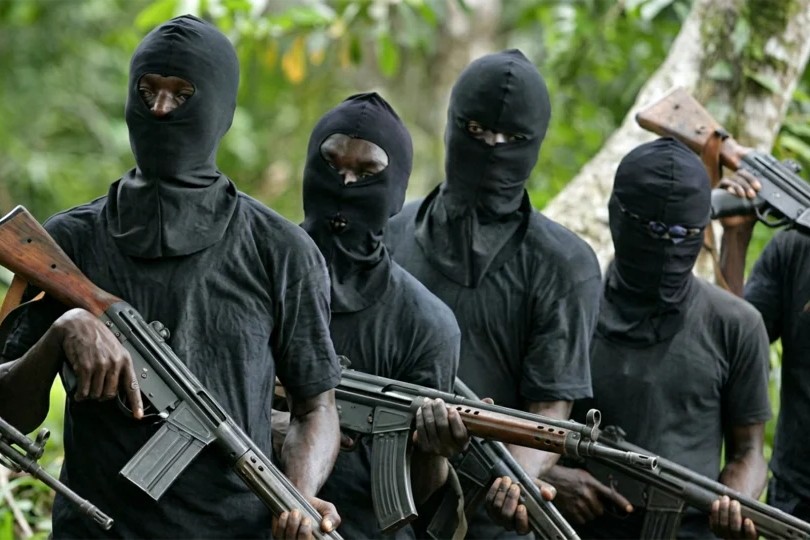
Tinubu’s speech placed heavy emphasis on security. He noted that recent school kidnappings in Oyo and Borno states have “dampened the mood” of Democracy Day, declaring that “democracy without security is not solid enough”.
To address the persistent terror and banditry, he highlighted a declared security emergency, massive hiring drives for police and soldiers, and – most strikingly – the 2026 budget’s historic security allocation.
As he announced: “Our 2026 budget commits N5.41 trillion — our largest ever — to defence and security”. (That sum is roughly a quarter of total federal spending.)
The president claimed these resources are yielding results. Military forces have shifted from training with allies to “precision targeting” of militant cells, he said, striking ISIS-West Africa (ISWAP) command posts in Borno.
According to Tinubu, “terror-related deaths are down by 81% since 2015. Over 13,000 terrorists have been neutralised in the past year.” This would mark a sharp decline if true.
He also praised the surrender of militants – “Over 124,000 fighters and dependents have laid down their arms since 2023 through Operation Safe Corridor” – though local analysts warn that sustained peace will require more than short-term gains.
Tinubu adopted a hardline message to bandits and kidnappers: “Surrender or face the full force of the Nigerian State”. He vowed no mercy for those who “trade in the blood of Nigerians.”
His rhetoric was martial, but also sought to defuse ethnic blame: “Crime has no ethnicity. We must stand united”. Indeed, he appealed for national unity against terror, insisting that “the enemies of our nation shall soon be history”.
Yet many Nigerians remain unconvinced that insecurity is abating. In the last year kidnappers have expanded into the south-west: on May 15 the Oyo town of Yawota saw dozens of pupils and teachers kidnapped in one day. Security experts warned this was “a dangerous escalation” of violence beyond its northern strongholds.
Reuters reported armed gangs collected “at least 2.57 billion naira ($1.89 million)” in ransom payments in the year to June 2025. That grim reality puts pressure on Tinubu’s claim of success.
“The 2026 budget commits N5.41 trillion to defence and security,” Tinubu told the nation, underscoring a “clear commitment” to equipment and readiness. “We have moved to precision targeting,” he said of the military fight against ISWAP. Yet analysts note that as bandits and terrorists are squeezed in the north, they have moved into new territories, including Lagos and Ogun States, kidnapping motorists and even schoolchildren in historically calm areas. Kidnappings now pose a key political issue ahead of the 2027 elections, with voters judging politicians on “whether they can keep classrooms and communities safe.”
Economic Reforms – Hard Choices, Some Relief
Alongside security, Tinubu’s address highlighted economic reform and growth as a key theme: “The heroes of June 12 secured political freedom. Our challenge is to secure economic freedom”.
He argued that since taking office in 2023, his administration has made tough fiscal and structural reforms to stabilize Nigeria’s economy.
Indeed, official data show modest growth: real GDP expanded by about 3.89% in Q1 2026, up from 3.13% a year earlier. The government also points to a falling inflation rate: April 2026 inflation was 15.69%, down from nearly 27% in early 2025.
In his speech Tinubu insisted “fiscal transparency has improved, leakage has been reduced” and that investor confidence is returning.
Nonetheless, many Nigerians still feel economic pain. Tinubu himself acknowledged “many Nigerians still face economic hardship”. He promised to double down on food production, job creation, and living standards. The president touted several key programs:
Agriculture: Deployment of 10,000 tractors nationwide (via the National Agricultural Development Fund) to boost farming. He said non-oil exports grew by 21% last year.
Energy: Expansion of domestic oil refining to reduce imports, and power sector reforms. Tinubu signed a new Electricity Act granting states more power roles and authorized a ₦4 trillion bond to retire legacy debts. The Rural Electrification Agency (with World Bank and AfDB support) is rolling out off-grid and mini-grid projects for schools and hospitals.
Business and Innovation: Support for entrepreneurs and tech industries is rising, with more foreign investment reported in energy, mining, manufacturing and creative sectors.
Social Support: The Renewed Hope cash-transfer program aims to reach 15 million low-income households; by late 2025 over 3 million had already received aid. One million Nigerians have accessed government-backed business loans, and student loan and credit programmes now benefit over a million youth.
Financial Reforms: Tinubu noted Nigeria’s recent exit from the FATF “grey list” as proof of successful anti-corruption and financial reforms. The government also passed multiple tax laws in 2025 to boost revenue.
Despite these reforms, ordinary Nigerians still say costs are high. Food prices and fuel remain sensitive issues. The World Bank’s April 2026 Nigeria Development Update notes that macroeconomic stability is improving but “household incomes have yet to recover fully and poverty remains high”.
Fiscal buffers are weak: NBS data show around half the population lacks access to basic sanitation and 39% still have no electricity. Tinubu vowed further progress, insisting “we are moving from uncertainty to stability” and promising that democracy must be “felt in the pocket”.
The Unity Challenge – Building a Nigerian Nation
Perhaps the most critical theme not directly in the speech, but widely debated, is national unity. Nigeria is Africa’s largest and most diverse country (250+ ethnic groups, multiple religions), and its very formation in 1914 “never intended to form a coherent nation”.
Colonial-era borders and post-independence power struggles have left deep mistrust among regions and ethnicities. A U.S. Army War College study notes that “before the British arrived, there was no shared national consciousness, culture, or language in Nigeria”.
Subsequent federal arrangements (indigeneship rules, state restructuring) have only partially bridged these divides.
Tinubu addressed unity directly. He warned against finger-pointing in the face of crime—“Crime has no ethnicity. We must stand united”—and recalled that many had once doubted democracy due to Nigeria’s diversity.
He declared proudly that now “our diversity sustains our democracy”. He appealed: “Let us build a Nigeria united by a common purpose, strengthened by diversity”, invoking the vision of past leaders like Shehu Musa Yar’Adua.
But analysts warn that national solidarity remains fragile. Separatist movements are more vocal now: Biafra activists (IPOB, MASSOB) in the southeast, Niger Delta militants in the oil south, and even Yoruba activists in the southwest have pressed for regional autonomy or independence.
In fact, in 2024 a fringe group even attempted a coup in Oyo State. A recent Bertelsmann Transformation Index report notes that “many citizens feel their security is insufficiently guaranteed and believe that they are politically and economically marginalized by the federal state”.
The pattern is clear: when people lack confidence in national institutions, they look to ethnic or regional structures.
Historical distrust: Colonial policies left the north and south with divergent economies and political systems. Efforts to appease minorities by creating many states have diluted majorities but also entrenched parochial politics.
Indigene-settler tensions: The constitution’s “indigene” clauses reserve jobs and scholarships for state indigenes, fuelling resentment among outsiders. Past clashes in cities like Jos or Kaduna show how identity can spur violence.
Electoral cynicism: The elaborate power-sharing rules (zoning, state quotas) aim for fairness, but critics say they often backfire. Some feel the system is rigged to benefit ruling elites, weakening faith in federal governance.
In short, the very idea of a common national will is still a work in progress in Nigeria. A leading analyst put it bluntly: Nigeria’s 1914 amalgamation was a “geographical expression” that failed to create a “national consciousness”.
President Tinubu called unity “the greatest tribute we can pay” to past heroes, but scholars warn that actions must match words.
Notably, the government has approved a “National Values Charter” (announced at the Democracy Day press briefing) to promote responsible citizenship and tolerance – an acknowledgment that nation-building requires deliberate effort.
Optimising Democracy – Voices and Verdict
Critics and supporters of the Tinubu administration see his speech through very different lenses. On the one hand, government media hailed the address as proof that “Nigeria is on the path to a stronger, more inclusive nation.”
The Secretary to the Government, Senator George Akume, told a June 2026 press briefing that official data showed growth and reform measures “bearing results”. The Information Minister and others lauded the numerous social programmes. For these defenders, Tinubu’s emphasis on democracy, the rule of law, and youth inclusion was genuine.
On the other hand, some activists remain skeptical. In April 2025, a coalition of academics and rights advocates warned against “creeping authoritarianism.” Tinubu’s spokesman Bayo Onanuga immediately dismissed such claims as “baseless and exaggerated”, insisting democracy was intact.
The voice of civil society is less present in official accounts, but independent observers note that press freedoms and civic space have tightened under the new government (for example, controversies over the Press Council and social media regulation). Many Nigerians on social media contrasted Tinubu’s calls for unity with street protests over power outages or policing.
It is noteworthy that Tinubu specifically addressed doubts. He exhorted all institutions – legislature, courts, media, civil society – to keep holding government to account. That appeal echoes what Democracy activists say is still needed: open debate. As the President said, “the guardrails of our republic” depend on vigilance and trust.
Conclusion: Democracy Day’s Reckoning
President Tinubu’s Democracy Day address painted a picture of a country making progress: terrorism in decline, economic growth returning, and a celebration of 27 years of unbroken civilian rule.
His message was upbeat and patriotic. However, a deeper dive reveals tough challenges behind the rhetoric. Security remains fragile in many regions; inflation and poverty bite hard; and the specter of ethnic division still looms.
Indeed, analysts remind us that modern Nigeria was forged without a natural “common national consciousness”, and that persistent factionalism can hold back development.
For a Nigerian patriot, the question is whether Tinubu’s government can convert speeches into substance. The President’s final plea was unambiguous: “let us move forward together – rejecting division, cynicism and despair; embracing unity, hope, and confidence”.
His vision is of “a Nigeria united by a common purpose, strengthened by diversity”. Achieving that will require more than words: it will demand inclusive policies that reach every community and rebuild citizens’ faith in the nation.
As Nigeria builds on June 12’s democratic legacy, the test is whether its leaders can inspire a common will to form the cohesive nation the heroes of Abiola’s dream envisioned.
Follow us on our broadcast channels today!
- WhatsApp: https://whatsapp.com/channel/0029VawZ8TbDDmFT1a1Syg46
- Telegram: https://t.me/atlanticpostchannel
- Facebook: https://www.messenger.com/channel/atlanticpostng