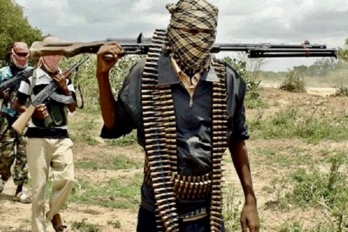
At least 12 people are feared dead after coordinated bandit attacks on Tungan Aljana, Tungan Makeri and Daidanai in Borgu Local Government Area of Niger State, in what residents describe as yet another brutal reminder that Nigeria’s north-western and north-central borderlands remain dangerously exposed. According to the report circulating from the area, the attackers first struck Tungan Aljana, killing three people, before moving to Tungan Makeri where nine more were reportedly murdered, while homes were burnt and cattle were rustled as the assailants advanced towards Daidanai.
The latest assault is not an isolated event. Borgu has been under sustained pressure for months, with Reuters reporting in February that armed assailants on motorbikes killed at least 30 people and burned houses and shops during raids on three villages in the area, while AP put the death toll at 32. UNICEF later said its preliminary verification pointed to about 56 fatalities in the earlier February attack, alongside around 17,000 displaced people and multiple wards that remained largely inaccessible. The variation in the figures reflects the difficulty of independently verifying casualty counts in remote communities where official access is weak and violence moves faster than documentation.
The recurring pattern is what makes Borgu so alarming. Reuters quoted Niger State police spokesperson Wasiu Abiodun saying, “Suspected bandits invaded Tunga-Makeri village … six persons lost their lives,” while AP reported that “Joint security teams have been mobilised to the scene for assessment and effort to rescue the victims is ongoing.” A resident quoted by AP delivered the bitterest judgement of all, saying the attackers were “operating freely without the presence of any security.” That is the real story here: not just the killings, but the persistent sense among villagers that the state shows up only after the attackers have gone.
Borgu’s strategic location makes the problem worse. Reuters has repeatedly described the area as lying close to the Benin Republic border, while the Institute for Security Studies warns that the Borgu-Kainji axis is part of a widening corridor of violence along Nigeria’s western frontier. In its April analysis, ISS cautioned that a “reactive counter-terrorism posture” risks entrenching armed groups rather than uprooting them. That warning matters because Borgu is not simply facing crime in the ordinary sense; it is confronting a mobile, adaptive security threat that feeds on forests, porous borders and the absence of a lasting security footprint.
UNICEF’s February situation report is especially revealing because it goes beyond casualty counting and exposes the collapse of state reach in the affected belt. The agency said multiple non-state armed groups, including JAS-Sadiku, Ansaru/Mahmuda and Lakurawa, were operating across the Kainji Forest belt, and that only two of Borgu’s ten wards were accessible at the time. It also said security forces had carried out deployments and aerial reconnaissance after the attacks, but that sustained presence remained limited in the most affected wards. In plain language, large parts of Borgu were being governed, if at all, by fear rather than by law.
That is why cattle rustling, arson and mass murder cannot be treated as separate incidents. In Borgu, they form one economy of violence. Livestock is not merely property; it is income, savings and survival for many rural households. When attackers kill villagers and drive away cattle in the same raid, they are not just spreading terror, they are stripping communities of the means to recover. Reuters and AP both noted that the February raids involved burning houses and shops as well as killings, a pattern that has now reappeared in the June attack report from Borgu.
The wider security picture is even more troubling. Reuters reported in January that gunmen killed at least 30 people in another Borgu attack and that President Bola Tinubu directed authorities to hunt down the perpetrators and intensify security operations around vulnerable communities near forests. Yet the cycle has continued. That suggests either that the security architecture remains too thin for the terrain, or that the criminal networks operating in the forested corridor have become too entrenched for short-term crackdowns to dislodge.
Bakatsine, the security analyst whose update brought the latest killings to wider attention, captured the public anger in one blunt question: “how many more villages must come under attack before authorities can guarantee the safety of those living in these remote areas?” That question now hangs over Niger State’s leadership, the federal security command and the entire border security arrangement along the Benin corridor. The test is no longer whether the authorities can condemn these attacks. The test is whether they can stop Borgu from becoming a permanent theatre of fear.
For now, Borgu remains a warning sign. A region that should be anchored by farming, trade and cross-border commerce is instead being marked by funerals, abandoned homes and repeated displacement. Unless the state establishes a durable presence in the forest belt, closes the operational space around the border routes and restores confidence in rural policing, Borgu’s tragedy will keep repeating itself with different village names and the same grim ending.