The latest petition has turned what looked like an internal party dispute into a much broader credibility crisis for the Nigeria Democratic Congress. A senatorial aspirant has reportedly asked the EFCC to probe what he describes as fraud, extortion and criminal conspiracy over an alleged N20 million demand by the party’s screening committee, after first paying N3 million for the expression of interest form and going through screening in Abuja.
According to P.M. Express, the aspirant says he was later made to sign an undertaking not to sue the party, then pressed for bank statements, property details, vehicles and investments before a First City Monument Bank account was produced and the N20 million payment requested.
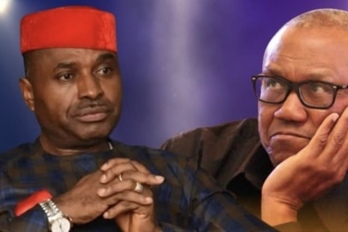
That allegation lands in the middle of Kenneth Okonkwo’s own offensive against Peter Obi and the same party structure. Punch reported that Okonkwo, now an ADC chieftain, alleged that the NDC leadership in the South-East collected N10 million from House of Representatives aspirants and N20 million from senatorial aspirants.
He said one aspirant, Obunike Ohaegbu, supplied him with details and a receipt, and he has since escalated the matter by publishing WhatsApp chats that he says back up the claim.
Those chats matter because they suggest the row is no longer just a war of words between former allies. In the excerpts reproduced by Punch, Ohaegbu complained that he had not been invited to a consensus meeting and questioned how a candidate list could have been produced elsewhere if no agreement had been reached among aspirants.
One line quoted by the paper asked how a process with no consultation could still be called consensus, ending with the warning that if that was not fraud, then fraud would need a new meaning.
Obi’s camp has answered with a hard legal counterstrike. Punch reported that his lawyers, led by Alex Ejesieme SAN, wrote on 9 June 2026 demanding N5 billion in damages, an immediate apology and a written undertaking to stop the publications.
They described Okonkwo’s comments as “false, malicious and defamatory” and said the allegations portrayed Obi as a bribe taker, fraudster and conspirator.
The legal battle now exposes a deeper political fault line. Okonkwo has insisted that he is acting as a lawyer and citizen with a duty to expose wrongdoing, while also signalling that more material could emerge if the matter is pushed further.
Business Hallmark reported that he said he had a civic duty “to disclose every crime” that comes to his knowledge, a position that will now be tested against whatever evidence he can actually produce in court or before investigators.
For the EFCC, the real question is not whether the petition exists but whether the commission can establish a paper trail strong enough to separate political blackmail from actual financial crime.
P.M. Express said the petition had been received in Abuja and that the NDC, Obi and the EFCC had not issued formal responses at the time of reporting, while also stressing that all the allegations remain claims until verified by the relevant authorities. That caution is important because none of the reports reviewed independently proves the committee’s guilt.
What emerges from the combined reports is a portrait of a party allegedly monetising access to nomination through layers of fees, screening pressure and informal power centres, if the petitioner’s version is eventually upheld. That is an inference from the allegations, not a proven finding, but it goes to the heart of why the story has ignited so quickly.
If aspirants were indeed paying sums far beyond the official form fee, the larger scandal is not only who received the money but how normalised such demands may have become inside the party’s 2027 selection machine.
Follow us on our broadcast channels today!
- WhatsApp: https://whatsapp.com/channel/0029VawZ8TbDDmFT1a1Syg46
- Telegram: https://t.me/atlanticpostchannel
- Facebook: https://www.messenger.com/channel/atlanticpostng